The Sequential Contamination Problem
Research programs rarely consist of a single study. Product teams run discovery sprints, follow up with validation studies, deepen understanding through diary studies, and revisit assumptions through periodic check-ins. Each study builds on the last -- and therein lies the problem.
The first study in a program establishes a frame. It identifies themes, surfaces pain points, and generates the language teams use to discuss user problems. Every subsequent study inherits that frame: its research questions reference earlier findings, its interview guides probe deeper on previously identified themes, and its analysis looks for evolution of patterns already named.
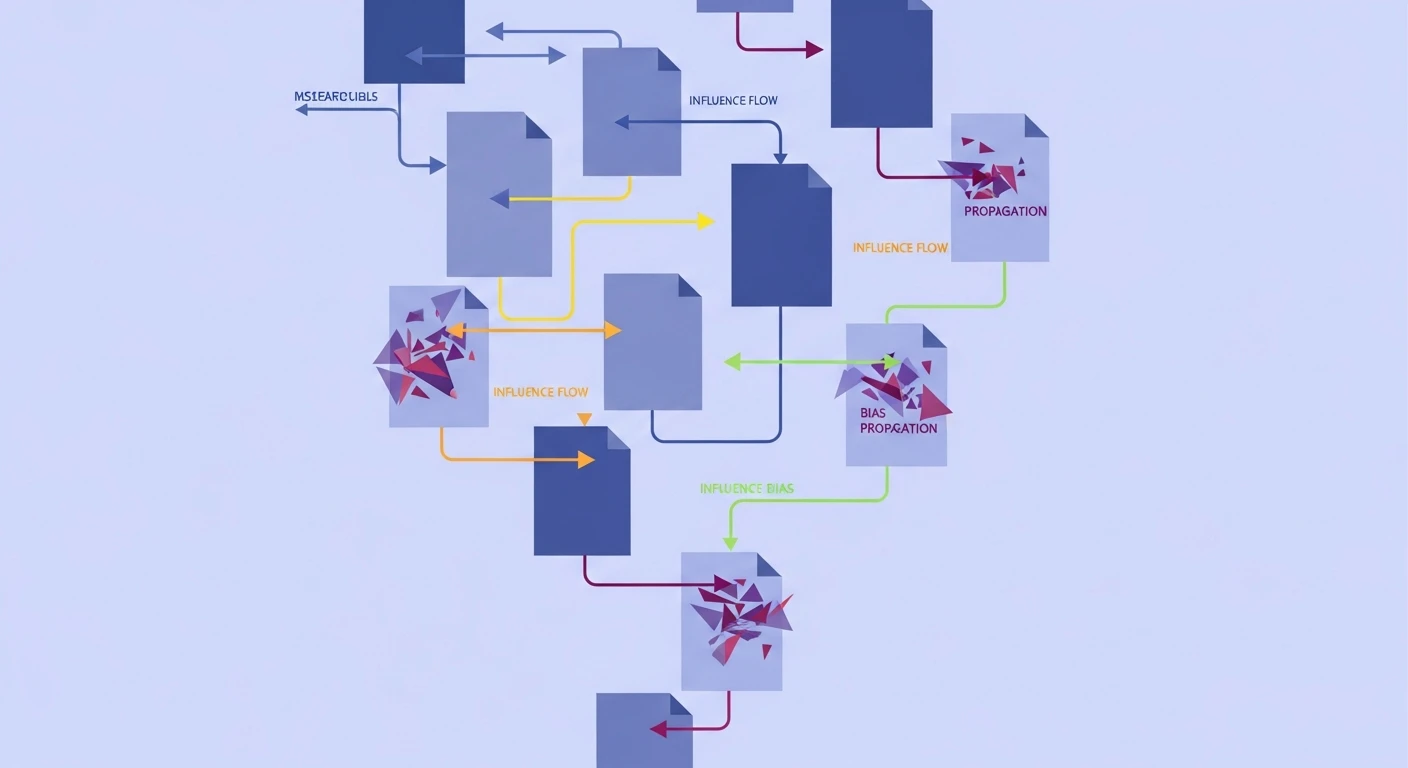
This inheritance is not neutral. It is an anchoring cascade -- a progressive narrowing of investigative scope where each study reinforces the relevance of what came before while systematically excluding what the first study happened to miss. The cascade operates below conscious awareness because each individual study feels methodologically sound. It is the program-level pattern that creates the bias, not any single study within it.
How Anchoring Cascades Form
The Naming Effect
Once early research names a phenomenon -- "onboarding confusion," "trust deficit," "feature discovery failure" -- that name becomes a conceptual container that subsequent studies fill. Researchers design follow-up studies to understand the named phenomenon more deeply rather than questioning whether the name accurately captures what participants experience.
Naming is powerful because it creates the illusion of understanding. A team that has named "onboarding confusion" feels they know what the problem is and now need to understand its dimensions, causes, and solutions. But the naming may have been premature -- an interpretation imposed on ambiguous early data that happened to stick because it was articulated first.
The interpretation drift literature shows how initial coding decisions propagate through subsequent analysis. Anchoring cascades operate the same mechanism at the program level: initial interpretive choices propagate through subsequent studies, becoming progressively more reified and harder to question with each repetition.
Research Question Inheritance
Study 2's research questions typically emerge from Study 1's findings. "We learned users struggle with onboarding -- now let's understand which specific steps cause the most friction." This logic feels rigorous: building knowledge incrementally, going deeper on validated problems.
But it assumes Study 1's findings are complete -- that the set of problems identified in the first study represents the full problem space rather than a sample biased by that study's specific participants, interview guide, and analytical frame. Every research question inherited from an earlier study carries the earlier study's blind spots forward without reexamination.
The assumption audit practice is designed to surface these inherited assumptions. But it is typically applied to organizational assumptions before research begins -- not to the assumptions created by earlier research within the same program. Research-generated assumptions are especially dangerous because they feel evidence-based rather than speculative.
Analytical Confirmation Loops
When researchers analyze data from Study 3, they already know what Studies 1 and 2 found. This knowledge creates a confirmation bias that operates even in researchers trying to remain open: familiar themes are easier to recognize, previously named patterns are easier to code, and data that fits existing understanding feels more meaningful than data that does not.
The cascade accelerates because each study that confirms earlier findings increases the team's confidence that their understanding is correct -- making it progressively harder to notice or take seriously data that contradicts the established frame. By Study 5, the frame feels like settled knowledge rather than a working hypothesis that accumulated confirming evidence without adequate disconfirming exploration.
The Narrowing Funnel
What Gets Excluded
Anchoring cascades do not just bias what gets studied -- they make entire problem spaces invisible. If Study 1 identified three main user pain points, Studies 2-5 will explore those three deeply. Pain points 4, 5, and 6 -- which might exist at equal or greater severity but were not surfaced in Study 1's specific sample and method -- never enter the research program's investigative scope.
This is not hypothetical. Teams regularly discover, through unrelated channels (support tickets, churn analysis, competitor switching interviews), problems that their multi-study research program never detected -- not because the problems are hidden but because the research frame established in Study 1 made them invisible to subsequent studies.
The recency bias in continuous discovery describes how the latest interview dominates interpretation. Anchoring cascades are the opposite temporal bias: the earliest study dominates the entire program's scope. Both biases limit what research can discover, but anchoring cascades are harder to detect because they operate at a programmatic level that no single study makes visible.
Progressive Precision, Declining Discovery
Each study in an anchored cascade produces increasingly precise understanding of a narrowing problem space. Teams feel productive -- they are "going deeper" and "building on prior work." But precision about a narrow problem is not the same as understanding of the full problem space.
A research program that runs five studies on onboarding friction may produce a detailed, nuanced, highly actionable understanding of onboarding problems. But if the actual primary driver of churn is a trust issue that manifests at month 3 (not onboarding), the entire program's precision is directed at the wrong target. The anchoring cascade produced confidence without validity -- a common and costly failure mode.
Breaking the Cascade
Periodic Frame Resets
Every third or fourth study in a program should deliberately reset the investigative frame. Instead of building on prior findings, start from scratch: new research questions, new participant criteria, new interview guides that do not reference previous studies. Compare what emerges from the reset study with what the anchored program has been investigating.
Frame resets feel wasteful -- "we already know about onboarding; why would we ignore that knowledge?" But they are not ignoring knowledge. They are testing whether the knowledge is complete by examining the same research space without the perceptual constraints of prior findings. If the reset produces the same themes, the anchor was valid. If it produces different themes, the anchor was a blind spot.
Adversarial Study Design
Design at least one study per program specifically to disconfirm earlier findings. Ask: "If our previous studies are wrong about the main user problem, what would we expect to see?" Then design a study to look for exactly that.
This is the program-level application of negative case analysis: deliberately seeking evidence that contradicts the established understanding. Most programs never do this because each study seeks to "advance" understanding rather than challenge it. But advancement without challenge is just elaboration within a potentially flawed frame.
Independent Parallel Tracks
Run some studies in the program without sharing earlier findings with the research team. Give a fresh researcher the same broad research objective but none of the prior findings, themes, or language. Their independent analysis provides an unanchored comparison point -- revealing what an uninherited perspective discovers in the same problem space.
This approach uses researcher independence as a calibration mechanism. If the independent researcher surfaces the same themes, you have convergent validation. If they surface different themes, you have identified the boundaries of your anchoring cascade -- the space between what anchored researchers find and what unanchored ones discover represents the cascade's blind spot.
Cross-Method Disruption
Anchoring cascades are strongest when sequential studies use the same method. If Studies 1-3 are all interviews, the interview format itself becomes a vehicle for the cascade (similar questions, similar probe patterns, similar analytical approaches). Introducing a radically different method -- diary studies, observational research, artifact analysis -- disrupts the methodological channel that carries the anchor forward.
Different methods surface different data types. Interviews surface what participants can articulate in a conversational context. Observation surfaces what they actually do. Diary studies surface what they experience over time. Each method has different susceptibility to anchoring -- and using multiple methods within a program reduces the probability that a single study's frame dominates the entire program's investigative scope.
Organizational Patterns That Enable Cascades
The Continuous Researcher Problem
When the same researcher leads all studies in a program, their personal knowledge accumulates and anchors subsequent work. They cannot unknow what they learned in Study 1. Their interpretive frame, sharpened by each study, becomes the program's frame -- with all its strengths and all its blind spots.
Rotating researchers between programs or bringing fresh analytical perspectives to later studies reduces individual anchoring. It also creates productive disagreement: a new researcher questioning "why are we focused on onboarding?" forces the team to justify the scope rather than assume it.
The Stakeholder Expectation Trap
Stakeholders who received Study 1's findings now expect subsequent studies to elaborate on those findings. They ask: "What did you learn about onboarding this time?" If Study 3 discovers something unrelated to onboarding, presenting it feels like a non sequitur -- the stakeholder frame is anchored to the earlier findings.
This creates social pressure to confirm the established frame: findings that fit prior studies are easy to communicate; findings that challenge them require explaining why the program's direction changed. The communication cost of frame-breaking findings discourages researchers from pursuing them -- a subtle but powerful mechanism that maintains the cascade.
Building stakeholder expectations for periodic resets -- communicating upfront that "every fourth study will challenge our assumptions" -- normalizes frame-breaking and reduces the social cost of discovering that earlier studies missed something important. Presenting findings that challenge prior understanding is a skill that programs need to develop structurally, not just individually.
Detecting Your Own Cascades
Review your last five studies in any program and ask:
- Did each study's research questions reference findings from earlier studies? (If yes in all cases, cascade is likely.)
- Did the language for describing user problems change across studies, or did the same labels persist? (Persistent labels suggest anchoring.)
- Did any study produce findings that contradicted or expanded the frame established by Study 1? (If not, the cascade may have suppressed disconfirming evidence.)
- Were there moments in later studies where participants raised issues outside the established frame? Were those moments pursued or dismissed? (Dismissed novel data is a cascade symptom.)
Anchoring cascades are not research failure -- they are a natural consequence of sequential knowledge building. The failure is not detecting them and not intervening to ensure that knowledge accumulation does not become scope calcification. Every program needs mechanisms for frame expansion, not just frame deepening.
The paradox: the more studies you run on a topic, the more confident you become -- and the less likely you are to discover you have been studying the wrong thing. Breaking that paradox requires deliberate, structured disconfirmation built into the program design from the start. Tools like data contracts for analytical pipelines enforce structural integrity in data systems; research programs need analogous structural safeguards against progressive analytical narrowing.