The Meeting Where Your Findings Actually Get Decided
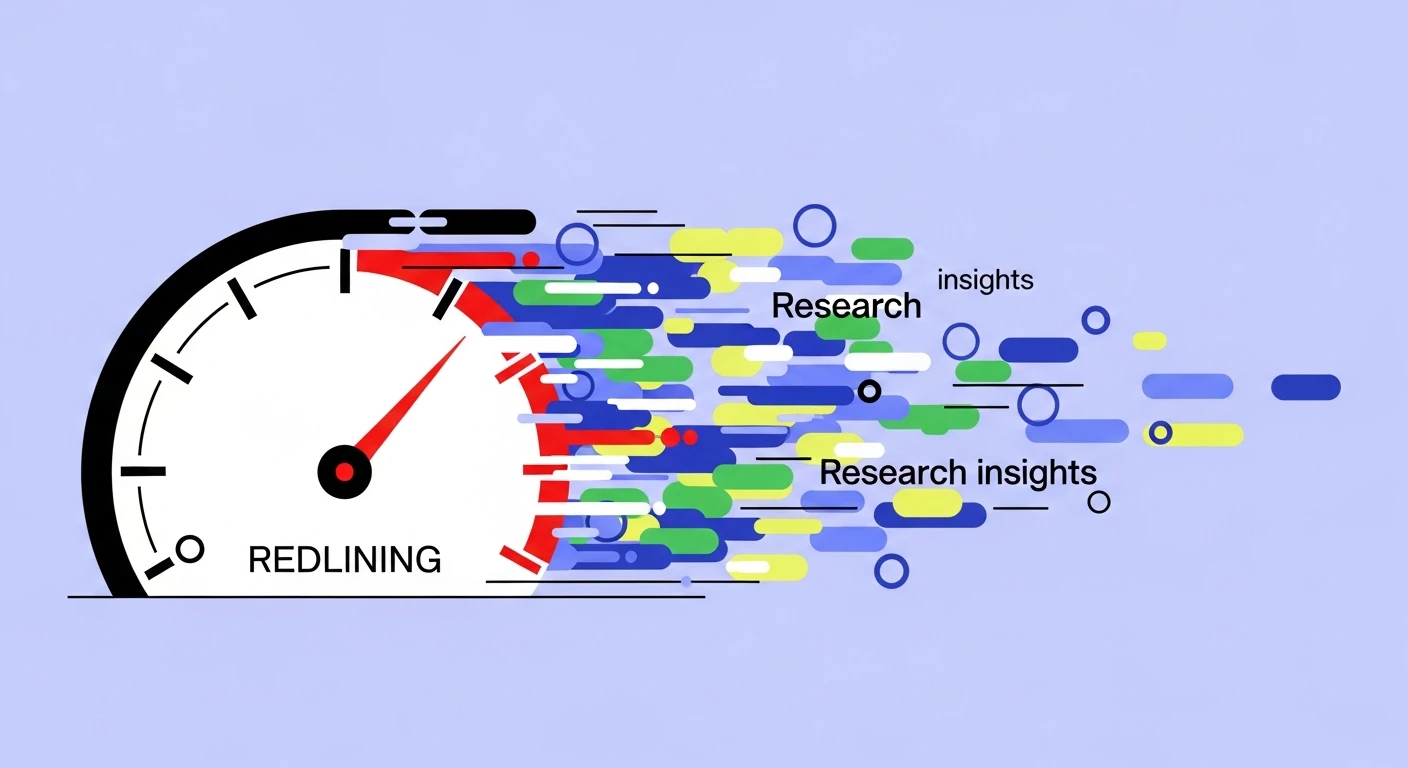
The official story is that findings come from analysis. The real story is that, for most teams, findings get set in the first ten minutes of the post-study debrief -- the informal huddle where researchers and observers compare notes while the sessions are still fresh. Someone says "the thing that really jumped out at me was how confused people were by onboarding," and a nod goes around the room. Someone else adds, "yeah, onboarding." Within minutes, onboarding confusion is the headline. It may well be a real finding. But notice what just happened: it became the finding not because the data ranked it first, but because it was said first, and repetition made it feel inevitable.
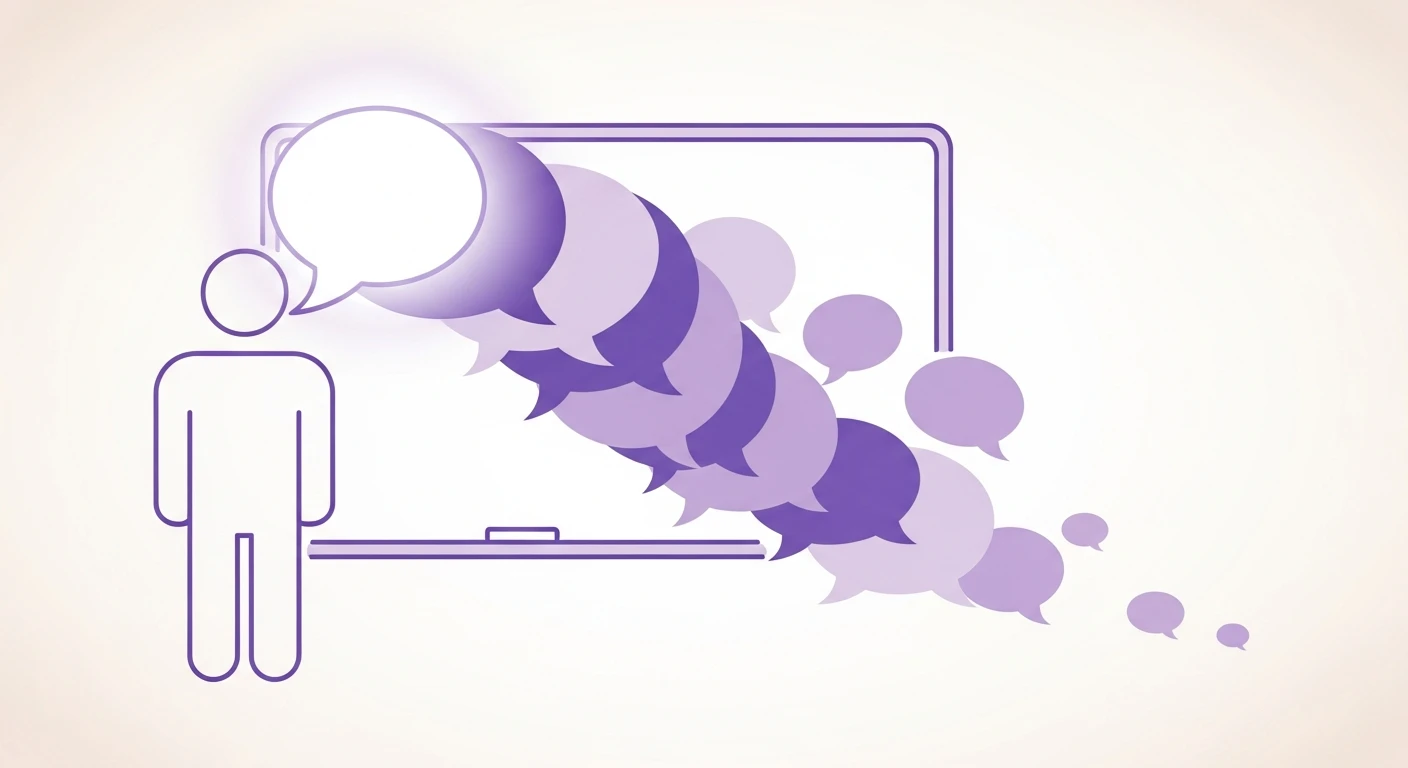
This is an availability cascade -- a self-reinforcing process in which an idea gains perceived truth through repetition rather than evidence. Each restatement makes the idea more cognitively available, and availability gets mistaken for importance. In stakeholder debriefs, the cascade runs fast and invisibly, and by the time formal analysis begins, the team is no longer discovering what the data says. It is assembling support for what it already announced.
Why Debriefs Are Especially Vulnerable
Debriefs combine every condition a cascade needs. The data is not yet analyzed, so there is no external anchor to check claims against -- only memory. Memory itself is biased toward the recent and the vivid, which means the moments that get voiced first are often the most dramatic, not the most representative. And the social setting adds pressure: once two or three people have agreed on a frame, disagreeing costs something. Silence reads as assent, and the cascade rolls forward unopposed.
The result is a specific distortion. The insight that surfaces first is usually the one tied to the most emotionally salient moment -- a visible frustration, a memorable quote, a participant who struggled dramatically. That salience is exactly what makes it available, and availability is exactly what the cascade amplifies. Meanwhile, quieter but more common patterns -- the mild hesitations, the near-misses, the things that worked but slowly -- never get voiced early enough to compete. They lose not on merit but on timing. This is a close cousin of the way theme frequency gets mistaken for theme importance in analysis, except here the counting happens in people's memories before a single transcript is coded.
The Cascade Contaminates the Analysis That Follows
The most damaging part is not that the debrief produces a premature headline. It is that the headline then steers the analysis. Once "onboarding confusion" is the agreed story, coders read transcripts looking for onboarding confusion. They probe it in follow-up sessions. They foreground supporting quotes and quietly discount the contradicting ones. The early frame becomes a lens, and every subsequent step confirms it -- not through dishonesty, but through ordinary interpretation drift, where the frame you start with reshapes how you code everything after.
This is why an availability cascade is worse than a simple wrong guess. A wrong guess can be corrected by data. A cascade recruits the data-gathering process itself into defending the guess. By the time the deck is built, the team has a mountain of evidence for the early frame and almost none for the alternatives -- not because the alternatives were false, but because nobody went looking. The cure is the deliberate discipline of negative case analysis, actively hunting for the observations that contradict your emerging story.
It Is a Systems Problem, Not a Character Flaw
It is tempting to treat this as a discipline issue -- researchers should just be more objective. But the cascade is structural. Any process that lets unverified claims propagate faster than they can be checked will amplify whichever claim arrives first, regardless of its accuracy. Enterprise AI teams learned the same lesson the hard way: systems that let confident outputs flow downstream without traceable evidence produce exactly this failure mode, which is why AI audit trails and explainability exist to make every claim traceable back to its source. A research debrief without traceability is a system optimizing for whoever speaks first and loudest.
The parallel is precise. In a well-engineered pipeline, an assertion is only as trusted as the record that backs it, and unbacked assertions are treated as hypotheses, not facts. The same governance mindset that keeps AI outputs accountable applies to the debrief room: the goal is not to suppress early observations, but to hold them at the status of hypothesis until the data has actually been consulted.
How to Break the Cascade
A few practical moves interrupt the mechanism directly.
Capture before you converge. Before anyone speaks, have each person privately write their top three observations. This preserves independent signal before the social cascade can overwrite it, and it surfaces the quiet patterns that would otherwise never get voiced first.
Timestamp claims as hypotheses. In the debrief, label everything as a candidate, not a conclusion. "Onboarding confusion -- to verify" is a different object than "onboarding confusion -- the finding." The label keeps the analysis honest and reminds coders they are testing, not confirming.
Assign a designated skeptic. Rotate the role of the person whose job is to argue for the observation nobody else raised. Structured dissent breaks the silence-as-assent dynamic that lets cascades roll unopposed.
Analyze before you brief widely. The riskiest cascade is the one that reaches stakeholders before analysis. Resist the pressure to send hot takes minutes after the last session; a same-day "here's what we saw" email can lock in a frame you later cannot dislodge.
Separate the vivid from the frequent. Explicitly ask which observations were memorable because they were dramatic versus common because they recurred. Naming the distinction defuses the availability bias that fuels the cascade.
The Discipline of Not Knowing Yet
The hardest thing in the debrief is to sit with genuine uncertainty -- to let a striking moment be striking without immediately promoting it to a finding. Teams that master this do not debrief less; they debrief differently, treating the session as a place to gather hypotheses rather than to ratify conclusions. They know that the first insight shared has an unearned advantage, and they build in the friction that makes the data, not the loudest early voice, decide what the research actually showed.
Qualz.ai supports this by keeping every synthesized finding linked to the underlying evidence, so a claim voiced in a debrief can be checked against what participants actually said before it hardens into the story. The point is not to slow the team down. It is to make sure the finding that survives is the one the data supports -- not merely the one that got said first.
Ready to keep your findings anchored to evidence instead of whoever speaks first? Book a Qualz.ai demo and see how traceable synthesis keeps the debrief honest.