The Productive Friction of Manual Documentation
The promise of AI-assisted note-taking in qualitative research is elegant: free the researcher from the divided attention of documentation so they can be fully present with the participant. Every research operations team that has adopted real-time transcription and AI summarization reports the same initial observation: researchers feel more engaged during sessions.
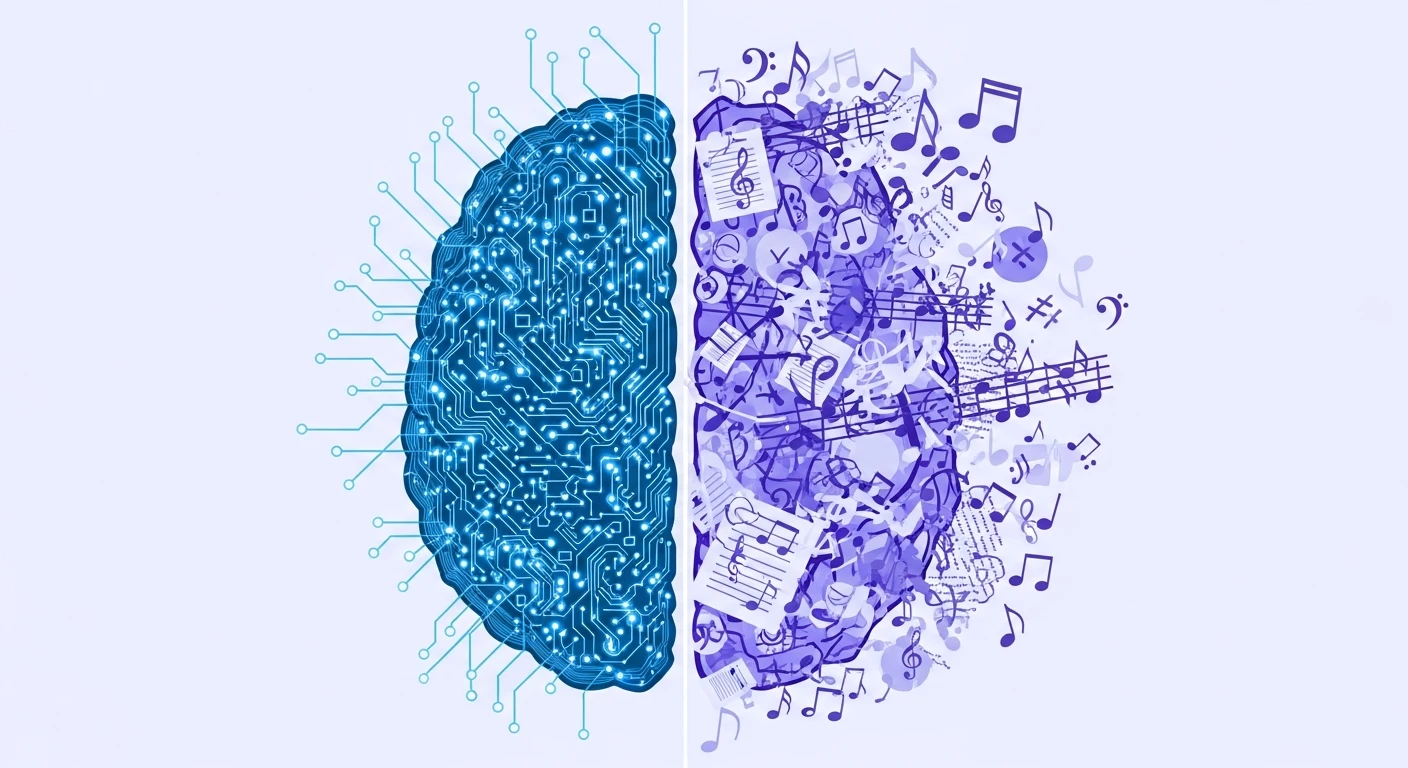
But feeling more engaged is not the same as being more analytically active. A growing pattern in teams using AI documentation reveals something counterintuitive: when you remove the cognitive load of note-taking, you also remove a form of productive friction that forced real-time analytical processing.
Manual note-taking is not just transcription. It is selective attention made visible. Every decision about what to write down is a micro-analytical judgment: this matters, that does not. This pattern connects to what I heard yesterday. This contradicts my hypothesis. The physical act of writing forces interpretive compression that primes deeper post-session analysis.
When AI handles all documentation, researchers lose this interpretive forcing function. They listen more smoothly but process less deeply. The interview becomes something they experience rather than something they actively interrogate in real-time.
The Encoding Specificity Problem
Cognitive psychology established decades ago that how you encode information determines how you retrieve it. The generation effect shows that actively producing information (writing notes, creating summaries) leads to stronger memory traces than passively receiving it (reading a transcript, watching a recording).
For qualitative researchers, this means the notes you take during an interview are not just a record. They are a cognitive scaffold for later analysis. When you wrote "contradiction -- said easy earlier but now struggling" in your field notes, you encoded an analytical observation that your brain will retrieve during coding. When AI produces a summary noting the same contradiction, you read it without the retrieval advantage of having generated it yourself.
This connects directly to what we know about how research debriefing practices after interviews shape analytical quality. The quality of post-session analysis depends heavily on what the researcher encoded during the session. AI-documented sessions produce researchers who remember the conversation happened but have fewer pre-formed analytical hooks for making sense of it afterward.
How Teams Experience the Bandwidth Paradox
The paradox manifests differently across research maturity levels:
Junior researchers often benefit initially from AI note-taking because it reduces overwhelm. But they lose the training effect of forced selective attention. Learning which moments matter -- the core skill of qualitative research -- happens through the repeated practice of deciding what to write down. Remove that practice and skill development stalls.
Senior researchers often report feeling "lazy" with AI documentation. Their expertise previously manifested as highly selective, interpretive notes that were already half-analyzed. With AI handling documentation, they listen attentively but their real-time analytical engine idles. One researcher described it as "watching a movie I should be editing."
Research teams notice the effect in collaborative analysis sessions. When researchers bring their own notes to analysis, discussions are rich with pre-formed interpretations that others can challenge or build upon. When researchers bring AI transcripts, discussions start from scratch with everyone reading the same undifferentiated text. The collaborative analysis process loses the diversity of interpretive entry points that made it generative.
The Spectrum of Cognitive Offloading
Not all AI-assisted documentation creates the same bandwidth problem. The effect depends on what specifically is being offloaded:
Full transcription only (low risk): Recording and transcribing the complete conversation while the researcher takes their own selective notes. This preserves the analytical forcing function while ensuring nothing is lost.
Real-time transcription display (moderate risk): Showing the live transcript during the interview. Researchers report checking the transcript instead of trusting their own attention, creating a divided-attention pattern worse than traditional note-taking.
AI real-time highlights (high risk): Systems that flag "key moments" during the interview actively compete with the researcher's own judgment about what matters. Researchers begin deferring to the AI's selection rather than developing their own.
Full AI documentation with no researcher notes (highest risk): The researcher takes no notes, trusting AI to capture everything. Post-session, they have rich transcripts but impoverished personal analytical scaffolding.
The research automation paradox applies directly here: automating the visible work of documentation removes the invisible analytical processing that was embedded within it.
Designing for Productive Friction
The solution is not to abandon AI documentation. It is to redesign workflows that preserve the analytical benefits of active processing while leveraging AI for completeness:
Dual-track documentation: The researcher takes sparse, interpretive notes (observations, connections, contradictions, hunches) while AI handles verbatim capture. Post-session analysis begins with the researcher's interpretive notes and references the full transcript for evidence.
Forced synthesis pauses: Build 2-3 minute mid-interview reflection points where the researcher must write a single sentence summarizing their current analytical impression. This forces interpretive processing without the full burden of continuous note-taking.
Pre-AI debrief: Before looking at any AI-generated summary or transcript, the researcher writes a 5-minute debrief from memory. What stood out? What surprised them? What connections did they notice? This captures the generation effect while it is still fresh.
Selective AI assistance: Use AI to handle logistical notes (participant details, timestamps, action items) while the researcher focuses exclusively on analytical notes (patterns, contradictions, connections to other sessions).
As the broader principle of how observability architecture shapes what teams can understand about their systems demonstrates, the design of your capture system determines what analytical pathways remain available downstream.
Measuring Analytical Engagement Decline
How do you know if your team is experiencing the cognitive bandwidth paradox? Look for these indicators:
- Post-interview debriefs become shorter and less specific
- Coding sessions require more transcript re-reading before researchers can begin
- Researchers report feeling "surprised" by themes that emerge from transcripts they were present for
- Cross-session pattern recognition declines (researchers see each interview as isolated rather than building)
- Time from interview completion to analytical insight increases despite faster documentation availability
These signals suggest that AI documentation has successfully captured the conversation but the researchers have not successfully processed it. The organization has better records and shallower understanding.
The Training Ground Problem
Perhaps the most consequential long-term effect is on researcher development. Note-taking in qualitative research is not a clerical task to be optimized away. It is the primary training mechanism for developing analytical sensitivity.
New researchers learn to see patterns by being forced to decide, in real-time, what is worth writing down. That decision-making muscle -- exercised thousands of times across hundreds of interviews -- is what separates a skilled qualitative researcher from someone who merely conducts conversations.
Teams that fully offload documentation to AI may produce a generation of researchers who are pleasant interviewers but underdeveloped analysts. The cognitive load that analysis frameworks impose is not overhead to be eliminated. It is the mechanism through which expertise develops.
The question is not whether to use AI documentation tools. It is how to use them in ways that augment rather than replace the active cognitive processing that makes qualitative research qualitative.