The Framework Is Not a Neutral Container
You finish ten user interviews. You open your analysis tool and begin coding against a predetermined framework -- say, Jobs-to-Be-Done, or a thematic hierarchy, or your product's feature map. Within hours, patterns emerge. The framework fills up. You feel the satisfying click of data fitting structure.
But what about the data that did not click? The participant who described a need that spans three categories but fits cleanly in none? The pattern that is real but lives in the spaces between your framework's boundaries? The observation that contradicts your structure's implicit assumptions?
Those insights did not vanish because they are unimportant. They vanished because your framework imposed cognitive load on their retention. Keeping an uncategorizable insight alive requires active mental effort -- you must remember it, find a place for it, argue for its inclusion despite it breaking your structure's logic. Most researchers, under time pressure, unconsciously let those insights go.
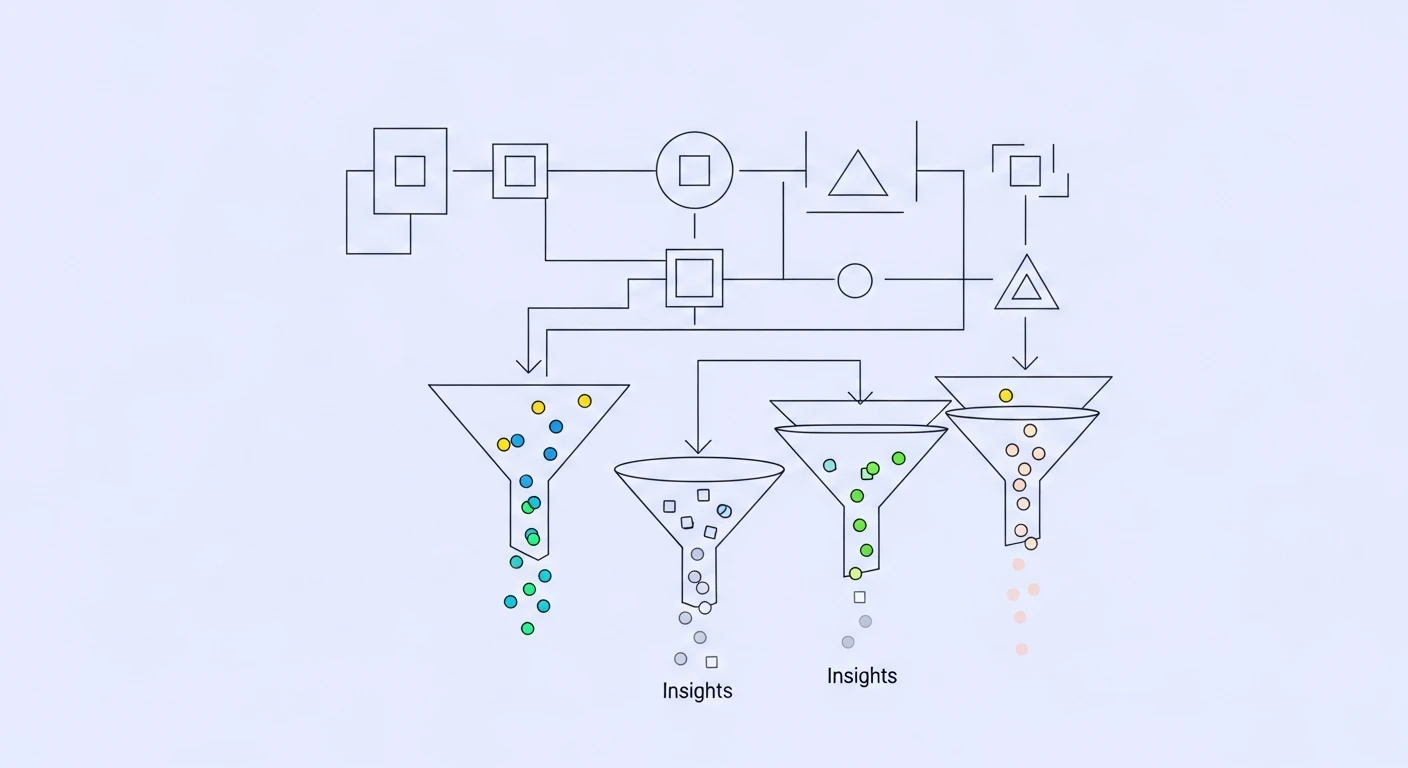
This is cognitive load transfer: the analytical framework shifts the burden of proof from structured insights (which survive effortlessly) to unstructured ones (which require active advocacy to persist).
How Frameworks Filter
Category Magnetism
Once categories exist, ambiguous data gets pulled toward the nearest one. A participant statement that is 60% about workflow and 40% about emotional frustration gets coded as "workflow" because that category exists and "emotional frustration" was not in the original framework.
The original richness of that statement -- which was precisely about how workflow failures create emotional responses -- gets flattened into a single dimension. The insight about the emotional-workflow connection disappears because it requires a category that does not exist yet.
This is the same mechanism that creates the granularity trap in qualitative coding, but operating in the opposite direction. Where over-splitting loses patterns, category magnetism loses nuance by collapsing multi-dimensional observations into single-dimensional codes.
The Survivorship Gradient
Not all insights face equal survival pressure during synthesis. The gradient looks like this:
- Effortless survival: Insights that map perfectly to an existing framework category
- Low-effort survival: Insights that fit a category with minor interpretation
- Moderate-effort survival: Insights that require creating a new sub-category
- High-effort survival: Insights that require restructuring the framework itself
- Near-impossible survival: Insights that contradict the framework's foundational assumptions
Under time pressure (which is always), researchers unconsciously optimize for insights in the top two tiers. The bottom three tiers -- which often contain the most genuinely novel findings -- face systematic extinction.
Prior Framework Contamination
When you reuse a framework across studies, previous findings shape current analysis. A category that was populated by the last project carries implicit expectations into the new one. You look for similar patterns because the category's existence suggests they should be there.
This creates a form of analytical confirmation bias: each successive study becomes more likely to find what previous studies found, because the framework makes those findings cognitively effortless to recognize and capture. Genuinely new patterns have to compete against the established structure's momentum.
The interpretation drift problem compounds this -- not only do frameworks bias which insights survive, but the meaning of surviving categories shifts subtly over time without anyone noticing.
The Consequences for Product Decisions
Innovation Signal Loss
The most consequential product insights are often the ones that do not fit existing mental models. A user describing a need that does not map to any current feature category might be signaling an entirely new product direction. But if your synthesis framework mirrors your product's current architecture, that signal gets absorbed into the nearest existing category and loses its disruptive potential.
This is why research debriefing practices matter so much -- the hour after the interview, before any framework is applied, is when novel signals are most visible. Once the framework activates, they begin fading.
False Convergence
Framework-driven synthesis creates artificial agreement across data sources. When multiple interviews produce data that gets coded into the same categories, it looks like convergence -- multiple participants pointing to the same need. But some of that apparent convergence is framework-manufactured: different participants said different things that got mapped to the same category because the category existed.
True convergence requires participants to express similar ideas independently. Framework convergence only requires that different ideas can be plausibly assigned to the same bin. Conflating the two leads to overconfidence in patterns that may be artifacts of your analytical structure rather than genuine user consensus.
Stale Strategy Reinforcement
Companies that use consistent frameworks across quarters of research create feedback loops where the framework reinforces existing strategy. The framework reflects current product thinking. Research gets filtered through that framework. Findings that align with current thinking survive. Findings that challenge it face higher cognitive barriers. The result: research consistently confirms strategic direction, not because the strategy is right, but because the analytical tool makes confirmation effortless and challenge expensive.
Structural Interventions
Framework-Free First Pass
Before applying any structured framework, do a first pass through your data with no categories. Write free-form analytical memos about what you notice. The principles of analytical memo writing exist precisely for this purpose -- memoing captures what your unconstrained mind notices before the framework tells it what to look for.
This first pass creates a record of pre-framework observations. After applying the framework, you can compare: what did I notice in the free pass that disappeared when structure was applied? Those disappeared observations are your highest-risk insight losses.
Multiple Framework Analysis
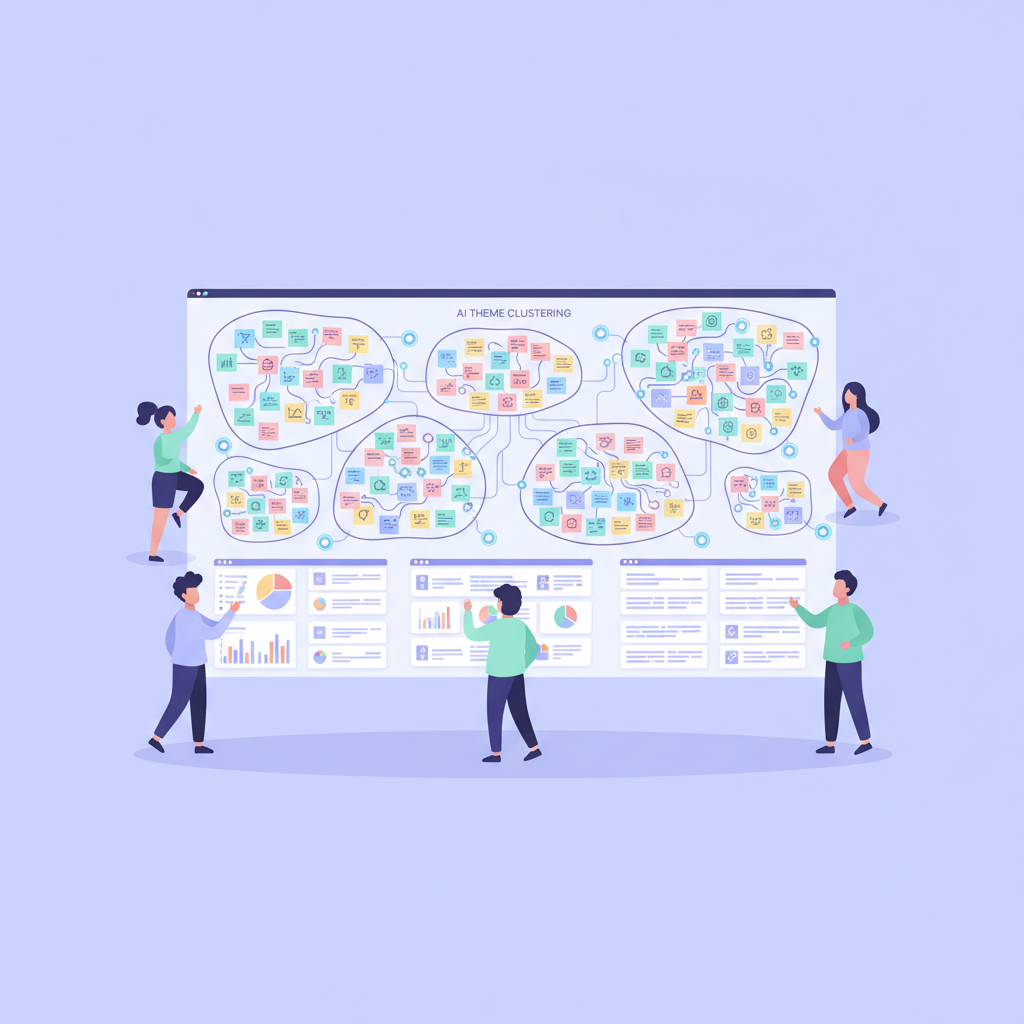
Apply two or three different frameworks to the same dataset and compare results. Where do they agree? (Probably genuine patterns.) Where do they diverge? (Framework artifacts.) What appears in one but not the others? (Category-dependent insights that need independent evaluation.)
This is expensive. It is also the only reliable way to distinguish data-driven patterns from framework-manufactured ones.
The "Miscellaneous" as Priority
Instead of treating uncategorized data as leftovers, treat it as priority material. Create an explicit practice where everything that resists categorization gets flagged for dedicated attention.
After initial coding, review only your uncategorized pile. Ask: what patterns exist here that my framework could not see? What would I need to restructure to accommodate these observations? If the answer is "restructure significantly," that is a signal that your framework is suppressing something important.
Framework Versioning
Version your analytical frameworks like software. Track what changed between versions, what drove the changes, and what data prompted new categories. This creates accountability for framework decisions and makes invisible filtering visible over time.
The same principles that govern versioned prompt registries in production AI apply to research frameworks -- they are interpretive systems that shape outputs, and they need the same rigor of version control and change documentation.
Adversarial Review
Assign one team member the explicit role of framework critic during synthesis. Their job: find data that contradicts or resists the framework. Find insights that were lost in translation between raw data and structured output. Challenge categories that seem too neat.
This is not about being difficult. It is about creating systematic pressure against the framework's natural tendency to assimilate everything into its existing structure and discard what does not fit.
When to Suspect Framework Filtering
Watch for these signals that your framework is eating insights:
- Suspiciously clean categorization: If 95% of your data codes cleanly into existing categories, either your framework is perfect (unlikely) or it is aggressively magnetizing ambiguous data
- No surprises: If synthesis never produces findings that challenge your prior understanding, the framework may be filtering out challenges
- Shrinking "other" category: If each successive study has less uncategorized data, your framework is expanding its capture radius -- which means it is increasingly defining what counts as a valid finding
- Stakeholder prediction accuracy: If stakeholders can predict your findings before you deliver them, your framework may be producing confirmatory results
As AI-driven evaluation methods mature, the ability to detect systematic framework bias in research outputs becomes a critical quality signal -- not just for AI systems, but for human analytical processes that exhibit the same filtering behaviors.
Practical Takeaways
- Do one framework-free pass first. Write memos before coding. Capture what your unconstrained attention notices.
- Track what disappears. Compare pre-framework observations with post-framework outputs. The gap is your insight loss.
- Treat the miscellaneous pile as high-priority. Uncategorized data is not leftovers -- it is where novelty lives.
- Rotate frameworks periodically. Using the same structure across studies compounds confirmation bias over time.
- Version your frameworks. Track changes and the data that prompted them.
- Assign an adversarial reviewer. Someone whose job is to find what the framework filtered out.
Your analysis framework is a tool. Like all tools, it shapes what you can build. Choose it deliberately, change it regularly, and never mistake its outputs for the full picture of what your participants told you.