The Safety of Agreement
Collaborative analysis sessions are supposed to eliminate the blind spots that plague solo researchers. Multiple perspectives, diverse interpretive lenses, collective rigor — the theory is sound. But in practice, something else happens.
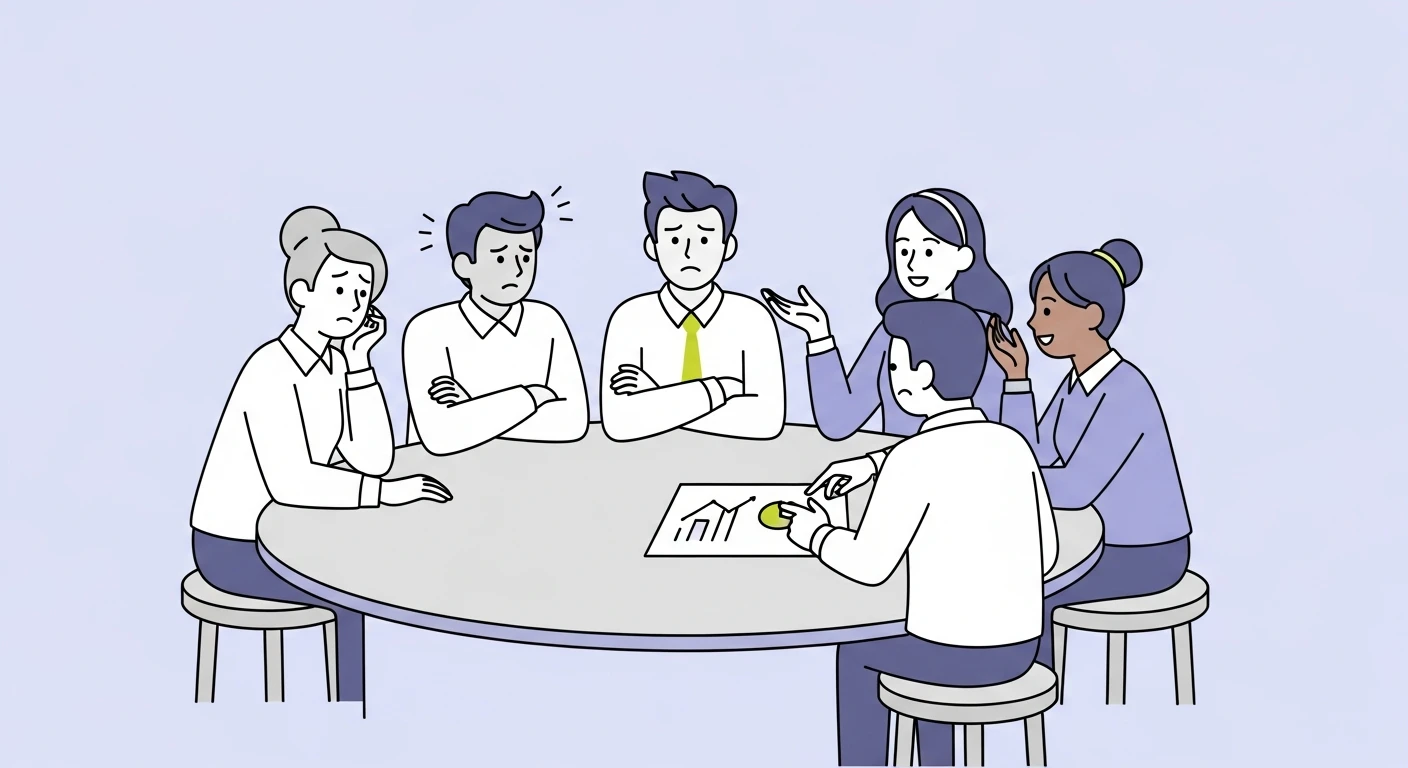
When three researchers sit down to jointly code a dataset, they do not simply combine their individual insights. They negotiate. And negotiation, by its nature, optimizes for agreement rather than truth.
The themes that survive collaborative analysis are not necessarily the most important ones. They are the ones that require the least defense. The ones nobody objects to. The ones that feel professionally safe to present to stakeholders.
Meanwhile, the researcher who noticed something genuinely surprising — a pattern that contradicts the team's assumptions, or challenges a product direction leadership has already committed to — faces a calculation: is this observation worth the social cost of defending it against collegial skepticism?
Usually, it is not. And the most valuable insight dies in the room where it was born.
How Consensus Pressure Operates
The First-Mover Anchoring Effect
Whoever speaks first in a collaborative coding session sets the interpretive frame. If a senior researcher proposes a theme, junior team members face an asymmetric choice: agree (low cost, high social reward) or challenge (high cost, uncertain benefit).
This dynamic mirrors what happens in AI governance frameworks where the first person to define categories constrains what everyone else can see. The initial taxonomy becomes a gravitational center that subsequent observations orbit rather than escape.
The Coherence Premium
Research teams instinctively reward coherent narratives. A theme that connects neatly to other themes, tells a clear story, and leads to actionable recommendations gets endorsed enthusiastically. A finding that is messy, contradictory, or hard to explain gets labeled "needs more analysis" — which often means "will never be discussed again."
This coherence premium systematically filters out the exact type of insight that negative case analysis identifies as most valuable: the contradictory data point that challenges emerging patterns.
The Expertise Deference Problem
In mixed-seniority teams, domain expertise creates invisible authority gradients. The researcher with twelve years of experience in healthcare UX does not need to explicitly dismiss a junior colleague's observation — their silence or mild skepticism is sufficient to kill it.
This pattern is especially dangerous because domain experts suffer from predictable blind spots. Their expertise tells them what "usually" happens, making them less receptive to signals that this situation might be different. The team's deference to experience paradoxically reduces the team's ability to see what is genuinely new.
The Structural Drivers
Career Risk Asymmetry
Presenting controversial findings carries career risk. If the finding is wrong, the researcher looks sloppy. If it is right but unwelcome, they become "difficult." If it is right and welcome, the credit gets diffused across the team anyway.
The rational career move is always to converge on themes that are defensible, expected, and aligned with organizational direction. This is not cynicism — it is what organizations incentivize, as we have explored in how team incentive structures reward volume over impact.
Time Pressure Compression
Collaborative sessions have fixed durations. When a team has two hours to align on themes from twenty interviews, they cannot afford extended debate on contested interpretations. Controversial themes require more discussion time, which means fewer of them survive the session's time constraints.
Teams unconsciously learn to pre-filter their observations, bringing only themes they believe will gain quick agreement. The session becomes a ratification ceremony rather than a genuine analytical process.
The Documentation Bottleneck
Whoever documents the session's outcomes holds disproportionate power. Themes that get written on the whiteboard become real; observations that remain verbal disappear. The documenter — often the most organized rather than the most insightful team member — becomes an unconscious editor of the team's collective intelligence.
What Gets Lost
The themes that consensus kills share specific characteristics:
They are politically uncomfortable. A finding that suggests the product direction is wrong, or that a key stakeholder's pet feature is solving the wrong problem, rarely survives collaborative analysis intact. The team softens it into something palatable.
They are methodologically uncertain. A pattern noticed by only one researcher, supported by only two or three data points, gets dismissed as "not strong enough" — even though qualitative research's strength lies precisely in taking seriously what small samples reveal.
They are conceptually complex. Findings that require lengthy explanation or challenge the team's existing mental models get simplified until they no longer carry their original meaning. The nuance is the insight, but nuance does not survive group compression.
They require integration across domains. The most valuable findings often connect research data to organizational dynamics, market conditions, or technical constraints. But researchers analyzing together tend to stay within their disciplinary comfort zone, missing cross-cutting themes that collaborative analysis sessions are theoretically designed to surface.
Breaking the Consensus Trap
Silent Independent Coding First
The most effective intervention is structural: require every team member to complete independent analysis before any group discussion begins. This captures each researcher's uncontaminated interpretive response before social pressure can reshape it.
The key is that independent codes must be submitted — written down, shared in a document — before the group session starts. Verbal "I was thinking the same thing" claims are retrospective constructions, not evidence of independent convergence.
Designated Dissent Roles
Assign one team member the explicit role of finding problems with emerging consensus. This is not devil's advocacy (which is often performative) but structural dissent: the designated dissenter must articulate the strongest possible alternative interpretation for every theme the group agrees on.
When dissent is expected and rewarded, the social cost of challenging consensus drops dramatically.
Anonymous Observation Submission
Before collaborative sessions, collect observations anonymously. When the team does not know who noticed what, they cannot apply expertise deference or seniority filters. Every observation competes on its interpretive merit rather than its source's authority.
Controversy Scoring
Explicitly rate each emerging theme on a controversy scale. Themes that everyone agrees on immediately should trigger skepticism, not confidence. The ease of agreement is a signal that the theme might be safe rather than true.
Institute a rule: at least one final theme must come from the "contested" category. This forces the team to do the difficult interpretive work of engaging with genuinely ambiguous data.
Time-Boxing Consensus and Protecting Dissent
Allocate specific session time exclusively for discussing observations that did not achieve consensus. These "minority reports" often contain the study's most important findings — the ones that challenge assumptions your team mapped before research began.
The AI Paradox in Collaborative Analysis
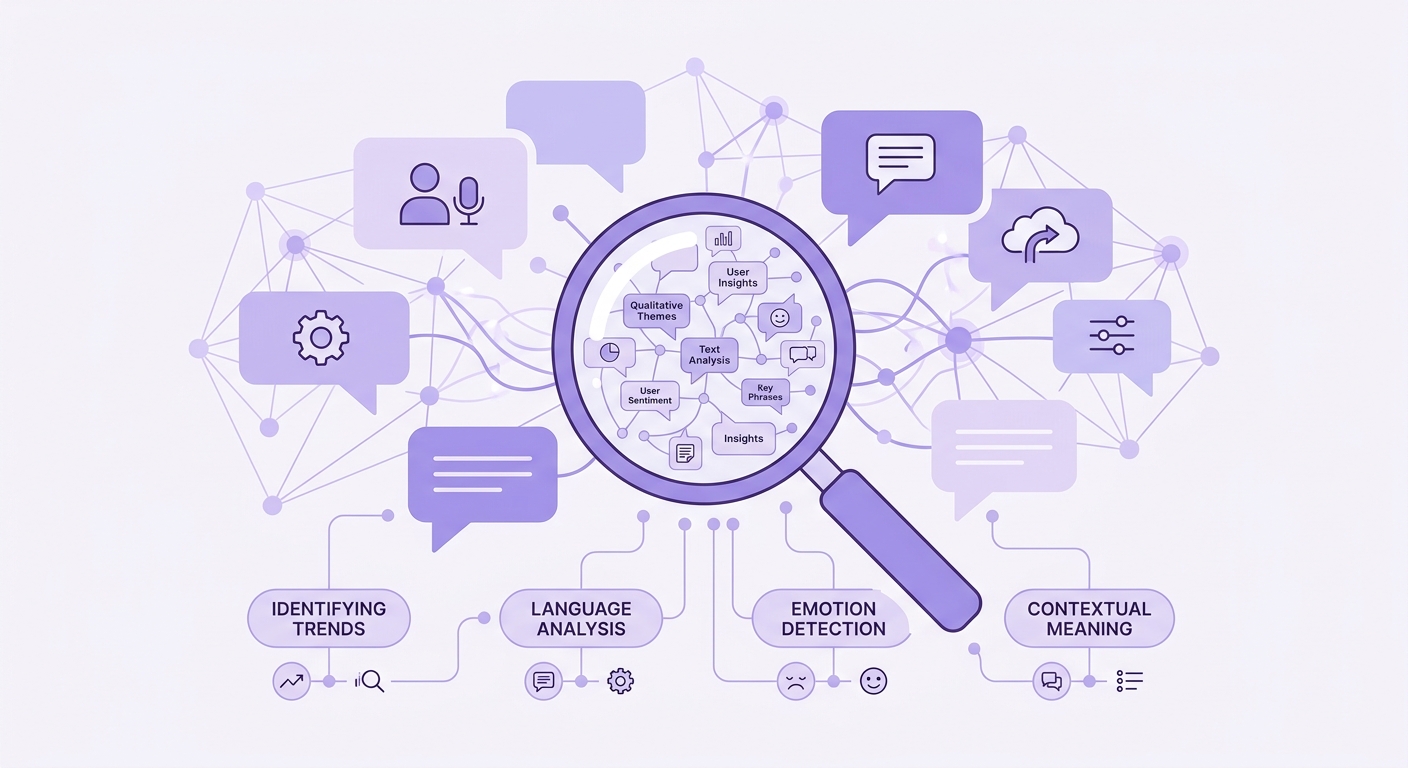
AI tools can both worsen and ameliorate the consensus trap. When teams use AI-generated themes as a starting point for collaborative analysis, the machine's output becomes a powerful anchor that constrains human interpretation.
But AI can also help by providing an "outsider" perspective that is immune to social pressure. An AI system that codes data independently and flags where its interpretations diverge from the team's consensus creates a productive tension — a non-social voice that raises uncomfortable alternatives without career risk.
The key is positioning AI as a dissent mechanism rather than a consensus accelerator. Most teams use AI to speed up agreement. The better use is to slow down premature convergence.
Measuring Whether You Have a Consensus Problem
Look for these signals:
- Your collaborative sessions consistently produce fewer themes than the sum of individual researchers' independent analyses
- Your final themes correlate suspiciously well with stakeholder expectations
- Junior researchers rarely originate themes that survive into final deliverables
- Your team has never produced a finding that genuinely surprised leadership
- Post-session, individual researchers express privately that they "wished they had pushed harder" on certain observations
If three or more of these apply, your collaborative analysis is likely generating consensus rather than insight. The fix is structural, not motivational — you cannot simply tell people to "be more brave." You must redesign the process so that dissent is the path of least resistance.
Because in qualitative research, the most important finding is almost always the one that makes everyone uncomfortable. And collaborative processes, left unstructured, systematically eliminate discomfort. Which means they systematically eliminate value.