The Most Dangerous Five Minutes in Research
The session ends, the participant drops off, and the researcher turns to the observer and says: so, what did we hear? It feels like the most productive moment in the whole study -- the point where raw conversation becomes shared insight. It is also the moment most likely to quietly corrupt everything that follows.
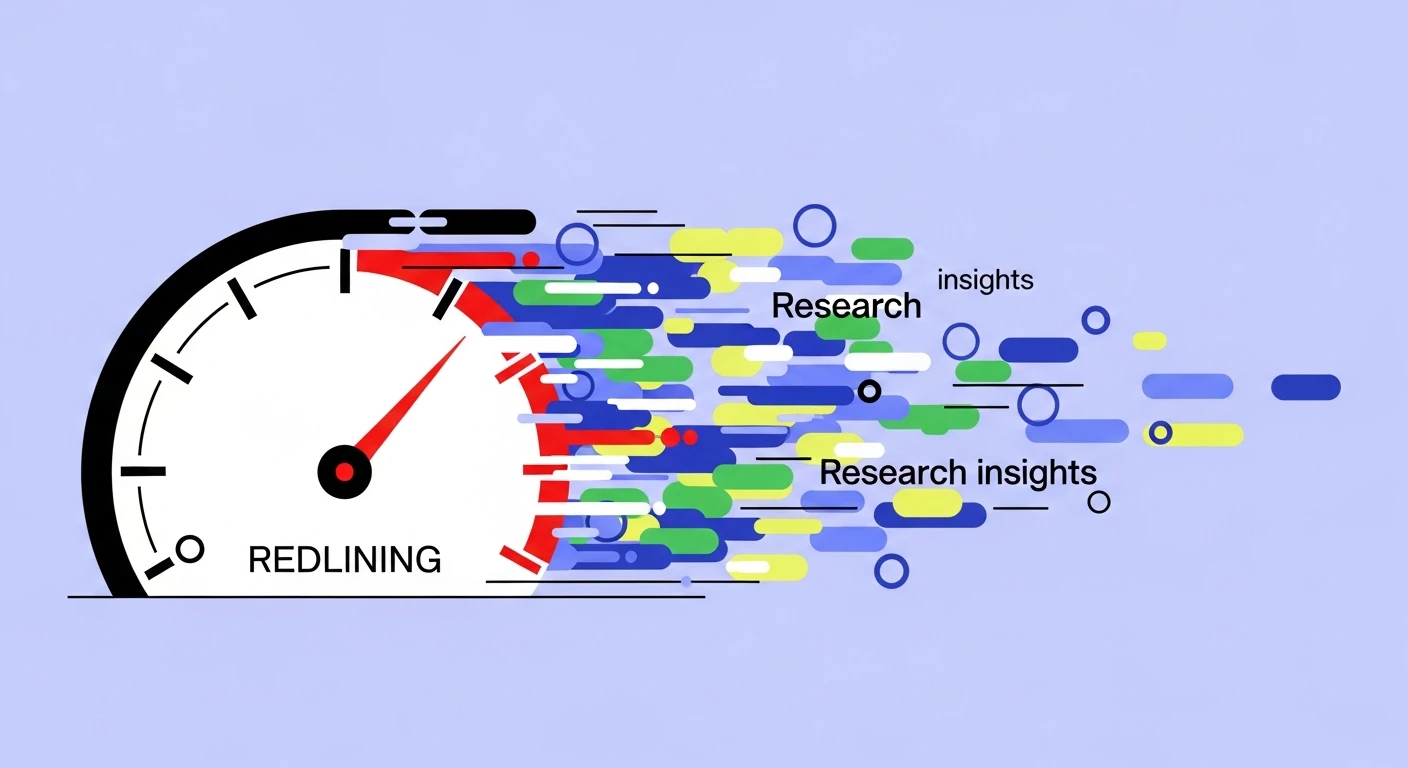
Talking through an interview immediately after it ends is not a neutral act of summary. It is an act of consolidation. Whatever you say out loud in those first five minutes becomes the version of the interview you will remember, and it does so at the expense of everything you did not mention. The debrief timing trap is the tendency for the hot-take debrief to overwrite the actual interview in the researcher's memory before the data has had any chance to be examined.
Why the Immediate Debrief Overwrites Rather Than Records
Human memory does not store an interview like a video file. It reconstructs it, and reconstruction is editable. When you verbalize an impression right after a session, that verbalized version becomes the new memory trace -- and the nuances you left out start to fade.
The most quotable moment wins. In a rushed debrief, people reach for the vivid, repeatable line. That one sentence then stands in for the entire hour, the same dynamic behind the verbatim overweighting effect, where a single quotable sentence hijacks a research readout.
Confident impressions crowd out tentative ones. The debrief rewards whoever speaks first and most decisively. Ambivalent, half-formed observations -- often the most important ones -- get flattened, echoing the confidence calibration gap, where certain-sounding signals are often the least accurate.
Two observers converge prematurely. When a researcher and an observer debrief together, they negotiate a single shared story before either has reviewed the recording -- collapsing the productive disagreement described in the note-taking divergence, where two people watching the same interview record different studies.
The Trap Gets Worse Across a Study
The immediate debrief does not just distort one session -- it primes the next. The story you lock in after interview three becomes the lens you carry into interview four, so you start hearing confirmation of yesterday's hot take instead of listening fresh. Over a study, these consolidated impressions stack into a narrative that feels earned but was actually decided in a series of rushed hallway conversations. It is a fast track to manufacturing consensus your participants never actually reached.
How to Debrief Without Overwriting
The fix is not to skip the debrief -- it is to change what the debrief is for.
Separate capture from interpretation. Immediately after a session, capture observations, not conclusions. Write down what was said and done before deciding what it means. Interpretation can wait; memory of specifics cannot.
Debrief in questions, not verdicts. Instead of what did we learn, ask what surprised us and what are we unsure about. Questions preserve the open threads that verdicts prematurely close.
Delay convergence. Have each observer record impressions independently before discussing. Compare after, not during. The disagreements are data.
Return to the source before the readout. Treat the debrief as a set of hypotheses to test against the recording and transcript -- never as the finding itself. Reconcile early impressions against the full evidence base the way research triangulation grounds product decisions.
Version your evolving interpretation. Keep the first-impression debrief and the post-analysis synthesis as distinct, dated artifacts so you can see how -- and why -- your reading changed. This is the same discipline that keeps AI systems honest through structured output engineering in production: the shape of the record determines what you can trust later.
The Takeaway
The debrief feels like the moment insight is born. Often it is the moment insight is prematurely embalmed. Capture specifics before conclusions, hold impressions as questions, and never let the five-minute hot take become the interview you remember. The data deserves to be examined, not just recalled.
Want a research workflow that preserves the full session instead of the hallway summary? See how Qualz.ai keeps every interview reviewable, not just memorable.