The Question That Always Gets a Yes
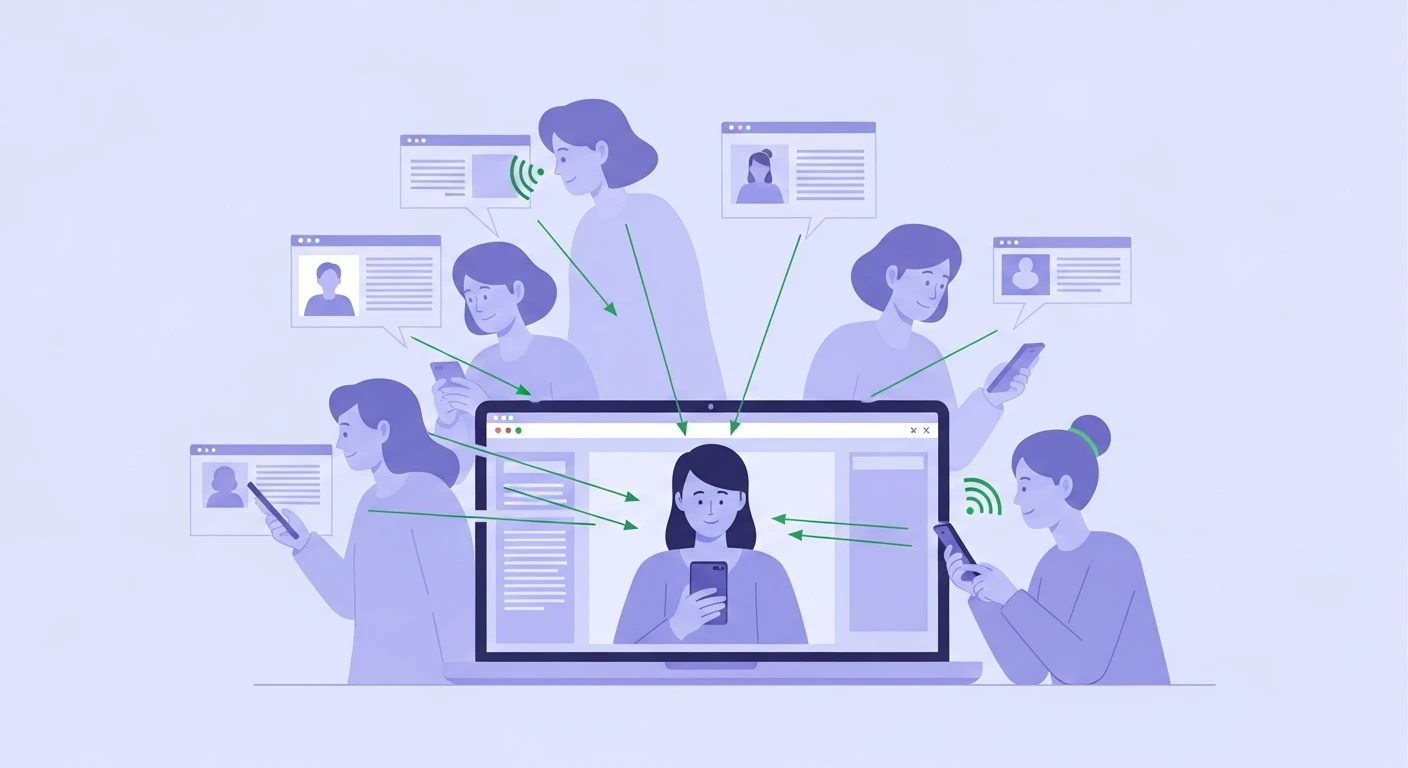
Every product team has run the interview. You describe the feature, you show the mockup, you ask the question that feels like the whole point of talking to users: "Would you use this?" And the participant, warm and engaged and genuinely trying to help, says yes. Sometimes an emphatic yes. You write it down, you count it, you carry it into the roadmap review as evidence. Then you ship, and the feature meets silence.
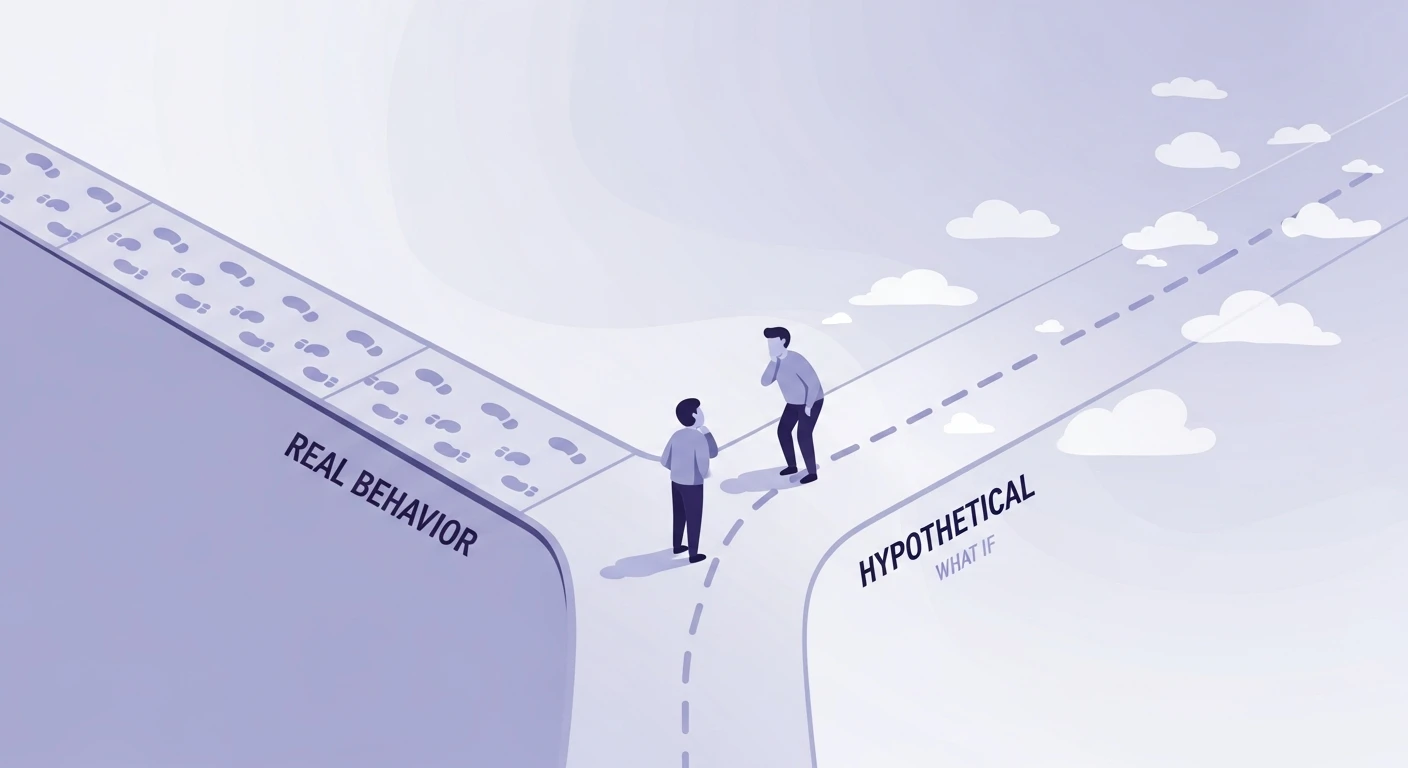
The problem was not the participant and it was not the feature. It was the question. "Would you" asks a person to simulate their own future behavior, and humans are catastrophically bad at that simulation in a predictable direction: we imagine the version of ourselves who has time, discipline, and motivation, and we answer as that person. Hypothetical questions do not measure what someone will do. They measure how appealing they find the idea of doing it, filtered through an idealized self-image. Those are different quantities, and confusing them is how validated ideas become shipped disappointments.
Stated Intention Is a Different Variable Than Revealed Behavior
The core error is treating a stated intention as a weak version of a behavioral prediction -- as if "I would definitely use this" is just a slightly noisier form of "I will use this." It is not a noisier version of the same variable. It is a different variable entirely, generated by a different cognitive process. Revealed behavior is produced by a real person under real constraints: competing priorities, switching costs, the friction of the actual moment, the pull of the habit they already have. Stated intention is produced by a frictionless imagination in which none of those constraints exist.
This is the same failure mode that shows up when people describe their own routines and their articulation gap between what they say and what they actually do quietly widens. Ask someone how they currently solve the problem and they narrate an idealized workflow. Ask what they would do with your new tool and they narrate an idealized future. In both cases you are collecting fiction that feels like data because it was spoken with conviction. The conviction is real. The predictive value is close to zero.
Why the Hypothetical Feels So Convincing
Hypothetical answers are dangerous precisely because they are high-quality fiction. A participant asked "would you use a feature that does X" will often generate a detailed, plausible, internally-consistent account of how and when they would use it. The specificity feels like evidence -- surely someone who can describe exactly when they would reach for the tool has told you something real. They have not. They have told you they are good at imagining, and the richness of the story is a property of their imagination, not a forecast of their calendar.
This is amplified by the social dynamics of the room. A participant who likes you, or who senses what you are hoping to hear, will lean into the yes -- a bias that intensifies when the interviewer's warmth overcorrects and honest doubt gets sanded off. Nobody wants to tell an earnest researcher that their baby is ugly, and "would you use this" hands them the easiest possible exit: an enthusiastic hypothetical that costs them nothing and pleases everyone.
The Fix: Route Every Hypothetical Back to the Concrete Past
The repair is not to interrogate the future harder. It is to abandon the future as a source of behavioral evidence and interview the past instead, because the past actually happened and the imagination cannot retroactively edit what a person already did. Every hypothetical you are tempted to ask has a behavioral-past equivalent that is worth ten times as much:
- Instead of "would you use a tool that organizes your notes?" ask "walk me through the last time you needed to find something in your notes -- what did you actually do?"
- Instead of "would you pay for this?" ask "what have you paid for to solve this, and what made you stop?"
- Instead of "how often would you use this?" ask "how many times did you hit this problem last week, and what did you do each time?"
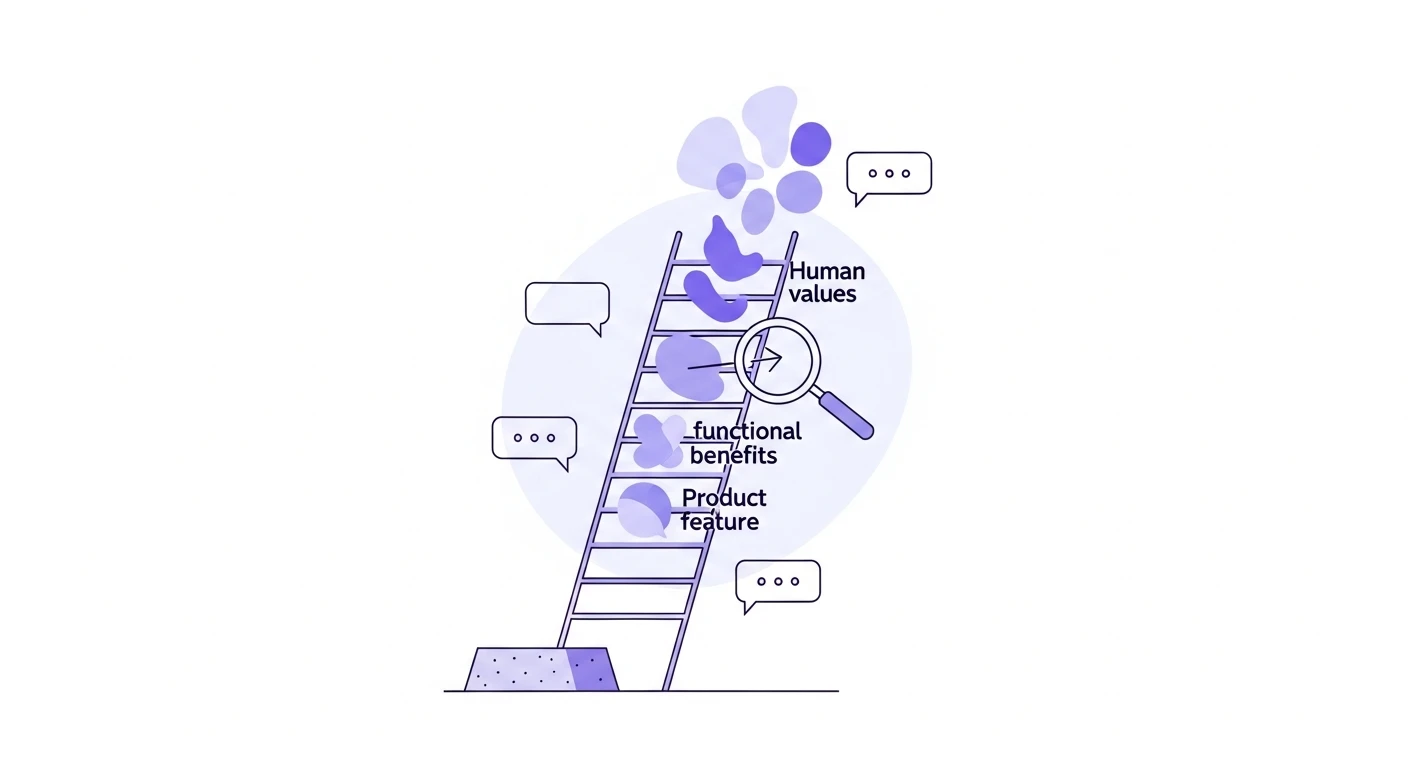
The concrete past forces the participant off the idealized self and onto the record of their real constraints. This is the same discipline behind the specificity gradient, where concrete questions unlock real experience while abstract ones produce performative answers. When someone recounts what they actually did last Tuesday, the fiction has nowhere to hide -- the switching costs, the abandonments, the workarounds all surface because they are part of the true story.
When You Genuinely Must Ask About the Future
Sometimes the thing you are testing has no past -- it is genuinely new, and there is no prior behavior to anchor on. Even then, do not trust the stated intention as a number. Treat it as a prompt for a story: "You said you would use this -- tell me about the last time you were in a situation where you would have." If they can produce a real, recent, specific occasion, the intention has some behavioral ballast. If they cannot -- if the situation is always somewhere in the vague future -- you have learned the most important thing the interview could teach you: the need is imagined, not lived.
This is also where synthetic and AI-assisted research quietly compounds the danger, because a synthetic respondent has no real past to route back to -- it can only generate the idealized hypothetical, at scale, with perfect confidence. Building systems that respect this distinction is a governance problem as much as a research one, in the same way enterprises need structured output engineering to keep production LLM answers honest rather than merely fluent. Fluency without grounding is exactly the trap the hypothetical question sets, whether the respondent is a person imagining their future or a model imagining a user.
The Discipline of Distrusting Enthusiasm
The uncomfortable truth is that enthusiasm in a discovery interview is not a signal to celebrate -- it is a signal to probe. A run of confident yeses should raise your suspicion, not your confidence, because the easiest thing in the world for a participant to do is agree that a good-sounding idea is good. The teams that build things people actually use are the ones who treat "would you" as a red flag and "tell me about the last time" as the real interview. This is the same reflex that separates rigorous research programs from ones that merely feel productive, the same instinct behind managing builders in an age of infinite leverage by grounding decisions in what happened rather than what was claimed.
Stop asking users to predict themselves. They are not qualified, and neither is anyone. Ask them what they did, and let the past tell you what the future is likely to hold.
Bringing Rigor to Every Interview
At Qualz.ai, our AI-moderated interview platform is built to probe for concrete behavioral evidence rather than settle for the comfortable hypothetical -- following up on vague intentions with the grounding questions that separate real signal from wishful fiction. If your discovery process keeps validating features that ship to silence, the problem may be the questions, not the users. Book a demo and see how behavior-anchored interviewing changes what you learn.