The Multi-Method Promise vs. The Multi-Method Reality
Multi-method research programs promise triangulation — the idea that converging evidence from different methodologies produces stronger, more trustworthy findings than any single method alone. In theory, interviews surface the why, surveys measure the how much, usability tests reveal the what happens, and analytics confirm the what actually happened.
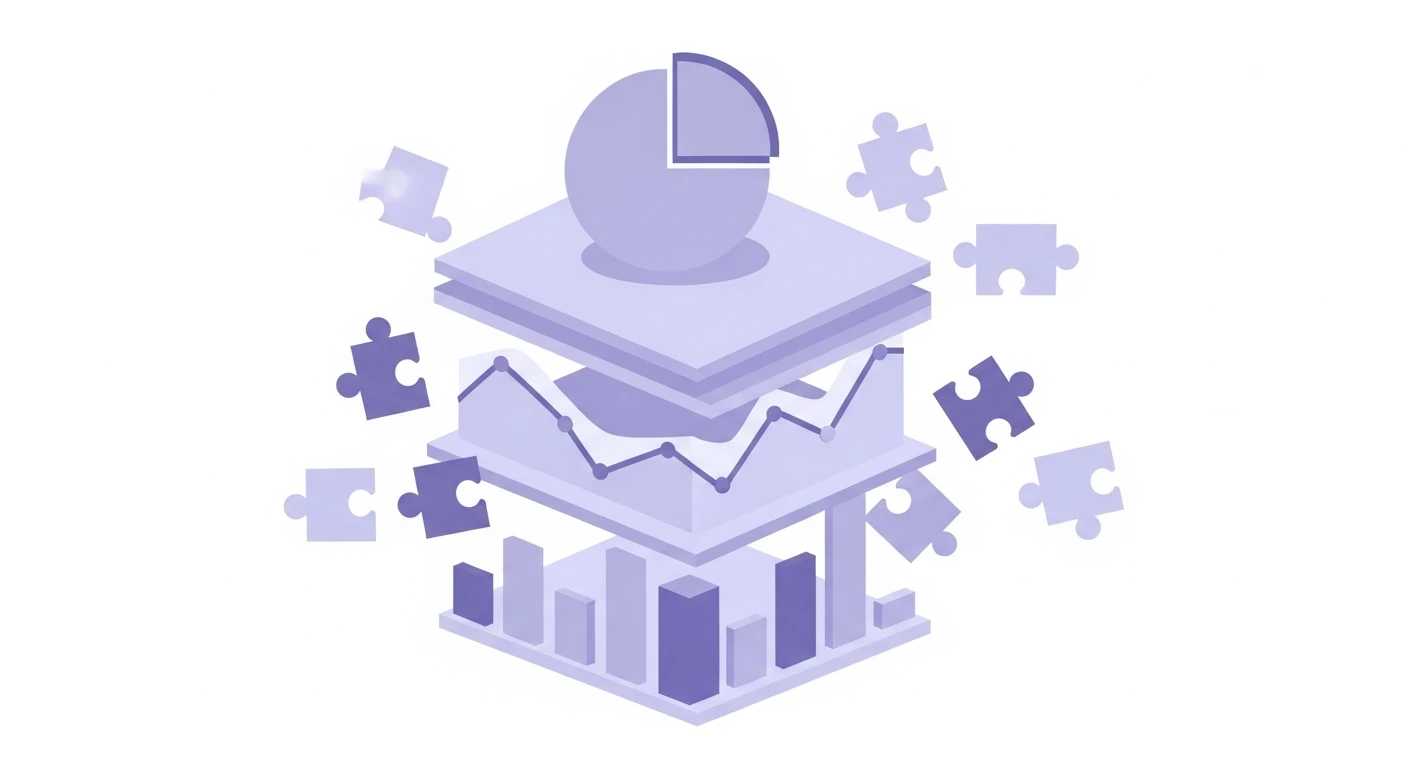
In practice, most multi-method programs produce something very different: insight stacks. Separate layers of findings from separate studies that sit adjacent to each other without genuine integration. Each layer has its own methodology, its own framing, its own implicit definitions of key concepts — and nobody does the hard work of reconciling them into a unified understanding.
The result is not triangulation. It is contradiction dressed up as comprehensiveness.
How Insight Stacks Form
Insight stacking happens when research programs treat multi-method as a collection strategy rather than an integration strategy. The team decides they need multiple data sources, schedules the studies sequentially, and delivers each one as a separate deliverable. The interview report goes out in March. The survey results land in April. The usability findings arrive in May.
Each deliverable is internally coherent. Each tells a compelling story within its own methodological frame. But the March interviews said users find the onboarding "confusing and overwhelming." The April survey showed 78% satisfaction with onboarding. The May usability test revealed that participants completed onboarding successfully but described it as "straightforward."
Which finding is right? All of them — and that is exactly the problem. Without integration, stakeholders cherry-pick whichever finding supports their pre-existing position. The PM cites the survey to defend the current flow. The designer quotes the interviews to argue for a redesign. The usability test gets ignored because it contradicts both.
This is not research triangulation. This is evidence accumulation without synthesis.
The Definitional Drift Problem
The deepest cause of insight stacking is definitional drift — the way key concepts silently change meaning across methods without anyone noticing.
When interview participants say onboarding is "confusing," they might mean the conceptual model is unclear. When survey respondents rate satisfaction, they might be rating outcome achievement ("I got set up") rather than experience quality. When usability test participants describe things as "straightforward," they might mean the individual steps were clear even though the overall journey felt disorienting.
"Confusion," "satisfaction," and "straightforwardness" are not measuring the same construct. But because they all nominally address "onboarding," the research program treats them as triangulating on the same question.
This definitional drift is invisible within each study but creates fundamental incoherence across the program. Each method asks a slightly different question, measures a slightly different construct, and produces findings that are not actually comparable — but get treated as if they are.
The Temporal Gap Amplifier
Sequential multi-method programs compound the integration problem with temporal gaps between studies. Users change. Products change. Market context changes. The participants in your March interviews are not the same population as your April survey respondents, even if they come from the same panel.
A quarter between studies means that product updates, market shifts, onboarding flow changes, or simply seasonal variation in user behavior can create differences that look like methodological disagreement but are actually temporal evolution.
Worse, the research team often does not realize this because each study exists in its own analytical bubble. The interview findings were coded and delivered before the survey was even fielded. There is no mechanism for the later study to revisit or challenge the earlier one.
The Integration Tax Nobody Budgets For
Genuine multi-method integration requires a synthesis phase that most research programs never schedule. This is not a meeting to "review findings." It is a dedicated analytical effort — often requiring as much time as one of the component studies — to reconcile, explain, and integrate disparate findings into a unified understanding.
Integration work means asking hard questions: Why do interviews and surveys disagree? Is it a definitional difference, a sampling difference, a temporal difference, or a genuine phenomenon that looks different from different methodological angles? What does each method reveal that the others cannot see? Where do they genuinely converge, and where does apparent convergence mask important nuances?
This integration tax is intellectually demanding and politically uncomfortable. It often requires admitting that previous findings were incomplete or that confident deliverables contained ambiguity that was smoothed over for stakeholder consumption.
Practical Integration Strategies
Concurrent rather than sequential design. Running methods in parallel rather than sequence reduces temporal drift and creates opportunities for each method to inform the others in real time. Interview findings can shape survey questions. Survey patterns can direct usability test scenarios.
Shared conceptual framework. Before any data collection begins, explicitly define key concepts across all planned methods. What does "onboarding success" mean in interview terms, survey terms, and usability test terms? Make these definitions visible and consistent.
Contradiction as signal. When methods disagree, treat the disagreement as the most interesting finding rather than something to explain away. Contradictions between methods often reveal that the phenomenon is more complex than any single method suggested — which is precisely the insight that justifies multi-method work.
Integration artifacts. Create deliverables that explicitly synthesize across methods rather than presenting each study separately. A convergence matrix showing where methods agree, disagree, and complement each other forces the integration work and makes contradictions visible to stakeholders.
Cross-method analytical sessions. Bring the research team together specifically to analyze across studies, not just within them. A collaborative analysis session that examines how interview quotes relate to survey distributions and usability patterns produces insights that no single-method analysis can generate.
The Organizational Incentive Problem
Insight stacking persists because organizational incentives reward study completion over program coherence. Researchers are measured on deliverables produced, not on integration quality. Project timelines allocate time for each study but not for synthesis across them.
Stakeholders prefer clean, actionable deliverables from each study over the messier, more ambiguous output of genuine integration. A survey report that says "78% satisfied" is easier to act on than an integration analysis that says "satisfaction depends on how you define the construct, and different methods reveal different facets that cannot be reduced to a single number."
The result is that research programs accumulate evidence without building understanding. They produce more data but not better decisions. The multi-method promise remains unfulfilled — not because the methods failed, but because nobody did the work of making them speak to each other.
If your multi-method program produces separate deliverables that stakeholders consume independently, you do not have triangulation. You have a more expensive version of running a single study — one where contradictions are hidden rather than resolved.