Why Two Is Not Just Double One
The default unit of qualitative research is the individual interview. One researcher, one participant, one conversation. It is clean, controllable, and deeply familiar. But it misses something fundamental: how people construct meaning together.
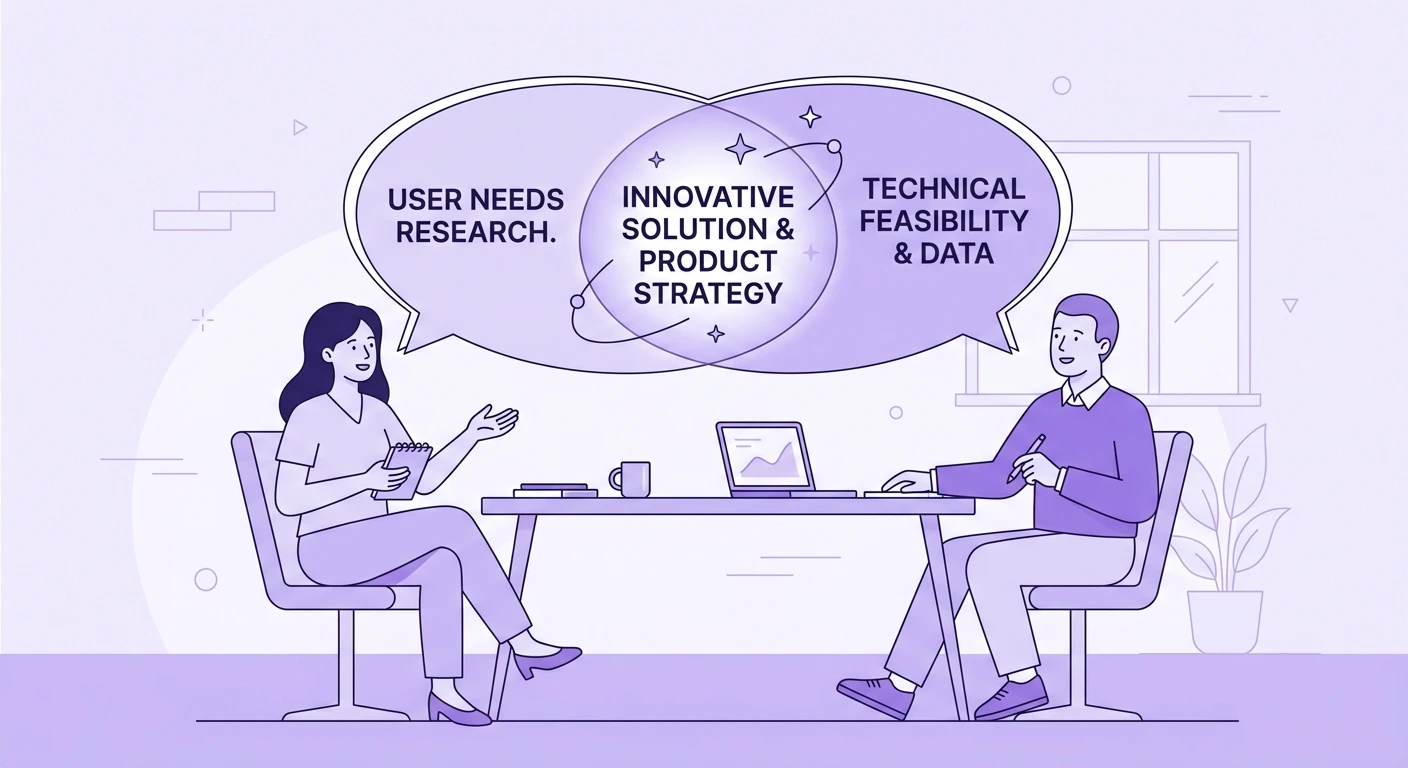
Paired interviews -- also called dyadic interviews -- place two participants in conversation simultaneously. Not a focus group (which introduces group dynamics and conformity pressure), but a targeted two-person format that creates a specific kind of data: the negotiation of meaning between people who share a context.
When a married couple discusses their budgeting app, the disagreements reveal more than either person's solo account. When two developers from the same team describe their workflow, the corrections and additions create a richer picture than any single narrative. The paired format surfaces contradictions, assumptions, and shared understanding that individual interviews cannot access.
When Paired Interviews Are the Right Method
Paired interviews are not universally better. They are specifically better for:
Shared experiences. When two people use a product together (co-workers on a tool, partners on a financial app, parent and child on an education platform), paired interviews capture the joint experience that individual interviews fragment.
Decision-making processes. Purchasing decisions, technology adoption, process changes -- these rarely happen in isolation. Paired interviews with decision-making partners reveal the negotiation, compromise, and influence patterns that shape choices.
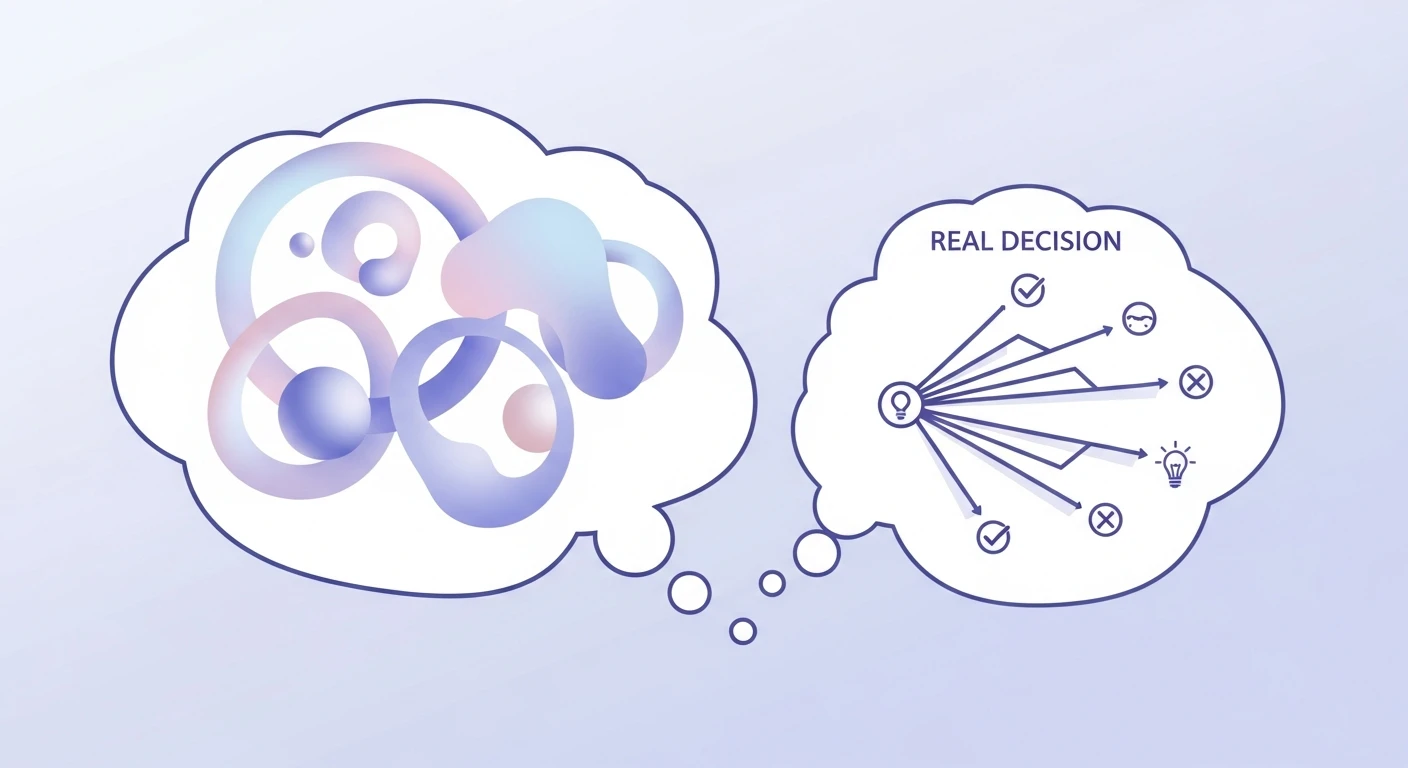
Norm surfacing. Individual participants often cannot articulate shared norms because norms are invisible until challenged. Put two people together and watch them negotiate what is "normal" -- that negotiation IS the data.
Memory reconstruction. Two participants reconstruct shared events more accurately than either alone. They correct each other's recall biases, fill gaps, and challenge distortions. The collaborative memory is closer to ground truth.
The Mechanics of Paired Facilitation
Facilitating a paired interview requires different skills than solo interviews. The core shift: you are managing a conversation system, not a Q&A session.
Opening frame. Explicitly tell both participants: "I want to hear from both of you, and I am especially interested in where you see things differently. There are no right answers, and disagreement is valuable data."
Question routing. Ask the same question to both participants, but vary who answers first. Order effects are real -- the second speaker always responds to the first. Alternating first-responder gives you cleaner data.
Productive disagreement. When participants disagree, do not resolve it. Instead: "That is interesting -- you see it differently. Can you each explain why?" The explanation of disagreement is often the most valuable data in the session.
Power dynamics. In any pair, one person is typically more dominant. Your job is not to equalize airtime (which feels artificial) but to explicitly create space: "I heard your perspective on that -- what would you add or change?" directed at the quieter participant.
Triangulation prompts. "You both mentioned X but described it differently. Walk me through a specific example where you experienced this together." This anchors abstract disagreements in concrete shared memory.
What Paired Data Looks Like
Paired interview data has a unique structure that requires adapted analysis approaches. You are coding not just individual statements but interactions:
- Agreement patterns: What do participants take for granted? Unquestioned agreement reveals shared assumptions.
- Negotiation sequences: Where do they work to align their accounts? This reveals contested territory.
- Corrections: "Well, actually it was more like..." signals where individual memory diverges from shared reality.
- Deference patterns: Who defers to whom on which topics? This maps expertise and authority structures.
Standard qualitative data analysis approaches work but need augmentation. Code at the interaction level, not just the statement level. A correction is not just content -- it is a relational act that tells you about the pair's knowledge structure.
Common Mistakes and How to Avoid Them
Treating it as a mini focus group. Focus groups create conformity pressure. Paired interviews should not. The difference is facilitation: in a pair, you explicitly invite disagreement and make it safe. In a group, social pressure homogenizes responses.
Pairing strangers. Paired interviews work because participants share context. Two random users discussing a product gives you two simultaneous solo interviews with interruptions, not a genuine paired conversation.
Over-facilitating. The value of paired interviews comes from participant-to-participant interaction. If every exchange routes through you (participant A answers you, then participant B answers you), you have lost the paired format's advantage. Ask a question, then let them talk to each other.
Ignoring power dynamics. Manager-report pairs, expert-novice pairs, and demographically imbalanced pairs all produce distorted data unless you actively manage the power differential. Consider whether the pair can speak freely in front of each other.
Scaling Paired Research With AI
Paired interviews generate more complex data: overlapping speech, rapid exchanges, contextual references. Traditional transcription struggles. This is where AI-assisted analysis becomes particularly valuable.
AI-powered analysis tools can parse paired interview transcripts at the interaction level -- identifying agreement patterns, flagging contradictions, and mapping the conversational structure in ways that manual coding finds extremely time-intensive.
The combination of paired interviewing with AI analysis creates a research approach that captures relational data at a scale previously impractical. Teams report that paired sessions with AI analysis produce insights equivalent to 3-4 individual interviews in terms of depth and coverage -- a genuine efficiency gain for research programs operating under time pressure.
When NOT to Use Paired Interviews
Sensitive topics where social desirability would distort responses. Personal experiences that participants may not want to share in front of another. Situations where one participant's presence would intimidate the other. Evaluative tasks where you need individual performance data untainted by collaboration.
The decision framework is simple: if the phenomenon you are studying is inherently social or shared, paired interviews access it directly. If it is inherently individual, stick with solo interviews. The research methodology choice should match the unit of analysis.
Getting Started
Run your next paired interview with these minimal adjustments:
- Recruit pairs who share genuine context (co-workers, co-users, decision-making partners)
- Frame disagreement as valuable from the first minute
- Ask questions to the pair, not to individuals -- then follow up individually when responses diverge
- Code interactions, not just statements
- Compare paired data with any solo interviews on the same topic -- the gaps are your most interesting findings
Paired interviewing is not a replacement for solo interviews. It is a complementary method that accesses a different layer of human experience: the social construction of meaning. For products used in social contexts -- which is most products -- that layer is where the actionable insights live.
*Ready to add paired interviewing to your research toolkit? Book a demo to see how Qualz handles multi-participant sessions with AI-powered interaction analysis.*