The Partner Filter Problem
Here's how a typical client interview program runs at a mid-size strategy firm. An associate conducts 25 stakeholder interviews across a client organisation in three weeks. She takes notes in a shared doc, sometimes from a recording and sometimes from memory at 11pm. A manager reads those notes and turns them into a synthesis page with six themes. A partner reads the synthesis, checks it against the hypothesis tree the engagement was sold on, and rewrites two of the themes so they "land with the CFO". The steering committee sees the result.
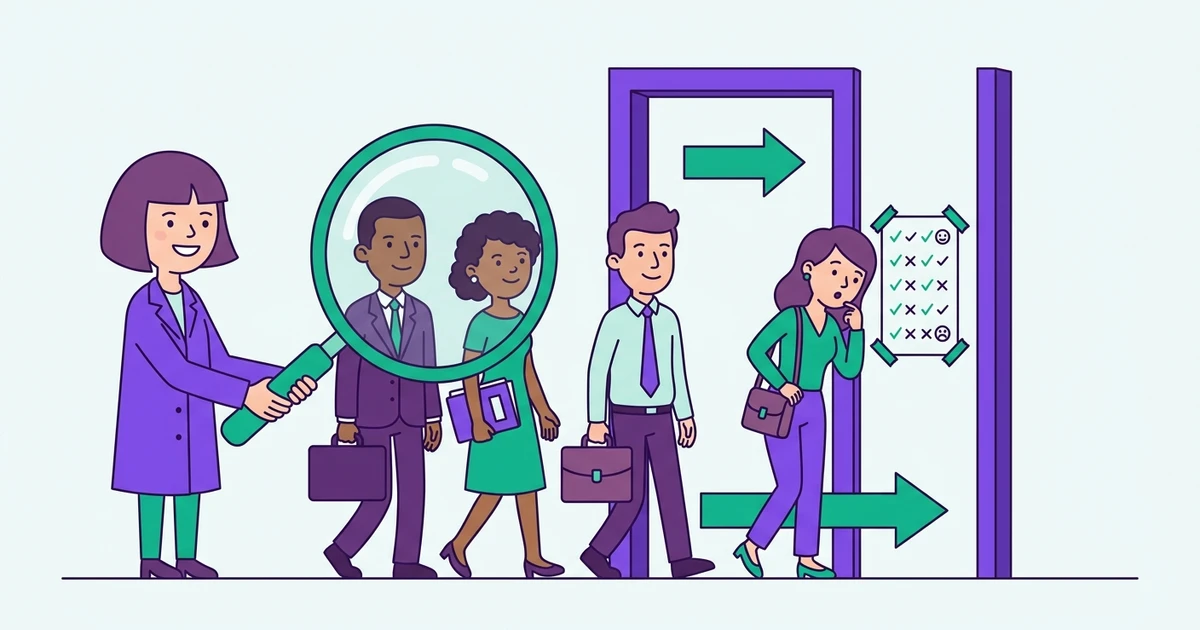
Four people handled the interviews. Only one heard them. Each handoff dropped a little signal and added a little expectation. We call this the Partner Filter Problem: in consulting, interview evidence goes through a chain of increasingly senior interpreters, and each one knows less about what was said and more about what the engagement needs it to say.
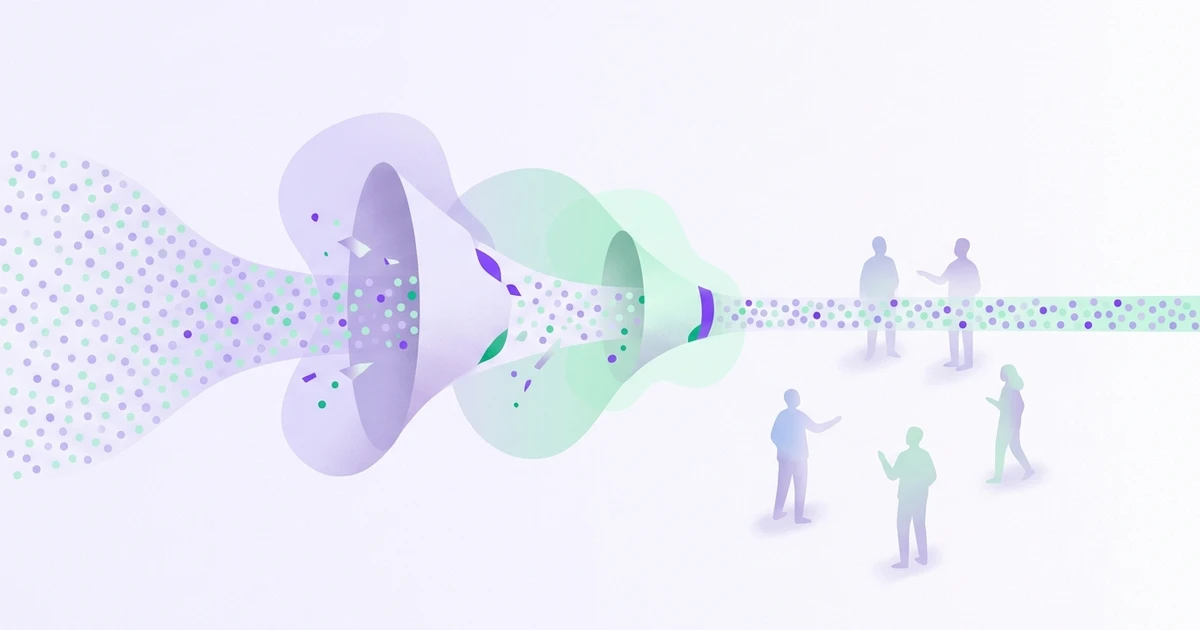
It isn't a question of anyone's integrity. It comes from how the work is set up, and that setup is what AI is actually changing. The pitch that "AI makes interviews faster" misses the point. The bigger change is that AI can shorten the chain between what a client said and what the partner reads.
Why the filter forms
The mechanism has three parts, and each is predictable.
Compression at capture. An associate running back-to-back stakeholder sessions can't write down everything. She records what seems important at that moment, and "important" is shaped by the hypotheses in the kickoff deck. As we showed in our work on note-taking divergence, two people watching the same interview write down noticeably different studies. In consulting there's usually only one note-taker, so you can't even see the divergence.
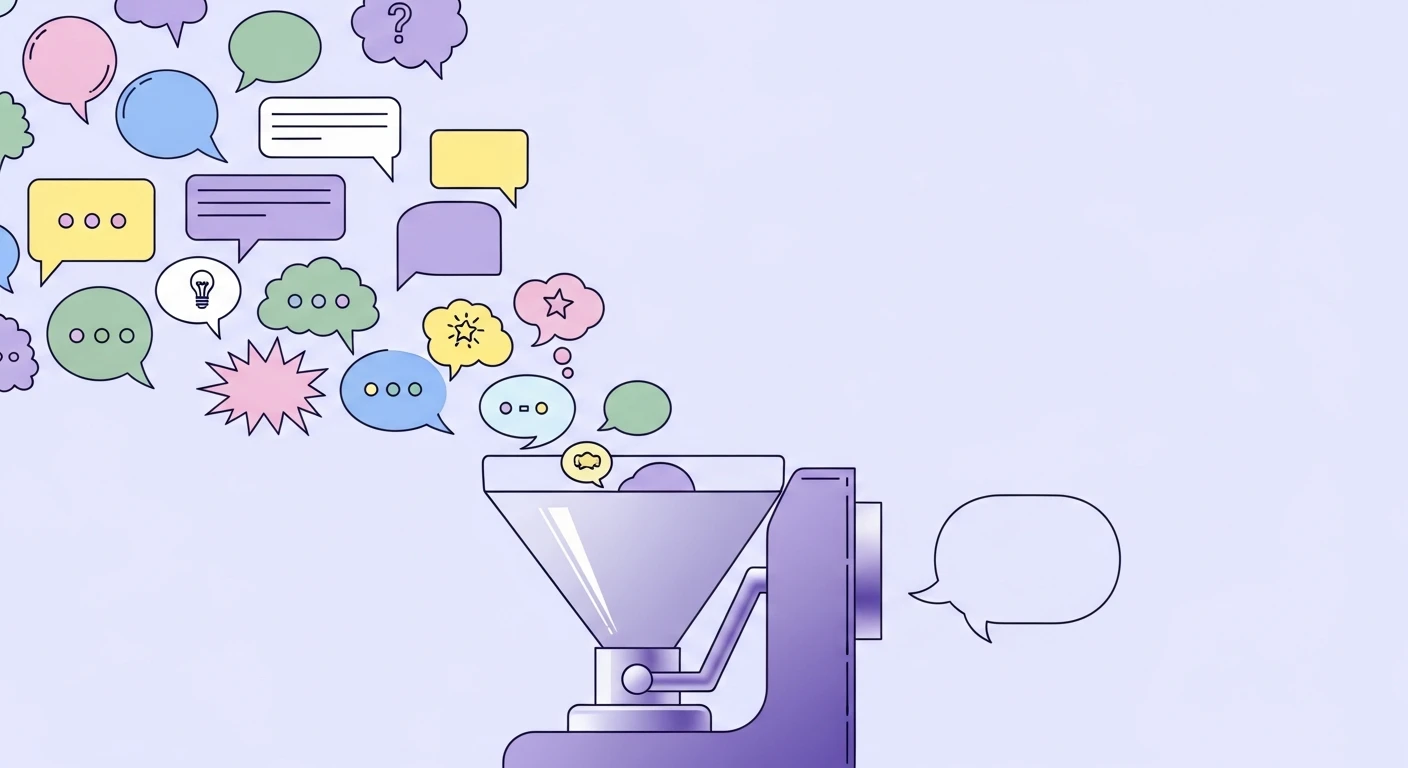
Abstraction at synthesis. The manager never heard the interviews. He works from notes that have already been compressed, and his job is to cut them down further to something that fits on a slide. Hedged, contradictory or minority views go first, because they don't turn into clean themes.
Alignment at review. The partner owns the client relationship and the storyline. When a finding contradicts the storyline, the easiest thing to do is soften it rather than go back to the evidence, because going back to the evidence means reading 25 sets of notes nobody has time to reread. So the finding gets softened.
The partner's own questions add a fourth problem upstream. Mid-engagement, the discussion guide collects "while you're in there, can you ask about..." additions, the pattern we described as stakeholder question injection. Now the interviews themselves are tilted toward the storyline before the filter even starts.
Why it matters: the decision that goes wrong
A 40-person operations consultancy ran a post-merger integration diagnostic for a regional manufacturer. The engagement hypothesis was that the integration was stalling because of incompatible ERP systems. Of 22 interviews, 9 mentioned the ERP. But 14 described, in different words, a plant manager-level refusal to adopt the acquirer's shift scheduling practices. Nobody called it "culture". People said things like "we just do nights differently here".
Those 14 mentions never became a theme. They were spread across notes as side comments, each too small to count on its own. The synthesis led with systems. The client spent seven figures on an ERP harmonisation, and a year later the integration was still stalled for the reason 14 people had already explained.
This is what the Partner Filter Problem costs. The evidence was there. It just couldn't survive being handed from person to person.
Five ways AI is transforming consultant client interviews
1. Complete capture replaces selective notes
The first change is also the most obvious one. With full transcription and structured coding of every session, the associate's attention at 4pm on interview day doesn't decide what gets kept. Every side comment about night shifts is preserved and searchable.
What matters more is what this does to the review step. A partner who doubts a finding can now query all 25 interviews in a few minutes instead of trusting a synthesis page. Going back to the evidence stops costing a weekend, and when it's cheap, people actually do it.
2. AI-moderated interviews widen the stakeholder base
Consulting interview programs have always been capped by consultant hours. You interview the 20 people the client sponsor puts forward, which usually means senior leaders and whoever gets along with the sponsor. Plant managers, frontline supervisors and the regional team that disagrees with headquarters are left out because there isn't the budget to reach them.
AI-moderated interviews change the numbers. A firm can keep human-led sessions for the 15 executives where the relationship matters and run 150 structured AI-moderated conversations with the layers below them, in parallel, over a week. In our experience, the frontline layer is where most integration and transformation diagnoses are actually settled. Participants also tend to be more open with a moderator that isn't a consultant sent by their CEO, which matters when the topic is why a strategy isn't working.
3. Synthesis becomes traceable, not just faster
A faster synthesis page doesn't help if it compresses just as much as the old one did. The real shift is traceability: each theme links to the verbatim excerpts behind it, with counts by stakeholder group.
That's the difference between "resistance to scheduling changes" as a claim and "14 of 22 interviews, concentrated in acquired-site operations roles, with these excerpts" as evidence. The second version is much harder to rewrite in review. Our evidence density test sets out what a defensible deliverable should look like, and in a consulting context it doubles as protection when the client pushes back.
4. Contradiction becomes visible instead of averaged away
Stakeholder programs are full of disagreement: finance against operations, headquarters against the regions. Human synthesis under deadline tends to blend it into a middle position nobody actually holds. AI analysis that's set up to segment by role, site or function can show disagreement as a finding in its own right.
But AI can also make this worse. A naive summariser does what we called consensus manufacturing, reporting agreement the participants never reached. So the tool alone doesn't fix the filter. What fixes it is configuring analysis to split by segment first and merge only after that.
5. The findings-to-recommendation chain gets an audit trail
Clients are asking more often why a recommendation was made, and sometimes asking years later. When interview evidence sits in a slide deck and three people's memories, nobody can answer that. When it sits in a structured repository with theme-to-quote links, the recommendation can be traced back to what was actually said. That closes the insight attribution gap, and for firms doing due diligence or regulated-sector work it's becoming a condition of winning the next engagement.
Where AI adds a new filter of its own
Taking a position here: an AI pipeline configured carelessly doesn't remove the Partner Filter. It automates it. If the analysis prompt is seeded with the engagement hypothesis, if themes are generated against the partner's storyline, or if summaries replace transcripts as the thing people read, you've just made the filter faster and harder to see.
Engineers building AI systems know this pattern well. Pipelines can report success while quietly dropping the thing that mattered, which is the core of the silent failure problem in agentic AI. A synthesis that looks clean and confident isn't evidence that nothing was lost. Consultants should treat the AI step as another interpreter in the chain and audit it the way they would a junior analyst.
The counter-practice: flatten the chain
The firms getting the most out of AI in client interviews aren't mainly using it to save associate hours. They're using it to change who reads what.
Partners read raw excerpts, not just synthesis. Every steering committee draft gets a companion appendix with 3–5 verbatims per theme. The partner has to read those before editing a headline.
Hypotheses are coded blind first. Run open coding with no engagement hypothesis in the prompt. Then compare the emergent themes with the hypothesis tree. The gap between the two is often the most valuable page in the deck.
Disconfirmation gets its own slide. Name the strongest evidence against the storyline and quantify it. If the partner wants to overrule it, that's a legitimate judgment, but it should be made openly and on the record.
Guide changes are logged. Any question added mid-program is timestamped, so the analysis can separate what participants raised unprompted from what they were asked directly.
Practical takeaways
- Map your current interview chain: count how many people interpret the evidence between the participant and the decision-maker, and which of them heard it firsthand.
- Record and transcribe every client interview, and make the full corpus queryable by anyone who reviews the findings.
- Keep human moderation for relationship-critical executive sessions, and use AI-moderated interviews to reach the operational layers the budget used to leave out.
- Run open coding before loading the engagement hypothesis, and present the difference between the two to the partner.
- Require every theme in the deliverable to link to excerpts and to counts by stakeholder segment.
- Add a mandatory disconfirming evidence slide to every steering committee readout.
- Audit your AI synthesis like a junior analyst's work: spot-check ten themes against the transcripts before the draft leaves the team.
If your firm wants to run client interview programs where the partner reads what the client actually said, book a Qualz.ai information session and we'll show you how consultancies are setting up capture, AI moderation and traceable synthesis end to end.