The Contamination That Happens Before the Study Starts
Researchers guard the interview itself carefully. They audit their discussion guides for leading questions, rehearse neutral phrasing, and worry about priming. Then they hand participant selection to a screener written in an afternoon and never think about it again. That is a mistake, because the screener is the first thing a participant reads, and it is often the most revealing document in the entire study.
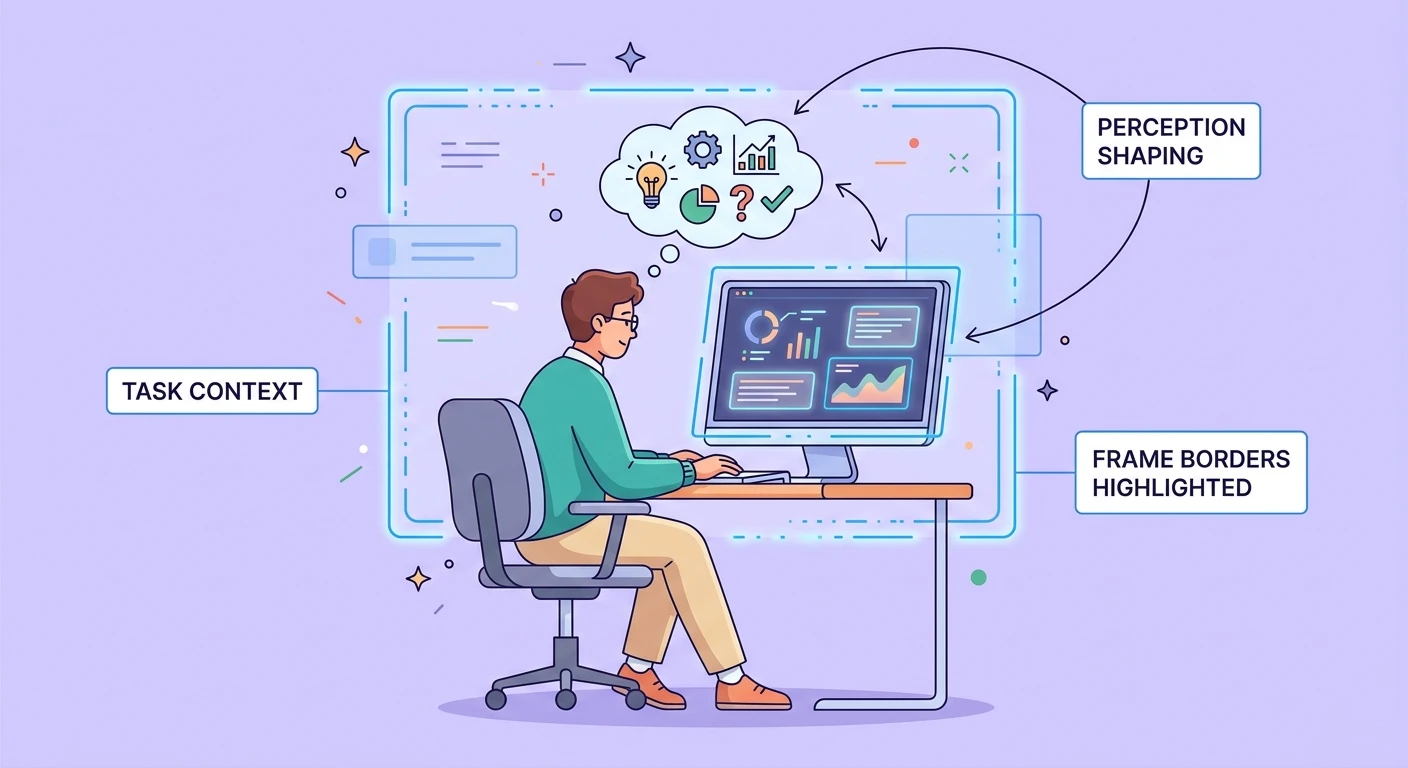
A screener does not just filter people. It talks to them. Every question communicates what the study cares about, and by the time a participant reaches the actual session, they have already inferred what you are looking for -- and, more importantly, why they were chosen. The interview is contaminated before you say a word.
What a Screener Actually Broadcasts
Consider a screener that asks, in sequence, how often someone feels overwhelmed by their current tools, whether they have ever abandoned a task out of frustration, and how open they are to trying new solutions. No individual question is loaded. Together, they compose a thesis: we think existing tools are frustrating and we are building an alternative. A reasonably perceptive participant reads that subtext instantly.
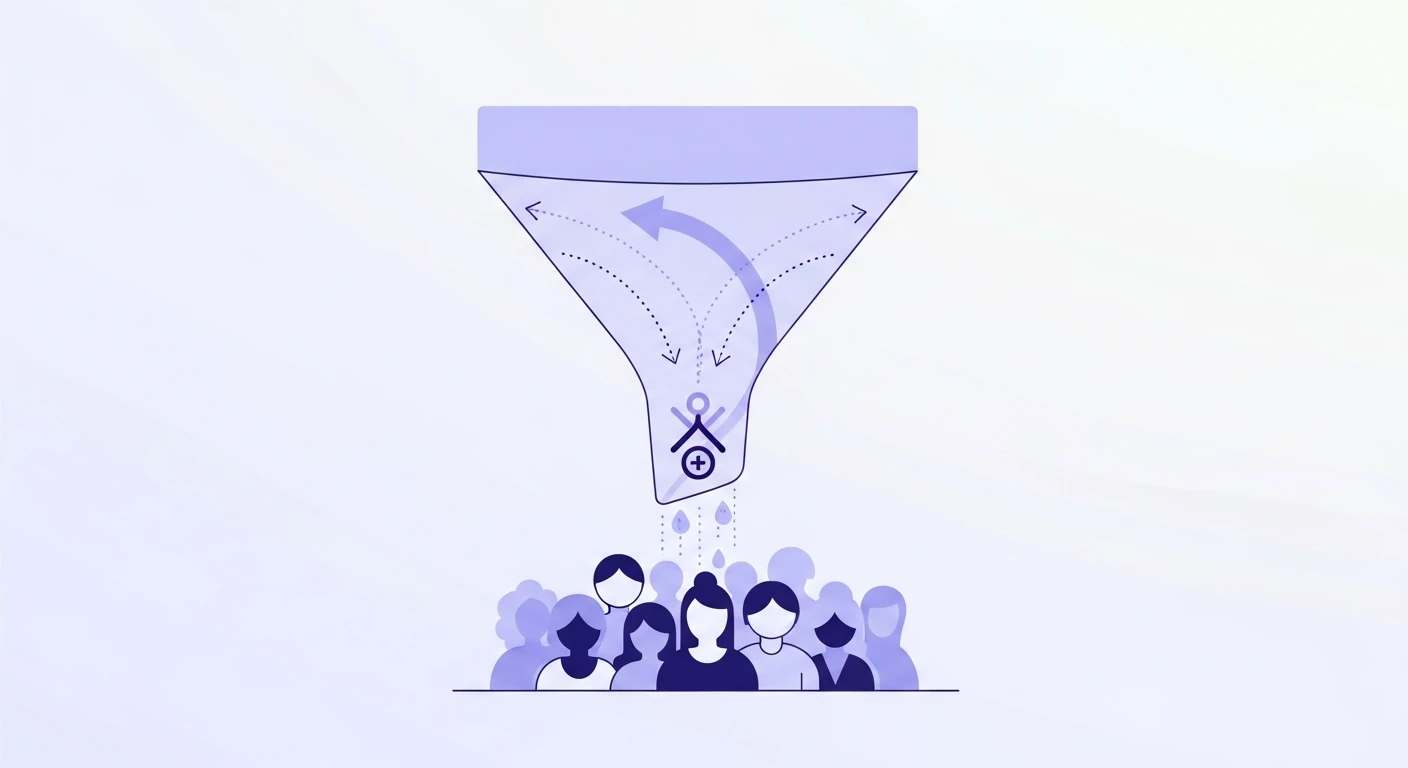
Once they have decoded the hypothesis, two things happen. First, the people who qualify are disproportionately those who already agree with the premise -- a selection effect that quietly narrows your sample, closely related to the screener precision trap, where tighter criteria produce homogeneous samples and false saturation. Second, everyone who makes it through arrives pre-framed, having already rehearsed the story they think earned them the seat, which is the recruitment-stage version of the rehearsal effect that manufactures polished answers.
The Persona the Screener Assigns
Screeners do not just leak the hypothesis; they assign an identity. When you qualify someone as "a frequent user of project management tools who struggles with team coordination," you have handed them a role, and people play the roles they are cast in. In the session, they perform the frustrated coordinator you recruited, foregrounding the pains that got them selected and suppressing the parts of their experience that don't fit the brief.
This is the participant persona paradox operating upstream of the interview: the framing that qualified them becomes the framing they inhabit. You wanted to study a behavior; instead you study a person auditioning for the part you already wrote. The tighter and more thematically pointed the screener, the more sharply defined the role, and the less room the participant has to surprise you.
Why This Is Worse Than a Leading Question
A leading question inside an interview is at least visible. A skilled moderator can catch it, rephrase, and recover. Screener leakage is insidious precisely because it operates outside the session, before anyone is watching for bias, and its effects are already baked into who is sitting in front of you. You cannot neutralize it mid-interview because the damage was done during recruitment.
It also compounds across a study in a way that resists detection. Because every participant passed through the same leaky screener, they all share the same priming, so the bias is perfectly correlated across your sample and survives any amount of aggregation. When the same skew touches every data point, no cross-participant comparison can reveal it -- a structural blind spot that mirrors why multi-researcher studies get systematically different data when the instrument shifts, except here the shifting instrument is the recruitment funnel itself.
Designing Screeners That Qualify Without Coaching
The fix is to treat the screener as part of your instrument and subject it to the same scrutiny as the discussion guide.
- Bury the signal. Mix your qualifying questions among plausible decoys so no single throughline reveals the study's thesis. If a participant cannot reverse-engineer what you are testing, they cannot perform it.
- Qualify on behavior, not attitude. Ask what people did, not how they feel about a category. "Which tools did you use last week?" reveals less about your hypothesis than "How frustrated are you with your current tools?" and selects on reality rather than sentiment.
- Avoid valenced framing. A screener that only asks about problems recruits problem-focused participants. Balance positive, negative, and neutral prompts so you are not pre-sorting for a mood.
- Decouple the recruit reason from the study reason. What earns someone a seat should not be the same thing you plan to ask them about. If "uses the product daily" is the qualifier, do not open the session by asking them to justify daily use.
- Version and audit your screeners. Reusing a screener across studies smuggles old assumptions into new research, the recruitment analog of the question banking antipattern and its invisible methodological drift.
The Systems View
At scale, screeners are code -- routing logic that decides who enters your research pipeline -- and they deserve the same rigor you would apply to any data contract. When the qualification layer silently encodes assumptions, everything downstream inherits them, which is exactly the failure mode enterprise teams fight when they treat data contracts as first-class artifacts in AI pipelines. The screener is the contract between your recruitment funnel and your findings; an untested contract is a liability. It is also why the governance mindset behind structured output engineering in production systems applies to research ops: the shape you impose at intake determines the shape of everything you can conclude.
The Takeaway
By the time a participant answers your first real question, the screener has already told them what you want, sorted for the people most likely to give it to you, and assigned them a role to play. The interview then dutifully records the performance. If you want data that can still surprise you, audit the screener as carefully as the guide -- because the study's most consequential leading question is often the one you asked before the study began.
Qualz.ai helps research teams design recruitment and analysis workflows that keep bias out of the pipeline from the very first touchpoint -- so your sample reflects reality, not your hypothesis.