When AI Hears Meaning in Empty Space
Silence in qualitative interviews is analytically significant. A participant pausing before answering a sensitive question carries different weight than a participant pausing to sip coffee. Expert researchers learn to distinguish meaningful silence from incidental silence through years of practice, contextual awareness, and real-time observation of body language, facial expressions, and environmental factors.
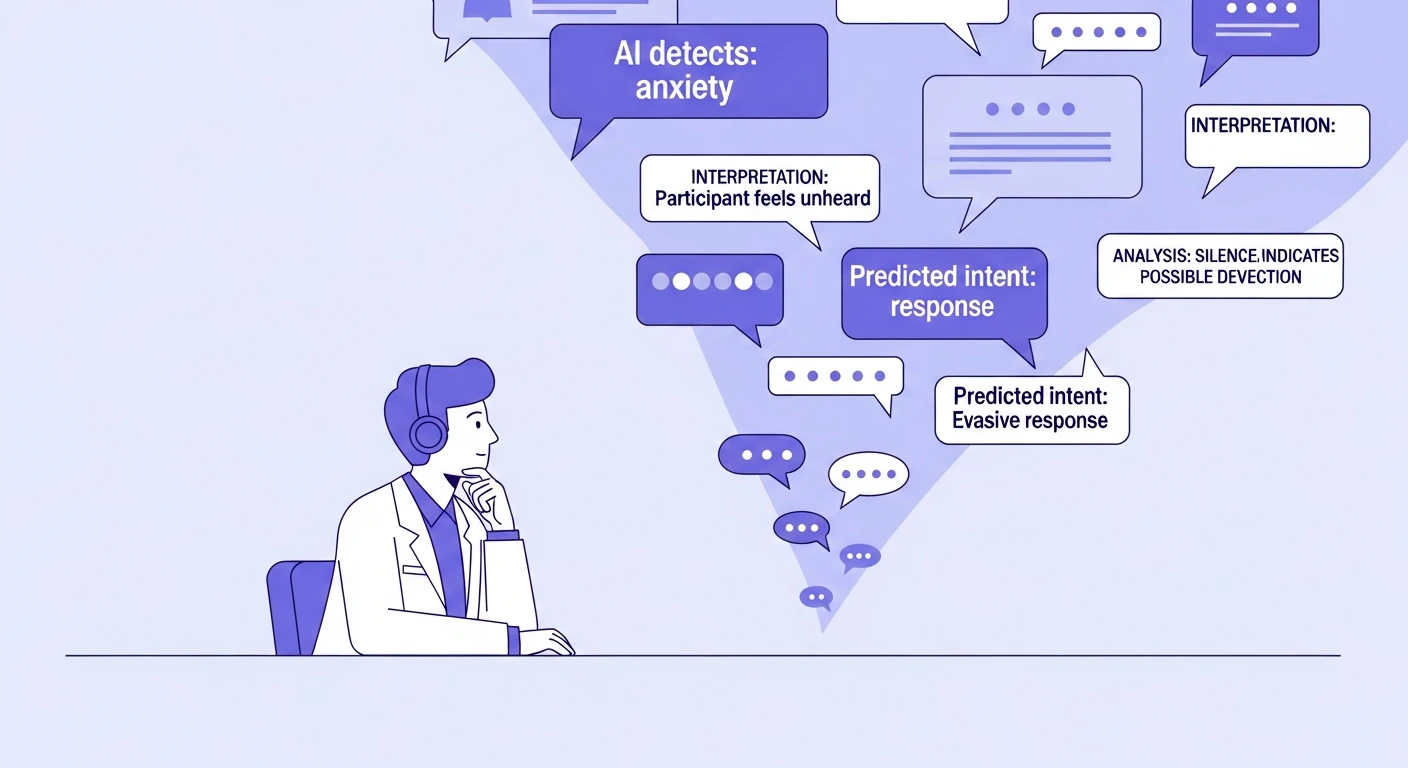
AI analysis tools have none of this context. What they have is timestamps, audio waveforms, and pattern-matching algorithms trained on datasets where silence was already labeled by researchers who could see what the participant was doing during the pause. Strip away that visual context, and silence becomes an ink blot — a blank space onto which the algorithm projects whatever its training data suggests is most probable.
The result is a systematic overinterpretation of silence that inflates the emotional significance of transcripts, generates false signals about participant discomfort, and creates a layer of fabricated analytical meaning that researchers then have to identify and remove.
The Taxonomy of Silence AI Cannot Distinguish
In any recorded interview, silence occurs for dozens of reasons. Meaningful analytical silence — the kind that reveals something about the participant's relationship to the topic — represents perhaps 20-30% of total pauses in a typical session. The rest is noise:
Environmental interruptions: Someone knocked on the door. A notification chimed. The participant's child walked in. The delivery person rang the bell. None of these pauses carry analytical significance, but on an audio waveform, they look identical to contemplative silence.
Cognitive processing: The participant is thinking about their answer, but not because the question is emotionally charged. They are trying to remember a specific date, recalling a sequence of events, or formulating a complex thought. This silence indicates engagement, not discomfort.
Technical artifacts: Connection lag in video calls creates artificial pauses. Mute button confusion creates extended silence. Audio processing delays introduce gaps that did not exist in the actual conversation.
Social performance: Some participants pause deliberately because they have learned that "thoughtful pauses" signal intellectual engagement. They are performing reflectiveness, not experiencing it.
AI tools typically collapse all of these into a single category: "significant pause" or "hesitation marker." The training data bias is clear — researchers who labeled the training sets were working from video recordings where they could see the difference. The AI inherits their conclusions without inheriting their observational capacity.
How Automated Silence Coding Contaminates Analysis
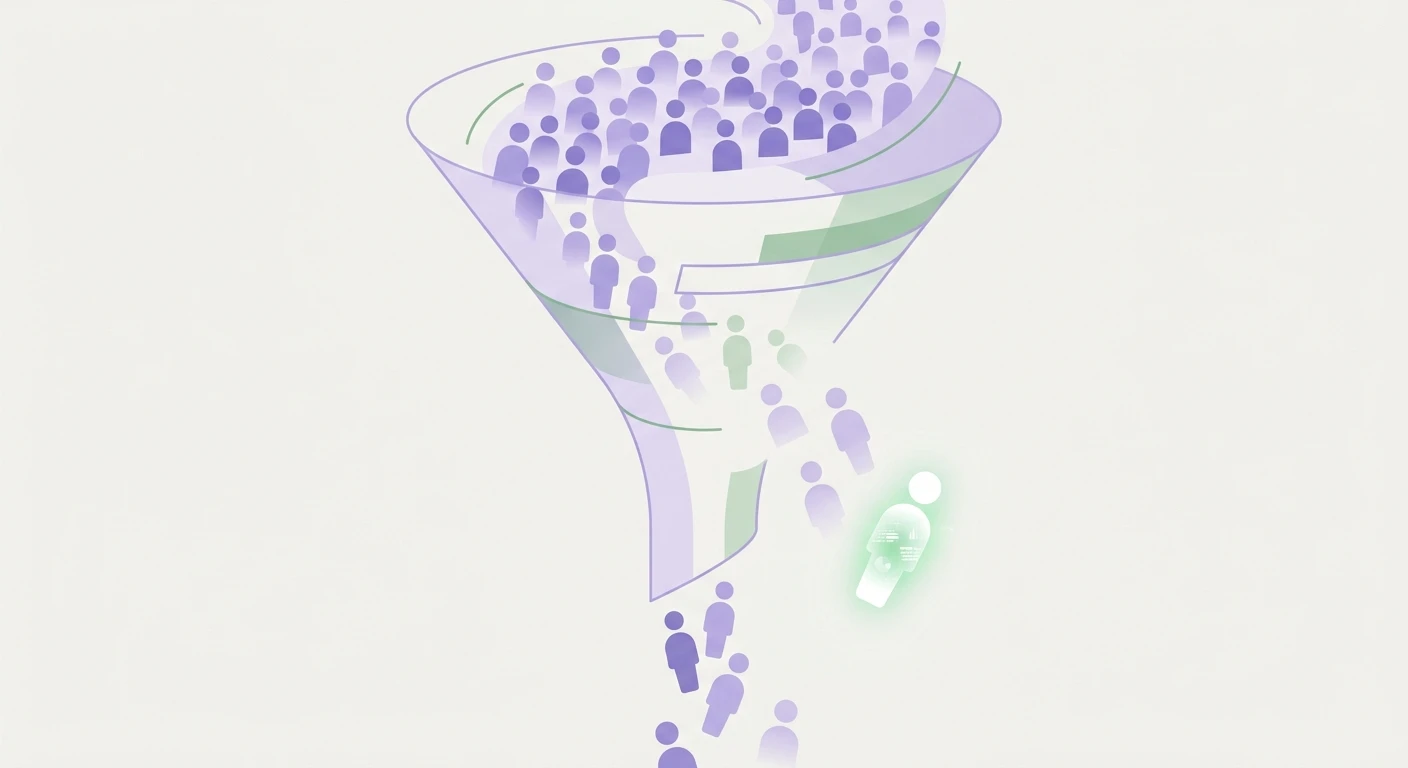
The contamination pattern follows a predictable path. First, the AI tool flags silences and assigns emotional or cognitive labels: "hesitation," "discomfort," "processing difficulty," "emotional response." These labels appear in the coded transcript alongside actual verbal data.
Second, researchers using the tool see these flags and unconsciously weight them in their analysis. When a participant pauses for three seconds before discussing their experience with a product feature, and the AI labels it "hesitation indicating negative affect," the researcher now reads the subsequent verbal response through that interpretive frame — even if the pause was simply the participant organizing their thoughts.
Third, the accumulated silence interpretations create a false emotional topography of the interview. Moments flagged as "significant" receive disproportionate analytical attention. Researchers spend time analyzing why the participant "hesitated" rather than questioning whether the hesitation was meaningful at all.
This mirrors the broader problem with AI-generated research deliverables creating false understanding. The tool produces confident interpretations from insufficient evidence, and the confidence itself becomes the problem — it discourages the skepticism that good qualitative analysis requires.
The Confidence Calibration Failure
Human researchers naturally calibrate their confidence about silence interpretation. An experienced interviewer might note "participant paused here — unclear if reflective or distracted" in their field notes. This uncertainty is analytically honest and epistemically appropriate.
AI tools do not express uncertainty this way. They produce categorical labels with confidence scores that reflect model certainty rather than interpretive validity. A tool might be 94% confident that a three-second pause represents "emotional processing" — but that confidence measures how well the pause matches patterns in training data, not how accurately it reflects what the participant was actually experiencing.
This is the same confidence calibration failure that affects structured output from production LLM systems. The system produces well-formed, confident outputs that satisfy structural requirements while potentially being substantively wrong. In production AI, this causes downstream data quality issues. In qualitative research, it causes analytical contamination.
The Multimodal Promise and Its Limitations
Some newer tools claim to solve this by analyzing video alongside audio — detecting facial expressions, body language, and gaze direction during silence. This is genuinely better than audio-only analysis, but it introduces its own interpretation problems.
Facial expression during silence is culturally coded. A neutral face during a pause means different things across cultural contexts. Body stillness might indicate deep thought in one participant and disengagement in another. Gaze direction during silence could reflect screen-reading, window-gazing, or internal visualization.
The multimodal approach reduces false positives but does not eliminate them. And it introduces new false positives — a participant frowning during silence might be squinting at bright sunlight, not expressing negative affect about the topic.
This connects to the broader modality mismatch challenge in AI research analysis. Different data streams carry different types of meaning, and combining them algorithmically does not automatically produce valid interpretation.
What Responsible Silence Analysis Looks Like
The solution is not to ignore silence in AI-assisted analysis — it is to treat silence flags as hypotheses rather than findings. Responsible integration of automated silence analysis requires several methodological adjustments:
Flagging without labeling: AI tools should mark silences above a duration threshold without assigning emotional or cognitive interpretations. "3.2 second pause at 14:32" is useful data. "Hesitation indicating discomfort at 14:32" is speculation presented as observation.
Context requirement before interpretation: Any silence interpretation should require the analyst to verify contextual information before accepting the label. Was the participant on video? What were they doing during the pause? Was there environmental noise immediately before or after?
Baseline establishment: Different participants have different natural pause patterns. A three-second silence from a fast-talking participant carries different weight than from someone who routinely takes four-second pauses between thoughts. AI tools rarely establish individual baselines before flagging "significant" pauses.
Uncertainty propagation: When silence interpretation feeds into broader thematic analysis, the uncertainty should propagate. If a theme is partly supported by silence-derived inferences, that theme should be flagged as having a weaker evidentiary base than themes supported entirely by verbal data.
The stakes are significant because silence interpretation, once embedded in coded transcripts, becomes invisible infrastructure. Downstream analysts working with pre-coded data cannot distinguish between codes derived from verbal content and codes projected onto silence. The phantom insights become indistinguishable from real ones.
As AI governance frameworks increasingly emphasize, systems that produce confident outputs from ambiguous inputs need explicit uncertainty boundaries. Silence in qualitative research is the ultimate ambiguous input — and tools that treat it otherwise are not augmenting analysis. They are fabricating it.