The Synchronous Assumption Is Breaking Down
For most of qualitative research history, the gold standard has been synchronous: sit across from someone (or on a video call) and have a conversation in real time. The logic seems sound -- you can probe, read body language, follow unexpected threads.
But something has shifted. Participant availability is cratering. No-show rates for live sessions have climbed past 30% in many organizations. The participants you most want to talk to -- senior executives, frontline healthcare workers, neurodivergent users -- are precisely the ones who cannot carve out a 60-minute synchronous block.
Meanwhile, async research methods have matured dramatically. AI-moderated interviews can conduct thoughtful, adaptive conversations over hours or days. Video diary tools let participants share in-context moments when they actually happen, not when a researcher happens to be watching. And the data quality? In many cases, it is better than what you get from a distracted participant squeezed between meetings.
What Async Research Actually Looks Like in 2026
Async qualitative research is not just "send a survey and wait." Modern async approaches include:
AI-moderated depth interviews that ask follow-up questions based on previous responses, maintain conversational context across multiple sessions, and adapt the discussion guide in real time. As we covered in our analysis of what you should know about AI-moderated interviews, these systems are now sophisticated enough to probe emotional responses and surface unexpected themes.
Longitudinal video diaries where participants record short clips over days or weeks, capturing real moments of frustration, delight, or confusion with products. The richness here exceeds what any single interview session can produce because you are observing behavior in context rather than asking people to reconstruct it from memory.
Threaded text conversations that unfold over 24-48 hours, giving participants time to reflect between responses. Introverted participants, non-native English speakers, and people with processing differences consistently produce more nuanced responses when freed from the pressure of real-time articulation.
The Data Quality Argument
The most surprising finding from organizations adopting async methods is that data quality often improves. Why?
First, reflection time. When participants have hours rather than seconds to formulate a response, they access deeper layers of experience. The initial surface-level answer is just the beginning -- given time, people connect their experience to broader patterns they had not previously articulated.
Second, contextual capture. A participant describing their frustration with a software tool while actively using it produces fundamentally different data than someone recounting that frustration three days later in an interview room. Async methods meet people in their actual context.
Third, reduced performance anxiety. As explored in research on moderator bias in AI interviews, the social pressure of a live conversation -- wanting to seem smart, not wanting to offend, defaulting to socially desirable responses -- diminishes significantly in async formats.
When Synchronous Still Wins
This is not an argument for abandoning live research. Certain research objectives demand real-time interaction:
Usability testing with think-aloud protocols requires observing real-time behavior and intervening when participants get stuck. The temporal relationship between action and verbalization matters.
Sensitive topics requiring rapport building -- grief, health conditions, financial stress -- often need the warmth and responsiveness of a human moderator who can read emotional cues and adjust pacing.
Co-creation and design workshops where participants build on each other's ideas need the energy of synchronous collaboration.
Exploratory research with completely undefined territory where you genuinely do not know what questions to ask next benefits from the improvisational nature of live conversation.
The Hybrid Model
The most sophisticated research programs are not choosing between sync and async -- they are combining them strategically. A common pattern: start with async AI-moderated interviews to establish the landscape across a broad participant pool, then conduct targeted synchronous deep-dives with the most interesting participants.
This approach leverages the scale and accessibility of async methods for breadth while preserving synchronous depth for the cases that warrant it. A 30-participant async study followed by 5 targeted live interviews often produces better insights than 15 live interviews alone -- at lower cost and faster timelines.
For teams managing this complexity, the principles of building a research repository that teams actually use become critical. Async research generates more data across more touchpoints, and without a solid system for synthesis and access, that richness becomes noise.
Implementation Considerations
Participant selection. Not everyone thrives in async formats. Screen for comfort with text-based communication and self-directed tasks. Some participants need the structure of a scheduled session.
Timeframe design. Async does not mean infinite. Set clear windows -- "complete this conversation within 48 hours" -- to maintain momentum without creating urgency pressure.
Analysis pipelines. Async generates more raw data than synchronous sessions. Plan your analysis workflow before launching. AI-powered thematic analysis is not optional at scale -- it is the difference between drowning in transcripts and actually delivering insights.
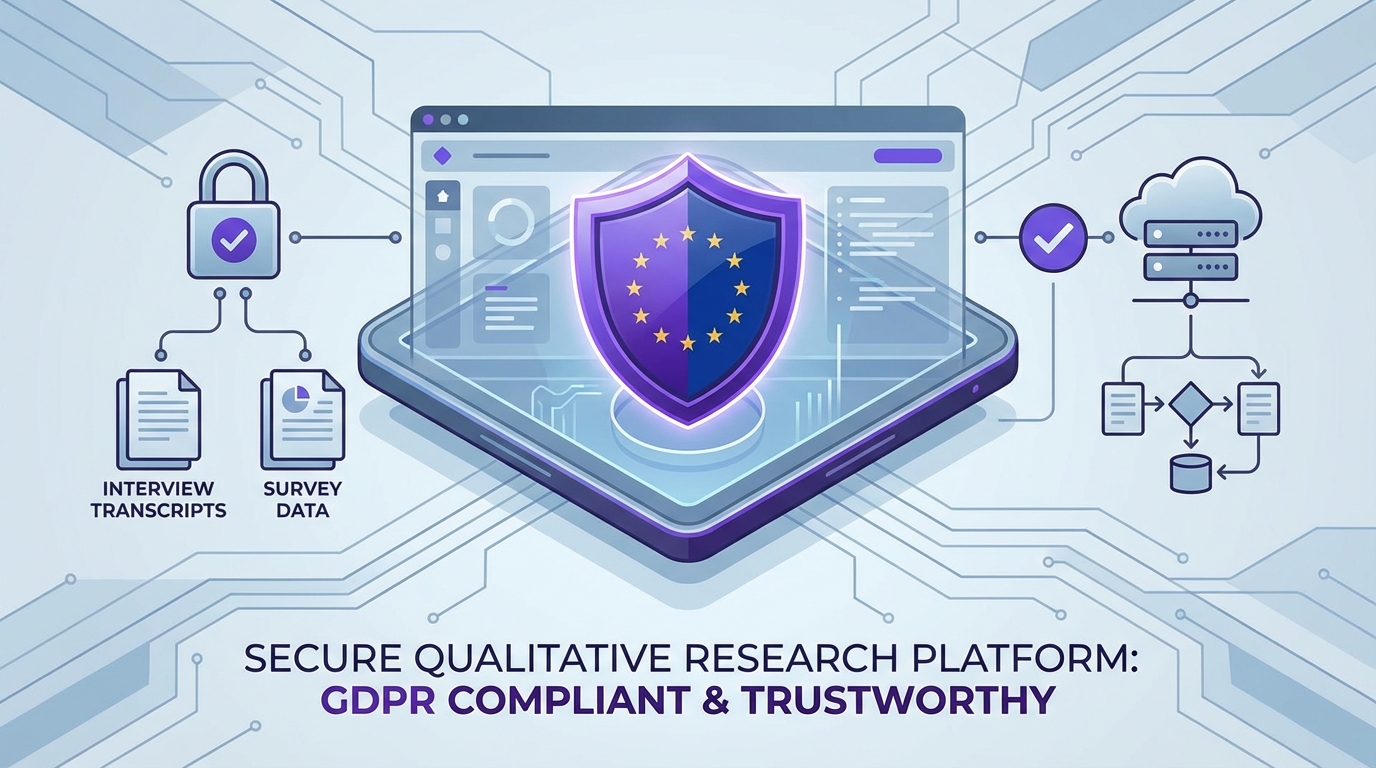
Informed consent. Async research raises specific ethical considerations around data persistence, the right to withdraw mid-stream, and clarity about whether responses are being read by AI or humans.
The Strategic Shift
The research teams gaining the most leverage right now are those who have stopped treating "interview" as the default method and instead ask: what is the right modality for this specific research question, participant population, and timeline?
That question increasingly leads to async or hybrid approaches. Not because synchronous research is bad, but because the constraints that made it the default -- geographic proximity, shared calendars, real-time transcription limitations -- have dissolved.
The tools caught up. The methods matured. The only thing lagging is the assumption that research means scheduling a call.
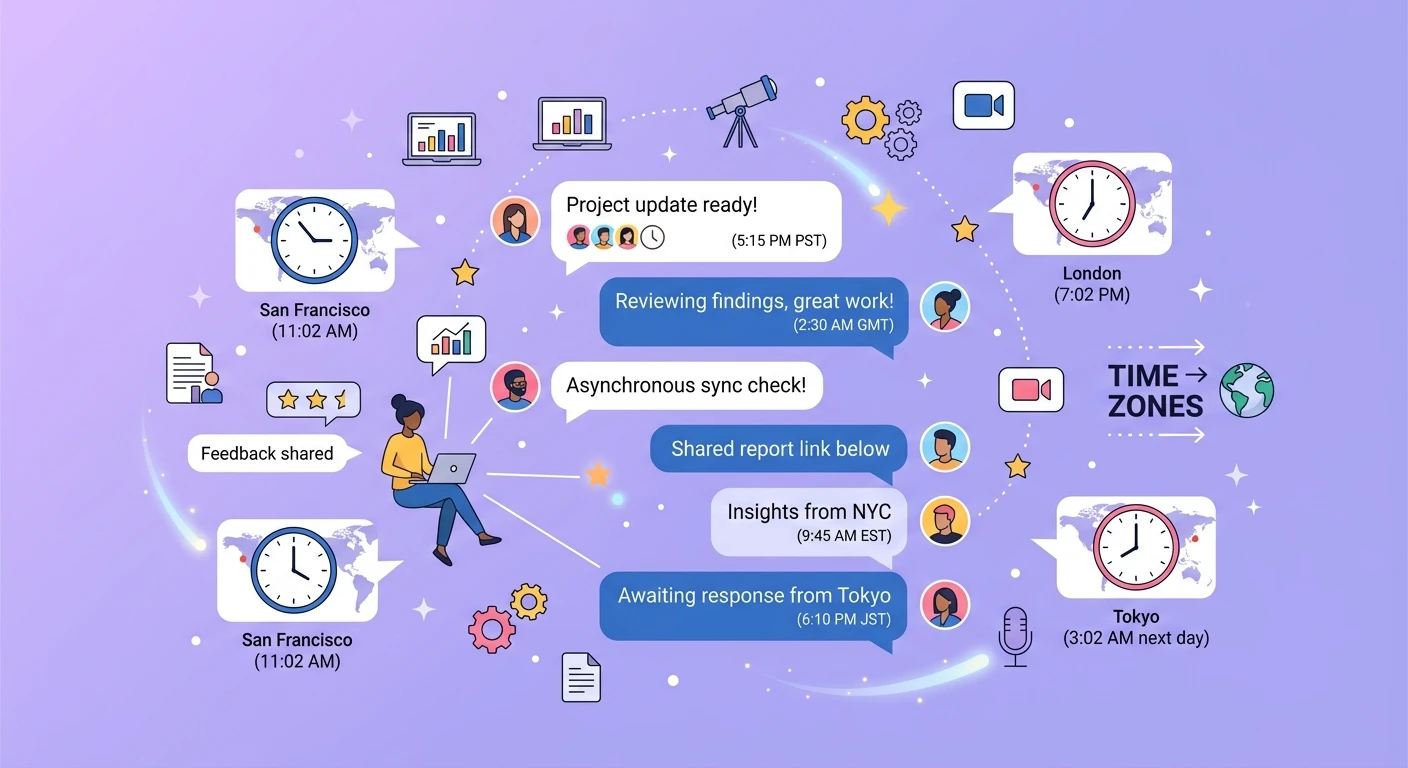
As the industry continues evolving from project-based research to continuous discovery, async methods become not just convenient but necessary. You cannot maintain weekly touchpoints with customers if every touchpoint requires synchronized schedules across multiple time zones.
The future of qualitative research is not synchronous or asynchronous. It is intentionally choosing the right mode for the right moment -- and having the infrastructure to do both well.