The Disappearing Meaning Problem
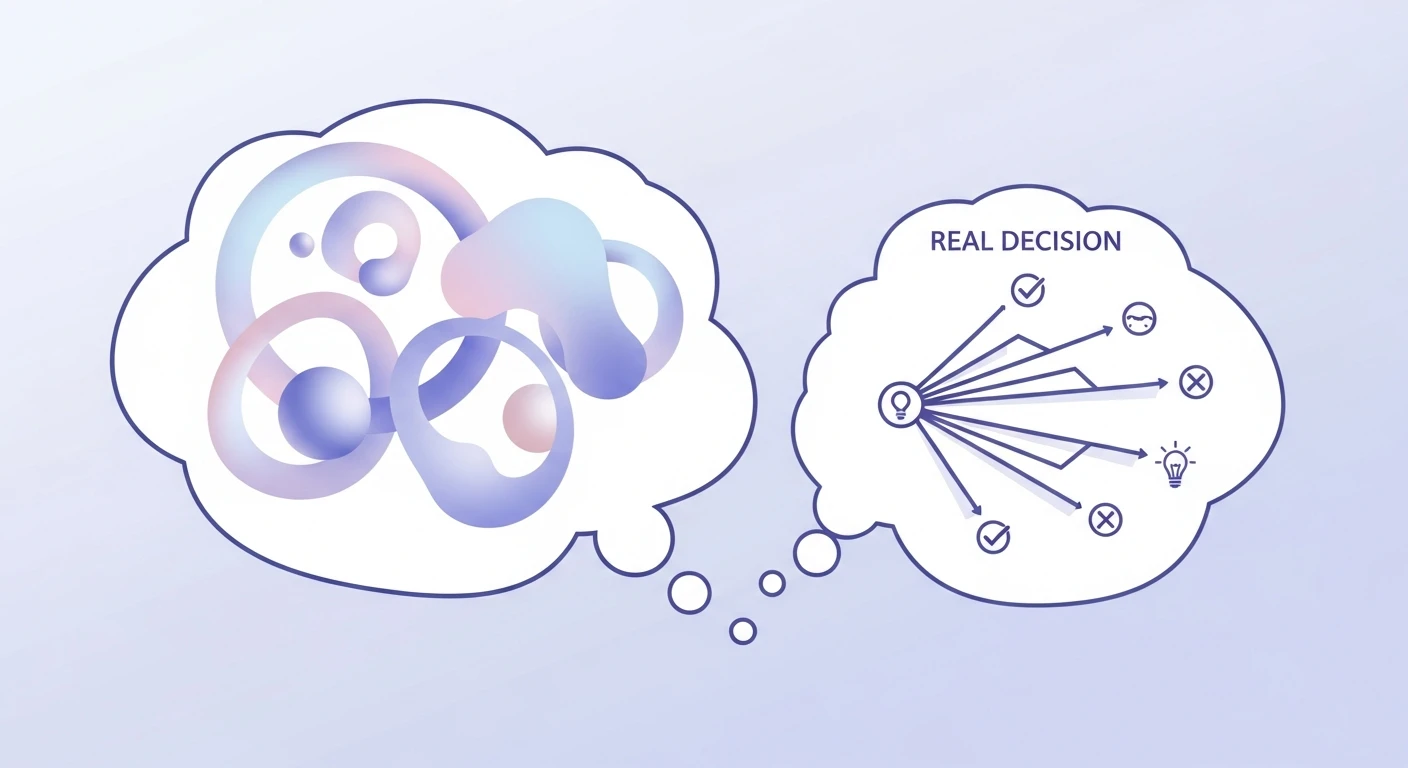
Every qualitative researcher has experienced this: you open a codebook from six months ago, look at a code like "trust concerns," and realize you have no idea what specific participant utterance it originally captured or why you chose that label over something more precise. The code exists. Its meaning has evaporated.
This is not a filing problem. It is a fundamental weakness in how most qualitative coding is practiced. Standard thematic coding treats codes as labels — categorical markers applied to data segments. What gets lost is the interpretive reasoning that connected a particular participant statement to a particular conceptual category.
The consequences compound over time. When research repositories grow beyond a single project, when teams share codebooks across studies, when insights get revisited months later for strategic decisions — the absence of contextual annotation transforms a living knowledge system into a graveyard of orphaned labels.
What Contextual Annotation Actually Means
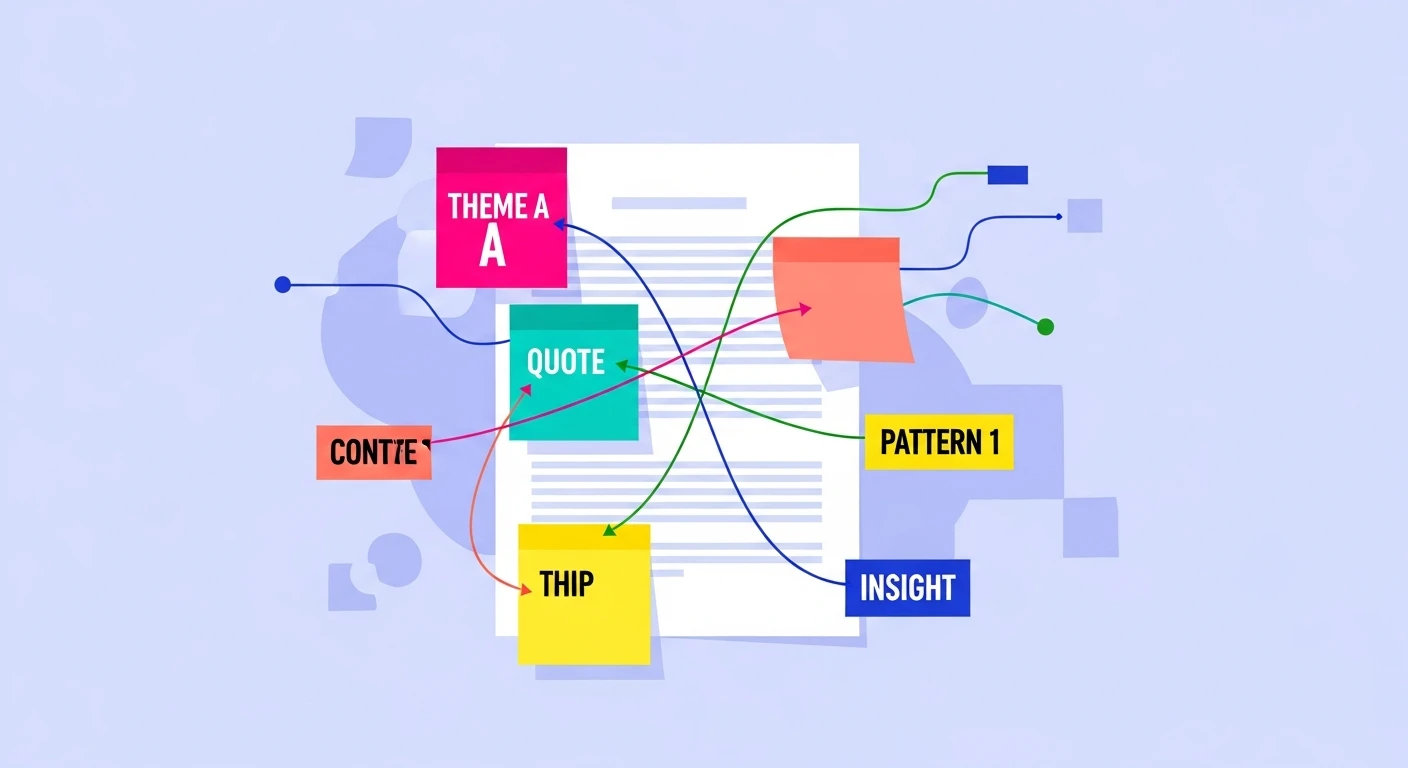
Contextual annotation goes beyond applying a code to a data segment. It captures three additional layers:
Interpretive rationale — Why this code? What reasoning connected this specific utterance to this conceptual category? This is the researcher's analytical thinking at the moment of coding, preserved as a first-class artifact.
Relational context — How does this coded segment relate to other things the same participant said? What came before and after in the conversation? What contradictions or confirmations exist within the same interview?
Analytical trajectory — Where in your evolving understanding did this coding decision occur? Early codes carry different weight than codes applied after twenty interviews have shaped your conceptual framework.
Without these layers, a code is just a tag. With them, it becomes a node in a knowledge network that retains its meaning regardless of who accesses it or when.
Why Standard Coding Practices Strip Context
Most qualitative analysis software encourages a workflow that systematically removes context. You highlight a segment, apply a code, move to the next segment. The software stores the code-to-segment mapping but not your reasoning. Over hundreds of coding decisions, the analytical logic that produced the codebook becomes invisible.
This workflow emerged from physical card-sorting methods where space constraints made annotation impractical. Digital tools inherited the limitation without questioning whether it still made sense. The result is that most teams produce codebooks that are structurally complete but interpretively hollow.
The problem intensifies in team settings. When one researcher codes data and another inherits the codebook, they inherit labels without the interpretive framework that gave those labels precise meaning. What follows is interpretation drift — subtle but cumulative divergence in how different analysts apply the same codes.
The Compounding Cost in Research Repositories
Organizations building research repositories face this problem at scale. A repository filled with context-free codes becomes searchable but not understandable. You can find every instance where "trust concerns" was coded across fifty studies, but you cannot determine whether those fifty instances reflect the same conceptual phenomenon or fifty different meanings wearing the same label.
This is where research synthesis debt accumulates fastest. Teams discover that their repository contains volume without coherence — thousands of coded segments that cannot be meaningfully compared because the contextual annotation that would enable comparison was never captured.
Implementing Contextual Annotation in Practice
The shift to contextual annotation requires changing coding workflows without making them impractically slow. Three practices make this feasible:
Memo-linked coding — Every code application gets a brief memo explaining the interpretive decision. Not a paragraph. One to two sentences capturing why this code, why here, why now. Most qualitative software supports code memos; most researchers skip them under time pressure.
Anchor examples with rationale — For each code in your codebook, maintain two to three anchor examples that include explicit annotation of what makes them exemplary instances. These serve as calibration references for the entire team, preserving the conceptual boundaries of each code.
Temporal markers — Note when in your analytical process each code emerged or evolved. A code created during your third interview carries different meaning than one created during your twentieth. The evolution of your codebook is analytical data itself.
As we explored in our work on how AI is reshaping qualitative analysis, machine-assisted coding can actually enhance contextual annotation by generating interpretive rationales that human coders can verify and refine, rather than creating from scratch under time pressure.
AI-Assisted Contextual Annotation
AI coding assistants offer an unexpected advantage here. When an AI system codes a data segment, it can simultaneously generate an interpretive rationale — a natural language explanation of why the code fits. Human researchers can then verify, modify, or reject both the code and the rationale.
This inverts the traditional bottleneck. Instead of asking time-pressed researchers to generate annotations in addition to codes, the system generates both and asks researchers to validate. The cognitive load shifts from generation to evaluation, which is faster and produces more consistent results.
The approach aligns with principles of eval-driven development — treating coding decisions as assertions that can be systematically validated rather than accepting them as one-time labels.
Building Team Alignment Through Annotation
Contextual annotation also solves the team calibration problem. When multiple researchers code the same dataset, disagreements are inevitable. Without annotation, resolving disagreements requires lengthy discussion to reconstruct each person's reasoning. With annotation, the reasoning is already visible — disagreements can be resolved by examining the different interpretive logics rather than relitigating the coding decision from scratch.
This matters especially in collaborative analysis sessions where the goal is not just inter-rater reliability but shared interpretive understanding. Annotations make the invisible thinking visible, accelerating the path to genuine analytical consensus.
The Repository Payoff
Teams that invest in contextual annotation for six months consistently report a phase transition in their repository's utility. Codes become queryable not just by label but by meaning. Cross-study comparisons become possible because the annotations reveal whether similarly labeled codes across different projects actually capture the same phenomenon.
The long-term payoff is a research knowledge base that appreciates rather than depreciates over time. Every new study adds not just data points but interpretive depth. The annotations create a compounding knowledge asset that makes each subsequent analysis faster and more grounded.
Getting Started
You do not need to retrofit your entire existing codebook. Start with your current project:
- For every new code you create, write one sentence explaining why it exists as a distinct category
- For every code application, note in one phrase what interpretive logic connects this segment to this code
- At the end of each coding session, spend five minutes writing a brief analytical memo about how your understanding evolved
The overhead is approximately fifteen percent more time during coding. The payoff is a codebook and repository that remain meaningful and usable indefinitely — not just to you, but to anyone who encounters your work in the future.