The Most Expensive Ten Minutes in Research
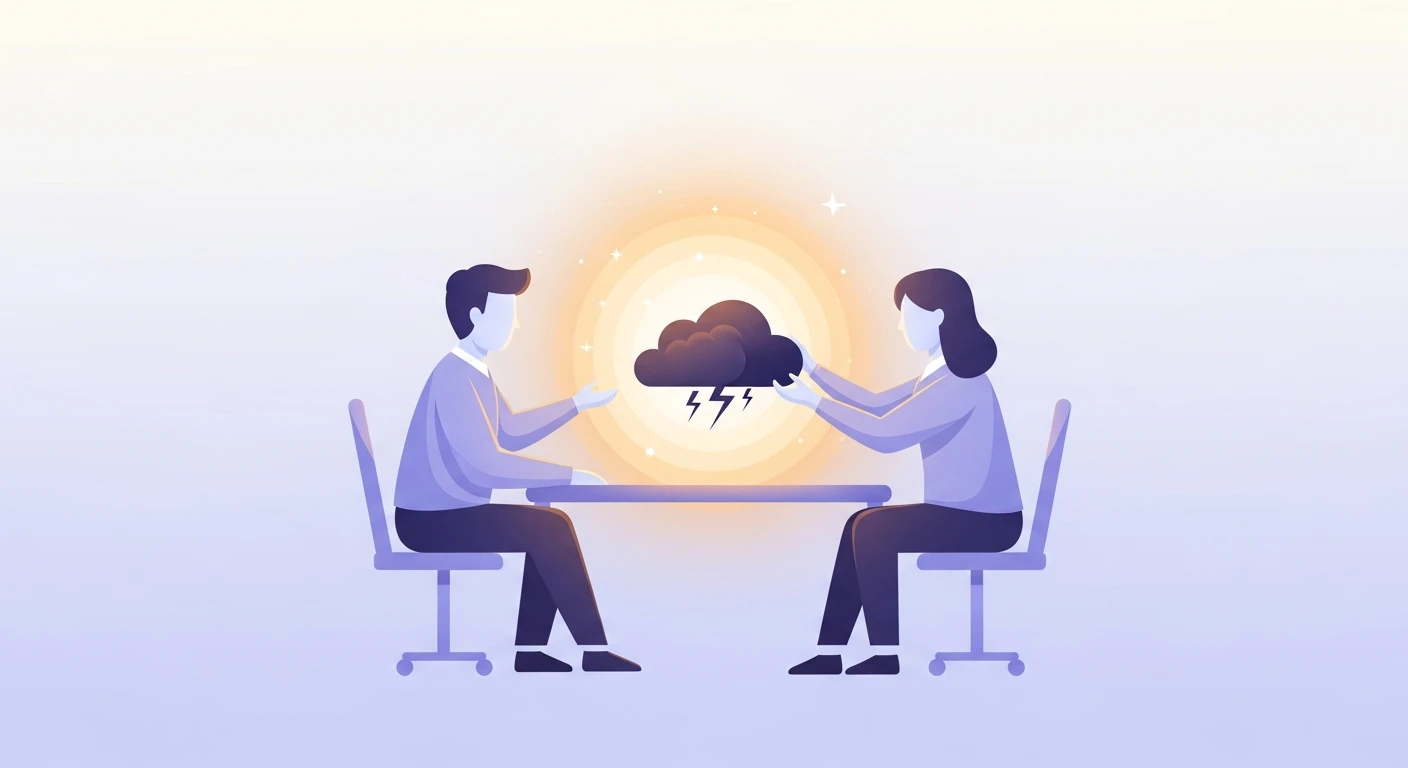
The interview ends, the participant leaves the call, and something almost involuntary happens: the researcher turns to whoever is watching -- a colleague, a note-taker, a product manager on the observation link -- and says, "So, what did you think?" It feels like the natural, even responsible, thing to do. Strike while the session is fresh. Compare notes. Align.
It is also the moment you begin destroying your own data. Because the conversation you have in those first ten minutes does not neutrally retrieve what happened in the session. It reconstructs it, collaboratively, into a version that is smoother, more quotable, and more agreed-upon than anything that actually occurred -- and that reconstructed version is the one that gets written down.
Memory Is Not a Recording
The premise underneath "let's debrief while it's fresh" is that memory works like a video file: fresher means more accurate. But episodic memory is reconstructive, not reproductive. Every time you recall a session you rebuild it from fragments, and every rebuild is subtly editable by what is happening in the room while you recall. When the first recall happens out loud, in dialogue, the edits come from your colleagues.
This is the mechanism behind recall bias and memory distortion in user interviews, operating on the researcher instead of the participant. The person who speaks first anchors the group, the anchor becomes the frame, and the frame becomes what everyone remembers seeing -- which is precisely the availability cascade that turns the first insight shared into the one everyone remembers.
The Overwrite Effect
Here is the part that makes debrief timing genuinely dangerous rather than merely sloppy: the act of verbalizing a memory can overwrite the original. Psychologists call the general phenomenon verbal overshadowing -- describing an experience in words degrades the nonverbal, holistic memory of it. When you narrate "the participant seemed frustrated with onboarding" before you have recorded the specific micro-observations that gave you that impression, the tidy verbal summary replaces the messy, information-rich original.
The subtle hesitations, the contradictory aside at minute forty, the thing the participant said that did not fit any theme -- these are the first casualties, because they do not survive translation into a quick verbal summary. This is the researcher-side cousin of think-aloud contamination, where verbalizing thought changes what is actually being thought. You end up with a clean story and no access to the raw material that would have let you challenge it.
Why Group Debriefs Amplify the Damage
A solo researcher talking to themselves at least overwrites their own memory with their own frame. A group debrief does something worse: it manufactures false consensus and then certifies it as corroboration. Three people who watched the same session, talk it through, and converge on "the key takeaway is X" now believe X is well-supported because three of them agree -- when in fact they agree because they influenced each other, not because they independently observed the same thing.
This is the consensus trap arriving before analysis even begins. The convergence feels like signal; it is an artifact of sequencing. And because it happened verbally and was never documented as separate observations, there is no record that would let you reconstruct who actually saw what. The disagreement that would have been your most valuable data -- the negative case that contradicts the emerging theme -- gets smoothed away in the hallway before anyone writes it down.
Independent Documentation Before Shared Interpretation
The fix is a discipline about order, not a ban on debriefing. Debriefs are valuable; they are just corrosive when they come first. The rule is simple: capture before you converge.
- Silent individual notes first. Everyone who observed writes their own raw observations before anyone speaks. No discussion, no "quick reactions" -- just each person's independent record of what they saw, ideally with timestamps and verbatim fragments rather than interpretations.
- Separate observation from inference. In those first notes, record what happened distinctly from what you think it means. "Participant paused eleven seconds before answering the pricing question" is an observation; "participant was uncomfortable with pricing" is an inference. The observation is durable; the inference is negotiable.
- Then debrief -- with the notes as evidence. Only after everyone has committed independent observations do you talk. Now the conversation is grounded in a paper trail, disagreements are visible rather than dissolved, and the debrief refines interpretation instead of manufacturing it.
- Protect the outliers. Explicitly ask what did not fit before letting the group agree on what did. The contradictions are the data most likely to be overwritten and the most likely to matter.
This sequencing is exactly what structured post-interview debriefing practices are built to protect, and it pairs naturally with analytical memo writing, which forces observation onto the page before interpretation hardens.
The Deeper Principle
The underlying lesson generalizes far beyond the debrief. Any time interpretation happens before documentation, the interpretation contaminates the record. It is the same failure mode as the documentation paradox, where writing up findings changes what you found -- except the debrief version is more insidious because it feels like collaboration rather than analysis. The infrastructure problem this points to is the same one enterprise AI teams face when they need to reconstruct how a decision was actually reached: without a durable, timestamped record of raw inputs, you cannot audit your own conclusions, which is why audit trails and explainability matter as much for a research team's reasoning as for a production model's, and why treating your observations as data contracts with a defined shape before they enter the pipeline keeps the record trustworthy downstream.
Capture first. Converge second. The ten minutes you protect at the end of every session are the difference between findings you can defend and a consensus you merely produced.
Turn Raw Observation Into Defensible Insight
Qualz.ai timestamps and structures every session so your raw observations are captured before interpretation ever begins -- giving your team a durable record to debrief against instead of a memory to argue over. Book a demo and see how disciplined capture protects your findings.