The Decision That Cannot Wait
Somewhere right now, an executive team is sitting in a conference room debating whether to launch a product, enter a market, acquire a company, or submit a regulatory filing. The data on the table includes financial models, competitive analysis, and market sizing. Somewhere in the stack is a qualitative research report -- or more likely, a promise that the qualitative research report will be ready next week.
Next week is too late. The decision is being made today.
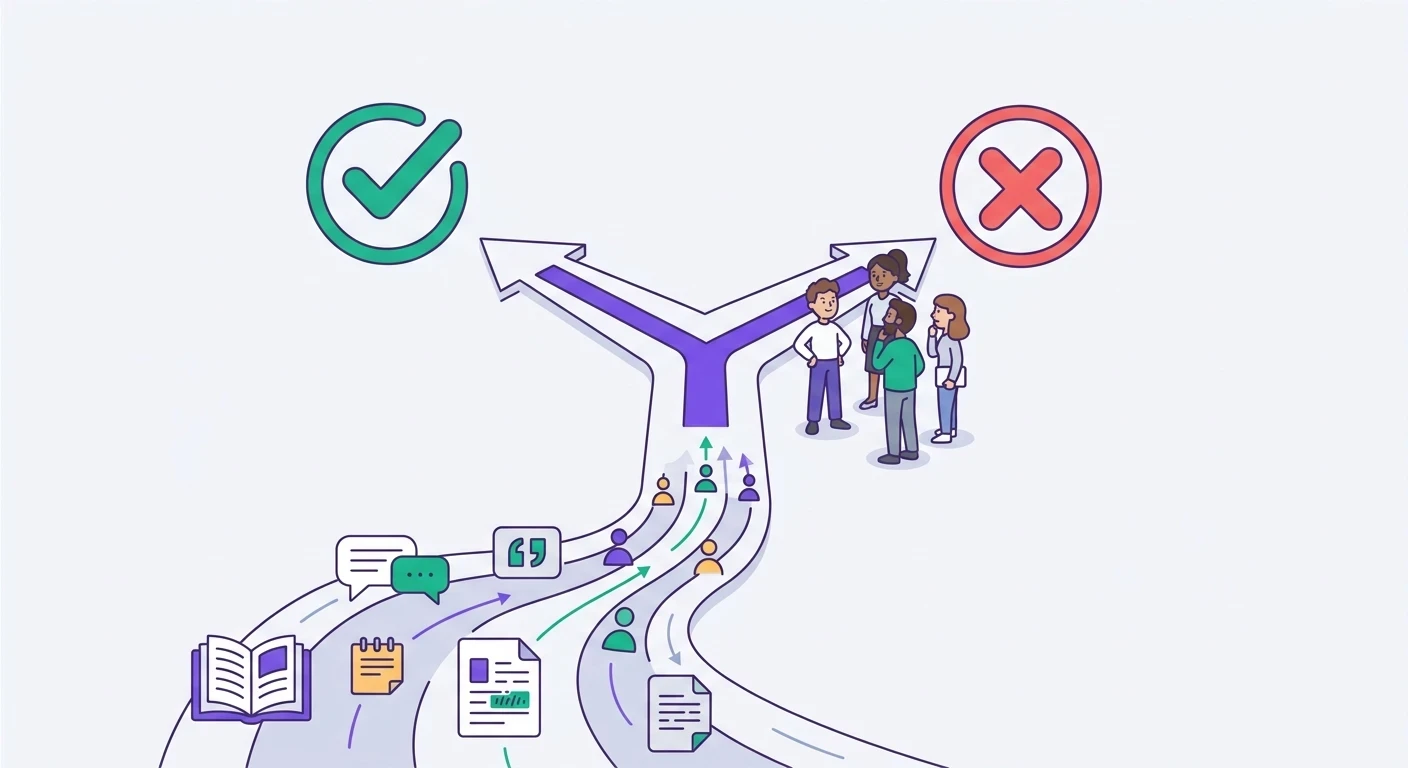
This is the fundamental mismatch in high-stakes decision-making. The decisions that carry the most consequence -- go/no-go on a product launch, proceed or abandon on an acquisition, submit or delay on a regulatory filing -- are precisely the decisions that most depend on qualitative insight. And qualitative insight, under the traditional analysis model, is the slowest input to arrive.
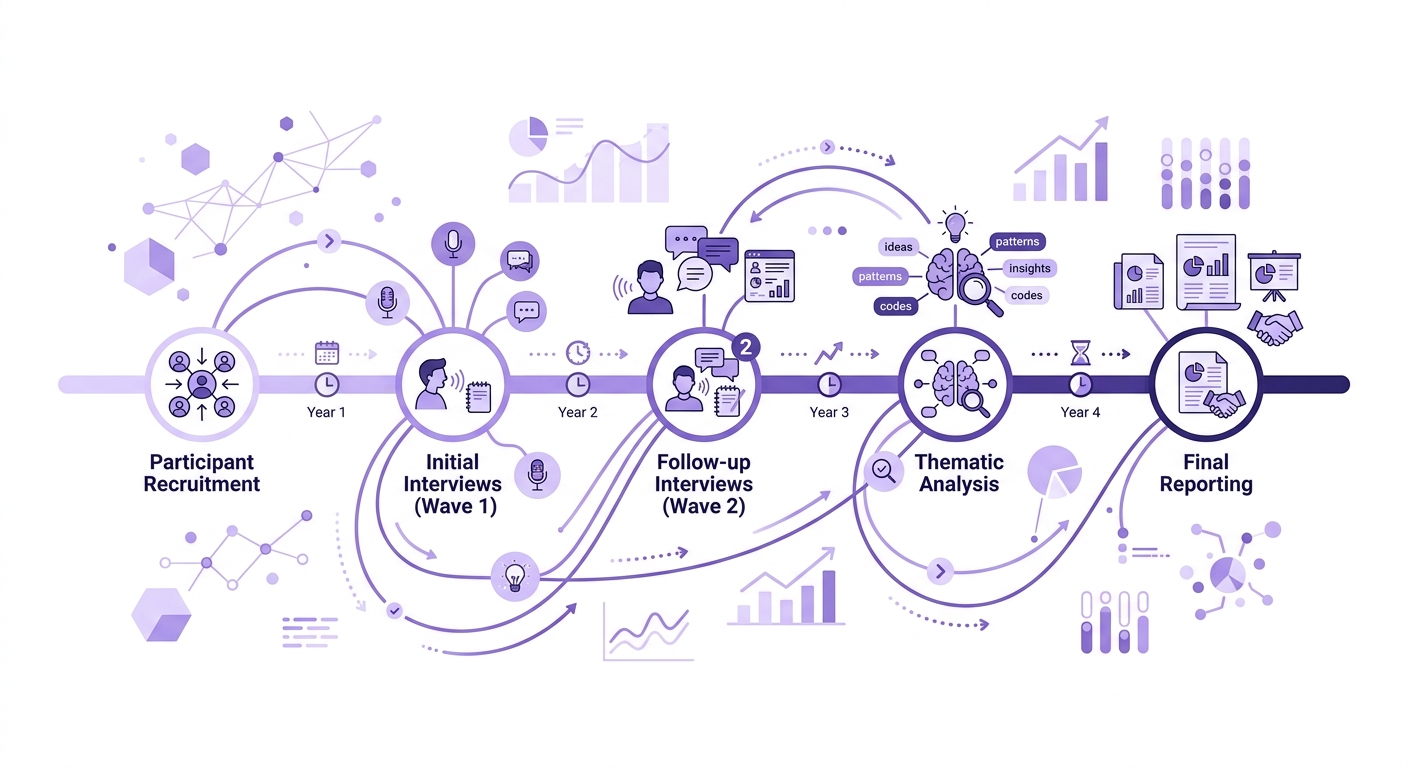
Financial models update in real time. Market data refreshes daily. Competitive intelligence flows continuously. But the synthesis of fifteen expert interviews that could change the entire framing of the decision? That takes three to four weeks under conventional methods. By the time it arrives, the decision has been made on incomplete information, and the research becomes a post-hoc rationalization rather than a genuine input.
The Cost of Slow Analysis Is Not Time -- It Is Decision Quality
Most discussions about research speed frame it as a logistics problem. How do we get the deliverable faster? How do we compress the timeline? How do we add analysts to the project?
This framing misses the point. The cost of slow qualitative analysis is not the time itself. It is the degradation in decision quality that occurs when decision-makers cannot access qualitative insight when they need it.
Consider a pharmaceutical company evaluating whether to advance a therapeutic candidate to Phase III trials. The quantitative data -- clinical endpoints, safety signals, market sizing -- is available. But the qualitative research with key opinion leaders about treatment paradigms, competitive positioning, and prescribing intent is still in analysis. The go/no-go decision carries a $200 million commitment.
The decision-makers have two options. Wait for the qualitative research and risk missing the enrollment window. Or proceed without it and risk a $200 million bet informed by numbers but not by the clinical judgment and market reality that only qualitative research captures.
They proceed without it. They almost always proceed without it. Not because they do not value the research, but because the decision timeline and the research timeline are fundamentally misaligned. This is insight decay at its most consequential -- findings that lose not just relevance but their ability to influence the decisions they were commissioned to inform.
How Compressed Timelines Force Bad Shortcuts
When organizations do try to accelerate qualitative research for high-stakes decisions, the shortcuts they take often undermine the very rigor that makes qualitative research valuable.
The most common shortcut is reducing the sample. Instead of twenty interviews, they do eight. Instead of covering all relevant stakeholder segments, they cover two. The researcher knows the sample is insufficient for confident findings, but the alternative is no findings at all.
The second shortcut is surface-level analysis. Instead of rigorous thematic coding, the researcher does a rapid read-through and produces a topline summary based on impressions rather than systematic analysis. The key themes are probably right, but the nuance -- the contradictions, the minority viewpoints, the conditional findings that apply only to specific segments -- gets lost. And in high-stakes decisions, it is often the nuance that matters most. The ability to detect contradictions across interviews is precisely what distinguishes rigorous qualitative analysis from informed opinion.
The third shortcut is skipping the synthesis. Individual interview summaries are stitched together rather than truly synthesized. The decision-makers get a stack of "what each person said" rather than an integrated analysis of what the collective data means. They are left to do the synthesis themselves, which they do badly because synthesis is a research skill, not a business skill.
Each of these shortcuts degrades the quality of the qualitative input. The irony is acute: the research was commissioned specifically because the decision is high-stakes, and then the high-stakes timeline forces compromises that reduce the research to something not much better than a straw poll.
AI Analysis Preserves Depth at Speed
AI-powered qualitative analysis resolves this tension because it eliminates the time bottleneck without eliminating the analytical depth.
The depth of qualitative analysis comes from three capabilities: systematic coding that captures the full range of what participants said, cross-case pattern recognition that identifies themes and variations across the dataset, and interpretive synthesis that translates patterns into implications. Traditional manual analysis delivers all three but requires weeks to do so.
AI-powered analysis delivers the same three capabilities on a fundamentally different timeline. Systematic coding happens in minutes per transcript rather than hours. Cross-case pattern recognition happens continuously as each new transcript is analyzed rather than as a separate post-coding phase. Interpretive synthesis -- the part that still requires human judgment -- begins during fieldwork rather than after it.
The result is that a twenty-interview study can deliver rigorous thematic findings within hours of the last interview, not weeks. And those findings carry the same analytical depth as a manual analysis because the underlying process is the same: code, pattern, synthesize. Only the execution speed changes.
Research comparing AI-powered thematic analysis with manual methods consistently finds that AI-augmented analysis matches or exceeds manual analysis on completeness -- the percentage of relevant themes identified -- while dramatically outperforming on consistency and speed. The AI does not get tired on transcript eighteen. It does not anchor on early impressions. It does not unconsciously downweight the participant whose views contradict the emerging narrative.
Decision Support, Not Decision Replacement
A critical distinction for high-stakes contexts: AI-powered qualitative analysis is decision support, not decision replacement. The AI does not tell the executive team whether to launch the product. It ensures that the qualitative evidence informing that decision is complete, rigorous, and available when the decision needs to be made.
This matters because high-stakes decisions require the decision-makers to engage with the qualitative data, not just receive a summary. They need to see the range of perspectives. They need to understand where experts agree and where they disagree. They need to assess the strength of evidence behind each finding. They need to weigh qualitative signals against quantitative signals and make judgment calls about which to prioritize.
All of this requires a deliverable that is more than a bullet-point summary. It requires a structured analysis that preserves the richness of the qualitative data while making it navigable for decision-makers who do not have time to read twenty transcripts. Conversational analysis with AI pattern recognition provides exactly this: structured findings with transparent links to the underlying data, so decision-makers can drill from theme to evidence to verbatim quote.
The Four Scenarios Where This Matters Most
Not every research project involves a high-stakes go/no-go decision. But four scenarios recur frequently enough to define the use case.
Product launch decisions. The product is built, the marketing is planned, but qualitative research with target users reveals unexpected positioning challenges, use-case confusion, or competitive dynamics that the quantitative research missed. The launch date is fixed. The qualitative insight needs to arrive before the launch review meeting, not after.
Market entry decisions. Entering a new geographic market, vertical, or customer segment requires understanding local dynamics that quantitative data cannot capture. Qualitative interviews with local stakeholders, channel partners, and potential customers provide the contextual intelligence that de-risks the entry strategy. But market entry windows are competitive -- delay the research and a competitor occupies the position first.
Regulatory and compliance decisions. Pharmaceutical submissions, medical device approvals, and healthcare policy decisions all benefit from qualitative evidence about clinician perspectives, patient experiences, and real-world practice patterns. Regulatory timelines are immovable. Qualitative research either arrives in time to inform the submission or it does not. Understanding voice of customer through AI-powered qualitative methods in regulated industries means the difference between a submission that anticipates reviewer concerns and one that does not.
Innovation portfolio decisions. Companies evaluating multiple potential products or features need qualitative insight to prioritize. Jobs-to-be-done interviews with customers reveal which unmet needs are most urgent, which current solutions are most vulnerable to disruption, and which value propositions resonate most strongly. When the portfolio review is quarterly, the research feeding it needs to match that cadence.
What Rigorous Rapid Analysis Actually Looks Like
Same-day qualitative analysis is not a topline summary dressed up as a final deliverable. Here is what a rigorous rapid analysis produces for a high-stakes go/no-go decision:
A thematic framework grounded in systematic coding of every transcript, with code frequencies, co-occurrences, and segment-level breakdowns. This is the analytical backbone that ensures findings are evidence-based, not impression-based.
A findings narrative that synthesizes the coded data into a structured story -- what the data says, where the evidence is strong, where it is equivocal, and where notable exceptions challenge the dominant pattern. This is where the researcher's interpretive expertise adds value that AI alone cannot provide.
Verbatim evidence linked to every finding, so decision-makers can assess the quality and context of the supporting data. Not cherry-picked quotes that confirm the narrative, but representative excerpts that show the range of participant perspectives.
A clear articulation of limitations: what the data can and cannot support, where additional research would strengthen confidence, and what assumptions the findings rest on. High-stakes decisions deserve honest uncertainty estimates, not false precision.
Segment-level analysis where relevant: do specialists and generalists see this differently? Do early adopters and mainstream users? Do large organizations and small ones? These segment distinctions often determine whether a go decision is appropriate for all segments or only some.
The Competitive Intelligence Application
Go/no-go decisions increasingly depend on competitive intelligence gathered through qualitative methods. Expert interviews with industry analysts, former employees of competitors, channel partners, and market participants provide the kind of intelligence that shapes strategic decisions.
This is a domain where speed is not just valuable -- it is the entire point. Competitive intelligence that arrives three weeks after the competitor's announcement is history, not intelligence. When a competitor announces a product, a partnership, or a strategic shift, the window for gathering and analyzing qualitative intelligence is measured in days.
AI-powered analysis makes rapid competitive intelligence studies feasible. Ten expert interviews conducted over three days, analyzed in parallel with fieldwork, synthesized into a strategic briefing within twenty-four hours of the last interview. The executive team gets informed intelligence while the competitive situation is still developing, not after it has crystallized.
Building the Capability
Organizations that want AI-powered qualitative analysis available for high-stakes decisions need to build the capability before the crisis hits. This means:
Establishing the analytical infrastructure -- platform, workflows, quality standards -- during routine projects so the team is fluent when a high-stakes project demands rapid turnaround.
Training researchers to work in the parallel analysis model, where they are reviewing and refining AI-generated analysis during fieldwork rather than starting analysis after fieldwork concludes.
Educating stakeholders about what rapid qualitative analysis can and cannot deliver, so expectations are calibrated before a high-pressure decision creates pressure to promise the impossible.
Building relationships with recruitment partners who can mobilize qualified participants on compressed timelines, because the analysis pipeline is only as fast as the data collection feeding it.
The Standard Is Shifting
Five years ago, a three-week turnaround for qualitative research analysis was considered efficient. Today, sophisticated research buyers -- particularly in pharmaceuticals, financial services, and technology -- are asking why it cannot be done in three days. Within two years, same-day delivery will be the expectation for high-stakes projects, and agencies or internal teams that cannot deliver will lose their seat at the decision-making table.
The researchers who embrace AI-powered analysis will not just work faster. They will be more influential, because their insights will arrive when decisions are being shaped rather than after decisions have been made. In high-stakes research, timing is not a convenience. It is a measure of impact.
The question for every research team is straightforward: when the next go/no-go decision depends on qualitative insight, will your analysis be ready in time to matter?
Learn how Qualz.ai delivers high-stakes qualitative research on decision timelines