The Interview Where Everyone Says Thank You
A mid-size workforce development nonprofit ran 140 exit interviews with program graduates last year. When the coded results came back, 92 percent of the transcripts included some form of the phrase "this program changed my life." Satisfaction was near universal. Complaints were rare and small: parking, and the coffee in the morning session.
Six months later, the placement data arrived. Fewer than half of graduates were still in the jobs the program had placed them in. When a volunteer with no connection to the program asked a handful of graduates informally what had gone wrong, the answers came quickly. The schedule clashed with childcare. The employer partners treated them as temporary labour. One case manager made people feel judged. None of this had appeared in 140 formal interviews.
We call this the Gratitude Tax. It is the share of every nonprofit interview that goes to thanking the organisation instead of informing it. Beneficiaries pay it because the organisation controls something they need. Donors pay it too, in a different currency, because they are protecting their own sense of having given well. The tax is highest exactly where the stakes are highest, and it grows as programs scale their feedback collection. The more interviews you run through the same power relationship, the more gratitude you collect.
The Mechanism: Why Candor Costs Beneficiaries Something
In commercial user research, an unhappy participant loses very little by being honest. They can churn to a competitor. A beneficiary of a food bank, a housing program or a legal aid clinic usually has no competitor to go to. The mental calculation that leads to the Gratitude Tax is quick and sensible:
- Dependency. The person needs the service to keep going, whether that is next month's groceries, a shelter bed or a caseworker's goodwill on an immigration file.
- Attribution uncertainty. They cannot tell whether a criticism will stay anonymous or find its way back to the staff member who controls their access.
- Identity of the asker. The interviewer is often a program staffer, or someone introduced by one. The person asking about the service is the service.
- Social script. Most cultures have a strong norm of thanking those who help you. Criticising a charity feels ungrateful, and people from communities that are often stereotyped as ungrateful feel this especially hard.
Put those four together and you get the rational answer, which is praise. The participant is not lying. They are telling you the true things that carry no risk, and leaving out the true things that do.
Donors pay the tax in a different way. A major donor asked "how do you feel about our impact reporting?" is also being asked, without anyone saying so, "did you make a good decision giving to us?" Almost nobody wants to say no to that. So donors report being satisfied, keep their doubts to themselves, and then quietly cut their gift in the next cycle. Retention data catches the problem that the interviews missed.
Why Scale Makes It Worse
Most nonprofits scale interviews by making them part of operations. Intake staff run feedback calls. Case managers do exit conversations. Development officers ask donors "a few questions" at the stewardship lunch. It is efficient, and it is also a systematic way to maximise the Gratitude Tax, because it puts the person with the most power over the participant in the interviewer's chair.
Three things compound as volume grows:
- Homogenised praise looks like consensus. With 20 interviews, a lot of thanks reads as a warm sample. With 200, it reads as proof. The board sees a satisfaction theme backed by hundreds of transcripts and decides the program design is sound.
- Dissent drops out before the interview even starts. The people with the most serious complaints often refuse the interview or stop using the service. As we covered in the silent segment problem, the people who never talk to you often matter most. For nonprofits, those non-responders are often the people the program is failing.
- Rapport never gets deep enough. Staff-run interviews are usually short and squeezed between other work. As we describe in the Rapport Decay Curve, trust has to hold up long enough to reach the hard questions. A 12-minute exit call from a caseworker never gets there.
The decision that goes wrong is concrete. Funders renew programs based on satisfaction narratives. Program leads cut the part that looks unpopular and keep the part that is actually failing quietly. Grant reports claim beneficiary voice when what they really contain is beneficiary politeness.
The Counter-Practice: Lowering the Tax
You cannot remove the power imbalance. You can design interviews so candor costs the participant less. Five moves make the biggest difference.
1. Separate the asker from the provider
This is the single highest-leverage change. The person interviewing must have no visible link to service delivery. Options, from strongest to weakest: an independent evaluator, a peer researcher from the community who has been trained and paid, or an AI-moderated interview that the participant completes on their own time with no staff present. Then say the separation out loud: "Nobody from the program will see your name next to your answers. Your caseworker will not hear this recording."
Self-administered AI interviews help here for a specific reason: the participant never has to watch someone's face react to what they say. In our work on anonymous AI interviews for community feedback, the most critical responses often come late at night, from a phone, with no human on the other end.
2. Make anonymity checkable, not just promised
"This is anonymous" is a claim that dependent participants have learned not to trust. Make it something they can verify. Do not require a login tied to their case file. Do not ask for identifiers you do not need. Remove names of staff members from transcripts before the program team sees anything. Report themes only once enough participants share them, so no one can be identified. Tell participants exactly which of these steps you take. Specifics earn trust. Reassurance does not.
3. Ask about the system, then the self
Direct questions like "What did you dislike about the program?" ask a beneficiary to criticise their benefactor to their face. Instead, start with questions in the third person, about other people and the system:
- "What makes it hard for people like you to keep coming?"
- "If a friend were thinking about joining, what would you warn them about?"
- "What do people say about the program when staff aren't around?"
People will tell you about "other people's" problems long before they admit to their own. Once the participant has said the critique out loud about others, a follow-up like "has any of that been true for you?" is much easier to answer.
For donors, do the same thing with peer framing: "What do other donors you know find frustrating about how nonprofits report back?" Then: "Where do we fall on that?"
4. Decouple the incentive from the relationship
Paying beneficiaries for their time is right, but how you pay matters. A gift card handed over by a caseworker ties the payment to the relationship with the program. A payment sent automatically on completion, whatever the answers were, does not. And do not overpay. As we covered in the compensation ceiling effect, a large incentive to someone in financial hardship feels like a debt, and debts get repaid in praise.
5. Treat uniform praise as a warning sign, not a finding
If 90 percent of transcripts contain the same grateful phrasing, that is a sign of the Gratitude Tax, not proof of impact. Code gratitude on its own, separate from substantive evaluation. Then look at what remains once the thanks is removed. A transcript that says "I'm so grateful, the staff are angels, it's just that I had to miss two shifts to get there" holds one finding, and it comes after the "just."
This is where AI synthesis can quietly make things worse. A summariser trained to find the dominant sentiment will report "participants were overwhelmingly positive" and lose the criticism in the subordinate clause. We have written about how AI summaries manufacture consensus that participants never reached. Nonprofit data has the same problem at larger scale. Engineers call this a silent failure: every metric looks healthy while the real signal is gone, and the same problem shows up in agentic AI systems whose success metrics hide broken tool calls. A dashboard showing 94 percent positive sentiment is exactly that kind of green light.
What This Looks Like at Scale
A regional housing nonprofit serving about 3,000 households a year moved its annual feedback from caseworker phone calls to self-administered AI-moderated interviews. Participants could complete them by voice or text, in four languages, at any time over a two-week window. The changes were small but deliberate. The invitation came from an external evaluator's address. The opening explained which data the program would and would not see. The guide started with "what do people in your building say about..." before asking about personal experience. And the analysis coded gratitude separately from criticism.
Response volume went up, but the more important change was in what people said. The share of transcripts that included a specific, actionable criticism went from about one in ten to more than four in ten. Two themes that had never come up in three years of caseworker calls became the top findings: people were afraid that reporting maintenance problems would count against them at renewal, and the recertification paperwork was confusing enough that some households let their benefits lapse. Neither theme was about ingratitude. Both had always been there. People had simply not been asked in a setting where answering was safe.
On the donor side, the same organisation ran short asynchronous interviews with lapsed and downgraded donors, framed around "how nonprofits in general report back." The most common reason given was not dissatisfaction with impact. It was feeling like an ATM, contacted only when money was needed. That finding reshaped the stewardship calendar more than any satisfaction survey had.
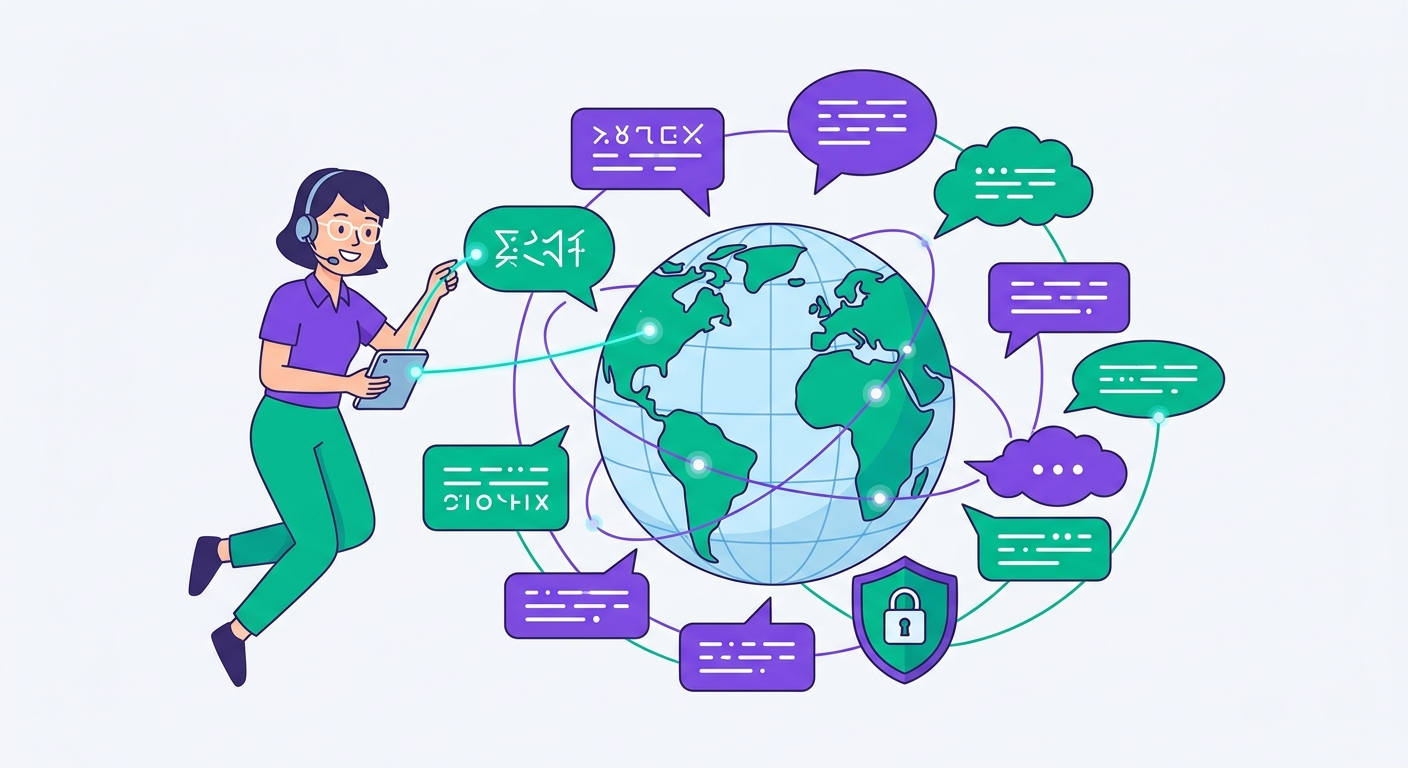
Qualz.ai supports this workflow directly: AI-moderated interviews participants can take on their own, multilingual voice and text, PII redaction before transcripts reach program staff, and analysis that shows dissenting and minority themes instead of averaging them away. For teams building program evaluation on this foundation, our guide to building a qualitative evidence base for nonprofit program improvement covers the next step.
Practical Takeaways
- Audit who is asking. List every feedback touchpoint and mark any where the interviewer controls access to services or influences the relationship. Move those first.
- Make anonymity specific. Replace "your answers are confidential" with a concrete list of what staff will and will not see, and design your data flow so the list is true.
- Open with third-person questions. Ask about "people like you" and "other donors" before asking about personal experience. Save direct questions for after the participant has already named the problem.
- Pay automatically and modestly. Send incentives on completion through a channel separate from the program, sized to respect people's time, not to create obligation.
- Code gratitude on its own. Tag thanks and praise as their own category, then analyse whatever substantive content remains. Look closely at clauses that begin with "but" and "just."
- Chase the non-responders. Offer a second, lower-effort channel, such as voice, text or a different language, and compare those responses with the first wave. The gap between them is your Gratitude Tax.
- Distrust near-unanimous praise. If more than 85 percent of interviews are uniformly positive, treat it as a problem with how you collected the data before you treat it as an impact finding.
If your organisation is scaling beneficiary or donor feedback and wants to see how this works on real program data, book a Qualz.ai information session. We will walk through an interview design built to capture candor, not thanks.