The Trap of Fresh Memory
There is a seductive logic to interviewing users right after they onboard. Their memory is sharp, every friction point is still stinging, and getting to them early feels like catching the truth before it fades. Research operations teams optimize for it -- shorter recruitment lag, higher response rates, richer emotional detail. It looks like a best practice.
It is often a mistake. When you interview a user in their first days, you are not studying how they use your product. You are studying what it feels like to be a novice at your product -- a fundamentally different and temporary thing. The confusion, the wrong turns, the surprise at where a button lives: those are real, but they are artifacts of unfamiliarity, not durable signals about your design. Time the study wrong and you will confidently ship fixes for problems that would have dissolved on their own by week three.
Two Different Users Wearing the Same Name
The person in their first session and the person in their fifth week are, for research purposes, two different participants. The novice is decoding your interface, building a mental model, and narrating friction that is mostly the cost of learning. The established user has automated all of that and is now hitting the real, durable frictions -- the ones that survive familiarity and actually shape retention.
Interview the novice and you get a catalog of learnability complaints. Interview the established user and you get usability truth. Confusing the two is a version of the novelty confound, where first-session excitement or friction masks the durable experience underneath. The early emotional intensity is exactly what makes the data feel trustworthy and exactly what makes it misleading.
Why Early Recall Is Not Better Recall
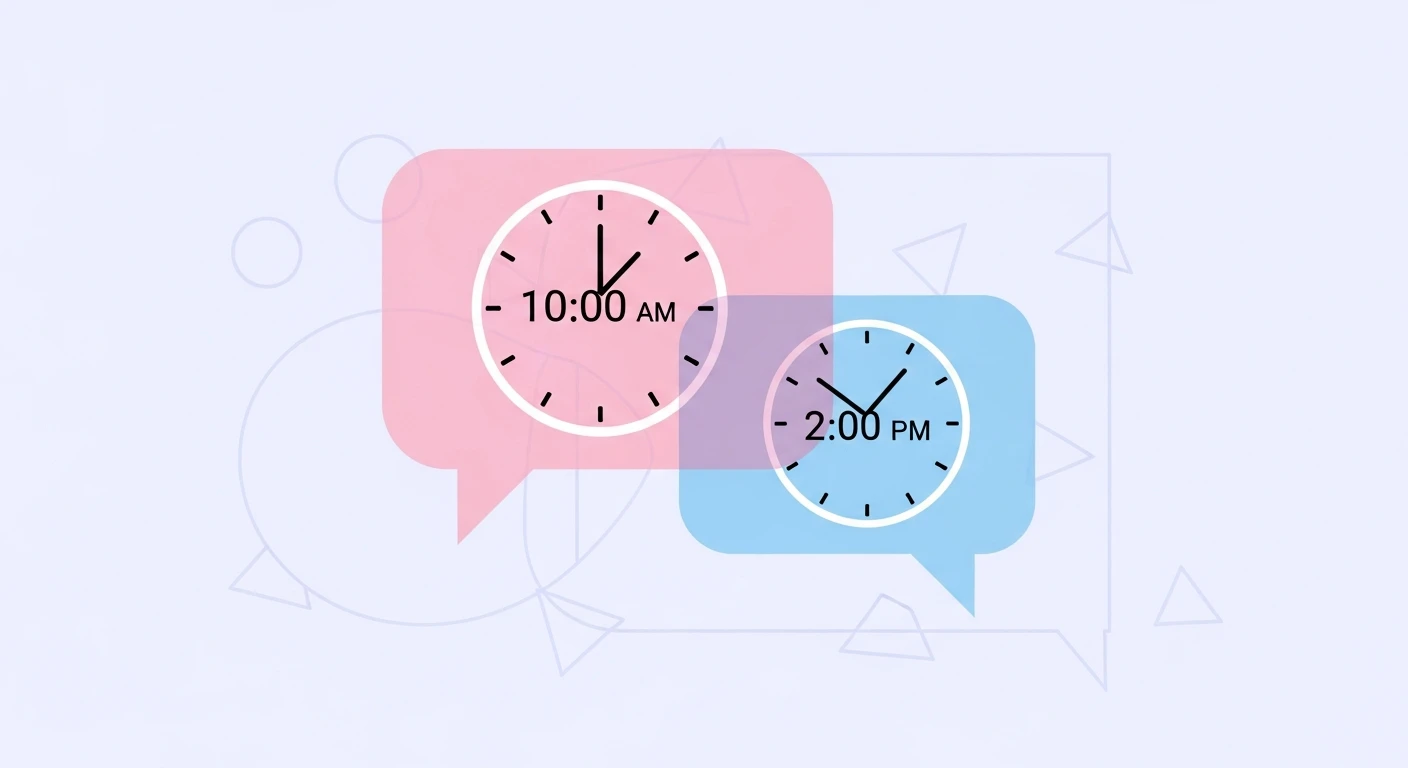
The assumption propping up early interviews is that fresher memory means more accurate memory. But accuracy is not the issue -- relevance is. A first-week user recalls their onboarding vividly precisely because it was effortful and unusual, and asking them to reconstruct that timeline invites the temporal-anchoring distortions that come with retrospective memory. Vivid does not mean representative. The moments that burn brightest in a beginner's memory are the ones least likely to still matter once the product becomes routine.
There is a second distortion. Early users have not yet formed a stable relationship with the product, so their reported intentions are aspirational rather than behavioral -- "I'll definitely use this every day" is a statement about hope, not habit. Come back weeks later and the retrospective distortion effect will have quietly rewritten those pre-adoption intentions to match what actually happened. Interview at the wrong moment and you capture the fiction; interview at the right one and you can compare it to reality.
The Cost of Acting on Novice Data
When a roadmap gets built from first-week interviews, the predictable result is over-investment in onboarding polish and under-investment in the frictions that actually drive churn. You smooth the first ten minutes of an experience while the problems that make people quit in month two go unstudied, because you never interviewed anyone who reached month two.
This is how teams end up with beautiful onboarding and stubborn retention curves. The research pointed them at the loudest problems, not the most consequential ones -- the interviewing analog of the surrogate endpoint problem, where task-completion metrics mislead about real-world adoption. Early friction is a surrogate. Sustained behavior is the endpoint you actually care about.
Timing Research to Behavioral Stabilization
The fix is to treat interview timing as a research-design decision, not a recruitment convenience.
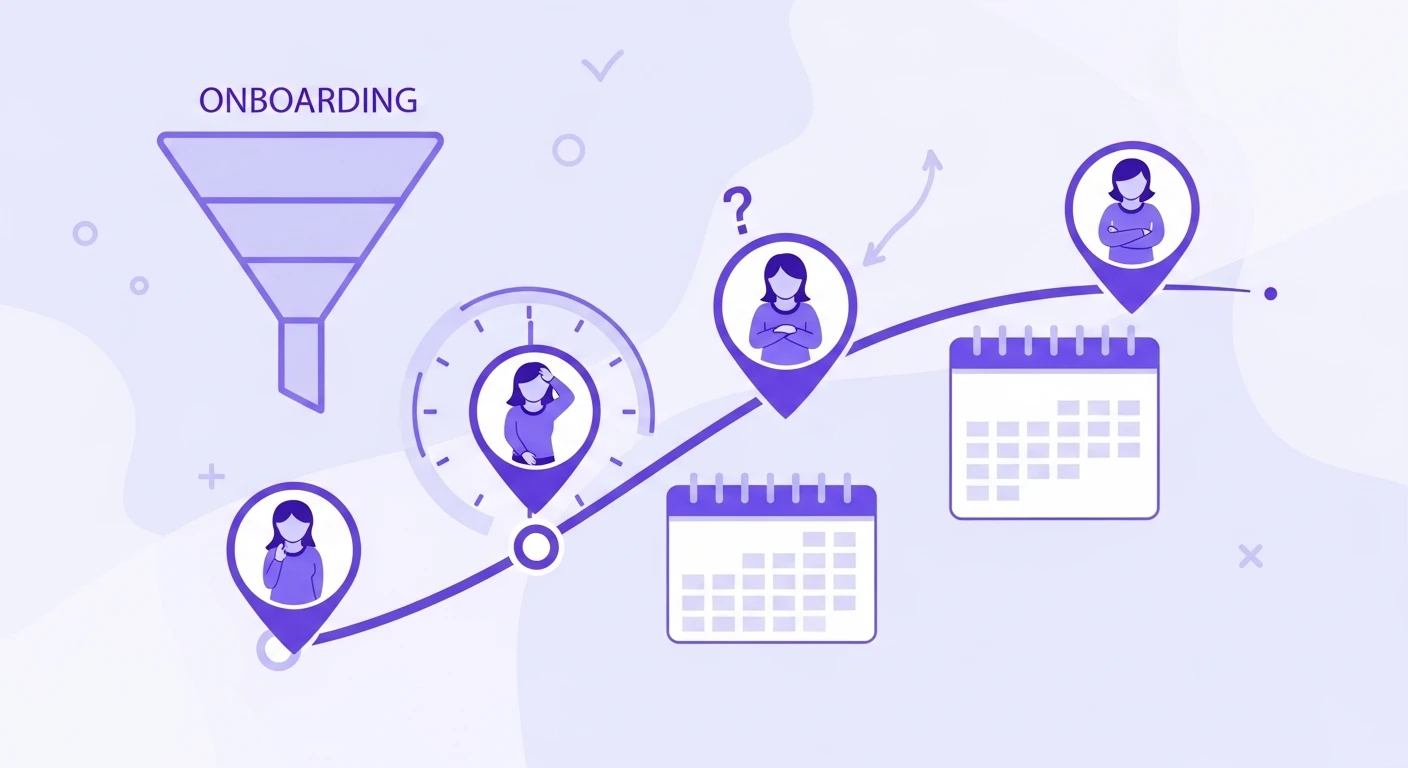
Anchor to behavior, not to calendar days. "One week post-signup" is arbitrary. "After the user has completed their third meaningful session" ties recruitment to the point where a mental model has actually formed. Behavioral triggers beat time triggers because stabilization happens at different speeds for different users.
Split your sample by tenure deliberately. Run one cohort of genuine novices to study learnability, and a separate cohort of established users to study durable usability -- and never blend their findings into one theme. Keeping them distinct is exactly the theoretical sampling discipline that treats different user states as different sampling strata rather than noise to average away.
Pair a moment-of-use capture with a later reflective interview. Catch the friction in situ when it happens, then interview weeks later once behavior has settled -- and triangulate. Neither snapshot alone is trustworthy; together they separate the temporary from the durable, the core logic of triangulating multiple methods before making a product decision.
Consider longitudinal instead of one-shot. For anything retention-critical, a diary study beats a single interview, because diary studies reveal the slow-building frictions that a one-time interview structurally cannot see.
Governing the Timing Decision
The deeper issue is that interview timing is usually implicit -- driven by whoever is available and whenever recruitment lands -- rather than governed. Mature research operations make the recall window an explicit, documented parameter of every study: what user state are we sampling, why that state, and what behavior triggers recruitment. Treating timing as a first-class variable is the same instinct behind governed, auditable AI systems where the conditions of data capture are recorded rather than assumed. If you cannot say what tenure your participants were at, you cannot say what your findings actually describe.
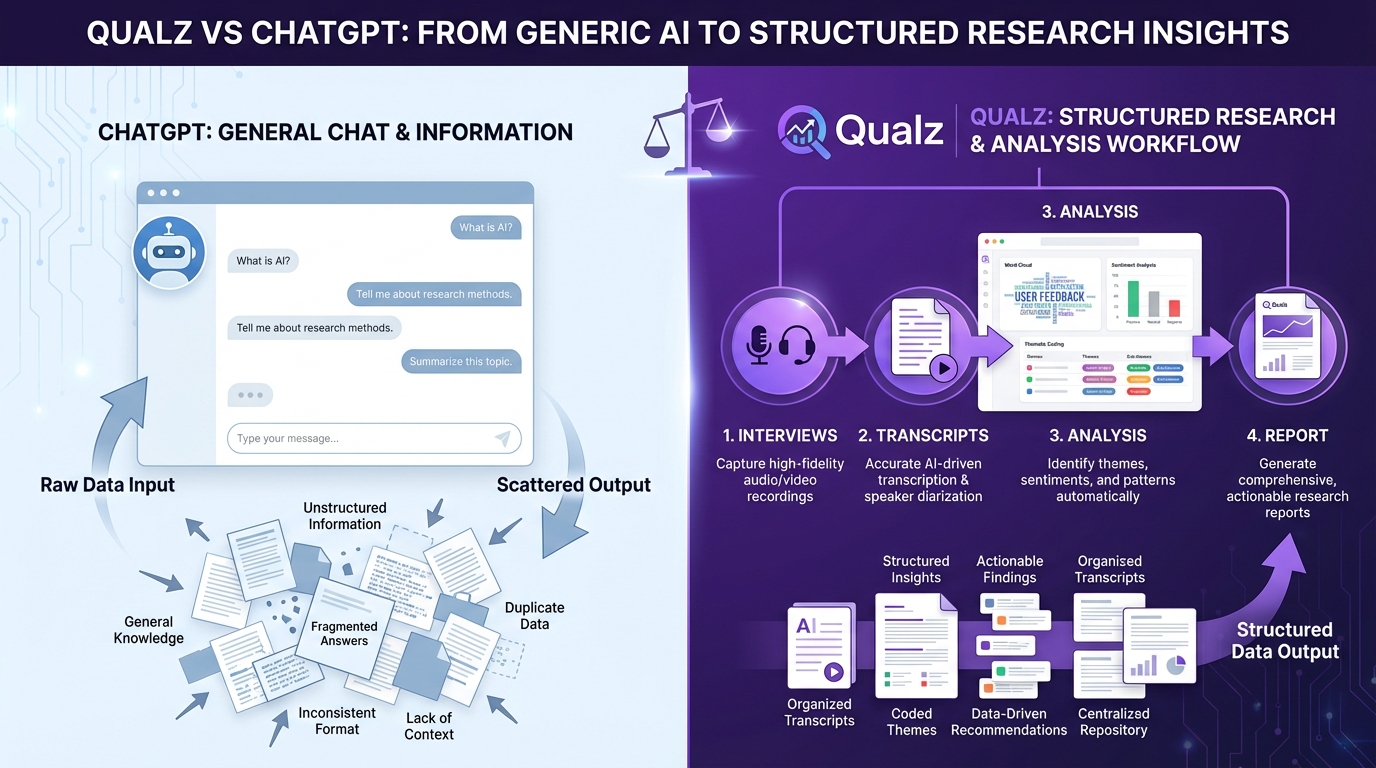
At Qualz.ai, we build studies that recruit against behavioral milestones rather than arbitrary days, so the users you talk to are the ones whose experience actually predicts what happens next -- not the ones who simply signed up most recently.
The Bottom Line
Fresh memory is not the same as relevant memory. The first week of a product experience is dominated by the temporary work of learning, and interviewing inside that window measures the beginner, not the user. Time your research to when behavior stabilizes, keep novices and established users in separate strata, and treat the recall window as a decision you make on purpose. The goal is not to talk to users while the experience is vivid -- it is to talk to them once it has become true.