The Guessable Screener Problem
Here's a question that turns up in most B2B screeners in some form: "Which of the following best describes your involvement in purchasing software for your team?" The options go from "I have no involvement" up to "I am the final decision-maker." Anyone taking it can see the study is about buyers, so anyone who wants the $150 incentive picks the top option.
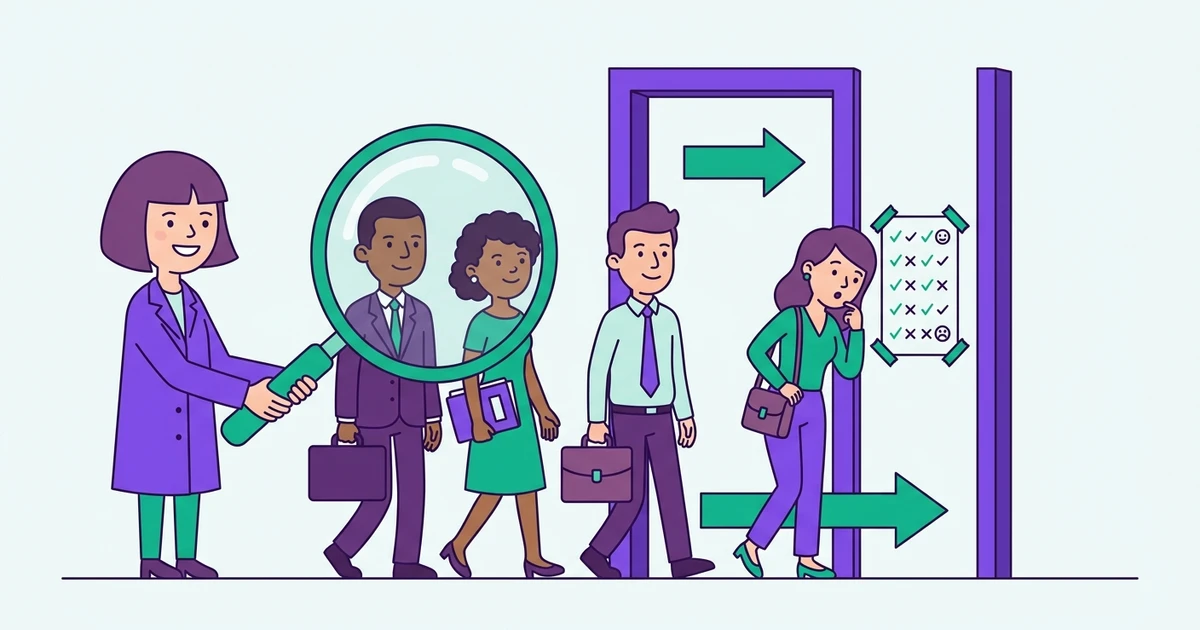
That's the Guessable Screener Problem: the question shows its own right answer, so it ends up measuring whether the respondent can read the study's intent, not whether they have the role. In B2B studies, where the incentives are higher and the people you want are hard to find, it may be the biggest source of bad sampling that nobody catches. The sessions still happen and the transcripts look fine. But the decision-maker you interviewed was a coordinator who sat in on one vendor demo.
How respondents game a screener
Gaming a screener doesn't take a professional fraudster. It happens through a few ordinary mechanisms.
The right answer is obvious. If every option but one screens you out, and that one sounds most senior, most active or most involved, respondents can work it out. B2B panels are full of people who have taken dozens of screeners and know what gets them through.
The questions are only about identity. "What is your job title?" "Do you manage a team?" "Do you use a CRM?" Each of these asks the respondent to label themselves. Labels are cheap to claim, and in B2B they're blurry anyway. A "Head of Operations" at a 12-person startup and one at a 4,000-person logistics firm have very little in common.
Confirming is easier than describing. Answering "yes, I use Salesforce weekly" costs nothing. Explaining what you did in Salesforce last Tuesday costs something. Screeners built from checkboxes make lying free.
People stretch the truth rather than invent it. As we covered in the screener honesty paradox, most people who game a screener aren't lying outright. They round up. The influencer calls themselves the decision-maker. The quarterly user calls themselves weekly. The person evaluating tools says they own the budget. Every one of these is near enough to true that the respondent doesn't feel dishonest, and that's why it happens so often.
Why B2B gets hit hardest
Consumer studies have gaming too, but three things make B2B worse.
First, the incentive gap. B2B incentives often run $100 to $300 for an hour, several times what consumer studies pay, so people have more reason to stretch their answers.
Second, you can't easily check. In consumer research the behaviour you're screening for is often observable. In B2B, what you're screening for (budget authority, a role in evaluation, how deeply someone uses an internal workflow) sits inside an organisation you can't see into.
Third, the gap between the real target and the next-closest role is small in a way that misleads you. An adjacent person can talk fluently about the category. Someone who attends procurement meetings knows the vocabulary. They just don't know what drives the decision: the political trade-offs, the objection from the CFO, the vendor that got cut in round two for a reason nobody wrote down.
What it does to your findings
The damage doesn't look like noise. It looks like a consistent tilt in one direction.
Picture a 30-person research consultancy running a buyer study for a client in mid-market HR software. They screen for "primary decision-maker for HR technology purchases." Fourteen interviews later, the synthesis says integrations and price drive buyer choice. The client reprices and puts an integration marketplace on the roadmap.
When the sales team later cross-checked the recruited companies against closed deals, it turned out five of the fourteen participants were HR generalists who had given input on an evaluation but didn't own it. They talked about integrations and price because those are the features you can see from the evaluation table. The actual owners, the CHROs and the people-ops leads carrying compliance risk, cared about audit trails and implementation risk. That theme showed up in only three transcripts, so it got coded as a minority view.
This is how gaming changes decisions. Adjacent participants aren't random. They share a vantage point, so they converge on the same surface-level themes. And that agreement looks like saturation. A third of your sample gamed the screener, and their shared view outvotes the real segment. It's related to the persona collapse problem: two different populations get merged into one "buyer," and the product team designs for a person who doesn't exist.
Engineers building AI evaluations run into the same thing in a different form. When test data leaks into the thing being tested, every score goes up and nobody sees why. The eval set contamination problem describes this in machine learning. A guessable screener is contamination at the recruitment stage: the filter that should separate real signal from lookalikes is itself compromised, so everything built on it looks more solid than it is.
Speed makes it worse. As we described in the recruitment velocity trap, the fastest panel fills come disproportionately from high-frequency respondents, who are the people most practised at spotting right answers.
Writing screeners that are hard to game
The principle: make qualifying expensive to fake and cheap to do honestly. Someone who really has the role should find the screener easy. Someone who doesn't should have to invent a lot of convincing detail.
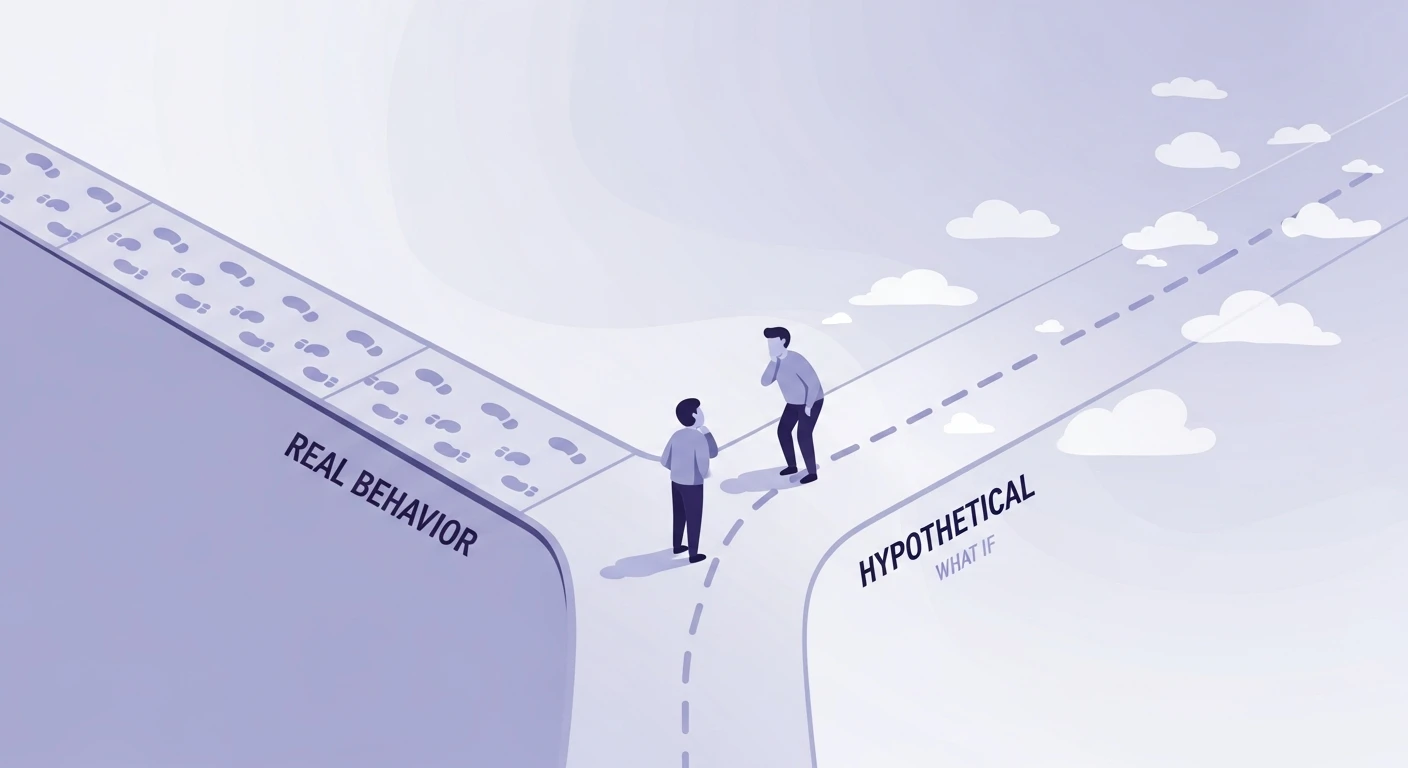
Ask about behaviour, not identity
Swap "Are you the decision-maker for X?" for questions about what the person has actually done:
- "In the last 12 months, which of these have you personally done?" Then list specific actions: signed a vendor contract, set the evaluation criteria, presented a recommendation to finance, run a pilot, negotiated a renewal. Mix in actions from roles you don't want.
- Put the qualifying combination somewhere in the middle of the list, not at the top.
A coordinator can claim a title. It's harder for them to pick out the specific set of actions an owner would have done.
Hide what you're screening for
Mix your target criteria in with questions that don't matter. If you're after procurement owners, add questions about team size, tool categories and meeting cadence, and keep the real filter out of sight. When respondents can't tell which answer counts, they can't aim for it. That same logic is why screener leakage, where the screener hints at your hypothesis, is so damaging.
Put in a question with no right answer
Add one or two questions where every option qualifies, or where the "impressive" option screens people out. For example: "How many tools did you seriously evaluate in your last purchase?" A real owner typically says two to four. Someone who picks "10+" to sound thorough has told you something. You aren't trapping people. You're checking whether answers look like actual experience.
Require at least one open-text answer
Checkboxes are free to tick. One short open answer costs something to fake: "Briefly describe the last time you had to justify a software purchase internally. Who pushed back, and on what?" Real owners write specific, slightly awkward answers with names of teams and real friction. Adjacent people write generic lines like "we compared features and pricing." You'll see the difference in about ten seconds per response, and it's the best filter you have.
Ask for detail you could check
For high-stakes studies, ask things that would be easy for a real participant to answer and embarrassing to make up: roughly how big the contract was, how long the evaluation took, which departments signed off. You probably won't verify most of them. Asking is enough to put many people off stretching the truth.
Re-screen in the first three minutes of the call
The screener is only the first gate. Start every B2B session with a short, conversational check that maps to your criteria: "Walk me through how the last purchase in this category actually happened, from first conversation to signature." Within a few minutes you'll know whether you have an owner or an observer. Decide ahead of time what happens when it's an observer. Pay them, finish politely, and tag their transcript so it's analysed separately or not at all. Don't mix it into the main sample.
Doing it at volume
These techniques are simple, but they take time. Reading open-text answers, spotting answers that don't look like real experience, and tagging sessions where the re-screen failed are all tedious by hand across 200 screener responses and 20 interviews. So teams fall back to checkboxes.
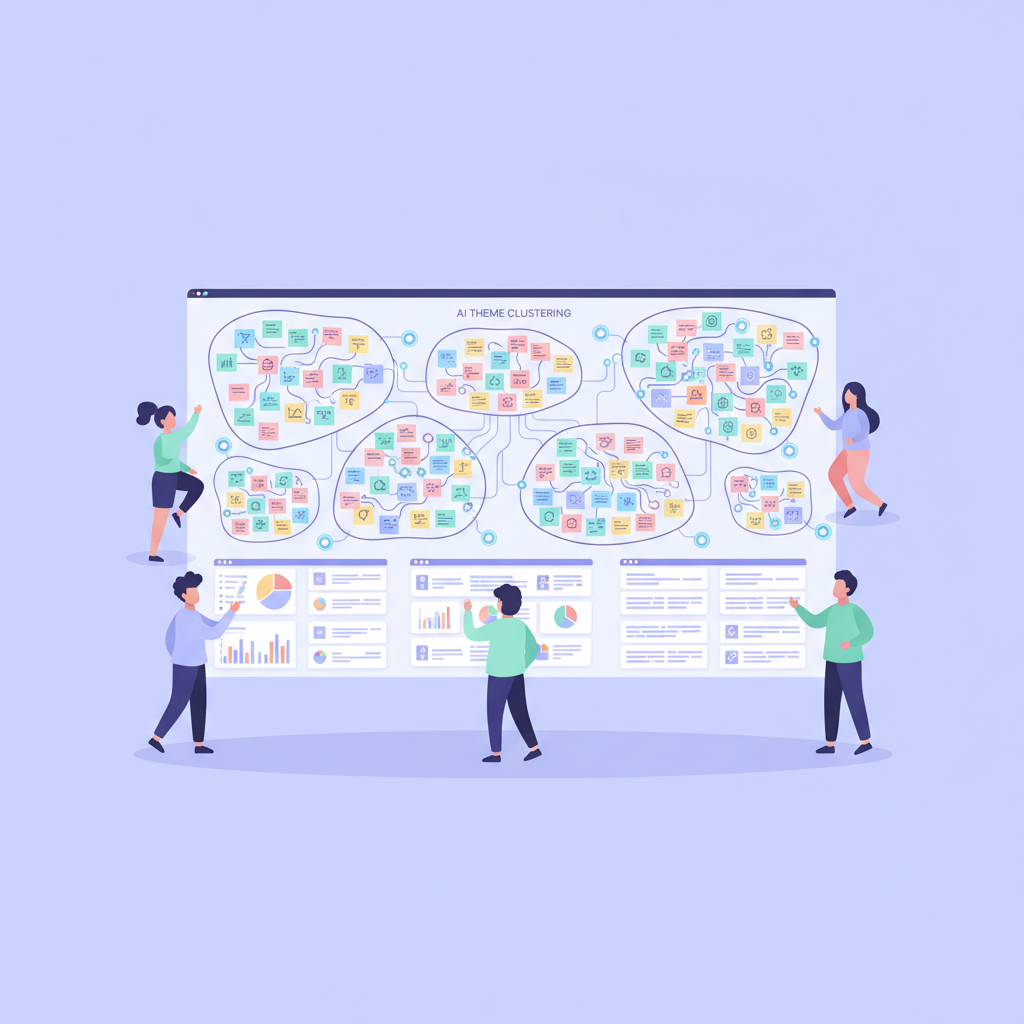
This is where AI-assisted workflows help. In Qualz.ai, you can run the first-minutes re-screen as a structured part of an AI-moderated session and flag transcripts where the participant's account of their role doesn't match their screener answers. During synthesis, you can filter themes by verified role, so the adjacent participants' shared view doesn't get to outvote the segment you're designing for. If an integration theme only comes from the unverified half of the sample, that should change how much weight it gets.
Practical takeaways
- Go through your current screener and underline every question with an obvious right answer. If the qualifying option is also the most senior, frequent or involved one, rewrite it.
- Replace identity questions with multi-select lists of specific past actions, including decoy actions from roles you don't want.
- Add at least one required open-text question asking for a specific recent episode, and read every response before you schedule anyone.
- Include a question where the impressive answer is suspicious, so you can spot respondents who are exaggerating.
- Plan a three-minute re-screen at the start of every session, and write down in advance what you'll do when someone fails it.
- Tag participants by verified role and analyse the groups separately. A theme that only appears among unverified participants is a warning sign, not a finding.
- After the study, cross-check your sample against ground truth such as CRM records, deal owners or account data, and use what you find to recalibrate the next screener.
A screener exists to check eligibility, and a guessable one doesn't. If your last B2B study produced tidy agreement on themes that feel like surface-level observations, check the screener before you trust the findings. If you'd like to see how Qualz.ai handles role verification and segment-aware synthesis on a live study, book an information session with our team.