Every research team has a graveyard. It is not labeled as such — it looks like a shared drive folder called "Interview Transcripts Q3" or "Focus Group Notes 2024" or "Open-Ended Responses - Customer Study." Inside are hundreds of hours of qualitative data that someone collected, someone transcribed, and nobody fully analyzed.
This is not a filing problem. It is a financial problem. The cost of collecting qualitative data — recruiting participants, compensating them, conducting interviews, transcribing recordings — is substantial and well-tracked. The cost of failing to extract full value from that data is substantial and almost never tracked. That asymmetry is where research budgets quietly hemorrhage.
The ROI of qualitative research is not determined by how much data you collect. It is determined by how much of that data you convert into structured, analyzable, actionable insight. And for most organizations, that conversion rate is embarrassingly low.
Quantifying the Waste
Let us put numbers to the problem. These are conservative estimates based on typical research operations.
Cost to produce one hour of interview data:
- Participant recruitment: $50-150 per participant (more for specialized populations)
- Participant incentive: $50-200
- Interviewer time (prep, conduct, debrief): 2 hours at $75-150/hour = $150-300
- Transcription: $1-2 per minute = $60-120 per hour of audio
- Platform and tooling costs: $10-25 per interview
Total per interview hour: $320-795
For a mid-sized research study with 40 one-hour interviews, you are looking at $12,800-$31,800 just to produce the raw transcripts. A research team running four studies per year spends $51,200-$127,200 annually on data collection alone.
Now ask the uncomfortable question: what percentage of that data gets fully analyzed?
Most research teams will admit — if pressed — that they deeply analyze about 30-40% of their qualitative data. The rest gets skimmed, partially coded, or filed away with the intention of returning to it later. That intention rarely materializes. The next study starts, priorities shift, and last quarter's transcripts join the graveyard.
At a 35% utilization rate, a team spending $100,000 annually on qualitative data collection is effectively wasting $65,000 per year on data that never produces insights. Over five years, that is $325,000 in sunk costs sitting in shared drives — research that was funded, conducted, and then abandoned before it could deliver value.
This is not a researcher laziness problem. It is a structural problem with how qualitative data has traditionally been analyzed.
Why Qualitative Data Goes Unanalyzed
The utilization gap exists because manual qualitative analysis does not scale. The methods most researchers learned in graduate school — reading transcripts, highlighting passages, writing memos, developing codes, building themes — are thorough when applied to 10 transcripts. They are punishing when applied to 40. And they are functionally impossible when applied to the cumulative data an organization produces over multiple studies.
Analysis takes longer than collection. A one-hour interview takes one hour to conduct and 4-8 hours to fully code and theme manually. When the analysis-to-collection ratio is 4:1 or higher, research teams inevitably fall behind. New data comes in faster than old data gets analyzed.
Codebook fragmentation. Each study develops its own codebook. Codes from Study A do not map cleanly to codes from Study B, even when both studies explored similar topics with similar populations. Cross-study synthesis — which is where the most valuable organizational insights live — requires reconciling incompatible coding schemes. Few teams have the time or methodology to do this well.
Institutional knowledge walks out the door. The researcher who coded those transcripts last year understood the nuances of the coding decisions. When they leave the organization — or simply move to a different project — their contextual knowledge leaves with them. The transcripts remain, but the analytical framework that made them interpretable is gone.
The 80/20 trap. Under time pressure, researchers rationally focus their deepest analysis on the 20% of data that seems most relevant to the immediate research question. This produces a defensible report for the current project but leaves 80% of the data underexplored. Insights that do not fit the current question — but might answer next quarter's question — are never surfaced.
The result is predictable: organizations continuously invest in new data collection while sitting on a growing archive of underanalyzed existing data. They are buying new ingredients while letting the pantry rot. Anyone who has experienced the frustration of qualitative evidence that never gets used for program improvement will recognize this pattern immediately.
What Structured Qualitative Data Actually Means
"Structure" in qualitative data does not mean reducing rich narratives to numbers. It means organizing qualitative data so that it can be systematically queried, compared, and synthesized across transcripts, studies, and time periods.
Structured qualitative data has these properties:
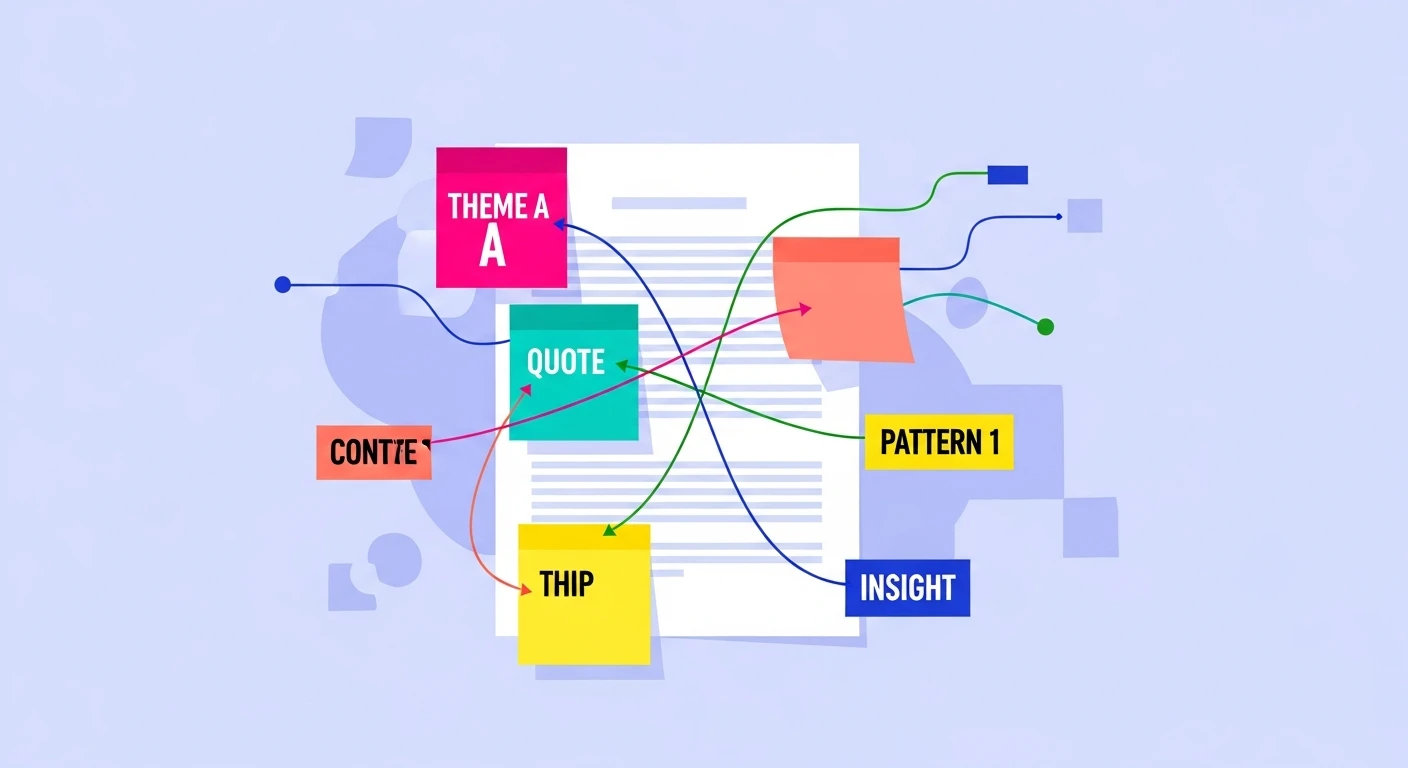
Consistent coding. Every relevant passage across every transcript is tagged with codes from a coherent, well-defined codebook. The same concept is coded the same way whether it appears in transcript 3 or transcript 43.
Hierarchical themes. Codes are organized into thematic hierarchies that show how granular observations connect to higher-order patterns. A code like "scheduling conflict" connects to a theme like "access barriers" which connects to a domain like "program participation challenges."
Cross-referencing. Any theme can be traced back to the specific passages that support it, across all transcripts. When a stakeholder asks "what evidence supports this finding?", the answer is immediate and comprehensive rather than reconstructed from memory.
Metadata linkage. Coded data connects to participant demographics, study parameters, and temporal markers. You can answer questions like "did participants in Region B describe access barriers differently than participants in Region A?" or "how did perceptions of program quality change between the Year 1 and Year 2 evaluations?"
Synthesizability. Data from multiple studies can be combined and compared because it shares a common analytical structure. The interviews from your 2024 customer study and your 2025 customer study produce additive insight rather than sitting in separate, incompatible silos.
This level of structure is what turns qualitative data from a cost center into an asset. And until recently, achieving it manually at any meaningful scale was impractical for most research teams.
How AI-Powered Coding and Theming Changes the Economics
AI-powered qualitative analysis does not just speed up the coding process. It fundamentally changes the cost structure of qualitative research in ways that make full data utilization economically rational for the first time.
Every Transcript Gets Fully Coded
When the marginal cost of coding an additional transcript drops from 4-8 hours of analyst time to minutes of compute time, there is no longer a reason to leave any transcript unanalyzed. The 40 interviews from your current study all get the same depth of analysis — not just the 15 that seemed most promising during a quick skim.
This alone can double the insight yield of a typical research study without any additional data collection spend.
Codebook Consistency Is Automatic
An AI system applies the same codebook with the same definitions to every passage in every transcript. There is no drift, no fatigue, no gradual reinterpretation of what a code means after coding 30 transcripts. The consistency that qualitative methodologists aspire to — and that human coders approximate at best — becomes the default. For a deeper look at how AI handles this, see our guide on AI-powered open coding.
Cross-Study Synthesis Becomes Feasible
This is where the ROI multiplier kicks in. When every study produces consistently structured data, comparing and synthesizing across studies becomes straightforward rather than heroic.
Your 2024 Q1 customer interviews and your 2025 Q1 customer interviews can be analyzed with the same framework, producing trend data that shows how customer needs, perceptions, and pain points have evolved over 12 months. Your product research and your market research can be cross-referenced to identify where customer-reported problems align with market opportunities.
This cross-study synthesis is the qualitative equivalent of a longitudinal database. It is enormously valuable. And it has been practically impossible for most organizations because each study's data was coded differently, stored differently, and analyzed by different people.
The 14 Lenses Multiply Insight per Data Point
Qualz offers 14 specialized analytical lenses — including Thematic Analysis, Jobs-to-Be-Done, Sentiment and Emotion Spectrum, Narrative Arc, Persona Stem and Task Flow, Framing and Discourse, Stakeholder Equity Audit, and more. Each lens examines the same data through a different interpretive framework.
A single set of 40 interview transcripts analyzed through five lenses produces five distinct analytical outputs. The same data yields insights about what participants are trying to accomplish (JTBD), how they feel about it (Sentiment), how they narrate their experience (Narrative Arc), and who benefits or is excluded (Stakeholder Equity Audit). For a comprehensive overview, see our deep dive on multi-lens analysis for qualitative data.
Manually applying five analytical frameworks to 40 transcripts would take months. With AI-powered analysis, it takes hours. The insight-per-dollar ratio of your data collection investment multiplies accordingly.
Calculating Your Actual ROI
Here is a framework for quantifying the return on structuring your qualitative data:
Step 1: Calculate your annual data collection spend. Include recruitment, incentives, interviewer time, transcription, and platform costs across all qualitative studies.
Step 2: Estimate your current utilization rate. What percentage of collected data gets fully coded and themed? Be honest. If you are like most teams, it is 30-40%.
Step 3: Calculate the waste. Annual spend multiplied by (1 minus utilization rate). If you spend $100,000 and utilize 35%, your annual waste is $65,000.
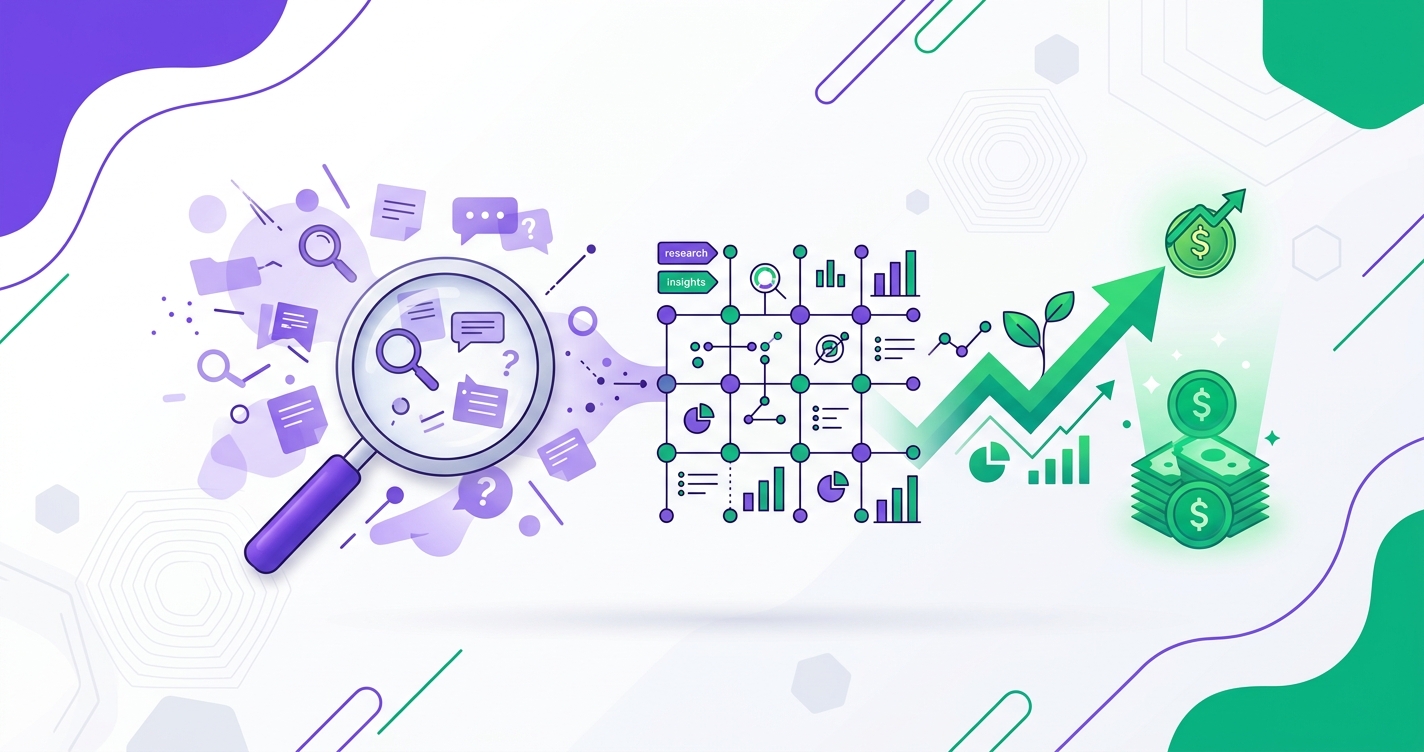
Step 4: Project the structured alternative. With AI-powered coding, utilization approaches 100% — every transcript gets fully analyzed. Your $100,000 in data collection now produces $100,000 in analyzed data instead of $35,000. That is a $65,000 improvement in insight yield without spending a dollar more on data collection.
Step 5: Add the cross-study multiplier. Structured data from multiple studies can be synthesized, producing insights that no single study could generate. This is harder to quantify but consistently cited by research leaders as the most strategically valuable outcome of systematizing their qualitative data.
The organizations that structure their qualitative data do not just save money on analysis. They extract dramatically more value from every dollar they spend on data collection. The research budget does not change. The return on that budget doubles or triples.
The Organizational Shift
Moving from unstructured to structured qualitative data is not just a tool change. It is an operational shift in how research teams think about their data.
Data as asset, not artifact. Transcripts stop being deliverables that mark the end of a project phase and start being assets that accumulate value over time. Each new study adds to the organization's qualitative knowledge base rather than creating a new standalone silo.
Analysis as standard, not stretch goal. When full analysis is fast and affordable, it stops being something that happens when there is time and budget left over. It becomes a standard step in every research project, as routine as transcription.
Research as cumulative intelligence. The most sophisticated research organizations do not treat each study as independent. They build cumulative understanding — where this quarter's findings build on and refine last quarter's findings. This requires structured data. Without it, cumulative research is just a pile of PDFs in a shared drive.
Getting Started
If your organization collects qualitative data — interviews, focus groups, open-ended survey responses, stakeholder conversations — you are either structuring that data systematically or you are wasting a quantifiable portion of your research investment.
The gap between these two states is not as large as it seems. AI-powered qualitative analysis platforms like Qualz can process your existing backlog of unanalyzed transcripts alongside your new data, creating a unified structured dataset that immediately starts producing compounding returns.
Book an information session to walk through your specific research operation. Bring your data collection budget and your honest estimate of your utilization rate. The ROI case will make itself.
The question is not whether you can afford to structure your qualitative data. It is whether you can afford to keep paying for data you never fully use.