The Questions You Care About Most Get the Least
Open almost any discussion guide and you will find the same shape. Warm-up and easy context questions at the top. The genuinely hard, high-stakes questions -- the ones the whole study exists to answer -- clustered near the bottom. The logic feels sound: build rapport first, earn the right to ask the difficult things, save the big swing for when trust is highest.
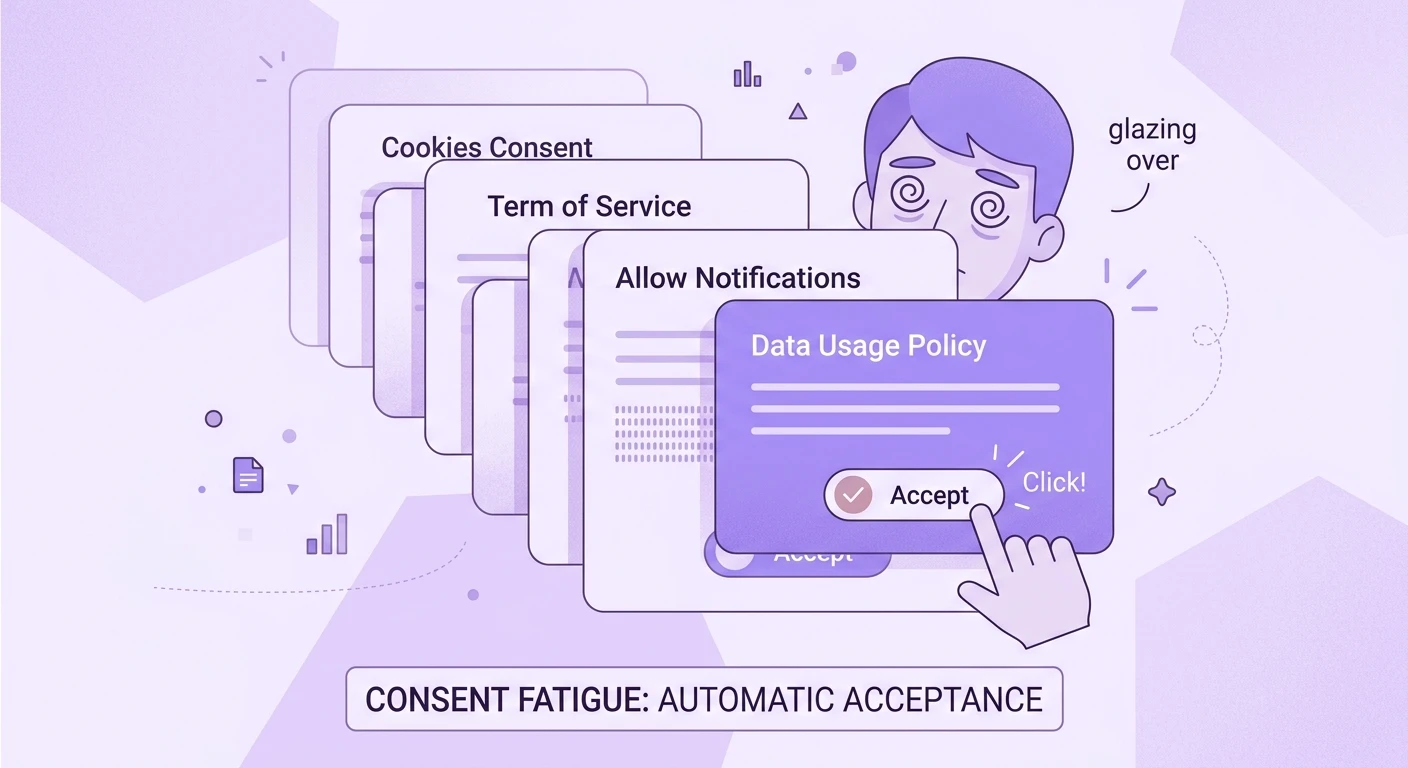
But trust is not the only thing changing over the course of an hour. Attention is draining, working memory is filling with everything already discussed, and the participant's motivation to construct a careful, effortful answer is quietly collapsing. By the time you reach the question you care about most, you are asking it of a person who has the least capacity left to answer it well. Question order fatigue is the systematic degradation of answer quality as a function of position in the guide -- and it means your most important questions routinely land in the worst possible slot.
Why Late Questions Get Thin Answers
Answering an open-ended interview question well is real cognitive work. The participant has to retrieve a memory, interpret what you are actually asking, weigh competing considerations, and assemble a coherent verbal response. Every one of those steps costs effort, and that budget is finite within a session.
Retrieval gets lazier. Early on, a participant will dig for a specific episode. Late in the session, they reach for whatever is closest to the surface -- a generality, a recycled phrase, the answer they already gave to an adjacent question. This is closely related to the probe depth ceiling, where each additional follow-up yields worse data than the one before; fatigue does to the whole session what over-probing does to a single thread.
Satisficing replaces optimizing. A tired participant stops trying to give the best answer and starts trying to give an acceptable one. The response is not false, it is just shallow -- enough to be polite, not enough to be useful.
Compliance masks the decline. The dangerous part is that fatigued answers still sound like answers. A participant who follows your task perfectly can be telling you the least, which is the instruction compliance illusion in usability testing. Late-guide answers have the same texture: fluent, agreeable, and hollow.
Trust was never the only bottleneck. The rapport argument for back-loading hard questions assumes candor is the limiting factor. But even a perfectly candid participant cannot manufacture depth they no longer have the energy to produce. And rapport itself is not monotonic -- it erodes over a session too, as the rapport decay curve shows trust fading before you reach the hard questions. You are betting your best question on two resources that are both running down.
The Position Confound in Your Data
Question order fatigue does not just weaken individual answers -- it corrupts comparison. If Question 12 always gets shorter, vaguer responses than Question 3, you cannot tell whether that topic is genuinely less salient to users or simply arrived when everyone was tired. Position and content are confounded, and any analysis that treats late-guide answers as equivalent to early-guide answers is comparing across a hidden gradient.
This is a structural measurement problem, not a moderator skill problem. The same participant, asked the same question at minute 8 versus minute 52, produces measurably different data. If your team fixes question order across all sessions -- which most do, for consistency -- then the fatigue penalty lands on the same questions every single time, quietly and systematically biasing exactly the findings you most rely on. It is a close cousin of the first-question anchor, where the opening question sets a ceiling on everything that follows: position in the guide is doing analytical work you never intended.
Designing Around the Fatigue Curve
Front-load your one must-answer question. Identify the single question the study cannot fail to answer well, and move it earlier than rapport logic would suggest -- often into the first third, right after enough warm-up to orient the participant. Trade a little rapport for a lot of cognitive freshness.
Interleave hard and easy. Do not stack all the demanding questions at the end. Alternate effortful questions with lighter ones so the participant gets micro-recoveries instead of a monotonic decline. Treat attention as a resource you spend and replenish across the session.
Shorten before you soften. When a guide runs long, the instinct is to make late questions easier. Instead, cut. A 35-minute guide where the key question lands at minute 15 beats a 60-minute guide where it lands at minute 50. Depth beats coverage; this is the same discipline behind adaptive interview termination, where ending sooner produces better data.
Randomize order across sessions when you can. If you run enough sessions, rotate the position of key questions so fatigue noise averages out instead of biasing the same topics every time. Then you can actually separate a genuinely low-salience topic from one that was merely asked too late.
Watch for the enterprise parallel. The instinct to keep piling more questions onto a fixed guide mirrors how AI teams keep bolting instructions onto a single prompt until quality quietly collapses -- what enterprise architects call prompt assembly sprawl, where accreting instructions make a system ungovernable. In both cases, the fix is not a longer artifact but a leaner, better-ordered one.
The Takeaway
Where a question sits in your guide is a methodological decision, not a formatting one. Question order fatigue means the last third of your interview is your weakest instrument, and back-loading your most important questions hands them to a participant with nothing left to give. Sequence for cognitive freshness, not just for rapport, and put your best questions where they will get your best answers.
Qualz.ai analyzes response depth and length by question position across your entire study, surfacing exactly where in your guide answers start thinning out -- so you can move your critical questions before the fatigue curve swallows them. Book a demo to see where your best questions are landing.