The Move That Feels Like Good Listening
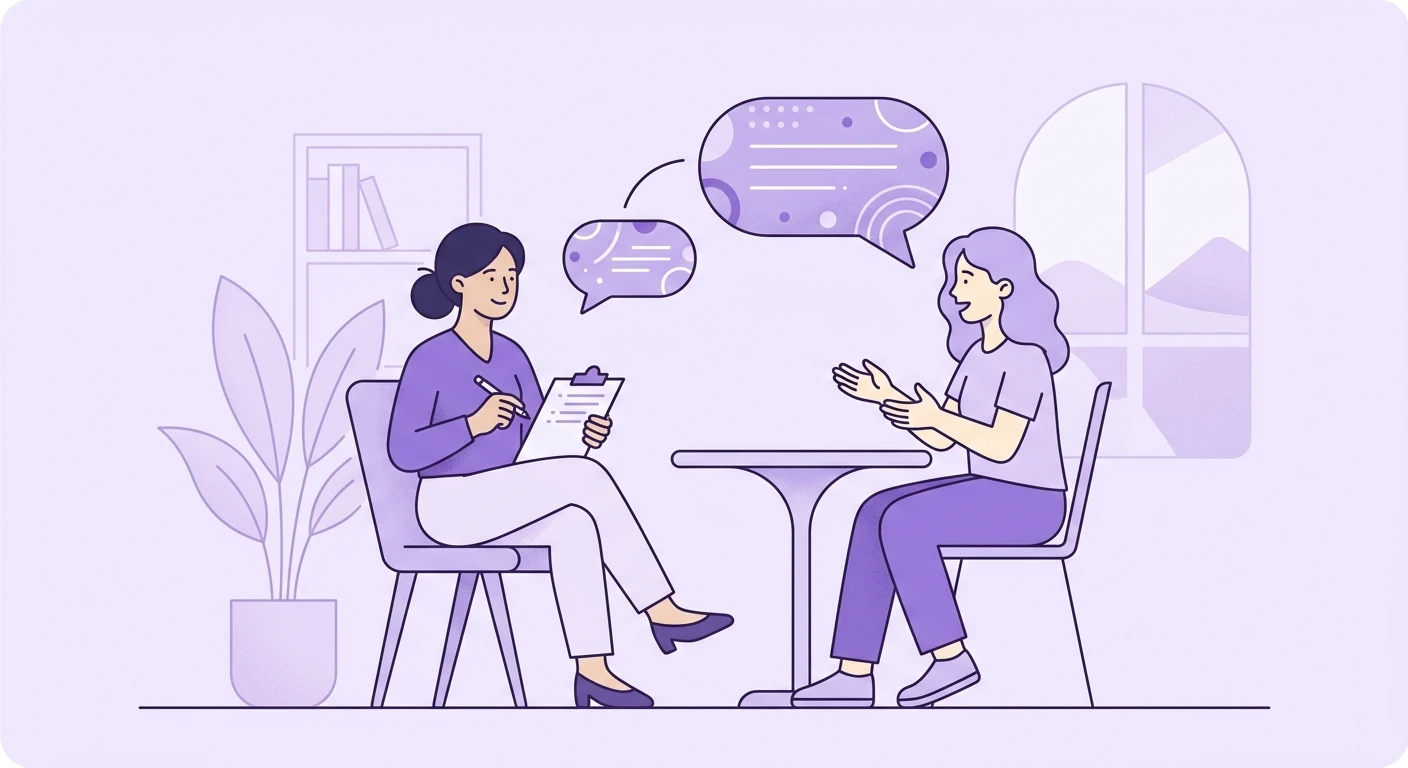
Every interviewer is taught to reflect: "So what I'm hearing is..." It signals attention, builds rapport, and gives the participant a chance to correct you. It is also one of the most reliable ways to overwrite your own data. The instant you paraphrase a participant's tangled, hedged, half-formed answer into a crisp summary, you have manufactured a cleaner artifact than the one they gave you -- and most participants will simply agree with your tidier version, because agreeing is easier than defending the mess they actually meant.
The read-back trap is the systematic distortion that happens when summarizing a participant's answer back to them replaces their real, ambivalent account with your compressed interpretation, which they then ratify as if it were their own.
Why the Read-Back Rewrites the Answer
Compression drops the ambivalence. Real experience is contradictory. A participant might be frustrated and loyal, confused but committed. Your read-back has to choose a through-line, and in choosing it you delete the tension that was the actual finding -- the same collapse you see when AI emotion detection flattens ambivalence into false clarity.
Agreement is the path of least resistance. Once you have offered a fluent summary, disagreeing means correcting an authority figure and reconstructing a messier truth on the spot. Most participants take the easy exit and nod, the same acquiescence dynamic behind the confidence calibration gap, where certain-sounding agreement masks low accuracy.
Your words become their words. A read-back hands the participant your vocabulary and frame, and they carry it forward for the rest of the session -- the vocabulary mirroring effect, where adopting a participant's words, or handing them yours, traps them in a first framing.
It arrives at the worst possible moment. Read-backs cluster right after the participant has said something interesting, which is exactly when you should be probing deeper, not sealing the answer shut.
The Delayed Version Is Even Worse
The trap does not only strike mid-interview. When you send a summary afterward for the participant to confirm, the distortion compounds: they anchor to your written version, not their spoken one, and "confirm" it into permanence. This is the confirmation timing trap, where member-checking rewrites the answers it was meant to verify. The read-back and the member-check are the same error separated by a few days.
How to Reflect Without Rewriting
Reflect with their words, not yours. If you must mirror, echo the participant's exact phrasing -- including the hedges and false starts -- rather than a polished paraphrase. The mess is the data.
Ask instead of summarize. Replace "So you mean X" with "Say more about that." A question keeps the answer open; a summary closes it.
Reflect the tension, not the resolution. When you do read back, name the contradiction: "You said it's frustrating, and also that you'd recommend it -- can you walk me through both?" That protects the ambivalence instead of erasing it.
Delay confirmation, and confirm behavior not summaries. If you validate findings later, do it against what participants did, not against your tidy recap -- and always subject single-session reads to research triangulation before you act on them.
Watch the structure of your prompts. The same discipline that keeps structured outputs faithful in production LLM systems applies to interviews: the shape of what you ask for determines the shape of what you get back, and an over-structured read-back forces a false clean answer.
The Takeaway
Active listening is not the same as active summarizing. The read-back feels generous, but it trades the participant's real, contradictory account for your compressed one -- and then gets them to sign off on the trade. The best interviewers reflect sparingly, in the participant's own language, and treat every clean summary as a warning sign that they may have just overwritten the very data they came to collect. Qualz.ai preserves the full, unsummarized record of every interview so your findings trace back to what participants actually said, not to what you reflected back at them.
Ready to stop overwriting your own data? See how Qualz.ai preserves interview fidelity end to end.