The Ritual Nobody Questions
Pilot your guide. It is the one piece of methodological advice that survives every research training, every ops playbook, every senior researcher's mentorship. Run a practice interview or two, catch the confusing questions, tighten the flow, then field the real study with confidence.
The advice is not wrong. Piloting genuinely surfaces broken questions, ambiguous wording, and timing problems. But the standard framing treats piloting as a purely instrumental act -- you test the instrument, you fix the instrument, the instrument is now better. What it ignores is that the interviewer is also an instrument, and piloting recalibrates that instrument in ways that are far less benign.
By the time you conduct your first real session, you have already heard how the questions land. You have already discovered which prompts produce silence and which produce stories. You have already formed a private opinion about what participants tend to say. You are no longer a curious stranger meeting the topic fresh. You are a performer who has run the show before.
What Rehearsal Does to Curiosity
The core problem is that rehearsal converts open questions into scripted beats. In a genuine first encounter with a research question, an interviewer does not know where the interesting territory lies. That not-knowing is productive. It forces real listening, real follow-up, real surprise.
Piloting erodes that not-knowing along three channels.
Anticipatory framing. Once you have heard two pilot participants answer "walk me through your last renewal decision," you know roughly what shape the answer takes. In the real session, you stop listening for what this participant says and start listening for whether they confirm the shape you already expect. The question is identical. Your attention is not.
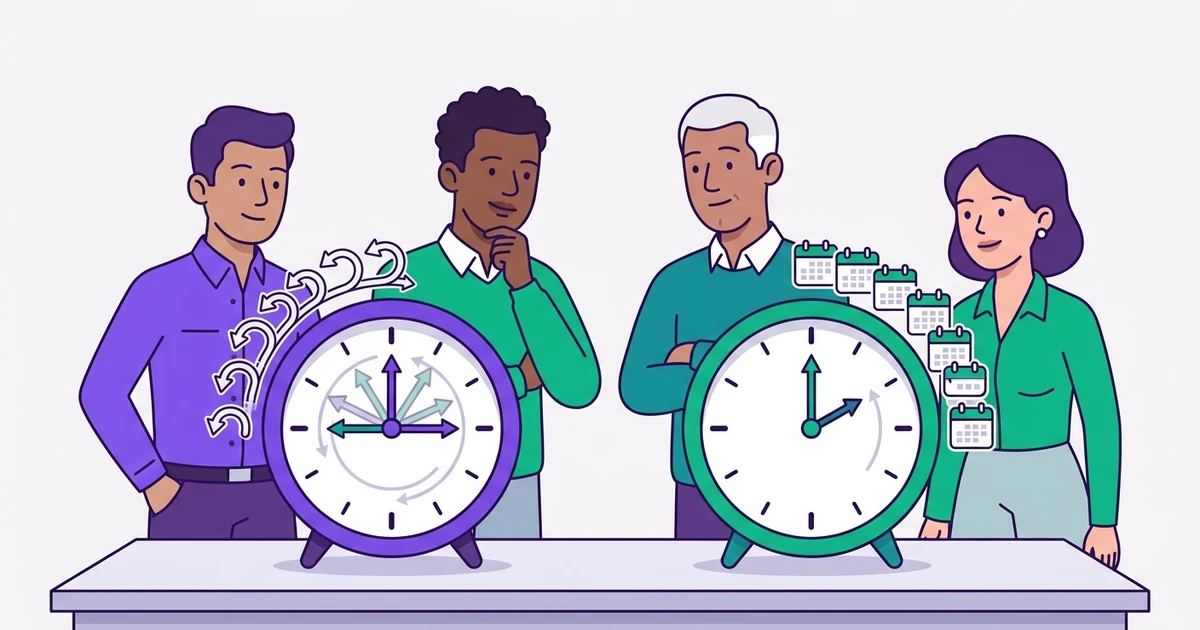
Prosodic flattening. The first time you ask a question, your voice carries authentic uncertainty. The fifth time -- across pilots and early real sessions -- it flattens into recitation. Participants are exquisitely sensitive to this. A rehearsed question signals that the interviewer already has an answer in mind, which is one of the fastest ways to trigger the surface-level compliance described in the warm-up question myth. Rehearsed delivery trains participants to give rehearsed answers.
Premature editing. During piloting you decide which follow-ups "work" and which "waste time." But a follow-up that fell flat with a pilot participant might have been exactly the door that opened a real participant. By pruning your improvisational range before the study begins, you enter real sessions with a narrower repertoire than you had the day you wrote the guide.
The Contamination Gradient
The effect is not uniform. It compounds along a predictable gradient across your early real sessions.
Pilot 1-2: Genuine discovery. Even though these are practice runs, the interviewer is hearing the material for the first time and often gets unusually rich data -- which is why pilot data is so tempting (and so dangerous) to fold into the real dataset.
Real session 1: Peak rehearsal contamination. The interviewer is fresh to this participant but stale to the material. They move faster, probe less, and unconsciously benchmark the participant against the pilots.
Real sessions 2-4: Gradual recovery, paradoxically. As real participants diverge from the pilot pattern, a good interviewer's curiosity reawakens. The rehearsed script starts to fail, which is healthy -- failure forces genuine listening again.
The uncomfortable implication: your first real session is often your worst, not because of nerves, but because it sits at the exact point where rehearsal has maximally dulled your curiosity and real-world variance has not yet re-sharpened it.
Why This Resembles a Reuse Problem
The rehearsal effect is a close cousin of a pattern we have written about at the study-portfolio level: the question banking antipattern, where reusing interview questions across studies creates invisible methodological drift. Piloting is question-banking compressed into a single study. You are reusing the same questions across pilot and real sessions, and the repetition silently changes how the questions behave in your mouth.
It also connects to research ritual contamination, where standardized protocols produce standardized insights. Piloting is a standardizing ritual. It optimizes the guide for smoothness -- and smoothness is often the enemy of the productive friction that surfaces surprising data.
Practical Countermeasures
You should still pilot. The goal is to capture the instrumental benefits without paying the full rehearsal tax.
Pilot with a different population dimension. Test the guide with participants who share the structural profile but differ enough that you cannot benchmark real participants against them. You want to fix broken questions without memorizing expected answers.
Separate the mechanics review from the content review. During piloting, focus explicitly on timing, wording, and flow -- not on what people said. Write down guide problems, not findings. This keeps your analytical mind from pre-forming themes.
Deliberately re-open pruned follow-ups. Keep the probes that "failed" in piloting available in your real sessions. A dead end with one person is a highway with another.
Insert a reset ritual before session one. Before the first real interview, re-read your research questions -- not your guide -- and remind yourself what you genuinely do not know. This is the same move that disciplined engineering teams make when they treat every model output as a hypothesis to be validated rather than a fact to be trusted, a habit reflected in eval-driven development practices for AI systems. Treat your pilot conclusions as hypotheses, not knowledge.
Consider treating session one as a second pilot. If your recruitment budget allows, plan to discard or discount your first real session analytically. Naming it in advance removes the pressure to extract clean data from a contaminated slot.
The Larger Point
Methodological advice tends to treat the interview guide as the fragile object that needs protecting. But the interviewer's curiosity is at least as fragile, and far harder to repair once dulled. Piloting protects the guide at the quiet expense of the interviewer's freshness.
The researchers who get the most from their studies are not the ones with the most polished guides. They are the ones who walk into every session -- including the first -- still genuinely not knowing what they are about to hear. Protecting that not-knowing is the real methodological discipline. The guide is just paper. Your curiosity is the instrument.
Qualz.AI helps research teams field adaptive interviews that resist the flattening effects of rehearsal, keeping every session responsive to the participant in front of you rather than the pattern in your head. Book a demo to see how.