The User Who Suddenly Became Very Organized
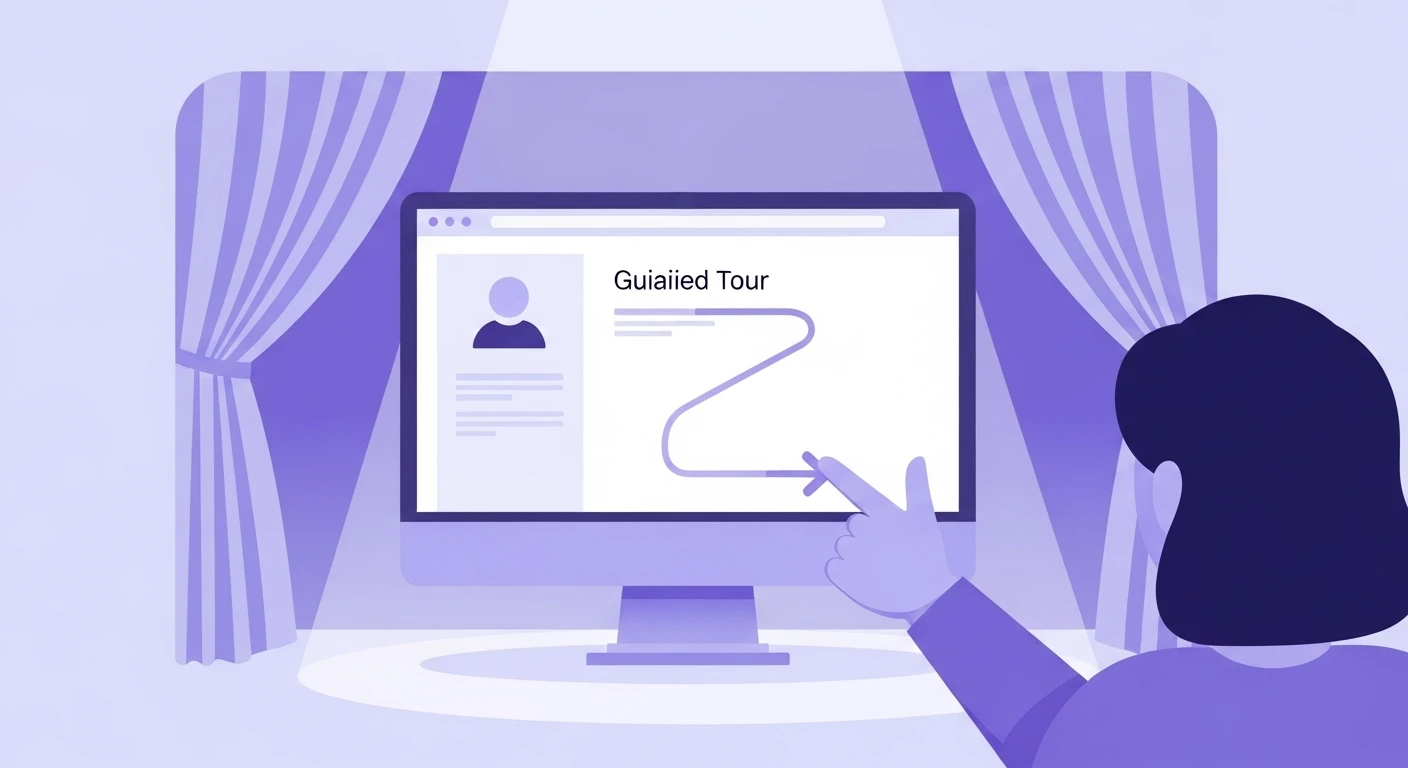
The participant shared their screen, and something subtle happened in the first thirty seconds: they got tidy. They closed distracting tabs, narrated their intentions before clicking, moved the cursor deliberately, and paused to explain choices they would normally make on reflex. It looked like a wonderfully articulate session. It was also a performance -- a curated tour of how they wanted to appear using the product, not a recording of how they actually use it.
Screen sharing solved a real logistics problem and introduced a quieter measurement problem in the same motion. Being watched at the pixel level triggers the same self-consciousness as being watched in a room, but concentrated on exactly the thing you are trying to measure: the moment-to-moment behavior on the screen. The shared screen does not show you natural use under slightly artificial conditions. It shows you a narrated, cleaned-up, deliberately-paced demonstration -- and the friction you most need to see is precisely what gets smoothed away.
Why the Shared Screen Becomes a Stage
The act of sharing a screen makes the participant an author of their own behavior. They are no longer just doing the task; they are presenting themselves doing the task, to an audience they can feel watching. This is the classic observer effect that runs through all UX research, but sharpened: the observation is trained on the exact surface where the behavior happens, so every hesitation, misclick, and dead-end feels exposed.
Under that spotlight, participants optimize for looking competent rather than behaving naturally. They slow down to avoid visible mistakes, narrate to justify choices, and suppress the messy exploratory clicking that characterizes real use. The session becomes fluent and legible -- and that fluency is a warning sign, the same way fluent, confident answers can mask a lack of real cognitive access to the experience. A user who is narrating a clean tour is not stuck, and being stuck is exactly the data you came for.
Worse, the performance suppresses the negative signal. Users who feel watched avoid the behaviors that would reveal friction -- they will not thrash, backtrack, or admit confusion when every move is on display. It is a behavioral cousin of the reassurance reflex, where softening hard truths erases the signal you needed; here the participant softens their own visible struggle to preserve face on the shared screen.
The Distortions the Shared Screen Introduces
Deliberate pacing replaces natural speed
Real product use is fast, sloppy, and semi-automatic. Screen-shared use is slow and deliberate, because the participant is managing an audience. Task times inflate, but not uniformly -- they inflate most on the steps where the user feels most watched, distorting exactly the comparisons you want to make.
Narration overwrites behavior
When you ask a screen-sharing participant to think aloud, you often get think-instead. They construct a tidy verbal account of what they are doing, and that account can diverge sharply from the behavior itself -- an instance of the articulation gap between what users say and what they actually do. The narration feels like rich data and quietly substitutes for the behavior it was supposed to annotate.
Exploration collapses into a straight line
Natural use branches -- users wander, open the wrong thing, double back. On a shared screen, that wandering feels like failure, so participants suppress it and march toward the goal. You lose the exploratory behavior that reveals how the interface's information scent actually performs, and you get a clean path that no unwatched user would ever take.
Recovering the Behavior the Screen Share Hides
- Reduce the felt audience. Frame the share as routine and low-stakes, keep your camera and reactions minimal, and explicitly tell participants you expect mess -- that getting lost and backtracking is the most useful thing they can do. Lowering the performance pressure recovers some natural behavior, in the same spirit as building rapport without introducing bias.
- Separate doing from narrating. Ask participants to complete a task silently first, then walk you through what they did afterward. This prevents narration from overwriting behavior in real time and preserves the natural pace, while still capturing the reasoning in a second pass.
- Prefer retrospective and in-context methods for durable friction. Screen-share sessions are strongest for first-encounter comprehension and weakest for habitual behavior. Pair them with diary studies that reveal what interviews and watched sessions miss, which capture behavior in the participant's real environment without a live audience.
- Watch first sessions with extra skepticism. The performance effect compounds with novelty -- a first-time user on a shared screen is performing and unfamiliar at once. Treat that data as directional and confirm durable friction over time, mindful of the novelty confound that makes first-session excitement mask lasting problems.
- Instrument real behavior alongside the shared screen. Where possible, triangulate the watched session against unwatched behavioral data. Building that kind of honest, auditable evidence trail is the same discipline that reliability-minded teams apply when they keep observability and monitoring at the center of AI systems -- instrument the real process, do not just trust the demo.
The Standard: Measure Behavior, Not Its Performance
A screen-share session is a stage the moment the participant knows the audience can see their screen, and stages produce performances. The tidy, narrated, deliberate tour you get from a self-conscious participant is real information about how they want to be seen using your product -- and almost no information about how they actually use it. The friction you are hunting lives in the mess the performance smooths away.
The fix is not to abandon screen sharing but to stop mistaking its output for natural behavior. Lower the felt audience, separate doing from narrating, and triangulate against methods that watch behavior without a spotlight on it. See how Qualz.ai helps teams capture and analyze real user behavior rather than its rehearsed performance -- or book a demo to design a study that gets past the tour.