The Nod That Means Nothing
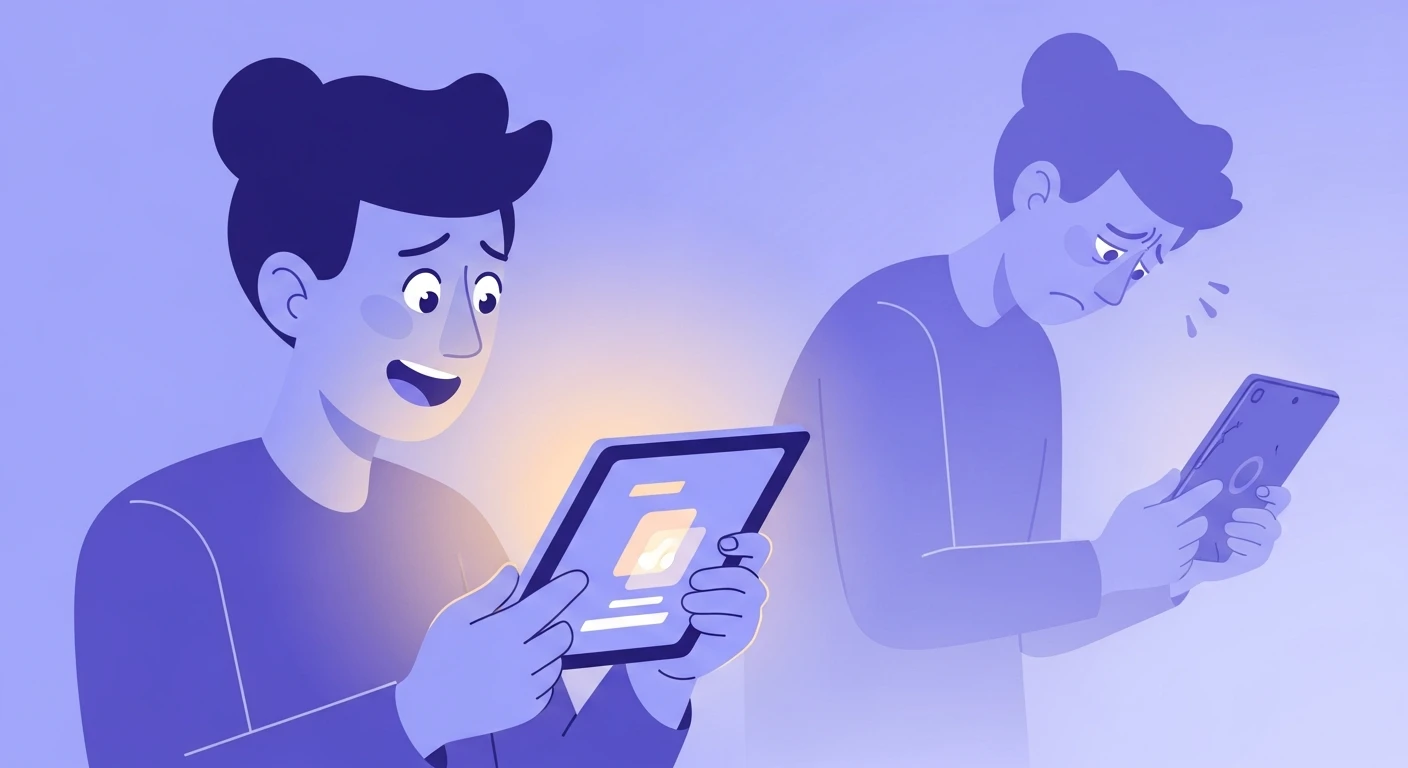
You ask a participant whether the pricing page made sense. They nod, say "yeah, yeah, totally," and you move to the next task. Later, watching the recording, you count that as a clean pass: they understood the pricing. Except they didn't. If you had asked them to explain the plan they'd just "understood," they would have stumbled -- because the nod was never a report on their comprehension. It was a report on the conversation: keep going, I'm being polite, I don't want to seem slow.
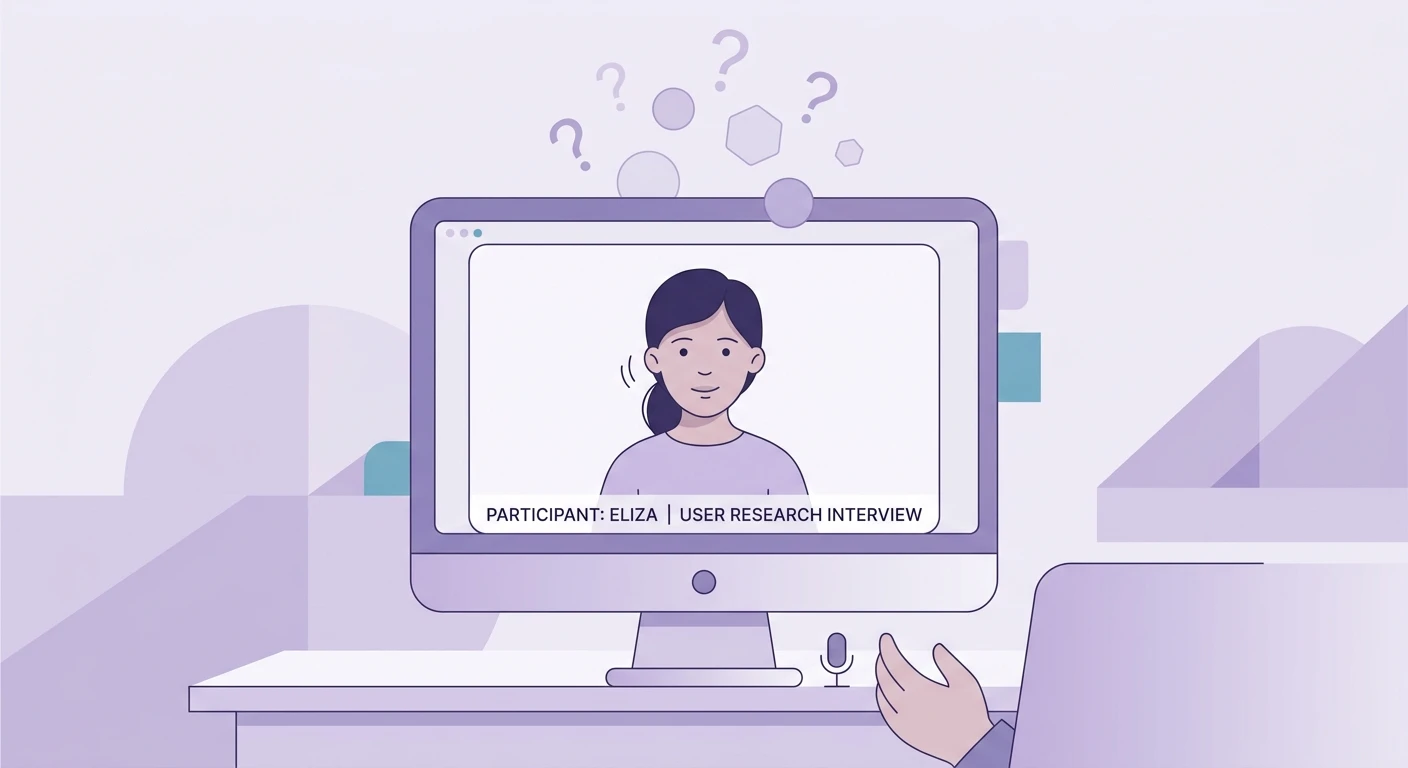
This is the silent nod trap. In face-to-face research, experienced interviewers read a dozen concurrent cues -- posture, gaze, the micro-hesitation before agreement -- and weight them against the words. On video, most of that channel collapses. What survives is the most performative, least informative gesture of all: the affirmative nod. And because it arrives right on cue, interviewers bank it as understanding and build the rest of the session on a foundation that was never poured.
Why Video Amplifies the Illusion
Remote interviews do not just lose a bit of fidelity; they systematically strip away the cues that would have contradicted the nod.
The disconfirming signals are the ones that disappear. The furrowed brow, the eyes drifting to a corner of the screen, the hand that starts to reach for the mouse and stops -- these are exactly the cues that tell an in-person interviewer "they don't actually get it." Video compresses or hides them, leaving the polite nod unopposed. This is the flip side of the backchannel suppression effect, where muting yourself in remote interviews kills the cues that keep participants talking: the channel loss cuts both directions, and the interviewer loses their read on the participant just as the participant loses their read on you.
The medium tilts toward agreement. Something about a talking-head video frame, the slight lag, and the felt awkwardness of disagreeing with a face on a screen nudges participants toward the easy yes. That is the acquiescence bias documented in video interviews and remote research, and the nod is its most compact expression.
Fluent agreement gets mistaken for accurate agreement. A quick, confident "yep, makes sense" sounds like understanding, but confidence and comprehension are only loosely related -- the same disconnect behind the confidence calibration gap, where certain-sounding participants are often the least accurate.
The Deeper Problem: People Can't Narrate Understanding
Even a sincere nod would be weak evidence, because comprehension is not something people can reliably introspect and report in the moment. They feel a sense of fluency and translate it into "I understand," but that feeling routinely outruns their actual grasp. This is the articulation gap between what users can say and what they actually do or know. The nod is a self-report about an internal state the participant cannot accurately observe -- which makes it doubly unreliable.
How to Test for Understanding Instead of Accepting the Nod
The fix is to stop asking questions a nod can answer.
Replace "does that make sense?" with "what would you do next?" A yes/no comprehension check invites the reflex nod. A behavioral or explanatory prompt -- "in your own words, what does this plan include?" or "show me where you'd click to upgrade" -- forces a demonstration the participant cannot fake by nodding. If they can't do it, the nod was noise.
Make silence do the work. After you explain something, wait. The participant who truly understood will often add a nuance; the one who nodded reflexively will just... keep nodding. Deliberate pauses surface the gap, the same reason the silence problem is central to good user interviews.
Log the nod as an unverified claim, not a result. Treat every "got it" as a hypothesis your session still has to confirm through behavior. This mirrors the engineering discipline of not trusting a success signal you never actually observed -- the same failure mode as silent failure in agentic AI, where systems report success against metrics that don't reflect reality. A nod is a green dashboard that may be lying to you; instrument the behavior underneath it, the way you would with observability for AI systems.
The Takeaway
A nod on video is the cheapest signal a participant can send and the most expensive one for you to misread. It costs them nothing and it can cost you an entire study's worth of false confirmations. Stop collecting nods and start collecting demonstrations: ask people to do the thing, explain the thing, or predict the next step. Understanding you can see is worth a hundred nods you merely counted.
*Qualz.AI helps research teams design comprehension-testing interviews and analyze what participants actually understood -- not just what they nodded along to. Book a demo.*