The Invisible Architecture of Interpretation
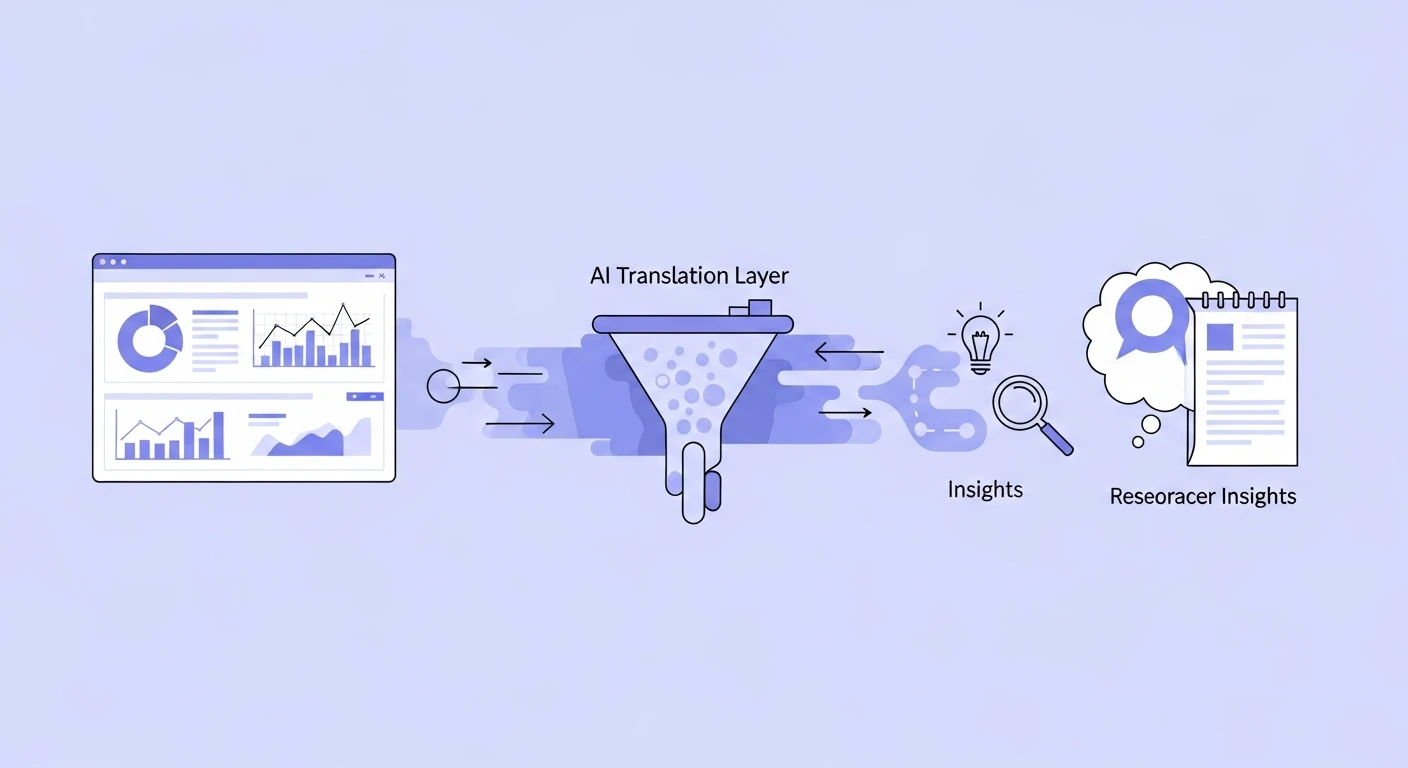
When researchers adopt AI-powered qualitative analysis tools, they rarely interrogate the interpretive assumptions baked into the platform's UX. Every interface decision — from how transcripts are segmented to how themes are visualized — constitutes a translation layer that transforms raw participant data into something the platform considers "analyzable."
This is not a bug. It is an architectural inevitability. But treating it as invisible creates a methodological crisis that most research teams never recognize until their findings start looking suspiciously similar across vastly different studies.
The problem intensifies as AI research tools become more sophisticated. A tool that automatically generates theme hierarchies is not just saving time — it is imposing a particular ontological structure on your data. A platform that surfaces "key quotes" is not just highlighting — it is deciding what counts as key based on criteria the researcher may never examine.
How Platform Design Becomes Methodological Choice
The Segmentation Decision
Before any analysis begins, platforms must decide how to chunk your data. Some segment by speaker turn. Others by paragraph. Others by semantic similarity. Each choice produces a fundamentally different unit of analysis, which cascades into different themes, different patterns, and different conclusions.
Consider a participant who takes 45 seconds of silence before contradicting something they said three minutes earlier. A turn-based segmentation treats these as separate analytical units. A semantic chunker might group the contradiction with its antecedent. A timestamp-based approach might split it across arbitrary boundaries.
The researcher using the platform sees "segments" and treats them as natural units. But they are manufactured units, shaped by engineering decisions made by people who may have never conducted a qualitative study. This connects directly to how context window limitations in AI analysis destroy conversational meaning — the same fundamental problem expressed at a different layer of the stack.
The Clustering Assumption
Most AI analysis tools present themes as discrete clusters. This visualization choice implies that qualitative data naturally organizes into bounded categories with clear membership criteria. But experienced researchers know that the most interesting findings often exist in the tensions between themes — in the data points that resist clean categorization.
When a platform presents a theme cluster with 80% confidence, it is making an epistemic claim about the nature of your data. It is saying: these utterances belong together, and their togetherness is more important than their differences. A researcher who accepts this framing without interrogation has outsourced their most important analytical judgment to an algorithm optimized for clean separation rather than productive ambiguity.
This mirrors the challenge of collaborative analysis sessions where team coding reveals blind spots — multiple perspectives prevent premature closure. AI tools, by contrast, close interpretive space by design.
The Salience Algorithm
Every platform must decide what to surface first. Which quotes appear in the summary? Which themes get top billing? Which patterns get flagged as "significant"? These decisions encode a theory of what matters in qualitative data — typically frequency, sentiment extremity, or semantic distinctiveness.
But as research methodology makes clear, theme frequency is not theme importance. A single deviant case might be more analytically valuable than a pattern repeated across 30 interviews. Yet no AI platform surfaces the lonely outlier above the dominant pattern, because their salience algorithms reward convergence.
The Homogenization Effect
When multiple research teams use the same platform, their findings begin converging — not because reality is converging, but because the translation layer imposes consistent interpretive constraints. The platform becomes a methodological monoculture.
This is already visible in practice. Teams using the same AI coding tool produce remarkably similar theme structures regardless of their research questions. The tool's clustering algorithm, its default granularity settings, and its confidence thresholds create a fingerprint that marks every analysis produced through it.
The implications for research operations and tool selection are significant. Organizations making platform decisions are simultaneously making methodological decisions — choosing not just a tool but an epistemology.
The Feedback Loop With Training Data
AI research tools improve by learning from how researchers use them. When researchers accept a platform's theme suggestions, those acceptances become training signals that reinforce the platform's existing interpretive tendencies. Over time, the tool gets better at producing outputs researchers will accept — which is not the same as getting better at producing accurate analyses.
This creates a particularly insidious form of interpretation drift where the drift happens not within a single researcher but within the collective analytical practice of an entire user base. The platform slowly optimizes for confirmation rather than discovery.
What Methodologically Aware Teams Do Differently
Audit the Translation Layer
Before using any AI analysis tool, examine what it does to your data before you see it. How does it segment? What does it filter? What visualization choices constrain your interpretation? Document these decisions as methodological choices, not platform features.
Maintain Analytical Independence
Run at least one analysis pass without the platform's AI suggestions. Code a subset manually. Compare your independent themes against the tool's suggestions. Where they diverge, the gap reveals the translation layer's fingerprint.
Rotate Tools Deliberately
Just as research triangulation strengthens findings, tool triangulation reveals platform-specific artifacts. Analyzing the same dataset through multiple platforms exposes which findings are robust and which are platform-dependent.
Report Platform Influence
Methodological transparency requires disclosing not just that AI assisted your analysis, but which AI, configured how, with what default settings. The platform is a co-analyst — its contribution deserves acknowledgment and scrutiny.
The Path Forward
The solution is not to abandon AI research tools. They provide genuine value in managing large qualitative datasets. The solution is to treat them as what they are: opinionated translation layers that transform data according to assumptions that may or may not align with your research goals.
Every platform makes choices. The danger is not in those choices existing — it is in researchers not knowing they are being made. The moment you recognize your tool's translation layer, you reclaim the analytical agency that makes qualitative research valuable in the first place.
The best researchers in the AI-assisted era will not be those who use tools most efficiently. They will be those who understand most deeply what their tools are doing to their data — and what their data might have said without the translation.