The Solo Coding Illusion
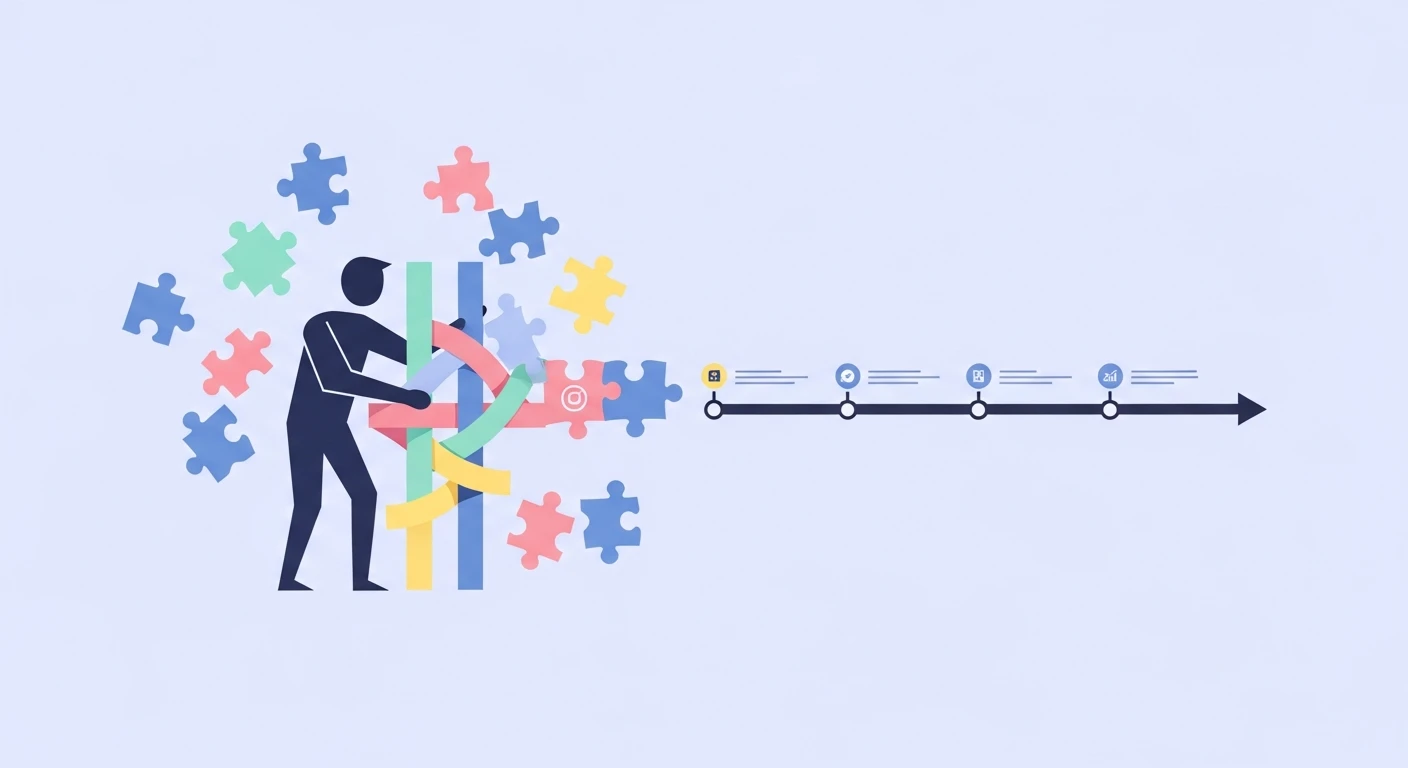
You sit down with your transcript, open your coding tool, and begin labeling segments. After three hours of focused work, you have a tidy codebook with clean hierarchies and satisfying patterns. It feels like rigor. It is not.
Solo coding produces internally consistent interpretations — your own mental model applied uniformly across data. But internal consistency is not validity. It is the analytical equivalent of confirmation bias wearing a lab coat. Every code you create reflects your disciplinary training, your assumptions about what matters, and your cognitive state that morning. None of these are visible to you while you work.
This is why the interpretation drift problem exists not just between researchers across time, but within a single researcher across a single dataset. You code the first transcript differently than the fifteenth because your understanding shifts — but you rarely go back to reconcile.
What Collaborative Analysis Actually Reveals
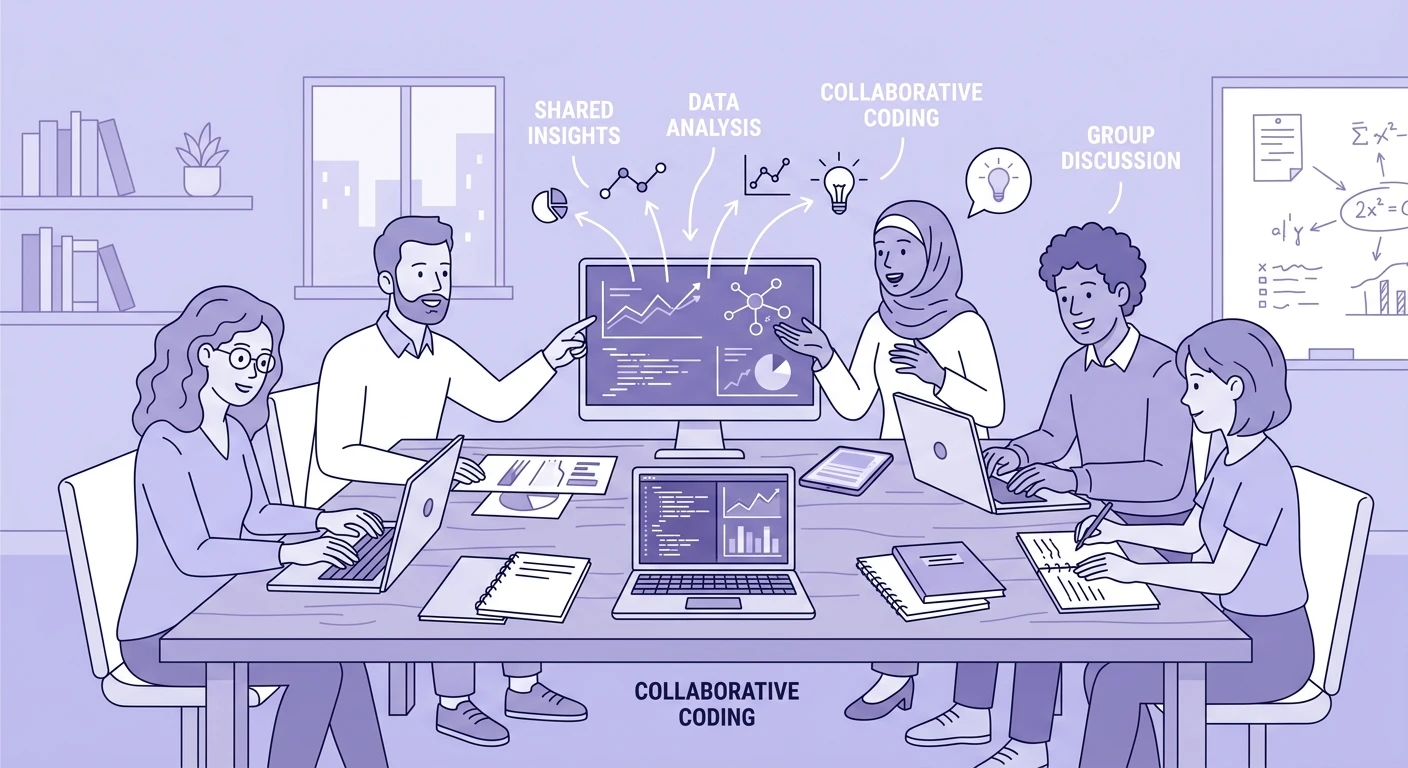
Assumption surfacing. When a second analyst codes the same segment differently, neither is necessarily wrong. The disagreement surfaces an assumption that was invisible to both. "I coded this as frustration because of the participant's tone" versus "I coded this as confusion because they repeated themselves" — both valid, both partial, and the intersection reveals something richer than either alone.
Category boundary testing. Solo coders draw boundaries between codes based on intuition. In collaborative sessions, those boundaries get stress-tested. "Why is this 'workaround' and not 'adaptation'?" forces you to articulate distinctions you were making unconsciously. Sometimes the distinction holds. Often it collapses, and your codebook gets sharper.
Contextual knowledge pooling. Different team members bring different domain knowledge. The designer notices interaction patterns. The PM recognizes business context. The researcher catches methodological artifacts. As we explored in our guide to building research repositories teams actually use, organizational knowledge compounds — but only when multiple perspectives actually touch the data.
The Three Collaborative Analysis Formats
1. Parallel coding with reconciliation. Two or more analysts independently code the same subset (typically 20-30% of transcripts), then meet to discuss disagreements. This is the gold standard for inter-rater reliability but requires significant time investment. Best for: high-stakes research where credibility matters (regulatory, academic publication, executive decision-making).
2. Real-time collaborative coding. Analysts work through transcripts together, discussing each segment before assigning codes. Slower per-transcript but produces richer codebooks faster. The conversation IS the analysis. Best for: exploratory research, early-stage projects where the codebook is still forming.
3. Rotating review sessions. One analyst codes, another reviews and challenges. Roles rotate across transcripts. Less intensive than parallel coding but catches major blind spots. Best for: teams with limited bandwidth who still want collaborative rigor. This approach mirrors how AI is reshaping qualitative analysis — the reviewer role can be partially augmented by AI that flags low-confidence codes.
Structuring Productive Disagreement
Collaborative analysis fails when disagreements become personal or when seniority determines the "right" code. Structure matters:
Ground rules. Every disagreement starts with "What in the data supports your reading?" Not "I think" but "The participant said X in the context of Y, which suggests Z." Evidence-first, interpretation-second.
Decision protocols. When analysts cannot reconcile, you need a system: create a new code that captures both readings, flag the segment for participant validation, or document the disagreement as a finding itself. Persistent disagreement often signals the most analytically interesting territory in your data.
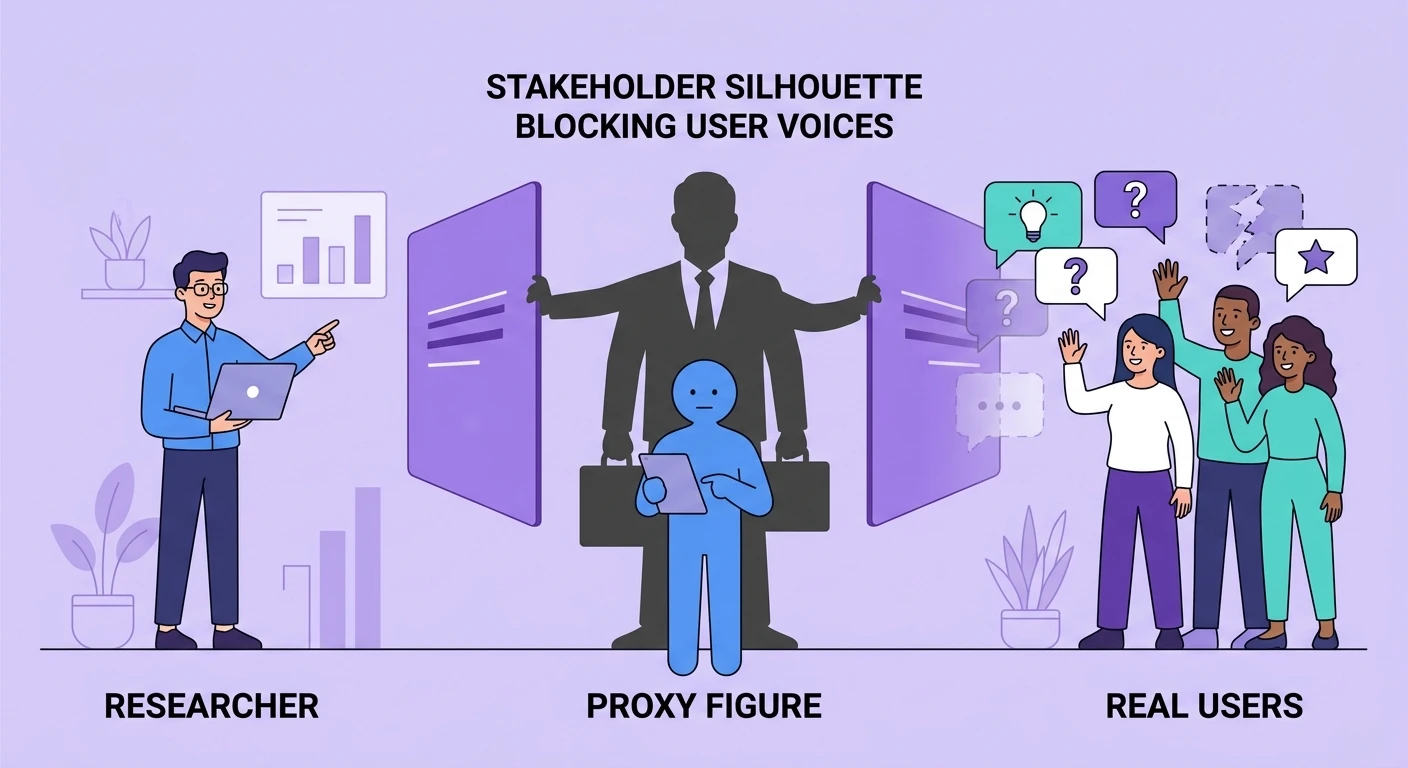
Power equalization. Junior researchers defer to seniors. Prevent this by having everyone write their codes independently before discussion, using anonymous initial coding where possible, and explicitly inviting junior team members to challenge. The principles of deterministic control planes in agentic systems apply here too — you need hard boundaries that prevent one voice from dominating the analytical process.
The Efficiency Objection
"We do not have time for collaborative coding" is the most common objection. It misunderstands the math. Solo coding that produces questionable findings which get challenged in stakeholder reviews, require re-analysis, or lead to wrong product decisions is not efficient. It is fast waste.
Collaborative analysis typically adds 30-40% to coding time but reduces synthesis time by 50% because the hard interpretive work happens during coding rather than being deferred to a synthesis phase where the data is no longer fresh. As organizations that understand the hidden cost of unanalyzed qualitative data recognize, speed-to-insight matters more than speed-to-codes.
Scaling Collaboration With AI
AI does not replace collaborative analysis — it amplifies it. Use AI to:
- Generate initial code suggestions that both analysts react to (shared starting point reduces cold-start disagreements)
- Flag segments where automated coding confidence is low (these are your highest-value collaborative discussion points)
- Track code evolution across sessions (making drift visible)
- Summarize disagreement patterns across the project (meta-analysis of your analytical process)
The human judgment remains irreplaceable. What AI provides is the scaffolding that makes collaborative sessions more focused and productive, spending human attention on genuinely ambiguous data rather than mechanical labeling.
Implementation: Starting Tomorrow
You do not need to overhaul your process. Start with one change: on your next project, have a colleague independently code three transcripts from your dataset. Schedule a 90-minute session to compare. Document every disagreement and what it revealed.
The first time you do this, you will find codes you were confident about that completely fail to convince another competent analyst. That experience — the recognition that your solo interpretation was partial — is worth more than any methodology textbook. It is the beginning of genuine analytical rigor.
The question is not whether collaborative analysis improves quality. It demonstrably does. The question is whether your organization treats research quality as a cost to minimize or an investment that compounds. Teams building insights that shape strategy from interview transcripts to product roadmaps cannot afford the blind spots that solo coding guarantees.