Every large organization collects qualitative data. Customer call recordings pile up in cloud storage. Support tickets with open-text fields accumulate in helpdesk systems. NPS surveys gather verbatim comments that nobody reads past the first dozen. Exit interview transcripts sit in HR folders. Sales call notes live in CRM fields that no one queries.
The collection problem has been solved. Modern enterprises are extraordinarily good at capturing the voice of the customer, the employee, and the market. What they are not good at — what almost no one is good at — is making sense of it all.
This is the hidden cost of unanalyzed qualitative data. Not the storage fees. Not the compliance overhead. The real cost is the intelligence that never gets extracted — the churn signals buried in support tickets, the product gaps described in customer interviews, the competitive threats hiding in plain text across thousands of conversations.
For enterprise organizations, this represents millions of dollars in lost insight. And the gap is widening every quarter as data volumes grow and analysis capacity stays flat.
The Qualitative Data Graveyard
Walk into any Fortune 500 company and you will find the same pattern. Qualitative data exists in abundance, but it is fragmented, unstructured, and largely untouched.
Customer Call Recordings
Contact centers generate thousands of hours of recorded conversations every month. These recordings contain rich, unfiltered customer feedback — complaints, feature requests, competitive mentions, emotional reactions to product changes. Most organizations transcribe a fraction of these calls. Fewer still analyze the transcripts systematically. The vast majority of recordings exist solely to satisfy compliance and dispute resolution requirements.
Support Ticket Verbatims
Every support ticket with a free-text field is a qualitative data point. Customers describe problems in their own words, explain workarounds they have built, express frustration with specific workflows, and occasionally describe exactly what they wish the product would do. In most organizations, these verbatims are read once by the support agent handling the ticket and never again.
NPS and Survey Open-Text Responses
Companies invest heavily in survey programs. They obsess over the quantitative scores — the NPS number, the CSAT average, the CES benchmark. But the open-text responses that accompany those scores, the responses that explain the "why" behind the number, are typically summarized by a junior analyst reading a sample of 50 to 100 comments out of thousands.
Exit Interview Transcripts
When employees leave, HR conducts exit interviews. These conversations capture candid assessments of management, culture, compensation, career development, and organizational dysfunction. The transcripts are filed. Occasionally someone reads them when a department experiences unusual turnover. Systematic analysis across hundreds of exit interviews to identify organizational patterns is rare.
Sales Call Notes and Lost Deal Narratives
Sales teams document why deals were won or lost. These narratives contain competitive intelligence, pricing feedback, feature gap analysis, and market positioning insights. They live in CRM systems where they are searchable in theory but analyzed in practice only when a specific question prompts someone to go looking.
Research Repository Backlog
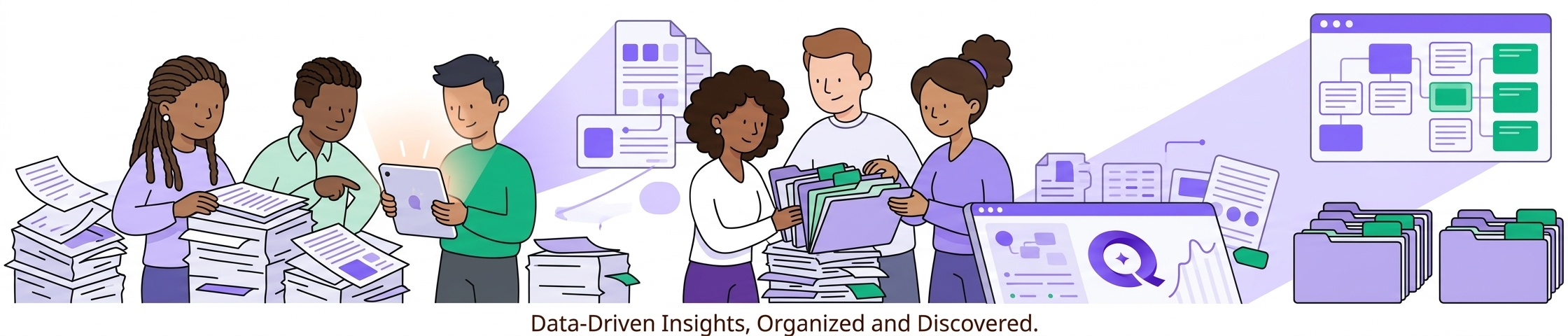
Many organizations have invested in building research repositories to centralize qualitative findings. The repository exists. Data flows in. But the analysis and synthesis that would transform raw data into actionable insight falls behind, creating an ever-growing backlog of unprocessed qualitative material.
What This Neglect Actually Costs
The cost of unanalyzed qualitative data is not abstract. It manifests in specific, measurable business failures.
Missed Churn Signals
Customers rarely churn without warning. They warn you — in support tickets, in call center conversations, in survey comments. They describe their frustration, explain their workarounds, and sometimes explicitly state their intention to evaluate competitors.
When qualitative data goes unanalyzed, these signals are invisible at the aggregate level. Individual support agents may notice a frustrated customer. But the pattern — that 340 customers in the mid-market segment have described the same workflow problem in the past quarter, and 12% of them mentioned a specific competitor by name — is only visible through systematic analysis.
Research consistently shows that acquiring a new customer costs five to seven times more than retaining an existing one. Every churned customer whose warning signals were sitting unread in a support ticket represents a preventable loss.
Undetected Product Gaps
Product teams rely on structured feedback mechanisms — feature request voting, product advisory boards, quarterly business reviews with key accounts. These mechanisms capture the loudest voices and the most articulate requests.
The qualitative data buried in support tickets and call recordings tells a different story. It reveals the problems that customers have learned to live with, the workarounds they have normalized, and the friction points they no longer bother to report through formal channels. These "silent" product gaps often affect more users than the feature requests that make it onto the roadmap.
Competitive Threats in Plain Text
When customers mention competitors — in support calls, in survey responses, in sales conversations — they are providing real-time competitive intelligence. They describe what attracted them to the alternative, what features they found compelling, and what pricing made them consider switching.
This intelligence is scattered across thousands of unstructured text fields. Without systematic analysis, it surfaces only anecdotally — when a sales rep mentions it in a team meeting or a support manager flags it in a quarterly review. By the time it reaches strategic decision-makers, the competitive window may have already closed.
Employee Experience Blind Spots
Exit interviews and employee surveys contain early warnings about management problems, cultural dysfunction, and organizational friction. When this qualitative data goes unanalyzed, problems that could have been addressed with targeted interventions instead escalate into department-wide turnover, disengagement, or public employer brand damage.
Regulatory and Compliance Risks
In regulated industries — healthcare, financial services, pharmaceuticals — customer complaints and feedback often contain signals relevant to compliance obligations. Unanalyzed qualitative data can harbor undetected patterns of adverse events, discriminatory practices, or regulatory violations that structured reporting systems miss.
Why Manual Analysis Does Not Scale
The standard enterprise response to the qualitative data problem is to hire analysts. Build a research team. Staff an insights function. Bring in consultants.
This approach worked when qualitative data volumes were manageable. It does not work at enterprise scale.
The Math Problem
A skilled qualitative analyst can thoroughly analyze approximately 50 to 100 open-text responses per day, including coding, categorization, theme identification, and synthesis. An enterprise with 10,000 support tickets per month containing open-text fields would need a team of analysts working full-time just to keep up with that single data source.
Now add call recordings, survey verbatims, exit interviews, sales notes, and social media mentions. The volume of qualitative data in a typical enterprise exceeds the capacity of any reasonably sized human analysis team by an order of magnitude.
The Consistency Problem
When multiple analysts code qualitative data, inter-rater reliability becomes a significant challenge. Different analysts interpret the same text differently, apply codes inconsistently, and bring their own unconscious biases to the categorization process.
Achieving acceptable inter-rater reliability requires extensive training, detailed codebooks, regular calibration sessions, and ongoing quality checks. These overhead costs further reduce the effective throughput of manual analysis.
The Timeliness Problem
Even when organizations invest in large analysis teams, the time from data collection to actionable insight is measured in weeks or months. By the time a quarterly analysis of customer feedback reaches the product team, the market has moved. The competitive threat has evolved. The churning customers have already left.
Qualitative insight that arrives too late to inform decisions is not insight. It is historical documentation.
The Integration Problem
Manual analysis produces reports. Reports live in slide decks, shared drives, and email threads. They are consumed once, discussed briefly, and filed away. The findings rarely integrate into the operational systems — CRM, product management tools, customer success platforms — where they could drive action.
This is fundamentally a knowledge management challenge. The intelligence exists in the analyst's synthesis, but it does not flow to the people and systems that need it in real time.
How AI-Powered Analysis Unlocks the Value
AI-powered thematic analysis changes the economics of qualitative data analysis. Not by replacing human judgment, but by eliminating the bottleneck that prevents human judgment from being applied to the full scope of available data.
Processing at Scale
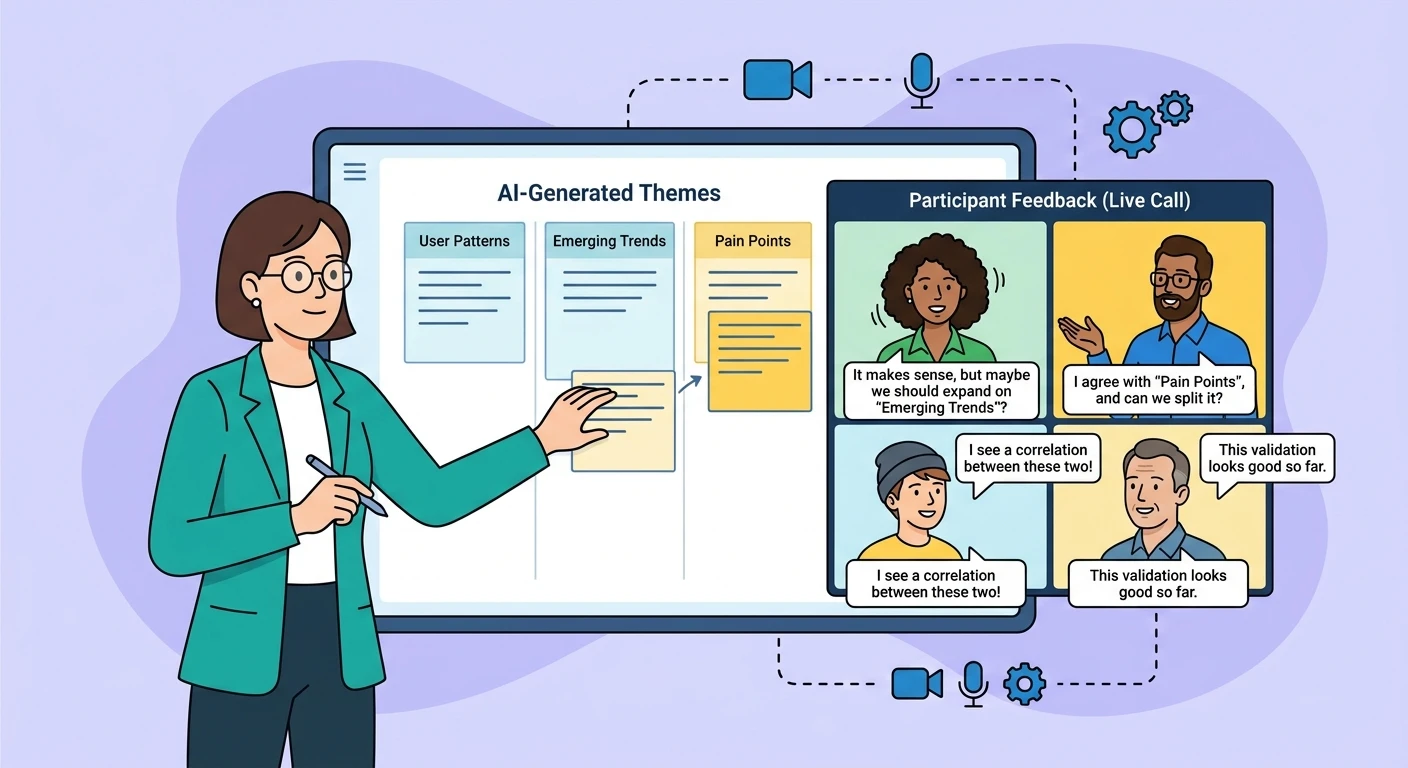
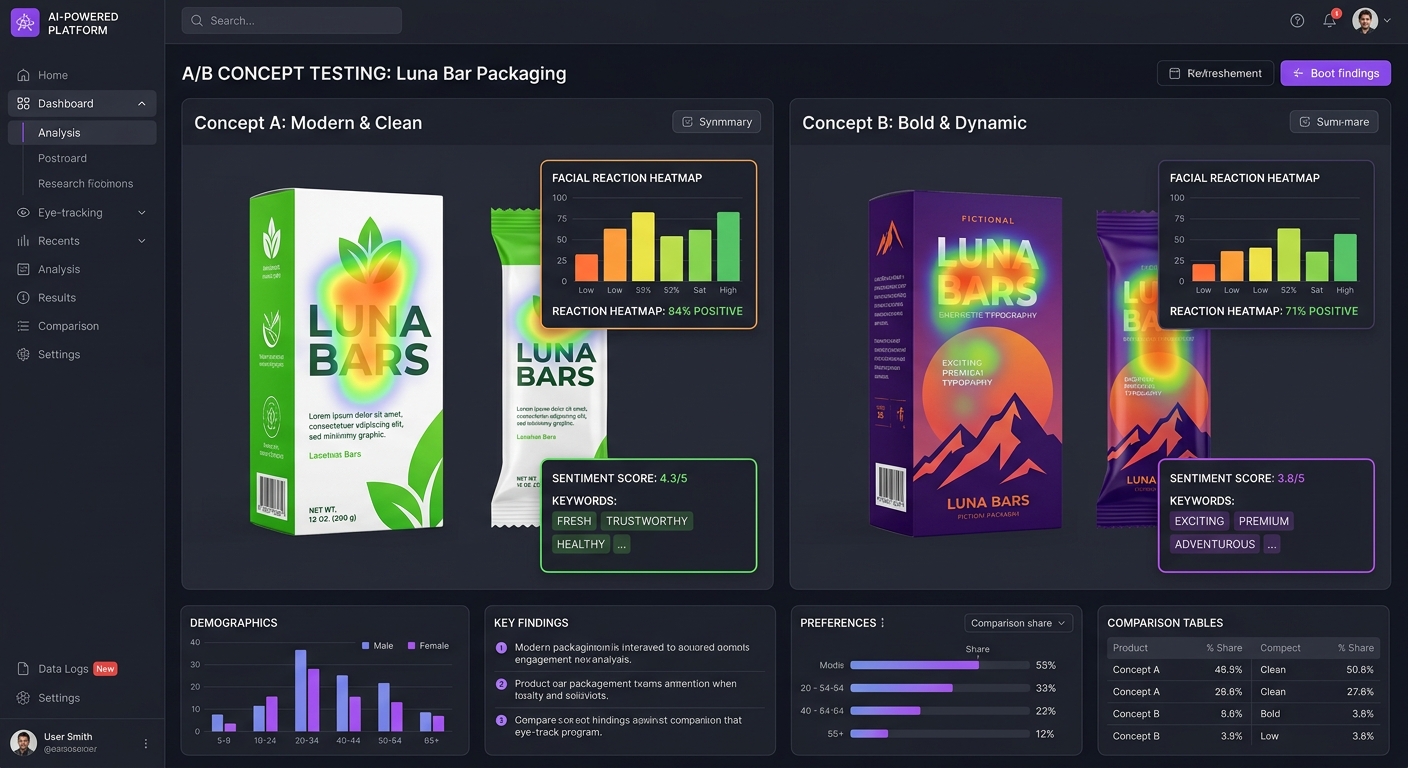
Modern AI systems can analyze thousands of open-text responses, call transcripts, and unstructured documents in hours rather than weeks. They identify themes, track sentiment patterns, detect emerging topics, and surface anomalies across datasets that would take a human team months to process.
This is not keyword counting or simple sentiment scoring. Contemporary AI-powered qualitative analysis applies the same kind of interpretive coding that trained researchers perform — identifying underlying themes, recognizing conceptual relationships, and building thematic frameworks from the ground up.
Consistency Across Sources
An AI system applies the same analytical framework to every data point, whether it is processing the first response or the ten-thousandth. There is no analyst fatigue, no Friday afternoon coding drift, no unconscious bias shifting the categorization over time.
This consistency enables something that manual analysis rarely achieves: reliable comparison across time periods, customer segments, product lines, and geographic regions. When the analysis methodology is perfectly consistent, differences in the findings reflect genuine differences in the data rather than analytical artifacts.
Real-Time Intelligence
AI analysis can operate continuously rather than in quarterly cycles. New support tickets, call recordings, and survey responses can be analyzed as they arrive, feeding into dashboards and alert systems that surface emerging themes in real time.
This transforms qualitative data from a retrospective reporting input into an operational intelligence source. Product teams can see emerging customer pain points as they develop. Customer success teams can identify accounts showing early warning signs of churn. Competitive intelligence teams can track competitor mentions as they appear across channels.
Auditable and Transparent
Enterprise organizations — particularly those in regulated industries — need to understand how analytical conclusions were reached. AI-powered analysis systems can provide complete audit trails that document every analytical decision, from raw data to thematic framework. This transparency exceeds what is typically available from manual analysis, where the analyst's interpretive process is largely opaque.
Building the ROI Case for Qualitative Data Analysis
For enterprise leaders evaluating the investment in AI-powered qualitative analysis, the ROI framework is straightforward.
Quantify the Data Volume
Start by inventorying the qualitative data your organization currently collects but does not systematically analyze. Count the support tickets with open-text fields, the call recordings, the survey verbatims, the exit interview transcripts. Most enterprise leaders are surprised by the volume.
Estimate the Intelligence Value
For each data source, identify the business decisions it could inform if analyzed. Customer support verbatims inform product development and churn prevention. Exit interviews inform retention strategy and organizational development. Sales call notes inform competitive positioning and pricing strategy.
Assign conservative value estimates to these decision improvements. If analyzing support ticket verbatims prevents even 2% of at-risk accounts from churning, what is that worth in annual recurring revenue? If identifying a product gap six months earlier accelerates a feature launch that wins three additional enterprise deals, what is that revenue impact?
Compare Analysis Costs
The cost of AI-powered analysis at enterprise scale is a fraction of the cost of building and maintaining a human analysis team large enough to process the same volume. More importantly, the AI approach actually processes the full volume. The human approach, constrained by capacity, inevitably samples — and sampling qualitative data means missing the outliers and emerging patterns that often contain the most valuable intelligence.
Factor in Speed
The value of insight degrades with time. A churn signal identified in real time can trigger an intervention. The same signal identified in a quarterly report can only inform a retrospective. The speed advantage of AI analysis is not merely operational efficiency — it is the difference between actionable intelligence and historical documentation.
From Data Graveyard to Strategic Asset
The qualitative data sitting unanalyzed in your organization is not a storage problem or a compliance artifact. It is a strategic asset that is currently generating zero return.
Every customer call recording contains intelligence about product fit, competitive positioning, and account health. Every support ticket verbatim contains signal about user experience friction, feature gaps, and churn risk. Every exit interview transcript contains insight about organizational health and management effectiveness.
The technology to extract this intelligence at scale now exists. The question is not whether the data has value — it does. The question is how long your organization will continue to collect it without unlocking it.
How much insight is hiding in your unanalyzed qualitative data? Book a demo to see how Qualz.ai can help your organization turn dormant customer voice data into actionable intelligence — in days, not quarters.