The Manufactured Preference Problem
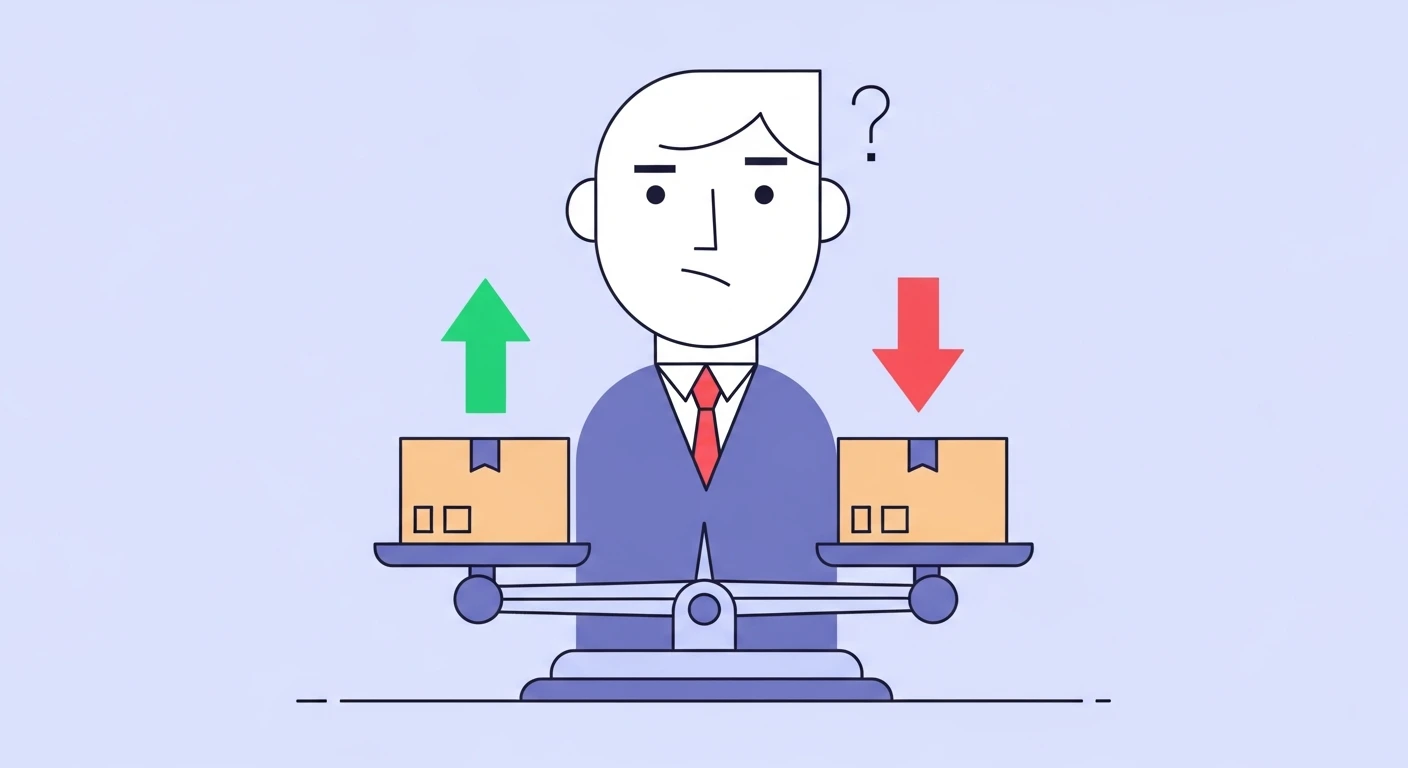
Competitive UX research has a dirty secret: the most common methodology — side-by-side comparison — produces data that looks rigorous but measures something entirely artificial. When you place two products in front of a participant and ask which they prefer, you have not revealed a pre-existing preference. You have forced the construction of one.
In natural usage, people rarely compare products feature by feature. They adopt tools through happenstance, habit, social influence, and satisficing. They develop familiarity-based preferences that have nothing to do with objective quality comparison. The comparison task strips away all of this natural decision context and replaces it with an artificial evaluation framework that exists only in the research session.
The result: participants generate clear, articulate preferences accompanied by logical justifications. Researchers report these as findings. Product teams build roadmaps around them. And six months later, nobody can explain why the competitive improvements had zero impact on market share.
How Comparison Tasks Distort Preference Data
The Criteria Construction Effect
When you ask "which do you prefer?", participants must first construct evaluation criteria. This construction is not retrieval — they are not accessing pre-existing comparison frameworks. They are building them in real time, using whatever dimensions are most salient in the comparison context.
This means the criteria participants use are shaped by the comparison itself. If Product A has a notably different navigation structure than Product B, navigation becomes a comparison criterion regardless of whether it was ever relevant to the participant's actual usage. The comparison makes dimensions salient that were previously invisible.
This artificial salience problem connects to how anchoring effects contaminate every subsequent finding in user research. The first difference noticed between products anchors the entire subsequent evaluation, creating a preference structure built on whichever contrast happens to be most visually obvious rather than most functionally important.
The Articulation Pressure
Comparison tasks create social pressure to articulate clear preferences. Participants feel that saying "I do not really have a preference" or "it depends on what I am doing" makes them bad research participants. So they construct preferences where none existed, often confabulating post-hoc justifications that sound logical but have no basis in actual experience.
Researchers trained to recognize the articulation gap between user behavior and verbal expression sometimes miss this variant: participants are not struggling to articulate a real preference they cannot verbalize. They are constructing a preference that did not exist prior to the question, then articulating it fluently because the construction itself is a verbal act.
The Context Stripping Problem
Real product preferences are deeply contextual. Users might prefer Tool A for quick tasks, Tool B for complex projects, and have no preference for everything in between. Comparison tasks collapse this contextual richness into a single forced choice, producing data that appears decisive but represents no actual usage scenario.
Consider asking a user to compare two project management tools. In reality, their choice would depend on team size, existing integrations, workflow type, organizational culture, and a dozen other factors. The comparison task removes all of these contextual mediators and asks for an abstract preference that cannot exist outside of context.
The Preference Stability Illusion
Comparison-generated preferences appear stable within a session but prove remarkably unstable across contexts. This creates a dangerous illusion of reliability.
Within-Session Consistency
Once participants construct a preference framework, they apply it consistently throughout the research session. This consistency looks like strong signal — participants repeatedly prefer Product A across multiple tasks. But what you are measuring is the stability of the constructed framework, not the stability of an underlying preference.
If you ran the same study with different comparison ordering, different initial tasks, or different framing, participants would construct different frameworks and produce different preferences with equal confidence. The data feels reliable because you never see the counterfactual.
The Temporal Decay Pattern
Follow up with comparison study participants two weeks later and ask about their preferences without the comparison context present. You will find that 40-60% cannot reconstruct the preferences they articulated so clearly during the session. The preferences were session-bound artifacts, not durable evaluative structures.
This temporal decay reveals that comparison-generated preferences live in working memory rather than long-term evaluative schemas. They feel real to participants in the moment — the construction process creates genuine subjective experience of preference. But they do not survive the removal of the comparison context that produced them.
Better Approaches to Competitive Intelligence
Natural Context Observation
Instead of forcing comparison, observe how participants naturally encounter, evaluate, and choose between products in their actual workflow context. This produces messier data — people satisfice, they do not compare systematically, they stick with tools for irrational reasons. But this messy data reflects actual behavior rather than artificial preference construction.
The principles of contextual inquiry adapted for distributed teams apply directly here: observe users in their natural tool-selection context rather than constructing an artificial comparison environment.
Switching Story Methodology
Ask participants who actually switched between competing products to narrate their switching story. What triggered the switch? What was the experience of transition? What do they miss from the old tool? What surprised them about the new one?
Switching stories capture real competitive dynamics — the actual factors that drive tool change in natural contexts. They are retrospective and therefore subject to narrative coherence bias, but they at least describe events that actually occurred rather than preferences that were manufactured in the research session.
Sequential Exposure Over Comparison
If you must evaluate competitive positioning, use sequential exposure rather than simultaneous comparison. Have participants use Product A for real tasks over several days, then Product B for real tasks over several days. Collect evaluative data after each period separately, without invoking comparison.
This approach produces independent evaluations rather than constructed contrasts. Participants rate each product against their own needs and expectations rather than against each other. The data is harder to analyze — you cannot produce a clean "67% preferred A" metric — but it reflects how products are actually evaluated in the market.
Implicit Preference Measurement
Measure preferences indirectly through behavioral signals: time-on-task differences, error rates, unprompted positive/negative comments, task approach strategies, and feature discovery patterns. These behavioral measures are harder to manufacture than stated preferences and more predictive of real-world adoption.
The work of building evaluation systems that detect genuine quality differences from noise has direct parallels here: you need metrics that resist gaming by both the participant's desire to be helpful and the researcher's desire for clean data.
When Comparison Tasks Are Appropriate
Comparison tasks are not universally wrong. They work well in specific contexts:
- UI pattern evaluation: When testing two designs for the same product, comparison helps identify which interaction patterns are more learnable. Here, the comparison context mirrors the actual design decision context.
- Price sensitivity testing: When products are genuinely substitutable and price is a real differentiator, comparison tasks model actual purchase decisions.
- Feature parity auditing: When you need to identify functional gaps between competitors, structured comparison produces useful inventories — as long as you do not interpret feature presence as preference driver.
The key question: does the comparison context in the study mirror a comparison context that exists in the real world? If users actually make side-by-side decisions (choosing between two subscription plans, for example), comparison research is valid. If users adopt tools without explicit comparison (most B2B software), comparison research manufactures data that looks actionable but predicts nothing.
The Stakeholder Communication Challenge
Competitive comparison data is enormously appealing to stakeholders. "67% of users preferred our navigation over Competitor X" is a clean, quotable finding that makes everyone feel confident. The messy reality — "users have contextual, unstable, partially-constructed preferences that resist simple comparison" — is harder to act on.
Research teams face a real tension between producing actionable-seeming data and producing honest data. The principles of how to present research findings that actually change decisions apply here, but inverted: you must present complexity without losing your audience, acknowledging that the clean comparison metric they want does not exist without being so academically precise that your findings get ignored.
The honest path: report behavioral differences, contextual preferences, and switching triggers rather than manufactured preference percentages. It requires more sophisticated stakeholder communication, but it produces decisions based on reality rather than research artifacts.