The Voice That Sounds Like Truth
Every researcher knows the participant who makes the session easy. They answer crisply, they never trail off, they explain their own behavior with the calm authority of someone reading from a script they wrote themselves. The transcript reads clean. The quotes are quotable. And when you write the report, theirs are the lines that make it in -- because certainty is persuasive, and a participant who sounds sure makes you feel sure too.
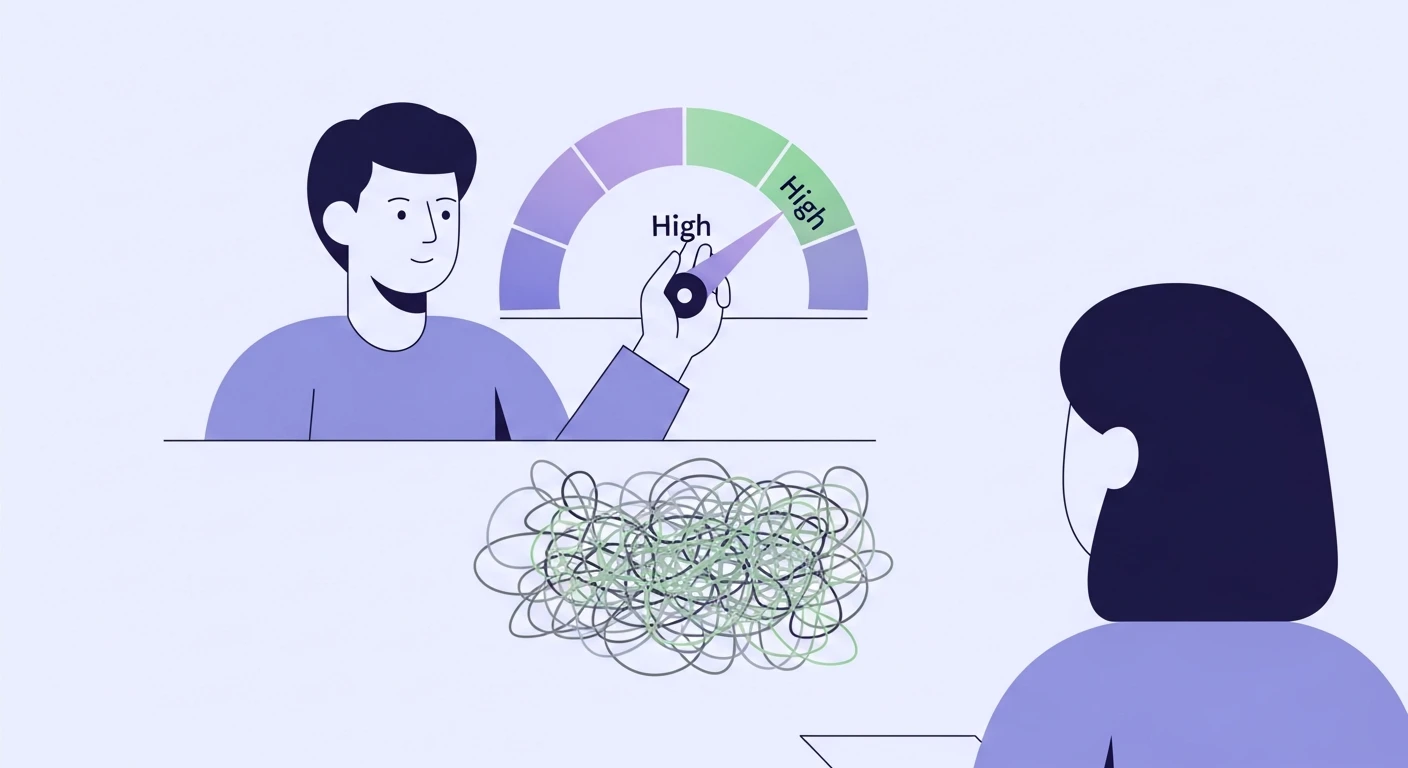
That feeling is the trap. The confidence in a participant's answer is a property of how the answer was produced, not of whether it is correct. People speak fluently about things they have rationalized, rehearsed, or simply made up on the spot, and they speak haltingly about things they actually experienced but have never had to put into words. The result is a systematic mismatch -- a confidence calibration gap -- between how certain a participant sounds and how accurate they are. And because we read confidence as competence, the gap runs in the most dangerous direction: the answers we trust most are disproportionately the ones we should trust least.
Where the Gap Comes From
Confidence tracks fluency, and fluency tracks familiarity with the story, not accuracy of the memory. A participant who has told the same origin story about how they discovered your product ten times delivers it with total assurance -- and total assurance is exactly what you would expect from a narrative that has been smoothed by repetition into something cleaner than the messy reality it replaced. This is the narrative coherence bias, where participants construct logical stories from chaotic experiences, and the polish of the telling is inversely related to its fidelity.
The gap also opens because people are answering a different question than the one you asked. Ask why someone abandoned a workflow and you will get a confident, plausible reason -- but the reason is generated at the moment of asking, not retrieved from the moment of acting. This is the articulation gap, the well-documented fact that users cannot reliably explain their own behavior, dressed up in the fluent delivery that makes it so easy to miss. The confident answer is not a window into the decision; it is a post-hoc reconstruction, and reconstructions are most fluent precisely when they are most invented.
Why Certainty Fools Analysis, Not Just Interviews
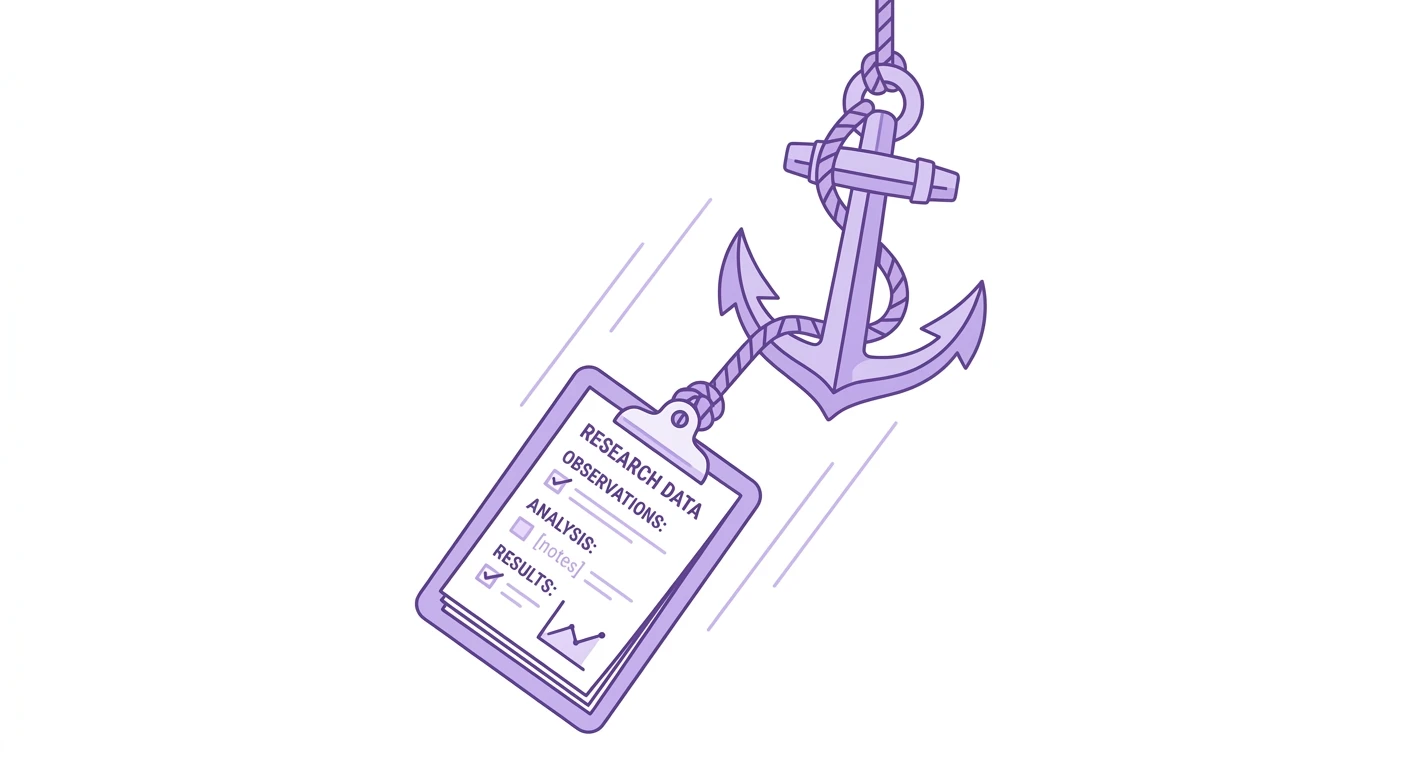
The damage does not stop at the interview. Confident quotes survive the analytic funnel better than hedged ones, because they are cleaner to code, easier to excerpt, and more compelling in a readout. A participant who says "I always check the reviews first" gets quoted; a participant who says "I think I maybe looked at some, I'm not totally sure" gets dropped -- even though the second statement is the more honest report of an uncertain memory. The analysis therefore filters for confidence and calls the residue signal, a bias closely related to the counting trap, where theme frequency gets mistaken for theme importance.
Then it compounds in the debrief. The confident line is the one the team remembers, repeats, and builds the recommendation on -- the availability cascade in stakeholder debriefs, where the first vivid insight becomes the one everyone anchors to. By the time it reaches the product decision, a fluent guess has been laundered into a firm finding, and no one in the chain remembers that its only credential was the confidence of the voice that first said it. The same discipline that production AI teams apply through audit trails and explainability, refusing to trust a confident output without tracing it back to its evidence, is exactly what qualitative analysis needs and usually lacks.
Reading Confidence as Data Instead of Trusting It
The move is not to distrust confident participants and believe hesitant ones -- that just inverts the same error. The move is to decouple confidence from accuracy and treat each as a separate variable you record.
- Probe confidence directly. When an answer arrives with unusual certainty, ask how they know, or when they last did it, or to walk you through the specific instance. Confidence built on a concrete episode survives; confidence built on a self-image collapses. This is where concrete, episode-anchored questions unlock real experience while abstract ones produce performative answers.
- Note hesitation as signal, not weakness. A participant struggling to articulate something is often reaching for a genuine but unrehearsed experience -- exactly the data a fluent narrative would have papered over.
- Separate confidence and accuracy in your notes. Log "stated with high certainty" as an observation about delivery, not a verdict on truth, so future-you does not mistake the register for the reliability.
- Triangulate the confident claims hardest. The answers that feel most settled are the ones most in need of a behavioral or second-source check, the same logic that makes triangulation across methods the backbone of defensible product decisions.
The Discipline of Distrusting the Easy Quote
Qualitative rigor is often described as listening carefully. It is at least as much about resisting the answers that are easiest to hear. The confident, quotable, script-clean response is the one that will win the debrief on its own -- which is exactly why it deserves the most scrutiny before it does. When you stop treating certainty as evidence and start treating it as one more thing to explain, your most persuasive participants stop steering your findings and start earning their place in them.
Qualz.ai helps research teams surface where confidence and evidence diverge -- flagging claims that arrive fluent but unsupported, and keeping every finding traceable back to the moment a participant actually said it. See how Qualz.ai keeps confident-sounding answers honest.