The Turnaround Problem Is an Existential Problem
If you run a qualitative research agency, you already know the math. Fieldwork takes the time it takes -- you cannot compress twenty interviews into two days without sacrificing quality. But the weeks between the last interview and the final deliverable? That is where projects go to stagnate, margins erode, and clients start shopping.
The traditional agency delivery timeline looks something like this: two to three weeks of fieldwork, one week for transcription and quality checks, one to two weeks for coding and thematic analysis, another week for deck creation and internal review, then the client presentation followed by at least one round of revisions. From project kickoff to final deliverable, you are looking at six to eight weeks for a standard qualitative project.
Your clients do not have six to eight weeks. The product launch is in five weeks. The board meeting is next Thursday. The competitive response needs to be drafted this quarter, not next quarter. Every week between the last interview and the insight delivery is a week where the research loses relevance and the client loses patience.
This is not a workflow problem. It is an existential problem for agencies that compete on insight quality. Because when turnaround time is the constraint, clients do not choose a better agency. They choose a faster method -- or skip the research entirely.
Why the Sequential Model Broke
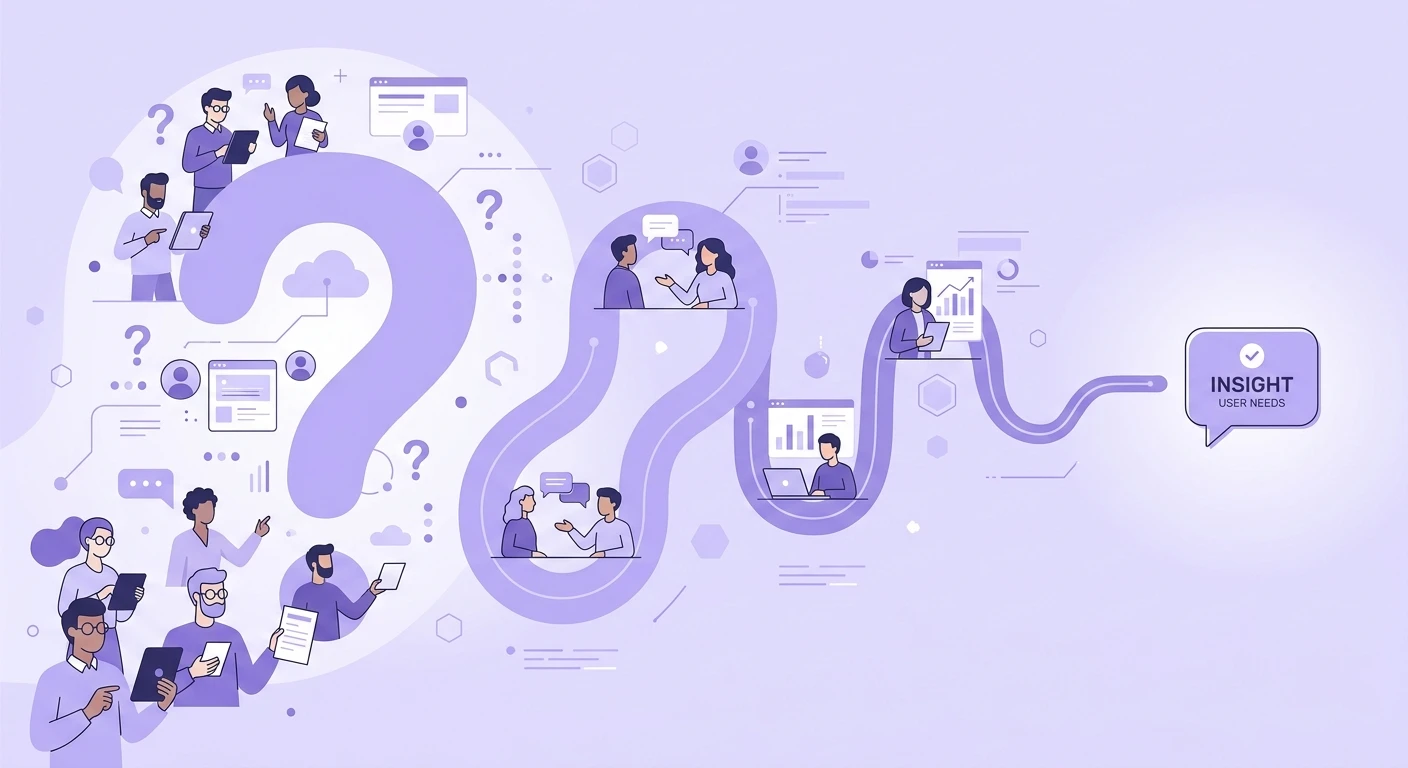
The traditional qualitative analysis pipeline is sequential by design. You finish fieldwork, then you transcribe, then you code, then you synthesize, then you build the deliverable. Each step waits for the previous step to complete. Each handoff introduces delay.
This made sense when transcription required human typists, coding required physical index cards or early software tools, and synthesis required a senior researcher to physically sit with printouts and highlighters. The sequential model reflected the physical constraints of the work.
Those constraints no longer exist. Transcription is near-instantaneous. Coding can begin on the first transcript while fieldwork is still running. Synthesis can update continuously as new data arrives. Yet most agencies still run the sequential pipeline because it is familiar, their project management tools assume it, and their staffing models are built around it.
The agencies that have collapsed this pipeline are not making incremental improvements. They are fundamentally restructuring how analysis happens relative to fieldwork. The shift from project-based research to continuous discovery is not just a methodology change -- it is a business model transformation.
The Parallel Analysis Model
The core insight behind same-day delivery is simple: analysis should happen during fieldwork, not after it.
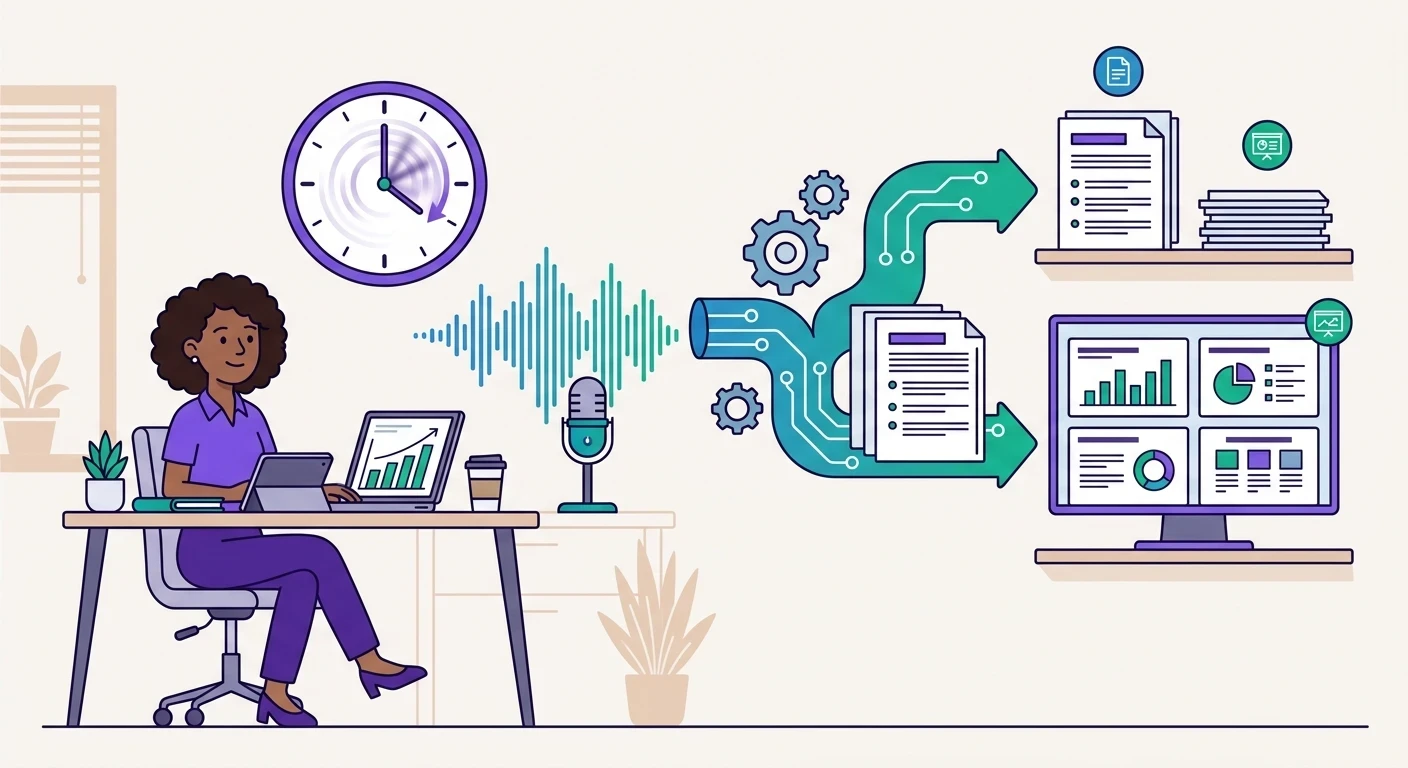
Here is what that looks like in practice. Interview one is completed at 10 AM. By 10:30 AM, the transcript is available and the AI-powered analysis platform has generated initial codes. The researcher reviews these codes, adjusts the emerging codebook, and flags areas to probe deeper in subsequent interviews.
Interview two happens at 1 PM. By 1:45 PM, the analysis has updated -- new codes are suggested, existing codes are applied to the new transcript, and the thematic structure begins to take shape. The researcher can now see which themes are appearing across both interviews and which are unique to one participant.
By interview five, the codebook is stabilizing. The researcher has refined it twice based on what the data is showing. Cross-interview patterns are visible. The themes that will ultimately anchor the final deliverable are already identifiable, even though fieldwork is only a quarter complete.
By interview fifteen, the analysis is essentially done. Not in draft form -- in near-final form. The thematic structure has been validated across a meaningful sample. The supporting quotes have been identified and tagged. The patterns have been cross-referenced and the exceptions noted.
When the twentieth and final interview concludes, the researcher is not starting the analysis. They are finishing it. The gap between last interview and deliverable shrinks from weeks to hours.
What This Means for the Deliverable
A common objection from agency leaders is that speed must come at the cost of quality. "Our clients expect a sixty-page deck with verbatim quotes, thematic maps, and strategic recommendations. You cannot produce that overnight."
Actually, you can. And the reason is that the deck is not the hard part. The analysis is the hard part.
When the thematic analysis is complete by the end of fieldwork, building the deliverable is an assembly task, not an analytical task. The themes are defined. The supporting evidence is tagged and organized. The patterns and exceptions are documented. The strategic implications have been emerging throughout the analytical process.
The deck itself -- whether it is thirty slides or sixty -- is a communication artifact that structures findings the researcher already understands. With a complete analysis in hand, a skilled researcher can build a client-ready deck in four to six hours. Add internal review and polish, and you are looking at a same-day or next-morning deliverable.
This is not a rough topline. This is the full analysis, complete with thematic frameworks, verbatim quotes in context, segment comparisons, and strategic recommendations. The depth comes from the analysis running parallel to fieldwork, not from weeks of post-hoc review.
Research on AI-powered thematic analysis consistently shows that parallel analysis with AI augmentation produces findings of comparable or superior quality to manual analysis -- because the AI catches patterns that fatigued human analysts miss on late-night transcript reviews.
The Agency Economics
Let us talk about what this means for your business.
A typical qualitative project priced at $75,000 to $120,000 carries a cost structure weighted toward analyst time in the post-fieldwork phase. Senior researchers reviewing transcripts, mid-level analysts coding and re-coding, junior team members building decks and pulling quotes. Under the traditional model, this post-fieldwork phase consumes 40 to 60 percent of the project labor budget.
Under the parallel analysis model, the post-fieldwork labor drops dramatically. The AI handles the initial coding pass. The researcher refines rather than creates from scratch. Cross-transcript pattern recognition that took three analysts a week takes one researcher a day.
The math varies by agency size and pricing model, but the directional impact is consistent: projects that used to require 200 analyst-hours of post-fieldwork labor now require 40 to 60. Your cost structure improves on every project. Your capacity increases without adding headcount. Your margins on fixed-price projects improve substantially.
But the bigger economic impact is on win rates and client retention. Agencies that can promise -- and deliver -- findings within 48 hours of fieldwork completion win projects that agencies quoting four-week timelines lose. When clients are leaving agencies that cannot keep pace, the speed advantage is not incremental. It is the difference between winning the work and not being invited to pitch.
The Real-Time Client Relationship
Here is something that changes when your analysis runs parallel to fieldwork: your client relationship transforms.
Under the traditional model, the client hands off the project and hears nothing substantive until the final presentation. There is a mid-fieldwork check-in where you share "emerging observations" -- which is researcher code for "I have read three transcripts and have some hunches." The client nods, asks a few questions, and goes back to waiting.
Under the parallel model, you can provide substantive updates throughout fieldwork. Not hunches -- actual thematic findings backed by coded data. "After eight interviews, we are seeing three distinct segments in how physicians evaluate this treatment. Here are the preliminary themes with supporting quotes." The client can redirect the research in real time: "We are seeing enough on segment A. Can we over-recruit segment B for the remaining interviews?"
This transforms the agency from a vendor that disappears for six weeks into a strategic partner providing continuous intelligence. Research on how agencies are using AI-moderated interviews shows that this continuous engagement model dramatically increases client satisfaction and repeat business.
The Operational Shift
Moving to same-day delivery requires more than buying a software license. It requires rethinking how your team operates.
The researcher's role shifts from analyst to analytical director. Instead of personally reading every transcript and writing every code, they are reviewing AI-generated codes, refining the thematic framework, and making the interpretive judgments that require human expertise. This is a higher-order skill set, and it requires different training than traditional qualitative methods courses provide.
Project management changes too. The sequential pipeline had natural checkpoints: transcription complete, coding complete, synthesis complete. The parallel model is more fluid. The researcher needs to be available during fieldwork to review incoming analysis, not blocked on other projects. This means agencies need to rethink resource allocation and potentially restructure how researchers are assigned to projects.
Quality assurance also evolves. Under the traditional model, QA happens at the end -- a senior researcher reviews the final deliverable. Under the parallel model, QA is continuous. The researcher is reviewing and refining the analysis throughout fieldwork, catching errors and adjusting the framework in real time rather than discovering problems in a final review that forces a week of rework.
Cross-Study Intelligence
One advantage of AI-powered analysis that agencies rarely leverage fully at first is cross-study pattern recognition. When your analytical platform processes fifty projects a year rather than having fifty separate analysis files on fifty different analyst laptops, you start seeing patterns across studies.
The pharmaceutical client who commissions three separate qualitative projects in the same therapeutic area gets better insights when findings from all three are synthesized together. The consumer brand that runs quarterly tracking studies gets more value when each wave is analyzed in the context of previous waves.
Cross-study triangulation becomes a service offering rather than an aspirational capability. It happens naturally when your analytical platform retains the coded data from previous projects and can identify connections that no individual researcher would remember across studies conducted months apart.
This is where the competitive advantage compounds. Same-day delivery wins the first project. Cross-study intelligence wins the retainer.
Addressing the Skepticism
Agency leaders who have built careers on methodological rigor are right to be skeptical. The history of "faster qualitative research" is littered with approaches that sacrificed depth for speed: automated sentiment analysis that missed nuance, text analytics that counted words instead of interpreting meaning, AI summaries that flattened complex findings into bullet points.
The current generation of AI-powered qualitative analysis is fundamentally different because it works with the researcher rather than replacing them. The AI proposes codes; the researcher accepts, modifies, or rejects them. The AI identifies candidate themes; the researcher validates them against their methodological expertise. The AI surfaces patterns; the researcher interprets what those patterns mean for the client's business.
The question is not whether AI can replace a senior qualitative researcher. It cannot. The question is whether a senior qualitative researcher augmented by AI can deliver the same quality of analysis in one day that they currently deliver in three weeks. The answer, from agencies already operating this way, is unambiguously yes.
The insight decay problem is real. Every day between the last interview and the deliverable is a day where the findings lose relevance. Same-day delivery does not just improve your agency's economics. It improves the quality of the outcome for your client because the insights arrive when they can still influence the decisions they were designed to inform.
The New Standard
Twenty-four-hour turnaround from final interview to client-ready insights is not an aspiration. It is the operational reality for a growing number of research agencies. Within two years, it will be the baseline expectation from sophisticated clients.
The agencies that adopt this model now will have a two-year head start on refining their parallel analysis processes, training their researchers in AI-augmented methods, and building the cross-study intelligence that creates long-term competitive advantage.
The agencies that wait will be explaining to clients why their findings are still three weeks out while a competitor delivered yesterday.
See how Qualz.ai enables same-day qualitative delivery for research agencies