Why Research Agencies Are Losing Clients to In-House Teams (And How AI Levels the Playing Field)
If you run a research agency, you already feel it. The RFPs are fewer. The budgets are tighter. The clients who used to hand you six-figure annual retainers are now staffing up their own insights teams and asking you to "just handle the overflow."
This is not a blip. It is a structural shift in how organizations buy and consume research. And if your agency's response is to wait it out or compete on price, you are accelerating your own irrelevance.
But here is the part most people miss: this shift does not have to be a death sentence for agencies. In fact, the same technology driving insourcing — artificial intelligence — is also the most powerful weapon agencies have to fight back. The agencies that figure this out first will not just survive. They will dominate.
Let me explain.
The Insourcing Wave Is Not a Trend. It Is a Correction.
The numbers tell a clear story. According to Greenbook's GRIT Report, the share of research conducted by in-house teams has grown steadily over the past decade, with over 73% of enterprise organizations now maintaining dedicated insights functions. The global market research industry still generates north of $140 billion annually, but an increasing share of that spend is flowing to internal teams, DIY platforms, and technology — not agencies.
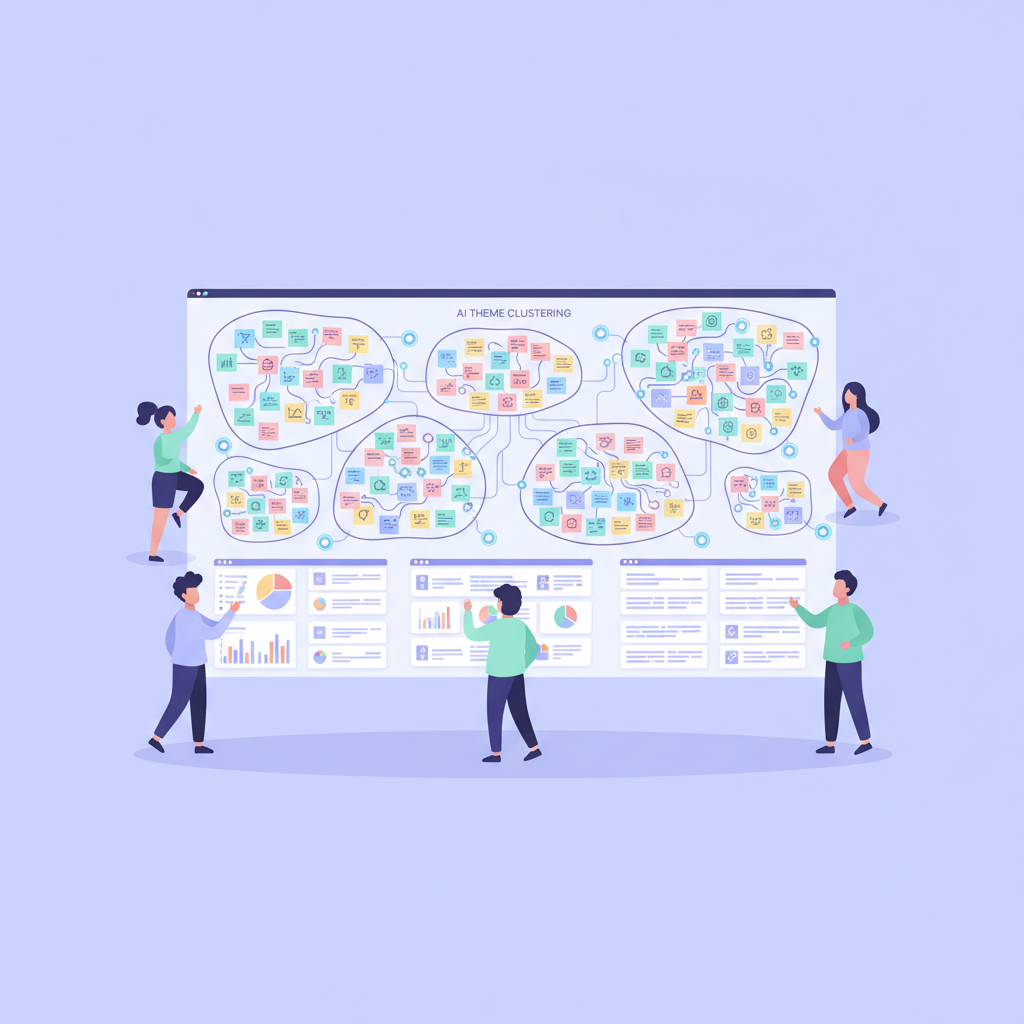
Why? Because the traditional agency model was built for an era of information scarcity. When running a focus group required specialized facilities, trained moderators, and weeks of logistical planning, outsourcing made sense. When analyzing interview transcripts meant hiring a team of qualitative coders to spend three weeks manually tagging themes (a process that AI is rapidly transforming), agencies provided genuine, hard-to-replicate value.
That era is ending.
Today, a product manager with a Zoom account and a survey tool can collect customer feedback before lunch. Platforms like UserTesting, Dovetail, and dozens of others have democratized the mechanics of research, making it accessible to non-specialists. And the rise of continuous discovery frameworks means companies want ongoing streams of insight, not quarterly deliverables that arrive six weeks after the decision was already made.
The correction is simple: clients realized they were paying agency premiums for work they could increasingly do themselves. And they acted on it.
Why Agencies Are Vulnerable (And It Is Not Just About Price)
If insourcing were purely a cost play, agencies could compete by cutting rates. But the vulnerability goes deeper than economics. It strikes at the core value proposition most agencies have been selling for decades.
Speed. The average qualitative research project — from kickoff to final deliverable — takes 6 to 12 weeks at a traditional agency. In-house teams, embedded in the product development cycle, can turn around a round of user interviews in days. When a VP of Product needs insight to inform a decision next sprint, waiting two months for an agency deck is not an option.
Relevance. In-house researchers live inside the business context. They know the product roadmap, the competitive landscape, the internal politics shaping what questions matter. Agency researchers, no matter how skilled, are always playing catch-up on context. The classic complaint — "the agency gave us insights we already knew" — is not about incompetence. It is about structural distance from the decision-making environment.
Cost structure. A senior qualitative researcher at an agency bills at $250-400/hour. A full-time in-house researcher costs $100,000-$150,000 annually — roughly the equivalent of 500-600 billable agency hours. For organizations running research regularly, the math tips in-house quickly, especially when you factor in the overhead agencies carry: office space, business development teams, account managers, and the layers of quality review that inflate timelines.
Volume. This might be the most underappreciated factor. Companies are not doing less research. They are doing dramatically more. Product-led growth, customer experience programs, continuous discovery — the appetite for qualitative insight has exploded. Agencies structured around discrete projects cannot serve a client that wants 50 interview studies a quarter. The operational capacity simply does not scale under the traditional model.
When you stack these vulnerabilities together, the picture is bleak. Agencies are slower, more expensive, less contextual, and structurally unable to match the volume modern organizations demand.
No wonder clients are insourcing.
The Uncomfortable Truth About In-House Teams
Here is where the narrative gets more nuanced — and more hopeful for agencies.
In-house research teams are not the paradise that procurement departments imagined when they signed off on the headcount. They have their own set of brutal constraints.
They are chronically understaffed. The typical insights team is 3-5 researchers serving an organization of thousands. They are permanently backlogged, triaging requests, and telling stakeholders "we will get to that next quarter" — which sounds a lot like the agency problem, just internalized.
They lack specialized depth. An in-house team optimized for continuous product discovery often lacks expertise in brand strategy research, segmentation studies, or complex multi-market projects. When the CMO needs a deep ethnographic study across four countries, the in-house team reaches for the phone and calls... an agency.
They struggle with objectivity. Internal researchers are embedded in the politics of their organization. They know which findings their VP wants to hear. They self-censor, consciously or not. The "outside perspective" that agencies provide is not just a sales pitch — it is a genuine epistemic advantage.
They burn out. Research operations at scale is grueling. Scheduling participants, managing incentives, cleaning data, producing reports — all while being pulled into meetings about things that have nothing to do with research. Attrition in in-house insights roles is high, and every departure takes institutional knowledge with it.
The reality is that most organizations need both: the embedded, always-on capability of an in-house team and the depth, objectivity, and surge capacity of agency partners. The question is not whether agencies will exist. It is which agencies will earn the right to that partnership.
Enter AI: The Great Equalizer
This is where the story changes.
The same AI capabilities that enabled DIY research tools — the ones that helped clients insource in the first place — are now available to agencies. And in the hands of experienced researchers, these tools do not just level the playing field. They tilt it.
Consider what AI does to the core agency vulnerabilities:
Speed: From weeks to days. AI-powered analysis tools can process 50 interview transcripts in minutes, not weeks. Theme extraction, sentiment analysis, pattern identification across segments — work that used to require a team of three analysts working for two weeks can now be done in an afternoon. An agency equipped with AI can deliver preliminary findings within days of fieldwork completion, matching or beating in-house turnaround times.
Cost: 10x throughput on the same team. When your analysts spend 70% less time on manual coding and synthesis, your effective capacity multiplies without adding headcount. That means you can serve more clients, take on larger studies, or — critically — offer more competitive pricing while maintaining margins. The agency cost premium shrinks from a structural disadvantage to a rounding error.
Depth: Analysis that humans alone cannot match. AI does not just speed up existing workflows. It enables analysis at a scale and granularity that was previously impossible. Processing thousands of open-ended survey responses to surface nuanced themes. Running cross-study meta-analysis across years of accumulated data. Identifying contradictions between what participants say and how they say it. These are not party tricks. They are genuine analytical capabilities that in-house teams, working with basic tools and limited bandwidth, simply cannot replicate.
Volume: Finally, agencies can scale. The biggest structural disadvantage — the inability to handle continuous, high-volume research — evaporates when AI handles the heavy lifting. An agency that would have needed 30 analysts to run 50 studies a quarter can now do it with 8. Suddenly, the retainer model makes economic sense again. Agencies can offer always-on research partnerships that match the continuous discovery cadence clients demand.
How Smart Agencies Are Already Winning
This is not theoretical. Agencies that have adopted AI-powered research tools are already seeing the results.
They are winning RFPs on turnaround time. When a CPG brand needs to understand consumer reactions to a new product concept across five markets in three weeks, the AI-equipped agency says "yes" while competitors are still scoping the project. Speed-to-insight has become a primary differentiator.
They are expanding scope, not just defending it. Instead of competing for the same shrinking pool of outsourced projects, smart agencies are pitching new services that only AI makes possible: always-on brand tracking through continuous qualitative interviews, real-time competitive intelligence from ongoing consumer conversations, and longitudinal studies that would have been prohibitively expensive under the old model.
They are repositioning as insight partners, not project vendors. The agencies pulling ahead are not selling "we will run your focus groups." They are selling "we will be your embedded insights engine — faster than your in-house team, deeper than your DIY tools, and always available." AI is what makes that promise credible.
They are using AI moderation to extend reach. AI-moderated interviews allow agencies to run dozens of in-depth conversations simultaneously across time zones and languages. A boutique agency in London can now field a 200-participant qualitative study in Southeast Asia without hiring a single local moderator. The geographic and logistical moats that protected large agencies are dissolving — and smaller, more agile firms are the beneficiaries.
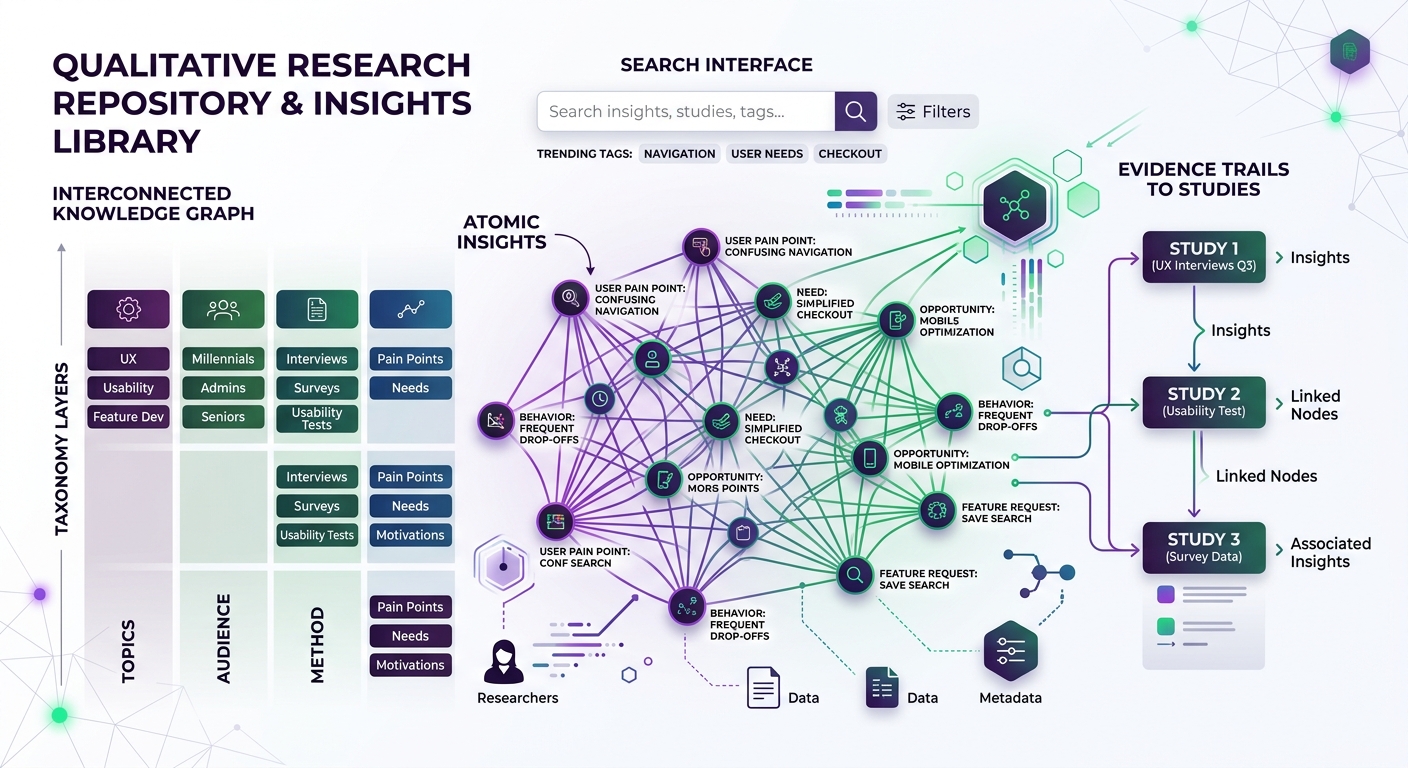
They are delivering work product that in-house teams cannot match. When your analysis is AI-assisted, your deliverables improve. Richer theme taxonomies. More granular segment comparisons. Evidence trails linking every insight back to verbatim quotes. The quality gap between agency and in-house work widens in the agency's favor — which is exactly where it needs to be to justify the premium.
The Agency Playbook for the AI Era
If you are an agency leader reading this, here is the blunt version of what you need to do:
1. Adopt AI tools now, not next year. The window for first-mover advantage in agency AI adoption is closing. Platforms like Qualz are purpose-built for research agencies — designed to amplify your team's expertise, not replace it. Every month you wait, a competitor gets faster.
2. Restructure your pricing. If you are still billing by the hour, AI creates a problem: you deliver faster, so you bill less. Flip to value-based or project-based pricing. Charge for the insight, not the labor. Your margins will actually improve because your costs drop faster than your prices.
3. Invest in your people differently. AI handles the mechanical work — transcription, initial coding, pattern detection. Your researchers need to level up on strategic synthesis, storytelling, and client advisory. The agency researcher of 2026 is not a coder-who-also-presents. They are a strategic consultant who happens to have AI-powered research infrastructure behind them.
4. Sell continuous, not project-based. Use AI-enabled capacity to offer retainer models and always-on research programs. This is how you become indispensable instead of interchangeable. When you are embedded in a client's ongoing decision-making rhythm, you are not competing with their in-house team — you are augmenting it.
5. Lead with speed and depth in every pitch. Your new pitch is: "We deliver faster than your in-house team can, with analytical depth they do not have the tools or bandwidth to match, at a cost that makes outsourcing the obvious choice." AI is what makes every part of that sentence true.
The Agencies That Disappear and the Ones That Thrive
Let me be direct about who loses here.
Agencies that sell bodies — billing hours for junior researchers to manually code transcripts and build PowerPoint decks — are in a race to the bottom that AI will finish. If your value proposition is "we have warm bodies who can do repetitive analytical work," you are competing with a technology that does it faster, cheaper, and arguably better.
Agencies that sell expertise — strategic thinking, methodological rigor, deep domain knowledge, and the ability to tell a client something they did not already know — have a future that is actually brighter than the past. AI removes the operational bottleneck that prevented great researchers from doing great research. It frees your best people from drudge work and lets them focus on what clients actually value: judgment, interpretation, and strategic recommendation.
The market is not shrinking. The demand for qualitative insight is exploding. What is shrinking is tolerance for slow, expensive, generic research. AI eliminates the slow and the expensive. Your job is to eliminate the generic.
The Bottom Line
The insourcing wave is real, and it is not reversing. Companies will continue building in-house research capabilities. DIY tools will continue to improve. The baseline for what clients can do without an agency will keep rising.
But baselines are just that — baselines. The opportunity for agencies is not to compete with the baseline. It is to operate so far above it that the comparison becomes absurd. AI gives you the infrastructure to do that.
The agencies that thrive in 2026 and beyond will be the ones that pair deep human expertise with AI-powered scale. They will deliver in days what used to take months. They will analyze at a depth that no in-house team with a handful of researchers and basic tools can match. They will offer continuous insight partnerships instead of one-off projects. And they will do it all at price points that make insourcing look like the expensive option.
The tools exist. The playbook is clear. The only question is whether you move now or watch your competitors do it first.
Ready to transform your agency's research capabilities? Explore how Qualz helps research agencies and consulting firms deliver faster, deeper, and at scale. Or visit qualz.ai to see the platform in action.