Qualitative research with vulnerable populations has always demanded an elevated standard of care. Domestic violence survivors, people experiencing mental health crises, displaced communities, minors, individuals in substance recovery -- these participants carry risks that extend far beyond data quality concerns. A poorly handled interview can retraumatize, endanger, or exploit the very people researchers aim to help.
AI-moderated interviews introduce a new dimension to this challenge. On one hand, automated interviews strip away some of the human safeguards that experienced researchers bring to sensitive conversations. On the other, they offer structural advantages that can make research with vulnerable populations genuinely safer than traditional methods -- if designed correctly.
This is not a theoretical discussion. Research teams in healthcare, social services, humanitarian organizations, and child welfare are already deploying AI interviews with at-risk populations. The question is not whether this will happen, but whether we will establish responsible practices before harm occurs.
IRB Considerations for AI-Moderated Interviews
Institutional Review Boards are still catching up to AI-moderated research methods. Most IRB frameworks were designed around a model where a trained human moderator exercises real-time judgment about participant welfare. When you replace that human with an AI system, you need to proactively address questions the IRB may not yet know to ask.
Classify the AI system clearly in your protocol. Is the AI a data collection instrument (like a survey tool) or a research agent (like a moderator)? This classification affects how the IRB evaluates risk. I recommend framing AI interviewers as structured data collection instruments with adaptive capabilities -- this aligns with existing IRB categories while accurately representing what the technology does.
Document the AI's decision boundaries explicitly. Your protocol should specify exactly what the AI can and cannot do. Can it deviate from the discussion guide? Can it ask unscripted follow-up questions? What happens if a participant discloses abuse, self-harm, or illegal activity? IRBs need to see that you have thought through every decision point where a human moderator would exercise judgment.
Address data handling with specificity. Vulnerable population research often involves heightened compliance requirements. Your protocol should detail where conversation data is stored, who has access, how long it is retained, and how PII is handled. If you are using a platform with built-in PII redaction, document the redaction methodology and its limitations.
Include a human oversight plan. Even the most sophisticated AI interview system should have human checkpoints. Define who reviews transcripts, how quickly flagged conversations are escalated, and what triggers a pause in data collection. IRBs are far more likely to approve AI-moderated studies with vulnerable populations when robust human oversight is baked into the protocol.
Trauma-Informed Discussion Guide Design
Writing a discussion guide for vulnerable populations requires fundamentally different design principles than standard qualitative research. When AI is the moderator, these principles must be encoded even more explicitly because the AI cannot read distress signals the way an experienced human researcher can.
Open with agency, not vulnerability. Begin interviews by establishing the participant's expertise and autonomy. "You are the expert on your own experience" is a framing that works across populations. For domestic violence survivors, this might mean starting with questions about their strengths and coping strategies before approaching difficult topics. For displaced communities, it might mean opening with questions about their skills and aspirations rather than their trauma.
Build explicit off-ramps into every section. After each sensitive topic block, include instructions for the AI to check in: "Before we continue, I want to make sure you are comfortable. Would you like to take a break, skip this section, or stop the interview entirely?" These check-ins must be genuine -- the AI should respond naturally and supportively to any answer, not just acknowledge and push forward.
Use graduated disclosure. Structure the guide so that topic sensitivity increases gradually. Do not jump from "Tell me about your daily routine" to "Describe your experience with violence." Each question should be a small step deeper, giving participants time to calibrate their own comfort level. This principle applies to all interview design, but it is non-negotiable with vulnerable populations.
Specify language constraints precisely. Tell the AI exactly what language to avoid. "Do not use the word 'victim.' Use 'survivor' or 'person who experienced.' Do not use clinical diagnostic language unless the participant introduces it first. Do not characterize the participant's emotions -- ask about them instead." With vulnerable populations, a single poorly chosen word can shut down trust entirely.
End with grounding. The final section of any trauma-adjacent interview should bring the participant back to the present and to their agency. "What gives you hope?" or "What would you want other people to understand about your experience?" are closing questions that leave participants in an empowered state rather than a re-activated one.
Crisis Detection and Escalation Protocols
This is the highest-stakes design challenge in AI-moderated research with vulnerable populations. What happens when a participant discloses active harm, suicidal ideation, or immediate danger?
Define trigger categories with specificity. Vague instructions like "escalate if the participant seems distressed" are insufficient. Define concrete trigger categories:
- Immediate danger: Participant discloses current abuse, active suicidal plan, or threat to self or others
- Mandatory reporting: Participant discloses child abuse, elder abuse, or other situations requiring mandatory reporting in your jurisdiction
- Emotional distress: Participant becomes visibly upset, requests to stop, or exhibits signs of re-traumatization
- Disclosure without immediate risk: Participant shares past trauma that does not indicate current danger but requires sensitive handling
Program specific responses for each category. For immediate danger, the AI should stop the research interview, express concern, and provide crisis resources -- not as a footnote, but as the primary response. "I can hear that you are going through something very serious right now. I want to make sure you have support. Here is the number for [relevant crisis line]. Would it be helpful if we stopped our conversation here?" Simultaneously, the system should alert a designated human researcher for follow-up.
Test escalation protocols before deployment. Run simulated interviews where trained testers deliberately trigger each crisis category. Verify that the AI responds appropriately, that alerts reach the right people within the required timeframe, and that the transition from research mode to crisis mode is seamless. Do not deploy with vulnerable populations until every escalation pathway has been tested.
Maintain crisis resources in multiple formats. Not every participant can make a phone call. Include text lines, chat services, and local resources relevant to your study population. For research with international populations, localize crisis resources for each participant's region.
Consent Design for Vulnerable Groups
Standard informed consent assumes a participant who can freely choose to participate, understands what they are agreeing to, and can withdraw without consequence. With vulnerable populations, each of these assumptions may be compromised.
Design for power dynamics. If participants are recruited through service providers (shelters, clinics, caseworkers), they may feel that participation is expected or that refusing could affect their services. Your consent process must explicitly address this: "Your participation is completely voluntary. Your decision will not affect any services you receive. No one at [organization] will know whether you participated or what you said."
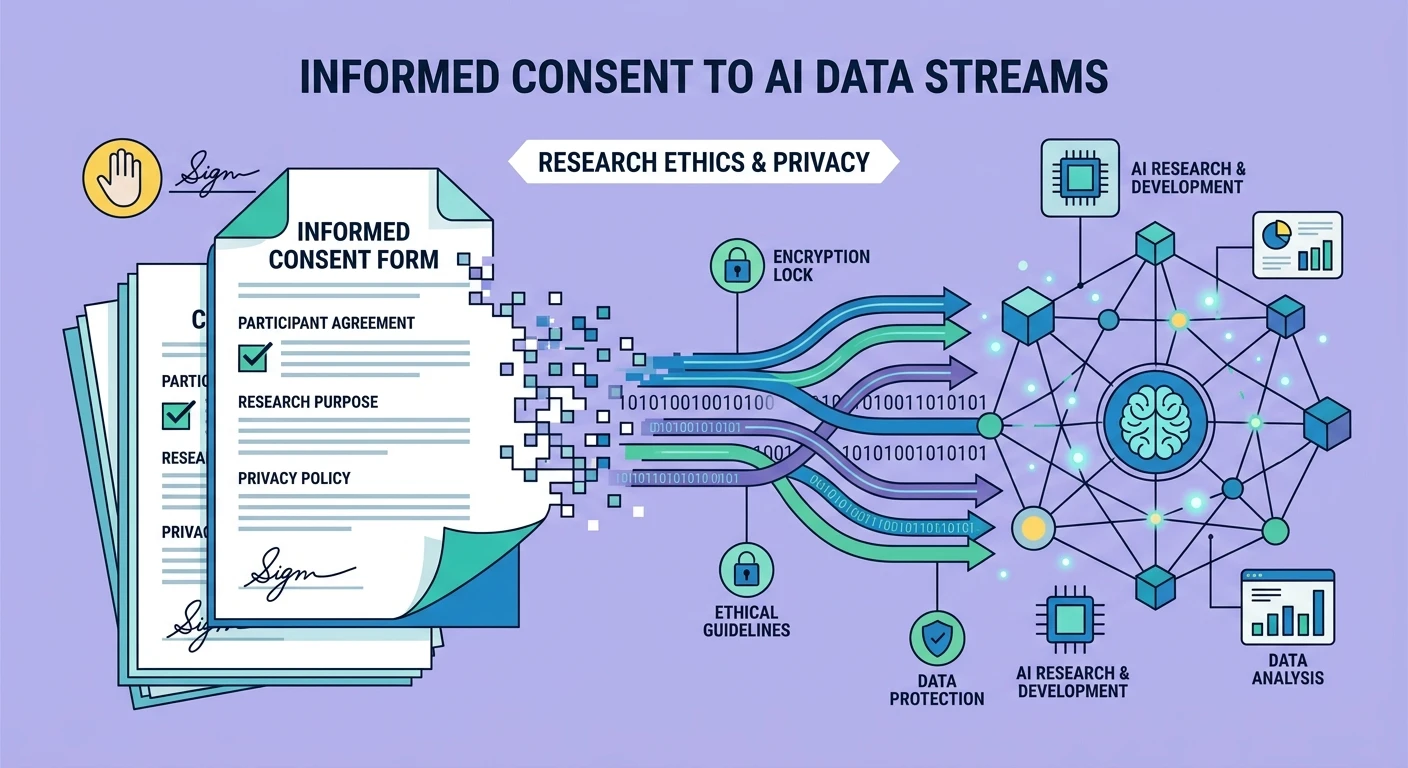
Use layered consent. Rather than a single consent form, use a progressive consent model. First, explain the study in plain language. Then ask if they want to continue to the full consent process. Then, before each sensitive section, re-confirm their willingness to discuss that topic. This approach respects that consent is not a single moment but an ongoing negotiation -- something AI interviews can actually handle more consistently than human ones.
Accommodate literacy and language barriers. For populations with limited literacy, provide audio or video consent explanations. For multilingual populations, provide consent in the participant's preferred language. AI platforms that support multi-language interviews can deliver consent in the same language as the interview itself.
Be transparent about the AI. Participants must know they are speaking with an AI, not a human. For some vulnerable populations, this is actually a feature -- they may disclose more freely knowing there is no human on the other end making judgments. But they deserve the choice to make that determination themselves.
PII Redaction as a Safety Feature
In most research contexts, PII redaction is a compliance obligation. With vulnerable populations, it is a safety feature. If a domestic violence survivor's interview data is breached, the consequences extend far beyond privacy violations -- they could face physical danger.
Implement real-time redaction. Do not wait until post-processing to strip identifying information. AI-powered PII redaction should operate during the interview, ensuring that names, addresses, phone numbers, and other identifiers never persist in raw form. This minimizes the window of exposure.
Redact contextual identifiers, not just direct ones. Standard PII redaction catches names and phone numbers. But for a domestic violence survivor, the combination of "works at the hospital on Third Street" and "has two kids in elementary school" might be enough to identify them. Configure redaction to flag and remove contextual identifying combinations, not just standard PII fields.
Implement data minimization aggressively. Do not collect what you do not need. If your research question is about service access barriers, you do not need to know the participant's exact location, employer, or family composition. Instruct the AI to redirect if participants volunteer unnecessary identifying information: "Thank you for sharing that. For your privacy, I will not record those specific details. Can you tell me more about the experience without using names or locations?"
The Case for AI Interviews Being Safer
Here is the argument that surprises most ethics boards: for certain vulnerable populations, AI-moderated interviews can be structurally safer than human-moderated ones.
No interviewer bias or judgment. Vulnerable populations are acutely sensitive to perceived judgment. A human interviewer's facial expression, tone shift, or moment of surprise can shut down disclosure. AI interviewers maintain consistent, bias-free engagement regardless of what the participant shares. Research on disclosure rates in sensitive topics consistently shows that people share more with automated systems than with humans.
Participant controls the pace. In a human interview, the moderator controls timing. In an AI interview, the participant can pause, take breaks, re-read questions, and respond when they are ready. For trauma survivors, this control over pacing can be the difference between a productive interview and a re-traumatizing one.
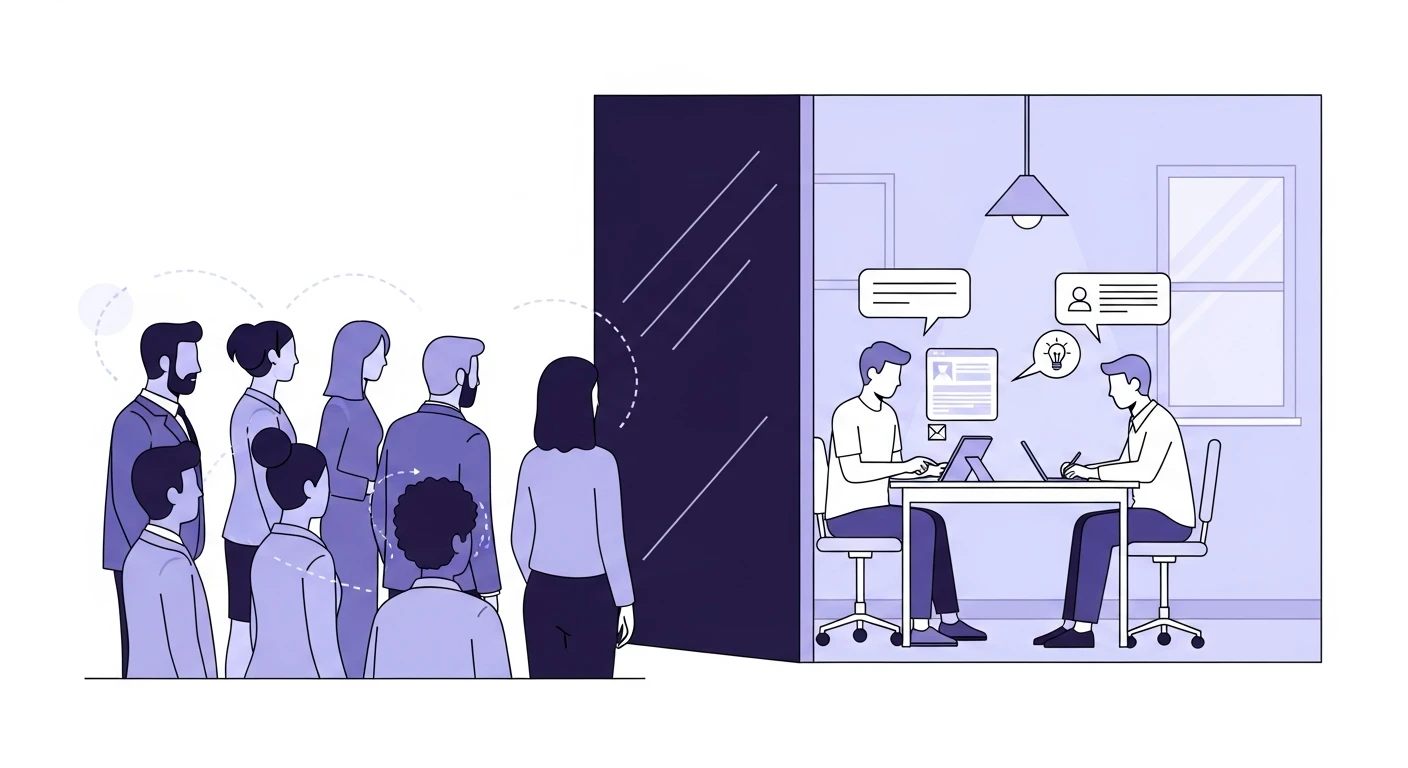
Complete anonymity is achievable. With proper design, an AI interview can be fully anonymous -- no human ever sees the participant's face, hears their voice in real-time, or knows their identity. For populations where identification carries risk (undocumented individuals, people in abusive situations, whistleblowers), this structural anonymity is not just convenient -- it is protective.
Consistency of safeguards. Human moderators have good days and bad days. They get fatigued after back-to-back trauma interviews. They might forget a check-in prompt or miss a distress signal at the end of a long day. AI systems execute safety protocols with the same consistency on interview number 200 as interview number one.
24/7 availability. Vulnerable populations often have constrained schedules. A parent in a shelter, a shift worker in recovery, a teenager with limited unsupervised time -- they need to participate when they can, not when a moderator is available. AI interviews meet participants on their schedule, which directly increases access for populations that traditional research methods systematically underserve.
This is not an argument against human oversight. It is an argument for recognizing that the comparison between AI and human moderation is not as one-sided as intuition suggests, particularly for vulnerable populations.
Building Your Protocol
If you are planning AI-moderated research with vulnerable populations, start with your ethics framework, not your discussion guide. Map every risk specific to your population. Design escalation protocols before you write a single interview question. Test with simulated participants before you engage real ones.
The opportunity is real. AI-moderated interviews can reach populations that traditional research methods exclude -- people who will not come to a focus group facility, who cannot schedule a 60-minute video call, who will not disclose to a stranger's face. But reaching these populations without proper safeguards is worse than not reaching them at all.
Want to design an AI interview study for vulnerable or sensitive populations? Book a session with our team to walk through ethical protocol design, crisis escalation setup, and trauma-informed discussion guide development for your specific research context.