A Framework Built for a Different Era
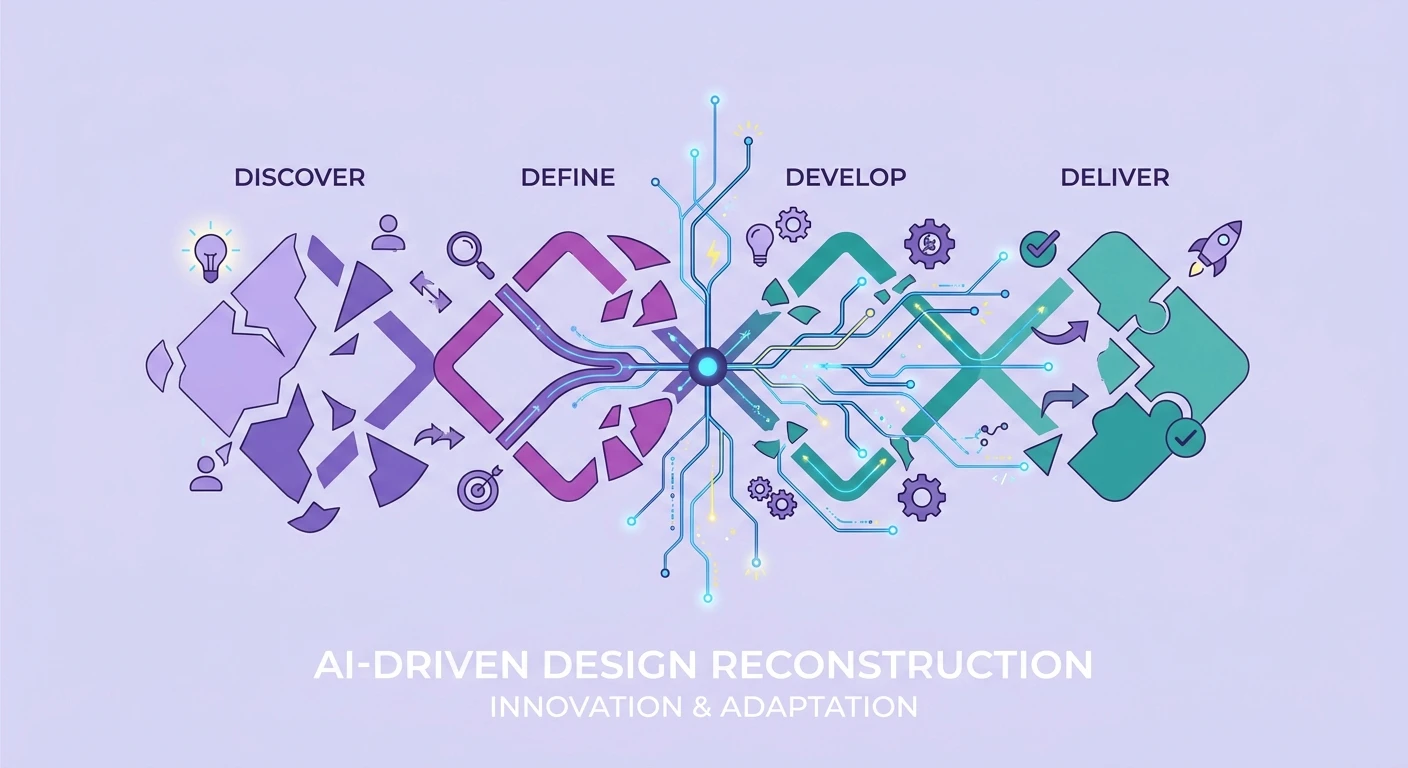
The British Design Council introduced the double diamond in 2005. It was elegant: diverge to discover problems, converge to define them, diverge again to develop solutions, converge to deliver. For two decades it gave design and research teams a shared language for how work should flow.
But the double diamond assumed something that is no longer true -- that research is a discrete phase that produces a deliverable, which then gets handed to a design team, which then produces another deliverable. Discovery happened, then definition happened, then development happened. Each phase had clear entry and exit criteria. You knew where you were in the diamond.
AI-augmented research does not work this way. When your analysis tool can surface themes from interview transcripts in minutes instead of weeks, the boundary between discovery and definition dissolves. When you can run sentiment analysis alongside qualitative coding in real-time, you are no longer diverging and converging in sequence. You are doing both simultaneously.
The double diamond is not wrong. It is outdated. And the teams that cling to it are structuring their work around artificial constraints that AI has already removed.
What AI Actually Changed
The core assumption of phased research processes is that analysis takes time. In the traditional model, you spend two weeks in the field, then three weeks analyzing, then a week synthesizing, then present findings. The timeline enforces phases because you physically cannot analyze while you are still collecting data -- there is too much manual work involved.
AI compressed the analysis timeline from weeks to hours. This is not an incremental improvement. It is a phase change that invalidates the sequential logic of every diamond, funnel, and stage-gate model in existence.
Consider what happens when a team uses AI-powered qualitative analysis during a research sprint. Interview one happens Monday morning. By Monday afternoon, the transcript is coded, initial themes are identified, and the AI has flagged areas where the interview guide might need adjustment. Interview two happens Tuesday. The system immediately cross-references findings with interview one, identifies contradictions worth exploring -- the kind of inconsistencies that are actually your most valuable signal -- and suggests follow-up probes for interview three.
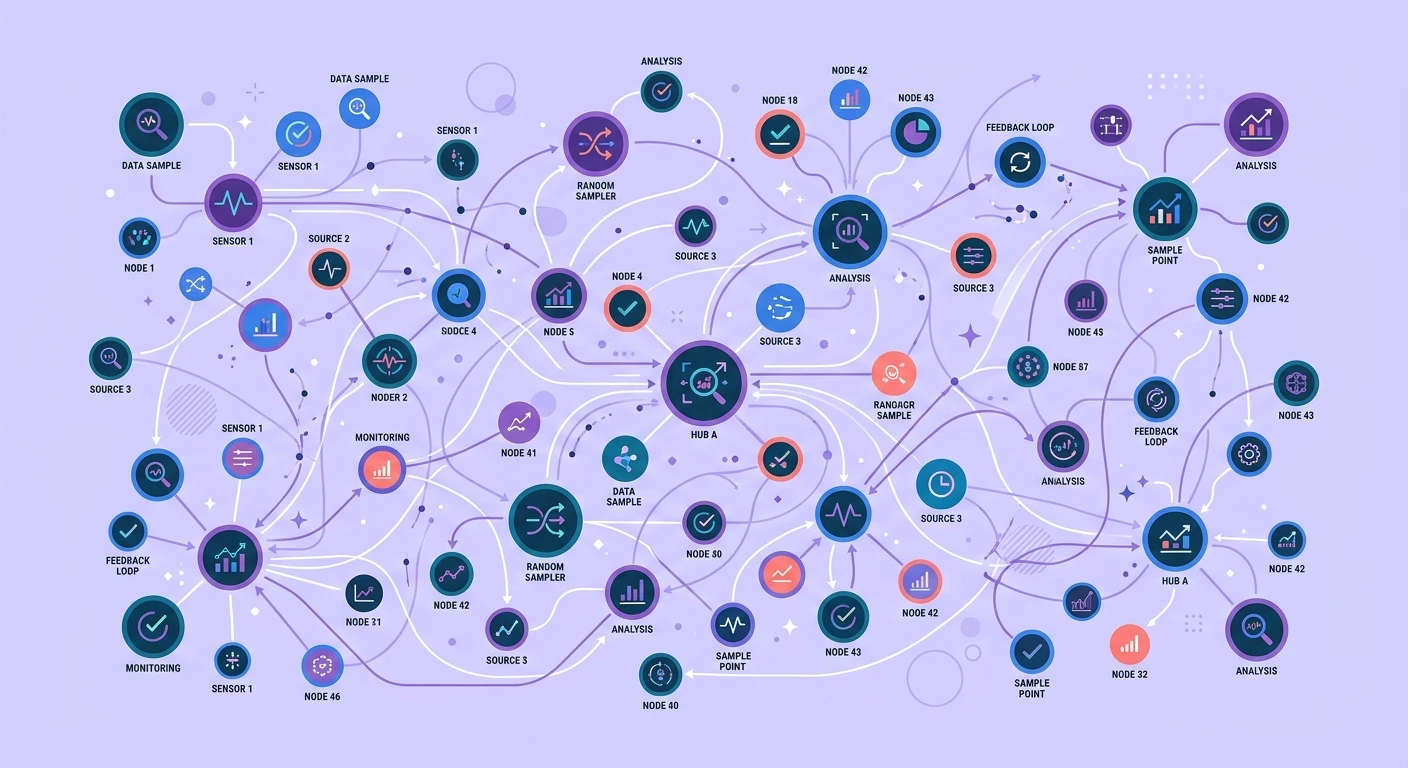
This is not discovery followed by definition. This is continuous sense-making where every new data point refines the analytical framework in real-time. The diamond has collapsed into a spiral.
The Spiral Model for AI-Augmented Research
What replaces the double diamond? Not another rigid framework -- the whole point is that rigidity is the problem. But teams need structure, and "just figure it out" is not a process.
The model that actually matches how AI-augmented research works is a spiral: tight loops of collection, analysis, synthesis, and redirection that repeat with increasing fidelity. Each loop takes hours or days, not weeks. Each loop builds on the previous one. And crucially, each loop can change the direction of the next.
Loop one might involve five exploratory interviews analyzed in real-time. The AI surfaces an unexpected theme -- participants are not struggling with the feature your product team assumed was the problem. They are struggling with a workflow three steps earlier that nobody asked about. In a double diamond process, this insight would sit in a transcript until week four. In a spiral, it redirects interview six through ten toward the actual problem.
Loop two deepens the investigation. The AI maintains a running thematic synthesis across all interviews, updating the framework as each new conversation adds data. The research team is not waiting to analyze -- they are watching the analysis evolve in real-time and making judgment calls about where to push deeper.
Loop three might shift methods entirely. The qualitative findings suggest a quantitative validation is needed. Because the synthesis is already done, the team can design a targeted survey the same week instead of waiting for the qualitative phase to "complete" before starting quantitative work. This is the kind of mixed methods integration that phased models make nearly impossible on tight timelines.
Why Teams Resist the Shift
If the spiral model is more effective, why do teams keep using diamonds? Three reasons.
First, organizational structures mirror the old process. Research teams, design teams, and product teams are set up as sequential handoff stations. Research "delivers" insights to design. Design "delivers" prototypes to engineering. The diamond gives each team a defined role in a defined phase. Switching to a spiral means restructuring how product teams do research -- and that is an organizational change, not just a methodological one.
Second, the diamond is easy to communicate to stakeholders. "We are in the discover phase" is a simple status update. "We are in loop three of a spiral where collection and analysis are happening simultaneously" requires more explanation. The frameworks that spread are the ones that fit on a slide, not the ones that best describe reality.
Third, many teams have not actually experienced AI-augmented research. They have read about it. They have seen demos. But they have not run a project where real-time analysis fundamentally changed their process. Until you have experienced the moment when your third interview redirects based on AI-surfaced patterns from interviews one and two, the spiral model sounds theoretical.
How to Actually Make the Transition
The shift from diamond to spiral is not about buying a tool. It is about changing four specific practices.
First, stop batching analysis. The single highest-impact change is analyzing each interview within hours of completion, not waiting until fieldwork ends. This requires AI-powered qualitative analysis tools that can process transcripts immediately, but the bigger change is psychological. Researchers need permission to act on partial data.
Second, build adaptive interview guides. If your interview guide is identical for participant one and participant twenty, you are not learning from your own data. AI-augmented analysis makes it possible to refine probes between interviews based on emerging patterns. The guide should be a living document that evolves with the research.
Third, integrate stakeholders into loops, not phases. Instead of presenting findings at the end of a research phase, share emerging themes after each spiral loop. Product managers who see patterns developing across interviews make better decisions than product managers who receive a polished deck three weeks later. The goal is to make research findings change decisions in real-time, not after the fact.
Fourth, measure research velocity, not research phases. The diamond encourages teams to track "are we in discover or define?" The spiral encourages teams to track "how many loops have we completed, and how much has our understanding changed since loop one?" Velocity metrics match how continuous discovery actually works better than phase-completion metrics.
The Competitive Advantage of Process Innovation
Most teams focus on tool adoption -- which AI platform to use, which features matter, how to integrate with existing workflows. But the teams that gain the most from AI-augmented research are the ones that also change their process model.
A team using AI tools within a double diamond framework will get faster analysis. A team using AI tools within a spiral framework will get fundamentally different insights, because the process allows real-time redirection that sequential models prevent.
The double diamond served UX research well for twenty years. It gave structure to a discipline that needed it. But the constraint it was designed around -- that analysis takes too long to run concurrently with collection -- no longer exists. The teams that recognize this and adapt their process accordingly will consistently out-research the teams that simply run the old process faster.
The diamond is not dead because it was wrong. It is dead because the world it described no longer exists.