The Memory Problem in UX Research
Every UX researcher has experienced this: you ask a participant about their experience with a product last week, and they give you a clean, coherent narrative. It sounds plausible. It might even contain genuine insights. But it is not what actually happened.
Human memory does not record experiences like a video camera. It reconstructs them. And reconstruction introduces systematic distortions -- recall bias that warps what participants tell you in predictable ways. Peak moments get amplified. Routine interactions vanish. The narrative gets smoothed into a story that makes sense retrospectively but misrepresents the messy reality of actual usage.
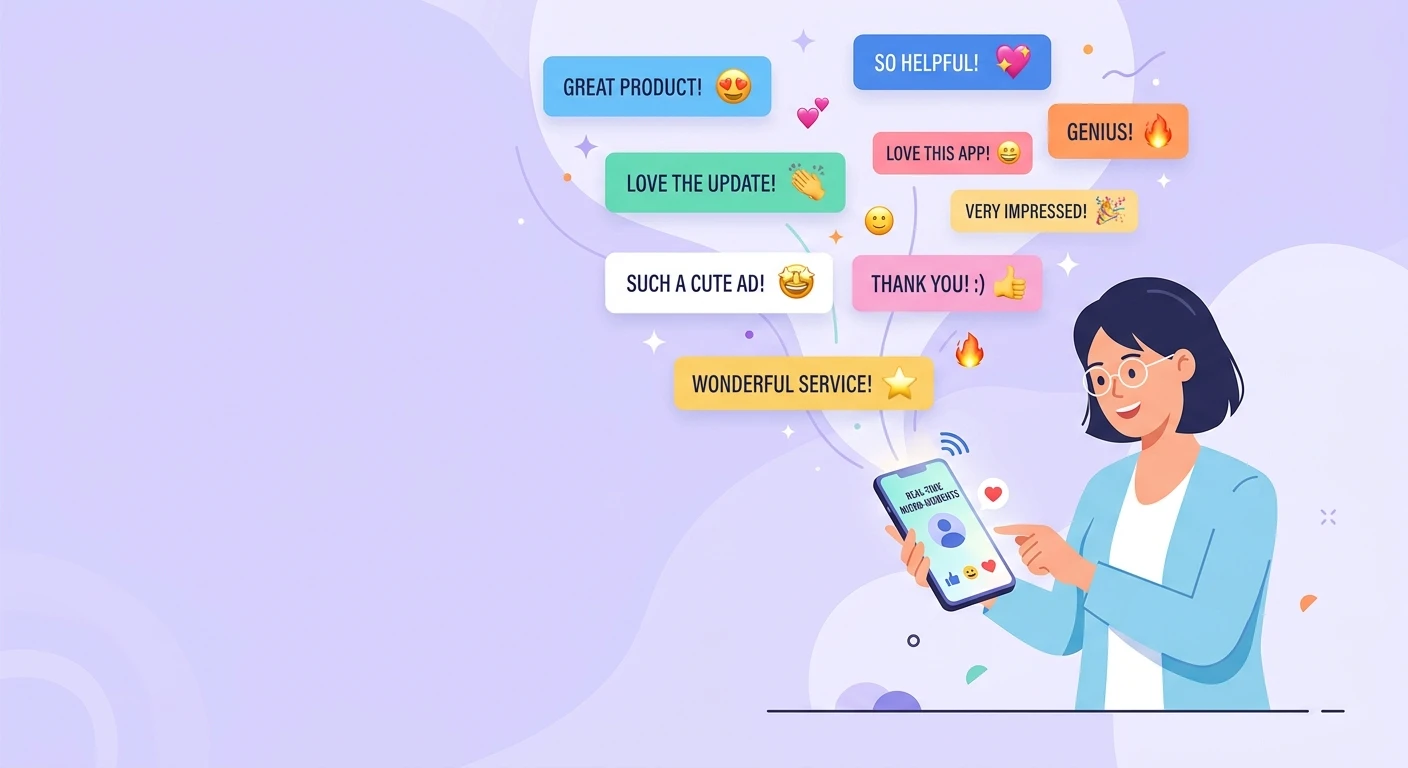
Experience Sampling Method (ESM) sidesteps this problem entirely. Instead of asking users to remember, you ask them to report -- right now, in the moment, while the experience is happening. The result is a fundamentally different kind of data: granular, temporal, and free from the distortions of retrospective reconstruction.
What Experience Sampling Actually Is
ESM is a research method where participants receive prompts at random or event-triggered moments throughout their day and respond with brief reports about their current experience. The prompts are short -- a few questions that take 30-60 seconds to answer. The responses capture what the participant is doing, feeling, and thinking at that specific moment.
The method originated in psychology research in the 1970s and 1980s, primarily through the work of Mihaly Csikszentmihalyi studying flow states. It moved into UX research as mobile devices made in-context prompting practical. Today, with smartphones as the default delivery mechanism, ESM has become one of the most powerful tools in the qualitative researcher's toolkit -- yet it remains dramatically underutilized.
The core principle is ecological validity. Lab studies tell you how users behave in a lab. Interviews tell you how users narrate their behavior after the fact. ESM tells you how users actually experience your product in their real environment, at real moments, during real tasks.
Designing an ESM Study That Works
The biggest failure mode in ESM is participant fatigue. Prompt too often and participants start ignoring notifications. Prompt too rarely and you miss the moments that matter. The sweet spot for most UX studies is 4-6 prompts per day over 5-7 days. That generates 20-40 data points per participant -- enough to identify patterns without burning out your panel.
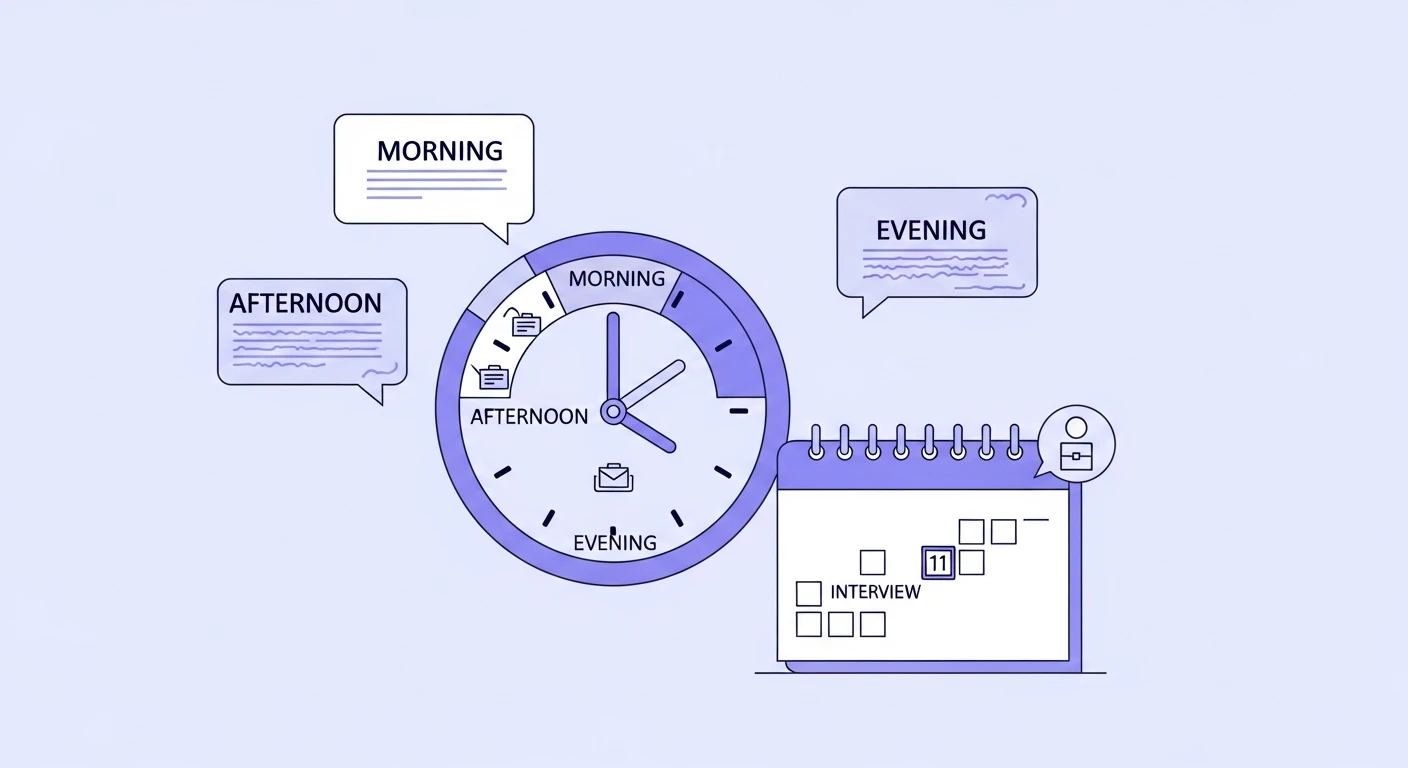
Prompt timing strategy matters enormously. There are three approaches:
Signal-contingent sampling sends prompts at random intervals. This gives you an unbiased snapshot of the user's day but may catch them during irrelevant moments -- commuting, cooking, sleeping. For product-specific research, the hit rate on relevant moments is low.
Event-contingent sampling asks participants to self-report whenever a specific event occurs -- every time they open your app, every time they encounter an error, every time they complete a key workflow. This guarantees relevant data but introduces selection bias: participants might forget to report, especially for routine or brief interactions.
Interval-contingent sampling prompts at fixed intervals during relevant windows. If you know your product is used primarily during work hours, prompt every 90 minutes between 9 AM and 6 PM. This balances coverage with relevance.
The best ESM studies combine approaches. Use event-contingent triggers for critical moments (app opens, task completions) and signal-contingent random prompts during active hours to capture the context around those moments.
The Questions That Surface Real Insights
ESM questions must be fast to answer. This is not a survey -- it is a momentary check-in. The most effective format combines structured scales with one open-ended field.
A proven template for UX ESM:
- What are you doing right now? (Multiple choice: specific product tasks)
- How would you rate this experience? (5-point scale)
- What one word describes how you feel right now? (Open text)
- Is anything frustrating or delightful about this moment? (Open text, optional)
That is it. Four questions, under 60 seconds. The structured data gives you quantitative patterns. The open text gives you qualitative richness. And because participants are responding in the moment, the open text captures language and emotions that retrospective interviews systematically miss.
Analyzing ESM Data at Scale
ESM generates a particular kind of dataset: many small observations distributed across time and participants. A 10-participant, 7-day study with 5 prompts per day produces 350 micro-responses. That is too many to read one by one and too few for traditional statistical analysis.
This is where AI-powered qualitative analysis transforms the method. Feed the open-text responses into thematic analysis tools and patterns emerge across participants and time periods. You can see that frustration clusters around Tuesday afternoons (when weekly reports are due), that delight peaks during collaborative features, that confusion appears consistently at a specific workflow transition.
The temporal dimension is ESM's unique analytical advantage. Unlike interview data, which gives you a flat collection of themes, ESM data has a time axis. You can track how experience quality changes across the day, the week, or the duration of the study. You can identify whether a pain point is consistent or situational. You can see whether your product fits into users' natural workflows or fights against them.
Combining ESM With Traditional Methods
ESM is not a replacement for interviews -- it is the perfect complement. The most powerful research design uses ESM to surface patterns and interviews to explore them.
Run a one-week ESM study first. Identify the moments of highest frustration and delight. Then bring participants into follow-up interviews armed with their own ESM responses. "On Wednesday at 2 PM, you reported feeling frustrated while using the export feature. Tell me what was happening." The participant does not need to reconstruct from memory -- they have their own contemporaneous notes as a prompt.
This combination solves the two weaknesses of each method. ESM alone gives you what happened but limited depth on why. Interviews alone give you depth but questionable accuracy on what. Together, they produce research that is both accurate and deep -- the kind of evidence that changes product decisions because it is impossible to dismiss.
The organizations building the best products in 2026 are not choosing between methods. They are layering them. ESM for real-time capture. AI analysis for pattern detection. Targeted interviews for depth. The continuous discovery model that treats research as an always-on function rather than a periodic project.