The Choice Everyone Makes for the Wrong Reason
When a team needs qualitative data, the focus-group-versus-interview decision usually comes down to logistics: a focus group talks to eight people in ninety minutes, interviews take eight sessions. Groups feel efficient, so groups win by default. But efficiency is the wrong axis entirely. The two methods do not produce the same data faster or slower -- they produce fundamentally different data, because the social physics of a room full of strangers is nothing like the physics of a one-on-one conversation.
The real question is never "which is cheaper." It is "which structure surfaces the truth I need, and which one distorts it." A focus group is the right tool for some questions and structurally incapable of answering others; the same is true of interviews. This piece lays out what each is genuinely good at, what each reliably distorts, and a decision rule for choosing between them.
What Focus Groups Are Structurally Good At
Focus groups have one genuine superpower: they surface the range and boundaries of opinion through interaction. When one participant says something and another reacts, disagrees, or builds on it, you see how ideas get contested and negotiated socially -- which is invaluable if the thing you are studying is itself social. Reactions to messaging, exploration of unfamiliar concepts, generating a wide spread of language and framings quickly, watching consensus form or fracture: these are things the group format does that no set of isolated interviews can replicate.
The interaction is the data. If your research question is about how people talk about a category, what language resonates, or how an idea holds up when someone pushes back on it, the group dynamic is a feature. You are deliberately using the social pressure of the room as a testing environment.
What Focus Groups Structurally Distort
The same social physics that makes groups good at surfacing range makes them terrible at surfacing individual truth. The dominant failure mode is well-documented: the loudest or highest-status participant sets the frame, and the group converges toward it -- not because it is right, but because dissent is socially expensive. This is the facilitator paradox, where group dynamics override individual truth and the moderator's presence cannot fully counteract it.
Conformity pressure means minority views, private behaviors, and anything socially undesirable get suppressed. People perform a version of themselves for the room. You cannot trust a focus group to tell you what individuals actually do in private, how they really feel about a sensitive topic, or whether a quiet dissenter had the most important insight -- because the format actively punishes the disclosure of exactly those things. It also amplifies the self-censoring that reshapes what people are willing to say when they sense judgment, and it does so with an audience of peers, which is far more suppressive than a single interviewer.
What One-on-One Interviews Are Structurally Good At
Interviews trade breadth of interaction for depth of individual truth. With no audience, a participant can contradict themselves, think aloud, admit something embarrassing, or follow a tangent that turns out to be the real story. The interviewer can probe a single thread relentlessly -- the depth of expert probing that surfaces how a person actually reasons, not just their headline opinion is only possible one-on-one, because it requires sustained attention on one person's chain of thought.
Interviews are the right tool whenever the truth you need lives below the surface of what people will say in public: private behaviors, sensitive experiences, individual decision processes, the full reasoning behind a choice. They are also where you can do the careful work of separating what someone says from what they do -- confronting the articulation gap, the fact that people cannot reliably explain their own behavior -- which requires the room and the time that a group cannot give you.
What One-on-One Interviews Structurally Distort
Interviews have their own failure modes, and pretending otherwise is how interview-based research goes wrong. Without other participants to react against, the interviewer becomes the entire social environment -- which means interviewer effects dominate. The participant reads the interviewer's cues, mirrors their language, and drifts toward what they sense the interviewer wants. This is the vocabulary mirroring effect, where the interviewer's framing quietly becomes the participant's answer, and it is much harder to detect in a dyad than in a group where competing framings are visible.
Interviews also lose the interactional data entirely. You never see how an idea survives contact with a peer's disagreement, and you can mistake one articulate individual's coherent story for a representative view. And because rapport builds one-on-one, interviews are especially vulnerable to the narrative coherence bias, where the participant smooths their real, messy experience into a tidy story for an attentive listener.
The Decision Framework
Stop choosing on logistics. Choose on the structure of the truth you need:
Choose focus groups when the phenomenon is social, when you want to observe how opinions are contested and negotiated, when you are testing messaging or generating a wide range of language and reactions fast, or when the interaction itself is the object of study.
Choose one-on-one interviews when the truth is individual, private, sensitive, or reasoning-heavy; when you need to probe a single person's decision process in depth; or when social conformity would suppress exactly the data you are after.
Never use a focus group to learn what individuals do in private, to study a sensitive or stigmatized behavior, or to find the truth held by the quietest person in the room. Never use interviews to study how a group negotiates meaning or how an idea holds up under peer pushback.
The mixed-methods move: when you genuinely need both -- the social range and the individual depth -- run them in sequence, not as substitutes. Use focus groups to map the territory and surface the language, then use interviews to go deep on the individual truths the group format suppressed. The group tells you what people say together; the interview tells you what is true alone.
Where AI Changes the Calculus
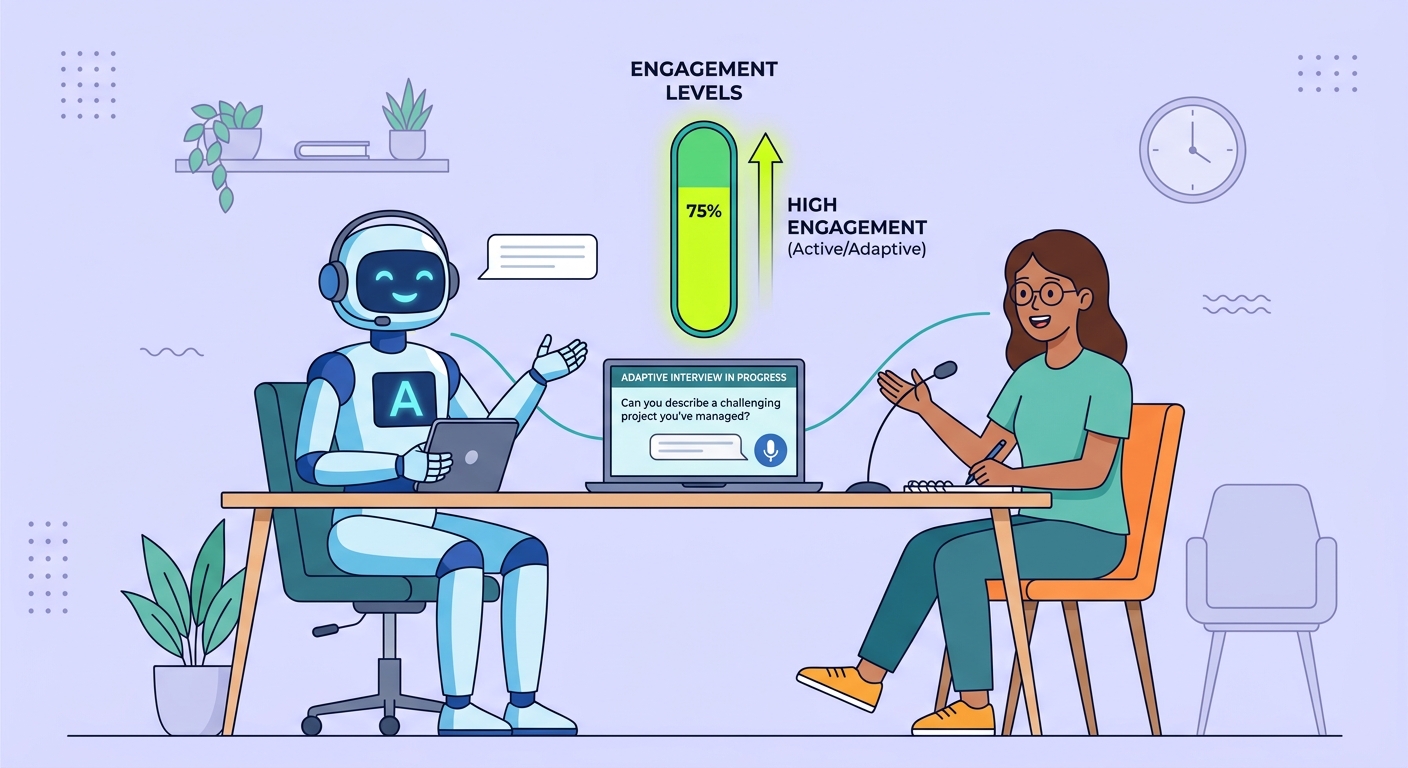
The historical reason teams over-chose focus groups was pure economics: interviews at scale were prohibitively expensive to run and analyze. AI-moderated interviews collapse that cost, which means the depth-versus-breadth tradeoff is no longer forced by budget. You can now run dozens of individual conversations for what a couple of focus groups used to cost -- getting individual, uncontaminated-by-the-room truth at group-study scale. That is a genuine shift, and it is why the traditional focus group is losing ground to one-on-one AI conversations for a wide class of questions.
But the framework still holds. AI does not make focus groups obsolete for the questions groups are actually good at -- studying social negotiation and contested meaning. It removes the economic penalty that used to push teams toward groups for questions that genuinely needed interviews. Choose on truth structure; let the economics stop distorting the choice.
The Bottom Line
Focus groups and interviews are not interchangeable tools that differ in speed. They are structurally different instruments that surface different truths and distort different truths. Groups are for social range and contested meaning; interviews are for individual depth and private truth. The most common research mistake is using a group for a question only an interview can answer -- and getting a confident, well-attended, and completely misleading result.
Match the method to the structure of the truth you need. Everything else is logistics, and logistics should never decide what you get to learn.
Deciding between group and individual research -- or want the depth of interviews at the scale of a focus group? Qualz.AI runs AI-moderated one-on-one interviews at scale, giving you individual, uncontaminated truth without the room's conformity pressure -- and analyzes the whole corpus for you. Book a demo to see which questions it can finally answer properly.