The Badge Is Not the Workflow
A patient's full name sat in a research team's shared slide deck for eleven weeks before anyone noticed.
The platform that recorded the interview had a strong security page. The vendor had signed the paperwork. But a junior researcher had copied a quote straight from the raw transcript, and the name came with it. From there it went into the readout deck, then a stakeholder's inbox, then a product wiki.
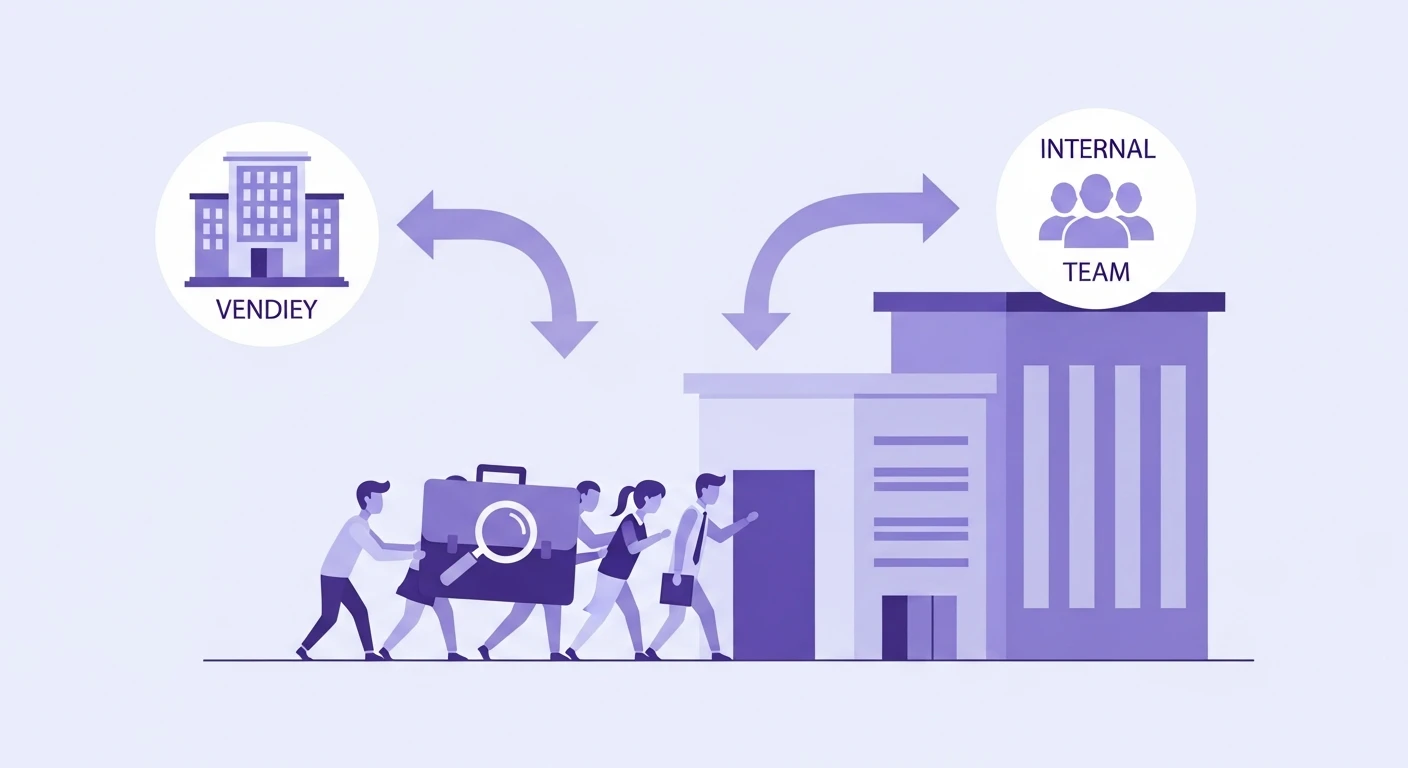
We call this the HIPAA Label Gap: the distance between a vendor's compliance claims and what your research workflow actually does with sensitive data. Teams close the gap on paper during procurement. Then they reopen it every day in practice.
A quick note before we go further. This post is not legal advice, and nothing here tells you whether your organisation is or is not compliant. That call belongs to your privacy officer and legal counsel. What we can do is describe what a HIPAA-aware research workflow looks like from the researcher's side of the table. These are the habits and controls that make those conversations shorter and safer.
Why the Gap Opens
The gap opens because procurement and research look at different things.
Procurement checks the vendor: certifications, contracts, hosting, encryption. Those checks matter. But they describe the container, not the behaviour inside it.
Research teams, meanwhile, work under time pressure. A typical healthcare study touches data in at least six places:
- The screener and recruitment list
- The scheduling tool
- The live session and its recording
- The transcript
- The analysis workspace
- The final report and every slide built from it
Each handoff is a chance for an identifier to leak. Each export creates a copy that no vendor contract covers. The tool can be well built and the workflow can still be leaky.
Why It Matters for Decisions
The obvious cost is risk. A leaked identifier can trigger an incident review, pause a study, or damage trust with a provider partner.
The less obvious cost is slower research. Teams that have been burned once become overly cautious. They stop recording. They refuse to let analysts see transcripts. They run five interviews instead of twenty because each one needs a manual privacy review.
That caution has a price. As we covered in our piece on running HCP interviews for go/no-go decisions, healthcare decisions often run on tight clocks. A workflow you can trust lets you move fast. A workflow you can't trust forces you to choose between speed and safety.
The Six Controls of a HIPAA-Aware Research Workflow
Here is what we think "HIPAA-aware" should mean in practice. Treat these as questions to answer about your own process, not boxes a vendor can tick for you.
1. Data Minimization: Collect Less on Purpose
The safest identifier is the one you never collected. Most studies gather far more than they need.
Ask of every field and every question: what decision does this data support? If the answer is "none," remove it.
In practice:
- Screeners: Ask for age bands, not birth dates. Ask for condition category, not diagnosis codes, unless the study truly needs them.
- Discussion guides: Tell participants at the start not to name their doctors, clinics or medications by brand unless asked. Many will still do it, but far fewer.
- Recordings: Decide whether you need video. Audio alone often answers the research question and carries fewer identifying cues.
- Retention: Set a deletion date for raw recordings before the study begins, not after.
Minimization is the control that makes every other control easier. Less sensitive data means fewer places to protect.
2. Permissions: Consent That Matches Reality
Consent should describe what will actually happen to the data. That includes AI processing, transcription, storage location and who will see quotes.
Two common failures:
- Vague consent: "Your data may be used for research purposes." This tells the participant nothing.
- Consent overload: Five separate prompts that participants click through without reading. We explored this in the consent fatigue effect.
Aim for one clear consent moment in plain language. Cover recording, processing, retention and quote use. Then build a real path for withdrawal. If a participant opts out, can you find and delete every copy of their data? Our post on the consent withdrawal blindspot shows how often teams can't.
3. Access: Least Privilege by Role
Not everyone on a study needs to see everything. Yet many teams give the whole project group full access to raw recordings by default.
A better pattern splits access by role:
- Moderators and lead analysts: Raw recordings and full transcripts, when needed.
- Supporting analysts: De-identified transcripts and coded excerpts.
- Stakeholders: Findings and approved, redacted quotes only.
Two more habits matter here. First, review access when people leave the project, not only when they leave the company. Second, keep an audit trail of who opened what. If something does leak, you'll want to know the path.
4. Identifier Handling: Redact Early, Not at the End
This is where the HIPAA Label Gap usually opens. Teams plan to "clean up" identifiers before the final report. By then, the raw data has already been copied into notes, spreadsheets and slides.
The counter-practice is simple: redact at the transcript stage, before analysis begins.
- Run automated detection for names, dates, locations, phone numbers, record numbers and facility names.
- Have a human review the flagged items. Automated redaction misses context, such as "my oncologist at the place on Fifth Street."
- Replace identifiers with consistent tokens like [CLINICIAN_1] or [FACILITY_A]. This keeps the meaning of the quote intact for analysis.
- Keep the key that maps tokens to real values separate, with tighter access.
Then make the redacted transcript the default working copy. Analysts should have to take a deliberate step to see raw data, not a deliberate step to avoid it.
5. Vendor Review: Ask About Behaviour, Not Just Badges
Procurement questionnaires tend to focus on certifications. Those are a starting point. But for research tools, the useful questions are about what happens to data in motion.
Ask every vendor in your research stack:
- Where is data stored and processed? Including any AI model providers they use.
- Is participant data used to train models? Get the answer in writing.
- What business associate or data processing terms do you offer? Let your legal team judge whether they fit.
- Can we set retention and deletion rules per study?
- Does redaction happen before data reaches third-party AI services, or after?
- What does an export contain? Raw or redacted?
That last question matters more than it seems. Every export is a copy that leaves the vendor's controls. As we argue in the export reflex, the best way to reduce exposure is to analyse data where it lives rather than pulling CSVs onto laptops.
AI adds a newer layer. Regulators are paying closer attention to how AI systems handle personal data, and retrofitting controls later is painful. Our sister site covers this in depth in the AI compliance cliff. The engineering lesson transfers directly: build the controls in at design time.
6. Process Controls: Make the Safe Path the Easy Path
Policies fail when following them is slower than ignoring them. Process controls fix that by building safety into the default workflow.
Useful controls for research teams:
- A study privacy checklist completed before recruitment opens. It covers what you collect, why, who sees it and when it's deleted.
- A quote approval step before anything goes into a deck. One person checks each quote for indirect identifiers.
- Named data owners for each study, so someone is responsible for deletion.
- A short incident playbook. If an identifier leaks, who do you tell and what do you do first?
- Quarterly spot checks of shared drives and wikis for stray raw data.
None of these require new software. They require someone to own them.
A Worked Example
A 25-person health tech product team was running monthly patient interviews on a medication adherence app. Their tools were solid. Their workflow was not.
Raw transcripts lived in a shared folder with 40 people on it. Quotes went into decks unchecked. Recordings were never deleted.
They made four changes over one month:
- They cut three screener fields they never used, including full date of birth.
- They moved to redact-on-ingest, so analysts worked only from tokenised transcripts.
- They reduced raw-data access from 40 people to 3.
- They set a 90-day deletion rule for raw recordings.
The result surprised them. Studies got faster, not slower. Stakeholders could now see transcripts directly, because the redacted versions were safe to share. The privacy review that once took a week per study dropped to a short checklist.
That's the real payoff of a HIPAA-aware workflow. It isn't just less risk. It's less friction, because trust is built into the process instead of checked at the end.
How Qualz.ai Fits
We built Qualz.ai so the safe path is the default. Identifier detection runs on transcripts before analysis. Teams can work from redacted data inside the platform instead of exporting it. Access can be scoped by role and study.
But we want to be direct: no platform makes your organisation compliant on its own. Compliance depends on your contracts, your policies and your people. What a good tool can do is remove the daily friction that pushes researchers toward risky shortcuts.
If you're preparing for a healthcare procurement review and want to walk through how these controls work in practice, book an information session with our team.
Practical Takeaways
- Map every place your study data lives, from screener to slide deck. Most teams find at least two copies they didn't know about.
- Remove any screener field or question that doesn't support a decision. Minimization is your cheapest control.
- Write one plain-language consent that covers recording, AI processing, retention and quote use, plus a real withdrawal path.
- Redact at the transcript stage and make the redacted version the default working copy.
- Split access by role, and review it whenever someone leaves a project.
- Ask vendors about data behaviour: model training, processing location, export contents and when redaction happens.
- Add a quote approval step and a deletion date to every study, with a named owner for each.