The Volume-Depth Inversion
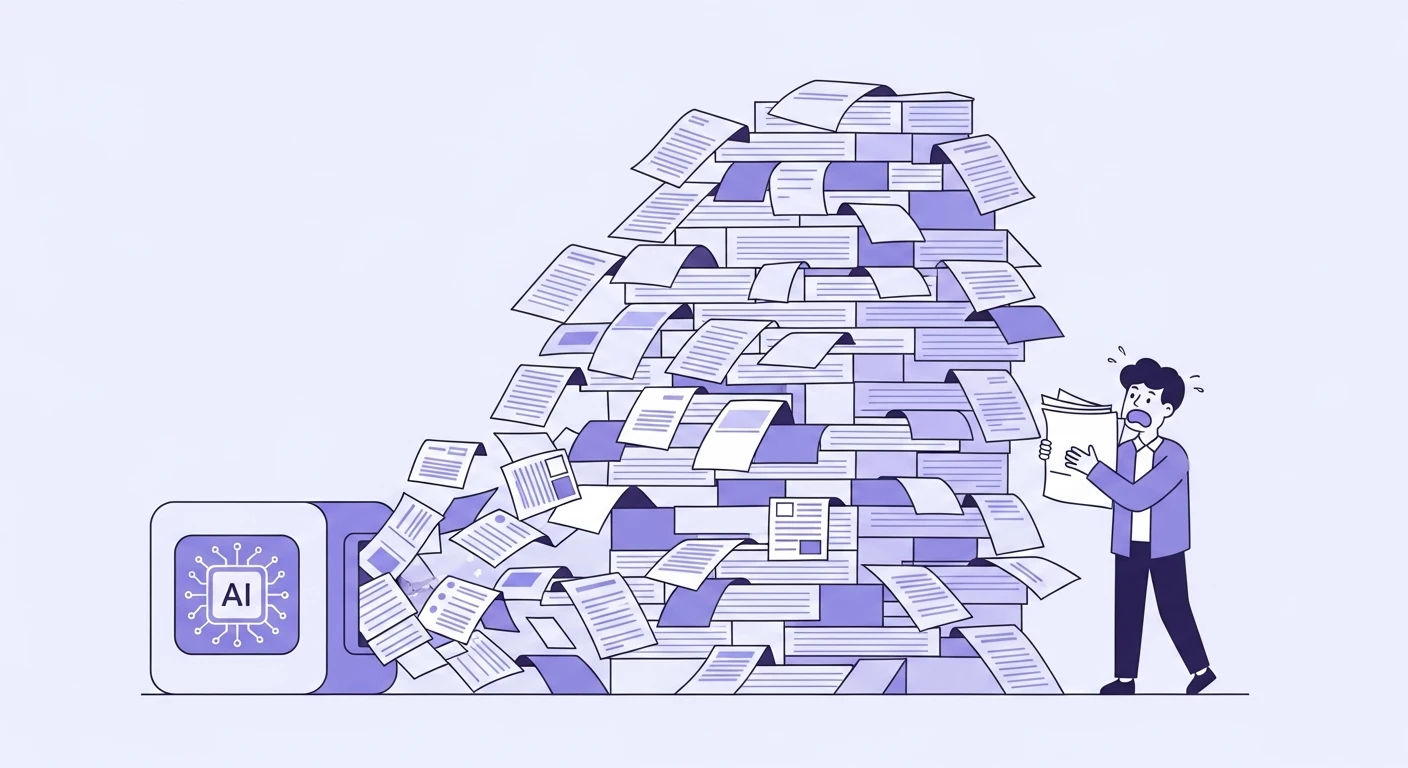
Something paradoxical happened when AI entered the research workflow. Teams that previously struggled to synthesize their qualitative data now produce more reports, more themes, more insight summaries than ever before. The backlog of unanalyzed interviews vanished. Stakeholders receive polished deliverables within hours of data collection.
And yet -- the quality of product decisions has not improved proportionally. In many organizations, it has degraded. The bottleneck was never the speed of analysis. It was the depth of understanding. And AI tools optimized for the former while creating an illusion of the latter.
This is insight inflation: the proliferation of research deliverables that look like understanding but lack the interpretive depth that makes research actually useful for decisions. Like monetary inflation, it devalues the currency. When everything looks like an insight, nothing functions as one.
How AI Creates Convincing But Shallow Synthesis
Pattern Recognition Without Pattern Understanding
AI excels at identifying surface patterns -- recurring words, similar phrases, clustered topics. It can group 50 interview excerpts into thematic categories faster than any human analyst. But pattern recognition is not the same as pattern understanding.
A human researcher reading those 50 excerpts builds context: they notice the hesitation in participant 7's voice, the contradiction between what participant 12 said in minute 3 versus minute 45, the way participants from one segment frame the issue entirely differently than another segment. These contextual signals determine whether a surface pattern represents a genuine insight or a linguistic coincidence.
AI produces the theme. Human researchers produce the meaning behind the theme. When teams skip the latter because the former looks complete, they mistake categorization for comprehension.
The Confident Tone Problem
AI-generated research summaries are uniformly confident. They present findings with the same authoritative tone regardless of whether the underlying evidence is strong or weak, consistent or contradictory, representative or anecdotal.
Human researchers naturally hedge when evidence is ambiguous: "The data suggests..." "Three of twelve participants mentioned..." "This may reflect..." AI summaries declare: "Users want X." "The primary pain point is Y." "Teams should prioritize Z." The hedging that signals honest uncertainty disappears, replaced by false precision that stakeholders read as conclusive.
This connects to why methodological transparency in AI-assisted research matters so urgently -- without it, consumers of research cannot distinguish strong findings from AI-confident restatements of thin evidence.
Synthesis Without Surprises
The most valuable research insights are surprising. They contradict assumptions. They reveal something the team did not expect. They create productive discomfort.
AI synthesis tends to confirm. It finds the patterns that align with how questions were framed, how prompts were structured, how data was labeled. It rarely produces the "wait, that cannot be right" reaction that characterizes genuine discovery. When it does surface something unexpected, teams lack the interpretive context to determine whether it is a genuine insight or a hallucination -- so they often discard it.
The result is research that consistently validates existing beliefs while appearing comprehensive. This is the most dangerous form of insight inflation: confirmation bias automated and disguised as evidence.
The Organizational Symptoms
Deliverable Volume Replaces Decision Impact
In inflated research environments, success metrics shift from "decisions influenced" to "reports produced." Teams measure research output by the number of insight summaries generated per week rather than the number of product decisions changed by research.
This mirrors the incentive misalignment that rewards volume over impact -- but AI accelerates the dysfunction by making volume trivially easy. When producing 10 insight summaries per day costs the same as producing one, organizations naturally optimize for quantity. Stakeholders receive more deliverables and feel more informed while understanding less.
The Comprehension Theater
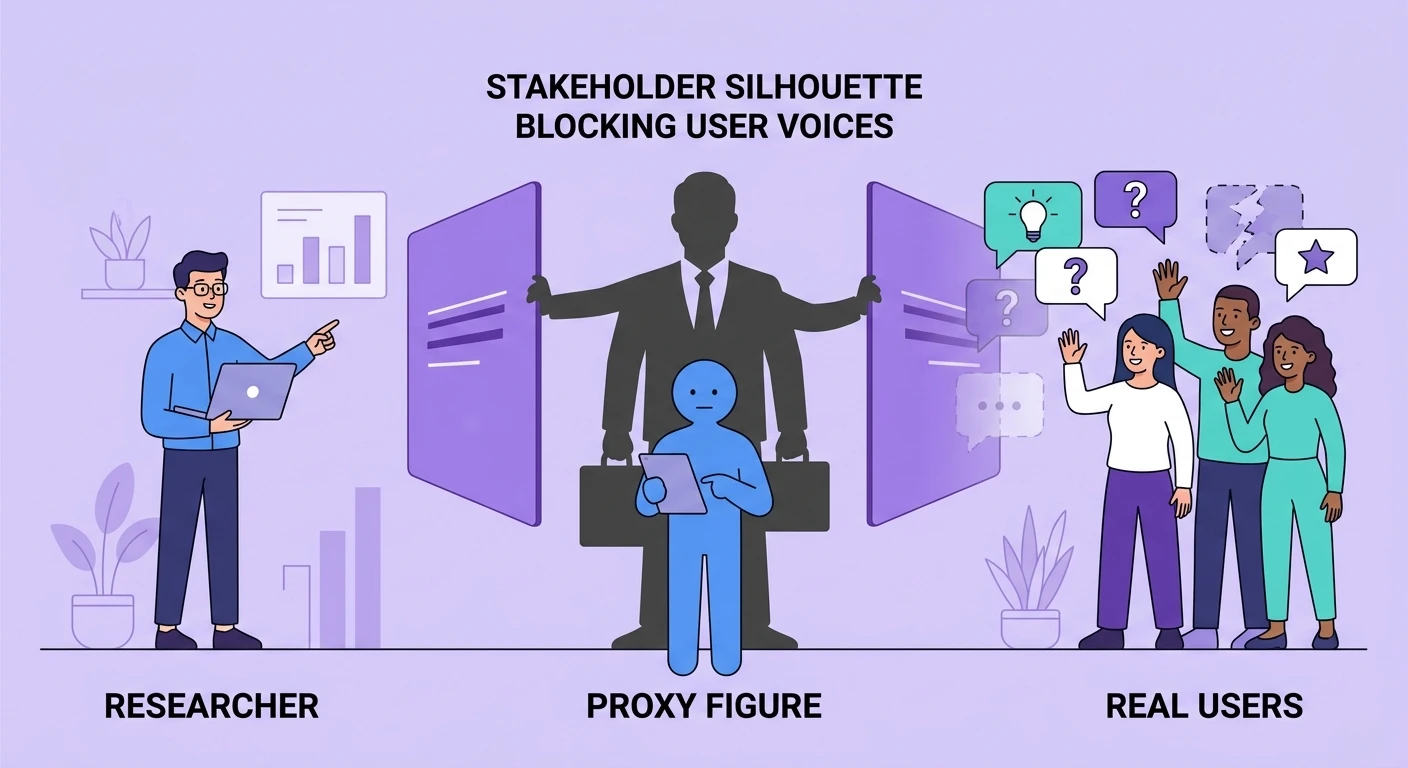
Teams develop a ritual around AI-generated research outputs: summaries are shared in Slack, themes are reviewed in meetings, action items are assigned. The performance looks like a research-driven organization. But dig into any specific decision, and the connection between research data and the chosen direction is thin -- because the synthesis that informed the decision lacked the interpretive depth to genuinely constrain choices.
This is research theater at scale: the appearance of evidence-based decision-making without the substance. AI did not create this problem -- research theater existed before AI -- but AI tools make it cheaper and more convincing to perform.
Stakeholder Trust Erosion
Paradoxically, insight inflation eventually erodes trust in research. When stakeholders receive ten AI-generated insight summaries per week, each presented with equal confidence, and discover that following them does not improve outcomes, they lose faith in the research function entirely.
The problem is not that AI findings are wrong. Many are directionally correct. The problem is that AI-generated deliverables lack the contextual scaffolding that helps stakeholders understand when to trust a finding, how far to generalize it, and what its limitations are. Without this scaffolding, every deliverable is equally actionable -- which means none are genuinely actionable.
Where AI Synthesis Genuinely Helps
Insight inflation does not mean AI has no role in research synthesis. It means the role is different from what most organizations assume.
Legitimate AI Contributions
- Coverage acceleration: AI can ensure every data point is touched, flagging excerpts a human analyst might miss in a large dataset
- Initial clustering: AI groupings provide a starting point for human interpretation, reducing blank-page paralysis
- Consistency checking: AI can identify contradictions between participants that warrant deeper human analysis
- Pattern monitoring at scale: For ongoing programs producing continuous data, AI maintains awareness across volumes no human can track
The Human Layer That Cannot Be Automated
- Contextual interpretation: Understanding what a pattern means in the specific organizational, competitive, and user context
- Evidential weighting: Determining which findings rest on strong evidence versus thin signal
- Surprise detection: Recognizing when data challenges assumptions rather than confirming them
- Decision translation: Converting research findings into specific, bounded recommendations with clear limitations
The organizations getting AI-assisted research right use AI for breadth and humans for depth. They use AI to ensure nothing is missed, then invest human judgment in determining what matters and why. Those experiencing insight inflation have eliminated the human depth layer, mistaking AI breadth for complete understanding.
Deflation Strategies
Insight Quality Gates
Before any AI-generated finding enters a decision process, require it to pass quality gates:
- Evidence count: How many independent data points support this finding?
- Contradiction check: Does any data actively contradict it?
- Surprise score: Does this finding challenge any existing assumption, or does it merely confirm?
- Specificity test: Is this finding specific enough to differentiate between two possible product decisions?
- Context attachment: Can a human researcher explain WHY this pattern exists, not just THAT it exists?
Findings that fail gates 4 and 5 are categorized as "observations" rather than "insights" -- preventing them from carrying decision weight they have not earned.
Researcher-In-The-Loop Synthesis
Rather than replacing human synthesis with AI synthesis, use AI as a pre-synthesis tool:
- AI processes transcripts and produces initial groupings
- Human researchers review groupings against their contextual knowledge of the research
- Researchers add interpretation, merge or split AI categories based on meaning rather than surface similarity
- Final synthesis carries researcher judgment as the primary analytical contribution, with AI handling the mechanical overhead
This preserves the speed advantage of AI while maintaining the interpretive depth that makes synthesis actionable. The collaborative analysis approach scales better when AI handles initial organization and humans focus on collective interpretation.
Deliverable Differentiation
Not all research outputs should carry equal authority. Implement explicit tiers:
- Tier 1 -- AI-generated summaries: Broad coverage, useful for awareness, not for decisions
- Tier 2 -- Researcher-validated findings: AI-identified patterns that human analysts have verified and interpreted
- Tier 3 -- Deep insights: Researcher-driven synthesis with full contextual interpretation, evidential assessment, and decision-specific recommendations
Stakeholders learn to match deliverable tier to decision stakes. Quick awareness questions use Tier 1. Product strategy uses Tier 3. The tiers make the depth-quality trade-off visible rather than hidden behind uniformly polished deliverables.
Connecting to Governance Principles
The insight inflation problem in research parallels challenges in AI systems more broadly. Just as AI audit trails and explainability ensure enterprise AI decisions can be traced and verified, research organizations need audit trails connecting deliverables to their evidential foundations. And similar to how deterministic control planes constrain agentic AI to prevent unbounded autonomous action, research workflows need boundaries on where AI synthesis can flow unsupervised into decision processes.
Measuring Insight Health
Track these metrics to detect insight inflation in your organization:
- Decision-to-deliverable ratio: How many research deliverables per actual product decision changed? A declining ratio signals inflation.
- Surprise frequency: What percentage of research findings challenge existing beliefs? Below 20% suggests confirmation bias dominance.
- Stakeholder pull rate: Do stakeholders actively seek research, or does the research team push deliverables? Push-dominant dynamics suggest low perceived value.
- Specificity score: Can each finding differentiate between at least two concrete options? Findings that support any direction provide no decision value.
Practical Takeaways
- Distinguish AI-generated summaries from researcher-driven insights. Label them differently, present them differently, weight them differently in decisions.
- Never let AI synthesis flow directly into product decisions without human interpretive validation. AI provides breadth; humans provide depth.
- Implement insight quality gates that test findings for evidence strength, surprise value, and decision specificity before granting them authority.
- Track decision impact, not deliverable volume. If your research output tripled but decisions influenced remained flat, you have inflation.
- Use AI for coverage and consistency, not for interpretation and recommendation. The mechanical parts of synthesis benefit from automation; the judgment parts do not.
- Maintain explicit uncertainty in research deliverables. Confident tone without evidential foundation is the primary symptom of inflation.
AI made research synthesis faster. It did not make it better by default. The teams producing genuinely useful research in the AI era are those who understand that polished deliverables and deep understanding are different things -- and invest in the latter even when the former is now free.