The Methodology Question Every Research Firm Is Asking
If you run a qualitative research firm or consulting practice, you've had this conversation in the last six months: "Should we adopt an AI research platform?" And immediately after: "Will it replace what makes us *us*?"
These aren't hypothetical concerns. Your methodology—the way you design discussions, probe for depth, synthesize across data sets, and frame strategic recommendations—is your intellectual property. It's what clients pay premium rates for. It's what differentiates you from the firm down the street.
So when an AI platform promises to "automate qualitative research," the natural reaction is skepticism. And frankly, that skepticism is healthy.
But here's what's actually happening in the market: the firms pulling ahead aren't choosing between their methodology and AI. They're using AI infrastructure selectively—keeping full control of their frameworks while dramatically expanding what they can deliver.
This post breaks down how that works in practice.
The Modularity Question: You Don't Have to Buy the Whole Stack
The first misconception about AI research platforms is that adoption is all-or-nothing. That you either hand over your entire research process or you don't engage at all.
The reality is more nuanced. A well-architected AI research platform operates as modular infrastructure, not a monolithic replacement for your practice.
Three engagement models firms are using:
1. Interview execution only. You design the discussion guide. You define the probing logic. The AI conducts interviews at scale—async, in multiple languages, across time zones your team can't cover. You retain full control of analysis and strategic recommendations.
This is the lowest-risk entry point. Your methodology stays entirely in your hands. The AI is simply executing conversations according to your specifications—much like a field team would, but with consistent quality and unlimited capacity. For firms thinking about how this works at the tactical level, the breakdown of AI-moderated interview best practices covers the mechanics of probing logic and discussion guide design.
2. Analysis and synthesis only. You've already collected data—maybe through traditional in-depth interviews, focus groups, or ethnographic work. You need to code, synthesize, and identify patterns across a large corpus faster than your team can manually process.
Here, you're feeding your own data into AI analysis tools while applying your proprietary analytical frameworks. The AI handles the volume; you handle the interpretation and strategic framing.
3. Full-stack with custom methodology. You use the platform end-to-end, but with your firm's methodology embedded throughout. Custom discussion guides, proprietary probing sequences, your analytical lenses applied to the synthesis. The platform executes your process at scale—it doesn't impose its own.
The key insight: modularity means you choose your level of engagement based on where AI adds the most value for your specific practice. There's no requirement to go all-in.
Preserving Firm IP Within AI Tools
Let's address the elephant in the room: if you embed your methodology into an AI platform, who owns it? Does your proprietary approach become the platform's training data?
These are legitimate concerns, and any platform worth partnering with should have clear answers:
Custom lenses and frameworks
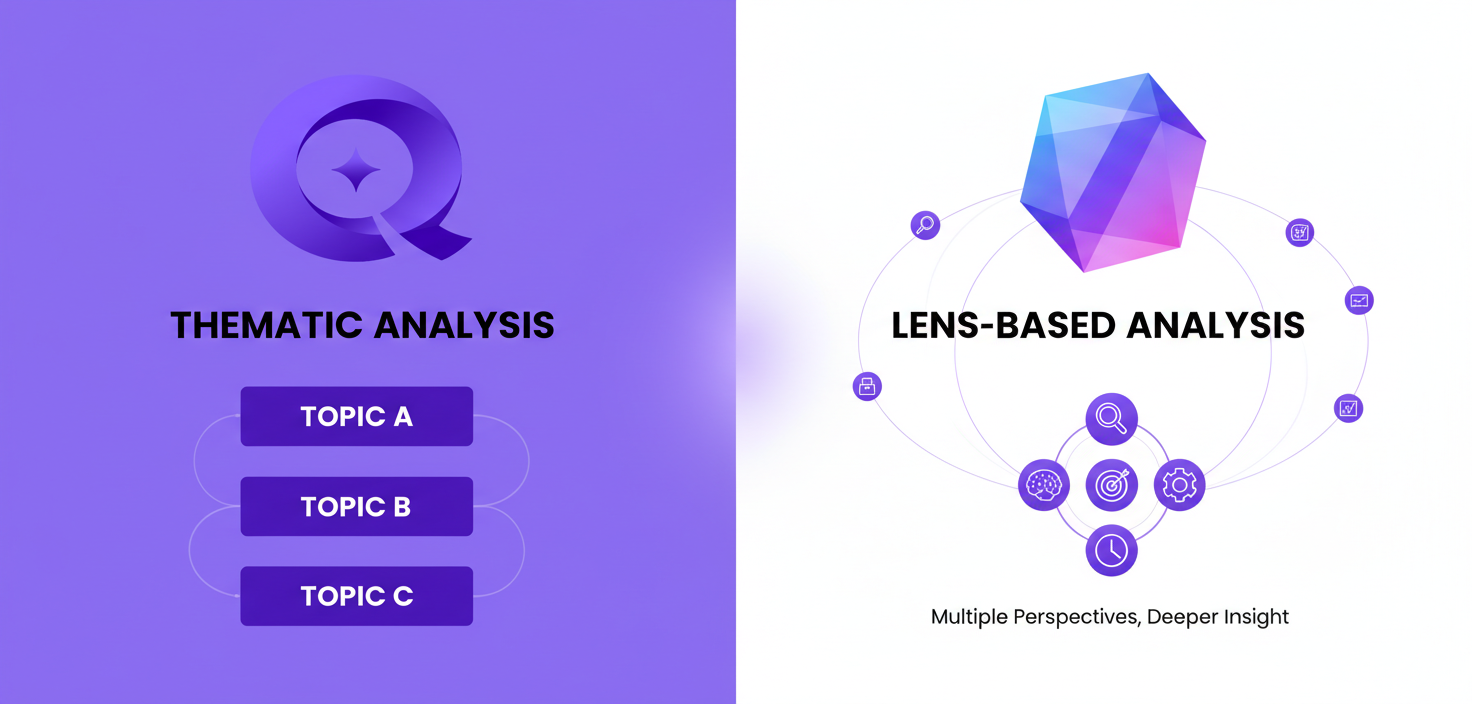
Your analytical frameworks—the models you've developed over years of practice—can be applied as custom lenses within AI analysis without becoming shared IP. Think of it like configuring a tool rather than contributing to it.
When you define that your firm's approach to brand perception research always examines five specific dimensions, or that your innovation methodology follows a particular sequencing of generative and evaluative phases, those configurations remain yours.
Data isolation
Client data processed through AI tools should be isolated—not used to train general models, not accessible to other platform users, not retained beyond your engagement terms. This is table stakes for any enterprise AI partnership, and if a platform can't guarantee it, walk away.
Methodology as competitive moat
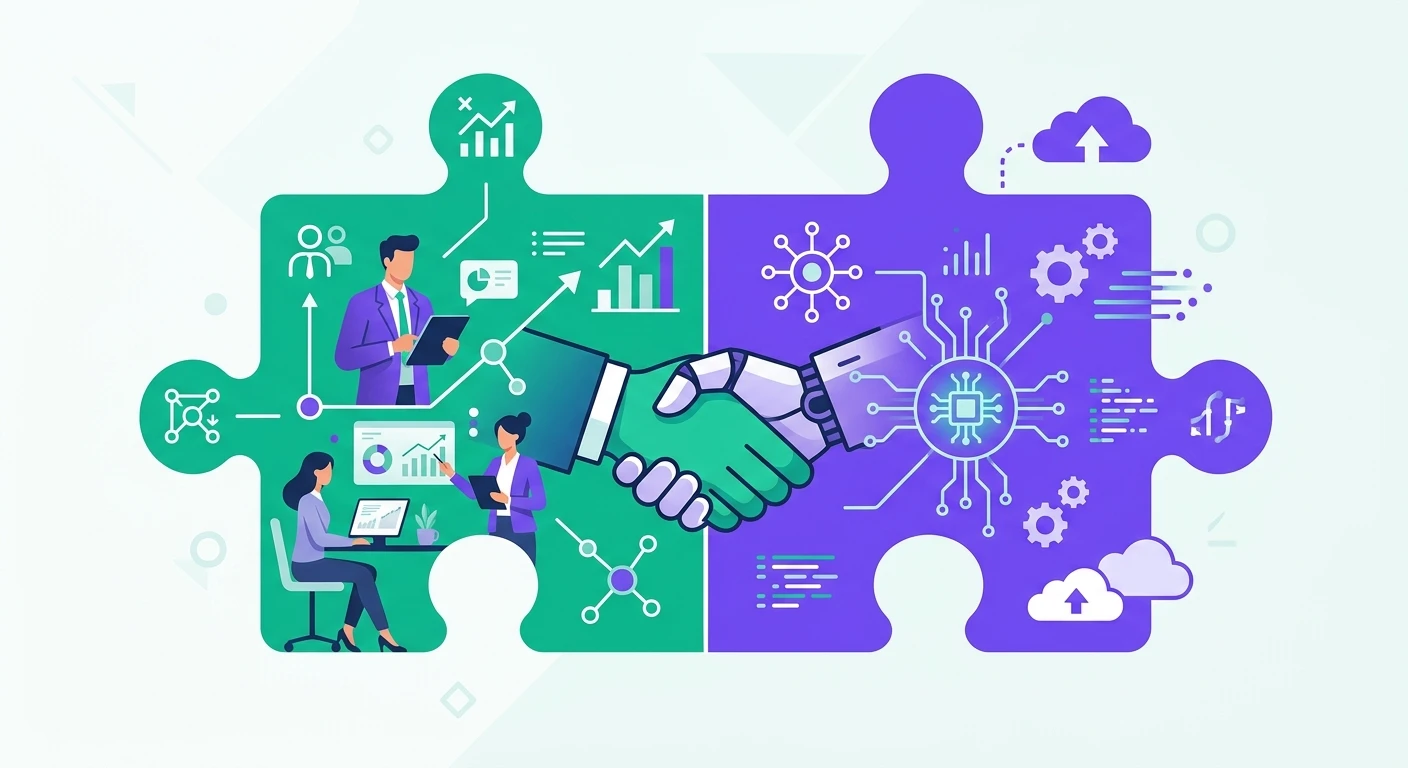
Here's the strategic frame: AI platforms provide infrastructure. Your methodology provides differentiation. These are complementary, not competitive.
The analogy isn't "AI replaces your methodology." It's "AI is the engine, your methodology is the steering." A Ferrari engine without a driver goes nowhere useful. A skilled driver without horsepower can't compete at scale.
The Hybrid Model: Human Strategic Thinking + AI Execution
The firms seeing the best results aren't going fully automated or staying fully manual. They're operating a hybrid model that looks something like this:
Humans own:
- Research design and hypothesis development
- Discussion guide architecture and probing strategy
- Analytical framework selection
- Strategic interpretation and recommendation development
- Client relationship and presentation
- Quality oversight and methodology governance
AI handles:
- High-volume interview execution (dozens to hundreds of conversations)
- Consistent probing across all participants
- Initial coding and theme identification across large data sets
- Cross-project pattern recognition
- Multi-language data collection without translation lag
- Rapid turnaround on iterative research sprints
This division maps cleanly to where each component adds the most value. Humans are irreplaceable for strategic thinking, contextual judgment, and client trust. AI is superior for scale, consistency, speed, and pattern detection across large corpora.
The result: your senior researchers spend less time on execution mechanics and more time on the high-value strategic work that clients actually pay for.
Where AI Adds the Most Value for Agencies
Based on how research firms are actually deploying AI tools, these are the highest-ROI applications:
1. Scaling interviews without scaling headcount
The economics of traditional qualitative research create a structural constraint: each additional interview requires proportional moderator time. This limits sample sizes, creates scheduling bottlenecks, and forces trade-offs between depth and breadth.
AI-moderated interviews break this constraint. A firm can run 50 in-depth conversations in the time it traditionally takes to complete 8-10. For guidance on structuring these at scale, the interview guide template for AI-moderated research provides a practical starting framework that firms customize to their approach.
This doesn't replace your senior moderators for high-stakes executive interviews or sensitive topics. It extends your capacity for the volume work that previously required large field teams.
2. Rapid coding and theme identification
Manual coding of qualitative data is time-intensive and prone to inter-coder reliability issues. AI-assisted coding can process transcripts in minutes rather than days, identifying initial themes and patterns that your analysts then validate, refine, and interpret through your firm's lens.
The human analyst remains essential—they bring contextual understanding, theoretical grounding, and the ability to distinguish meaningful themes from noise. But they start from a structured foundation rather than a blank page.
3. Cross-project synthesis
This might be the most undervalued application. Research firms accumulate enormous institutional knowledge across projects, but synthesizing insights across engagements is rarely feasible manually.
AI tools can identify patterns and connections across your project portfolio—recurring themes, emerging trends, contradictions between segments. This enables meta-analyses that would otherwise require dedicated research teams and weeks of effort.
4. Capacity expansion for consulting firms
For firms navigating research operations and capacity constraints, AI tools directly address the scaling challenge without proportional hiring. You can take on more projects, deliver faster turnarounds, or offer larger sample sizes—all without the fixed cost increase of additional FTEs.
This changes your firm's economics. Proposals that were previously unprofitable at traditional staffing levels become viable. Time-sensitive RFPs that required passing on work become winnable.
The Engagement Model: How to Start Without Overcommitting
Research firms—rightfully—don't want to sign annual contracts for technology they haven't validated against their practice. Here's how smart firms are approaching the partnership:
Phase 1: Pilot / Proof of Concept (4-6 weeks)
Pick one project. Ideally mid-stakes—not your flagship client, not throwaway work. Something where you can genuinely evaluate AI execution quality against your standards.
Define success criteria upfront: data quality thresholds, time savings, client-readiness of outputs. Run AI-assisted and traditional approaches in parallel if budget allows, so you have a direct comparison.
Most firms know within one project cycle whether the tool fits their practice.
Phase 2: Selective Integration (2-3 months)
Expand to the specific modules that proved out in your pilot. Maybe it's interview execution for large-sample projects. Maybe it's analysis acceleration for time-pressured engagements. Integrate where ROI is clearest.
During this phase, you're developing internal playbooks: how your firm uses AI tools within your existing methodology. These playbooks become institutional IP.
Phase 3: Strategic Partnership (Annual)
Once you've validated fit and developed internal capability, an annual partnership makes economic sense. Volume pricing, priority support, custom integrations, methodology embedding—these become the terms of engagement.
The key: no firm should be locked into a long-term commitment before they've validated fit. Any platform that demands annual contracts before demonstrating value is optimizing for their revenue, not your success.
Maintaining Client Trust While Using AI Tools
Perhaps the most sensitive question: how do you tell clients you're using AI?
Here's the framework most firms are adopting:
Transparency about capability, not implementation details
Clients hire you for outcomes—insights, recommendations, strategic clarity. They care about quality, rigor, and relevance. Most don't need or want a detailed breakdown of your tooling stack, any more than they need to know which transcription software you use.
That said, transparency is a spectrum:
Always disclose:
- If AI is directly interacting with their customers/participants (this affects consent and ethics)
- If you're making claims about sample sizes or methodology that depend on AI capabilities
- If client contracts or data governance policies specifically address AI usage
Frame positively:
- "We use AI-assisted tools to achieve sample sizes and turnaround times that traditional approaches can't match, while maintaining the analytical rigor and strategic interpretation that define our practice."
- "Our methodology guides the AI—not the other way around."
Quality as the proof point
Ultimately, client trust is maintained through output quality. If AI-assisted work produces sharper insights, more comprehensive evidence, and faster delivery—clients see results, not tools.
The firms that struggle with this conversation are the ones where AI usage is a cost-cutting measure rather than a quality-enhancement measure. If you're using AI to do less work for the same price, the value proposition to clients is unclear. If you're using AI to deliver more depth, broader coverage, and faster turnarounds—that's a client benefit worth communicating.
The Real Risk: Not Adapting
Here's the uncomfortable truth for research firm principals: the risk of AI partnership isn't losing your methodology. It's competitors adopting AI tools while you deliberate.
The firms integrating AI today are building internal capability, developing hybrid workflows, and demonstrating enhanced capacity to clients. In 18 months, they'll be operating at a scale and speed that manual-only firms can't match—without sacrificing methodological rigor.
Your methodology isn't at risk from AI tools. It's at risk from competitive firms that figure out how to deliver your quality at three times your speed.
Making the Decision
If you're evaluating AI partnerships for your research practice, here's the honest checklist:
The platform should offer:
- Modular engagement (use what you need, not an all-or-nothing package)
- Clear data isolation and IP protection
- Custom methodology embedding (your frameworks, your lenses, your probing logic)
- Pilot/POC pathway before long-term commitment
- Integration with your existing analytical workflows
- Transparent quality metrics you can validate
You should maintain:
- Full ownership of research design and strategy
- Control over analytical interpretation and recommendations
- Client relationships and delivery
- Quality governance and methodology standards
- The ability to walk away if the tool doesn't serve your practice
The question isn't whether AI will transform market research—it already is. The question is whether your firm shapes that transformation according to your methodology, or reacts to it after competitors have moved.
*If you lead a research firm or consulting practice evaluating AI research infrastructure, we'd welcome a conversation about how modular AI tools can extend your methodology rather than replace it. No pitch—just an honest exploration of fit.*
[Book an information session →](https://app.reclaim.ai/m/qualz-info-session/qualz-information-session)