AI-moderated interviews have moved from novelty to mainstream. Research teams across product, consulting, healthcare, and academia are deploying them at scale. But the quality gap between teams getting transformative results and teams getting shallow, repetitive transcripts is enormous -- and it almost always comes down to the discussion guide.
The technology is not the bottleneck. The instructions you give the AI are.
I have run hundreds of AI-moderated interviews across different domains, interview modes, and research objectives. The patterns of what works and what fails are remarkably consistent. This is the practitioner guide I wish I had when I started -- covering discussion guide design, probe strategy, interview length, stimulus integration, and how to balance AI autonomy with researcher control.
Understanding Interview Modes: Structured, Semi-Structured, and Unstructured
Before you write a single question, you need to decide what mode your AI interview will operate in. This choice shapes everything downstream.
Structured mode follows a fixed sequence of questions with no deviation. Every participant gets the same questions in the same order. This is useful for standardized data collection where comparability across participants matters more than depth -- think compliance interviews, exit interviews, or large-scale screening studies. The AI acts as a consistent, tireless interviewer. The trade-off is that you sacrifice the ability to follow unexpected threads.
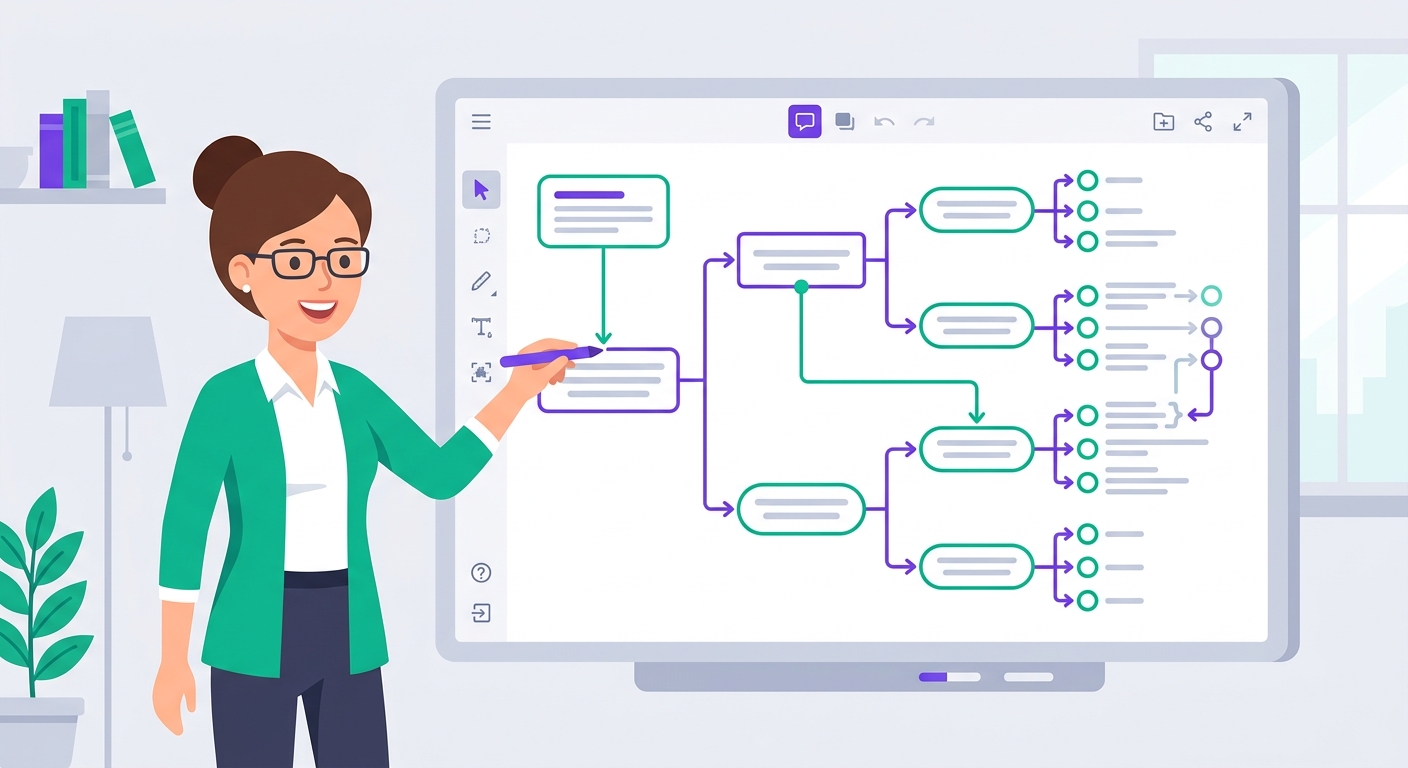
Semi-structured mode is the sweet spot for most qualitative research. You define core questions and topics that must be covered, but give the AI latitude to probe, follow up, and adapt the conversation based on what the participant says. This is where AI-moderated interviews genuinely shine -- the AI can maintain the discipline of covering all required topics while being responsive to what emerges in the conversation. Most product discovery interviews, JTBD interviews, and exploratory studies should use this mode.
Unstructured mode gives the AI a broad topic or research question and lets it conduct a free-flowing conversation. This works for early exploratory research where you genuinely do not know what questions to ask, or for sensitive topics where rigid structure can feel interrogative. The risk is that without guardrails, the AI may stay surface-level or drift into territory that does not serve your research objectives.
The most common mistake I see is defaulting to structured mode because it feels safer. Researchers worry that giving the AI more freedom means losing control. In practice, the opposite is true -- a well-designed semi-structured guide with clear probing instructions produces more controlled, higher-quality data than a rigid question list that cannot adapt to what participants actually say.
Writing Effective AI Interview Guidelines
The discussion guide for an AI-moderated interview is fundamentally different from a traditional moderator guide. Human moderators interpret intent. They read body language. They make judgment calls based on decades of experience. Your AI interviewer needs explicit instructions for decisions a human moderator would make instinctively.
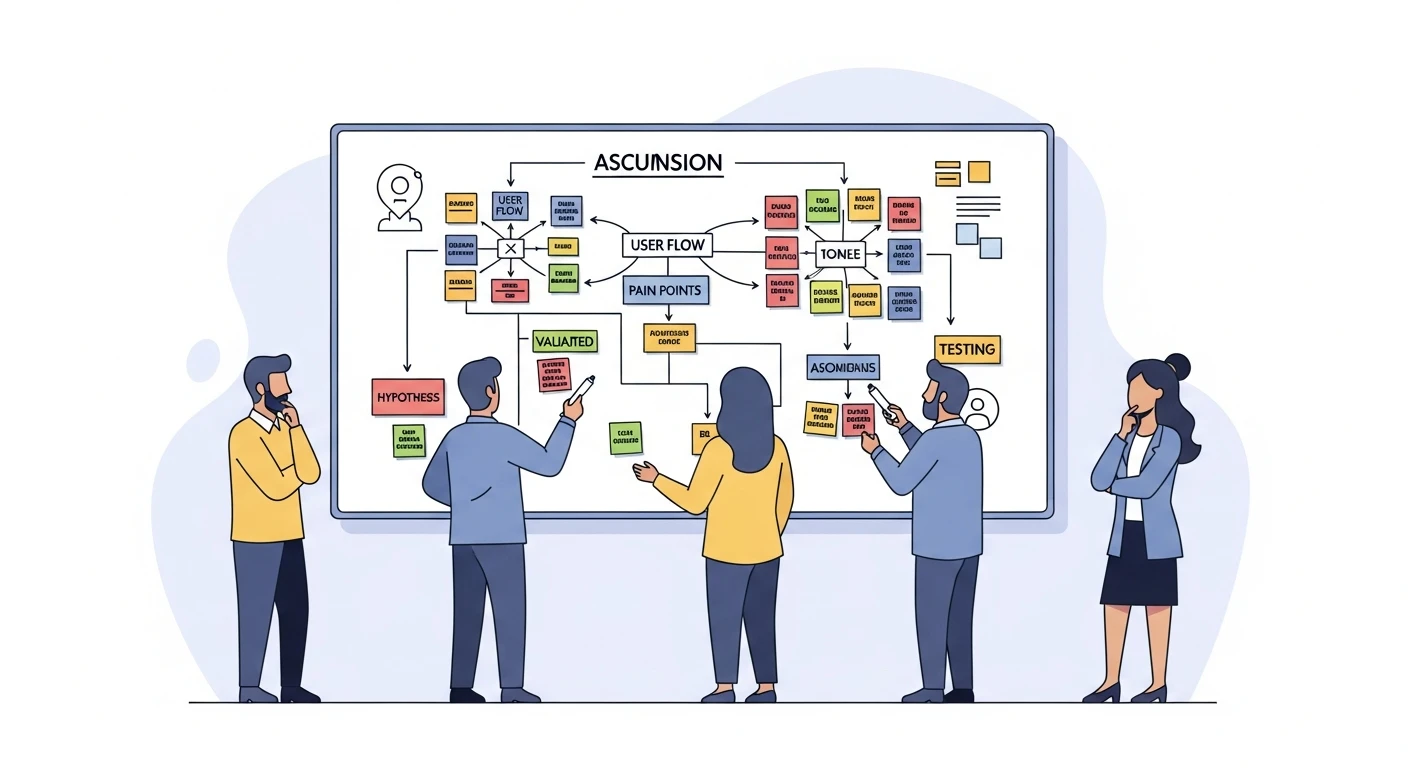
Write objectives, not just questions. For each section of your guide, state what you are trying to learn, not just what to ask. Instead of "Ask about their onboarding experience," write "Understand the participant's first 48 hours with the product -- what they expected, what surprised them, and where they got stuck. The goal is to identify expectation gaps between what marketing promised and what the product delivered." This gives the AI context for deciding when to probe deeper and when to move on.
Be explicit about tone and rapport. Tell the AI how to behave. "Maintain a warm, conversational tone. Acknowledge the participant's responses before asking follow-up questions. Do not interrupt or rush. If the participant goes on a tangent that is remotely related to the research topic, follow it briefly before redirecting." These instructions seem obvious, but without them the AI defaults to a more transactional interview style.
Define terminology boundaries. If your research involves domain-specific language, tell the AI whether to use it or avoid it. For consumer research, you might instruct: "Never use research jargon. Say 'how you feel about' instead of 'your perception of.' Say 'what happened next' instead of 'walk me through the subsequent steps.'" For expert interviews, you might want the opposite: "This participant is a senior clinician. Use medical terminology naturally."
Specify transition logic. How should the AI decide when a topic is sufficiently explored? I typically include instructions like: "Move to the next topic when the participant has described at least one specific example from their experience, or when they indicate they have nothing more to add on the subject. Do not move on if the participant has only given abstract or general answers without concrete details."
These principles apply whether you are designing interview studies from scratch or adapting existing moderator guides for AI deployment. The key shift is from implicit moderator knowledge to explicit written instructions.
Probe Design: The Core Skill
Probing is where AI-moderated interviews succeed or fail. A discussion guide with great questions but poor probe instructions produces shallow data. The probe strategy is more important than the questions themselves.
There are three probe modes I use consistently:
"Ask at least one probe" -- use this when the topic is critical to your research objectives and you need depth regardless of what the participant says. Even if the initial answer seems complete, the AI should dig deeper. This is appropriate for your core research questions. Example: "After the participant describes their decision process, always probe with a follow-up about what alternatives they considered and why they were rejected."
"Ask only if needed" -- use this when you want depth but do not want to create a tedious experience by probing topics the participant has already addressed thoroughly. The AI probes when the answer is vague, incomplete, or contradictory, but accepts a detailed initial response without pushing further. This is appropriate for secondary research questions and contextual background.
"Most relevant" -- use this when you have several possible probe directions and want the AI to choose the one most relevant to what the participant just said. This requires giving the AI a menu of possible probes with instructions to select the most appropriate based on the conversation context. Example: "If the participant mentions cost, probe on budget constraints. If they mention team dynamics, probe on stakeholder alignment. If they mention timeline pressure, probe on what is driving the deadline."
The biggest mistake in probe design is under-specifying. Writing "probe as needed" gives the AI no guidance. Writing "ask follow-up questions to get more detail" is only slightly better. Effective probe instructions are specific: "If the participant describes a frustration, ask them to recall a specific moment when that frustration was most acute. Ask what they did immediately after that moment."
Good probing is what separates AI interviews from static surveys. The whole point of the conversational format is the ability to follow up, clarify, and go deeper. If your probe design does not take advantage of this, you are running an expensive survey.
Optimal Interview Length: The 10-20 Minute Sweet Spot
Interview length is one of the most under-discussed design decisions. After running hundreds of AI-moderated sessions, here is what I have found:
10-20 minutes is the sweet spot. This is long enough to cover 3-5 core topics with meaningful depth, short enough that participant engagement stays high throughout. Most of the best data I have collected comes from interviews in this range.
Under 10 minutes works for highly focused studies with a single research question -- quick concept tests, feature reaction interviews, or brief customer feedback sessions. You sacrifice context and depth but gain completion rates and the ability to run at very high volume.
20-30 minutes is acceptable for complex topics with multiple research objectives. But engagement noticeably drops after the 20-minute mark in AI-moderated interviews. Unlike human interviews where rapport sustains engagement, AI interviews rely more on topic interest. If your guide requires 30 minutes, make sure the most important questions come in the first 15.
Beyond 30 minutes is not recommended. I have tested longer formats and the data quality degrades significantly. Participants give shorter answers, stop elaborating, and start satisficing. If your research requires 45-60 minutes of conversation, use a human moderator or split the study into two separate AI interview sessions.
Design your guide to hit your target time. A common pitfall is writing 15 questions with probes for a "20-minute interview" and ending up with 40-minute sessions that exhaust participants. Be ruthless about prioritization. Five well-probed questions produce better data than twelve surface-level ones.
Stimulus Support for Concept Testing
AI-moderated interviews are not limited to verbal Q&A. Integrating stimuli -- images, prototypes, concept descriptions, competitor screenshots -- dramatically expands what you can study.
When incorporating stimuli into your discussion guide, follow these principles:
Present stimuli with minimal framing. Tell the AI to show the stimulus and ask an open question: "What is your initial reaction to this?" Do not front-load context that biases the response. The participant's unprompted reaction is the most valuable data point. This approach builds on stimulus-based research principles that apply whether the moderator is human or AI.
Sequence stimuli intentionally. If you are testing multiple concepts, the order matters. Instruct the AI on sequencing -- randomize across participants if you are concerned about order effects, or use a fixed sequence if you want participants to build on earlier reactions.
Probe reactions, not preferences. "Which do you prefer?" is a weak question. "What about this concept addresses something you are currently dealing with?" is strong. Train the AI to probe the connection between stimulus and participant reality, not just abstract evaluation.
Stimulus integration is one area where AI-moderated interviews can actually surpass human-moderated ones. The AI presents stimuli consistently, does not accidentally reveal which concept the team prefers, and probes each participant's reactions with the same systematic thoroughness. For concept testing studies, this consistency is a genuine methodological advantage.
Balancing AI Autonomy with Researcher Control
The fundamental tension in AI interview design is between giving the AI enough autonomy to be a good conversationalist and maintaining enough control to get the data you need. Here is how I navigate it:
Control the objectives. Free the conversation. Your guide should be rigid about what topics must be covered and what insights you need. It should be flexible about how the AI gets there -- the exact wording, the order of questions, the specific probes used. This mirrors how the best human moderators work: clear on goals, adaptive on method.
Use guardrails, not scripts. Instead of scripting every question word-for-word, define boundaries. "Do not discuss pricing or competitive products in this interview." "If the participant brings up topic X, acknowledge it but redirect to topic Y." "Spend no more than five minutes on the background section." These guardrails keep the AI on track without making it robotic.
Build in researcher checkpoints. For ongoing studies, review the first 5-10 transcripts before running the full sample. Look for patterns in how the AI is interpreting your instructions. Are probes going deep enough? Is the AI spending too long on background questions? Is it missing opportunities to follow up on interesting threads? Adjust your guide based on what you observe. This iterative refinement is critical -- your first version of the guide is never your best.
Trust the AI with rapport, control the analysis. Let the AI handle the conversational flow. Focus your energy on what happens after -- the analysis framework you apply to make sense of the data. The quality of your insights depends as much on how you analyze the transcripts as on how the interviews were conducted.
Start With Your Next Study
If you are designing your first AI-moderated interview study, start with a semi-structured guide, 5-7 core questions, specific probe instructions for each, and a target length of 15 minutes. Run a pilot with 3-5 participants, review the transcripts critically, and refine before scaling.
If you have been running AI interviews and the data feels shallow, look at your probe instructions first. Nine times out of ten, that is where the problem lives.
The discussion guide is the researcher's primary tool for shaping AI interview quality. Invest in it the way you would invest in training a junior moderator -- with specificity, patience, and iterative improvement.
Want to see how these principles work in practice with your own research? Book a session with our team and we will walk through discussion guide design for your specific use case.