The Subscription Trap in Consulting
Consulting firms operate on a fundamentally different economic model than most software buyers. Your revenue is project-based. Your teams shift between clients weekly. Your methodologies adapt to each engagement. Yet most AI research platforms sell you the same thing they sell everyone else: an annual subscription with a 30-minute demo and a prayer that adoption sticks.
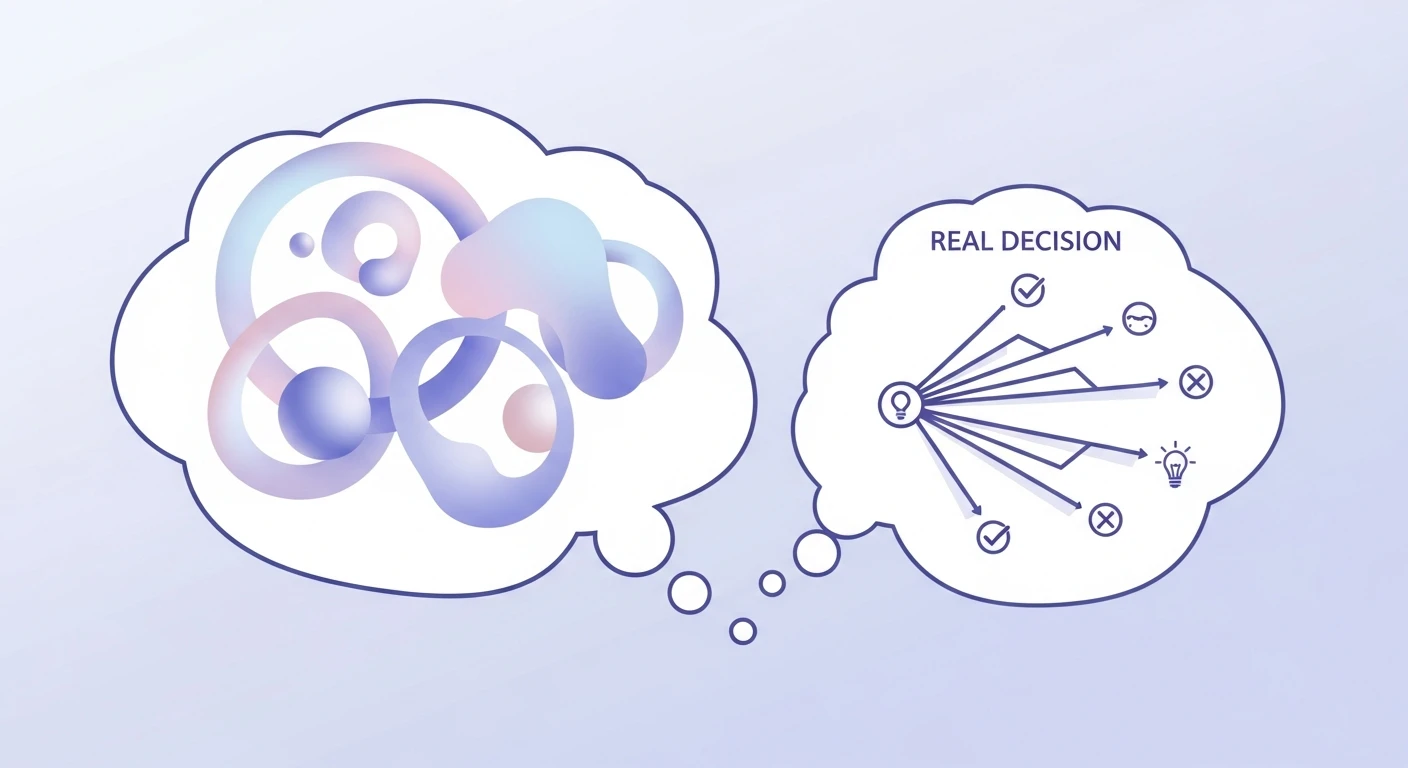
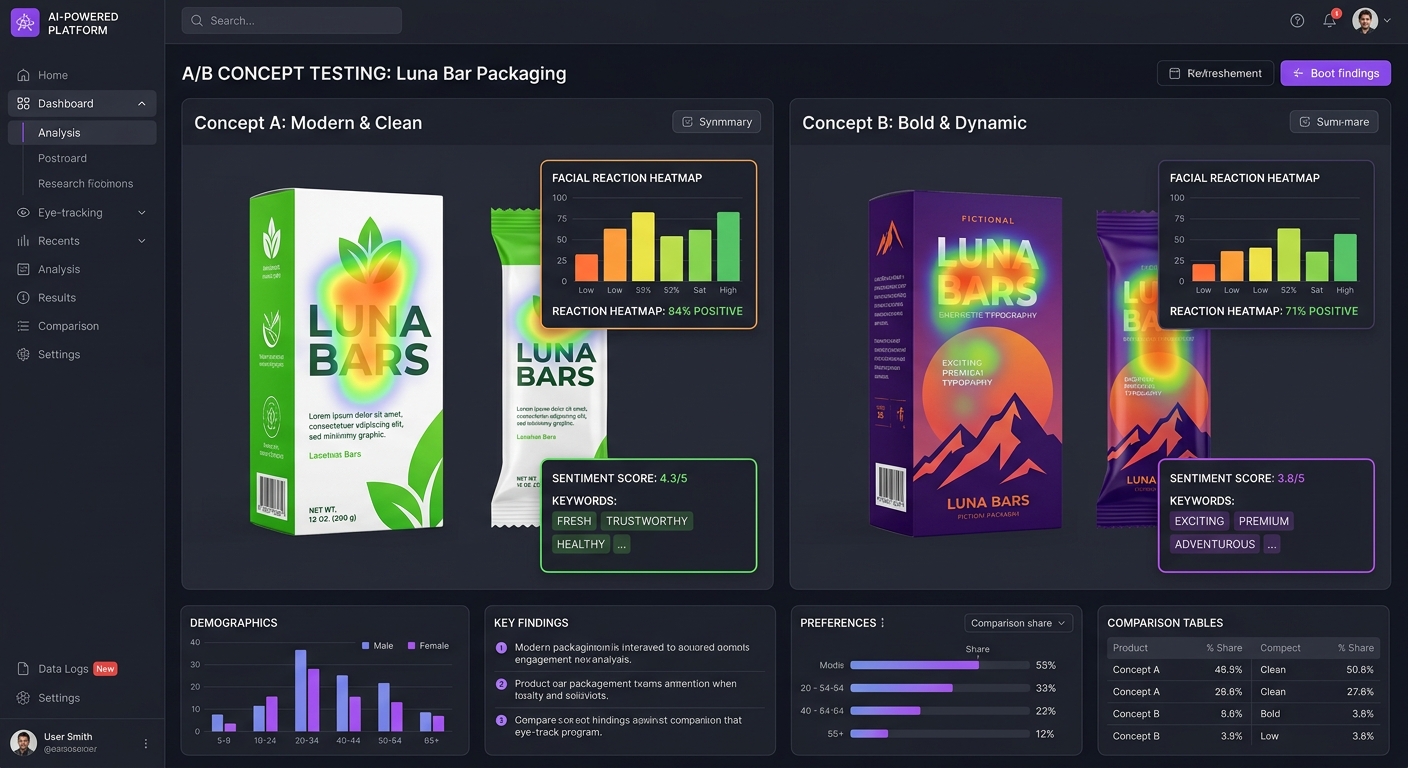
Here's the problem. A demo shows you what a platform *can* do. It doesn't show you what it *will* do with your data, your team's workflows, your clients' expectations, and your firm's methodological standards. The gap between demo and reality is where six-figure annual commitments go to die.
For consulting and research firms evaluating AI-powered research tools, a proof-of-concept approach isn't just prudent—it's the only strategy that aligns with how your business actually works.
Why POCs Beat Demos for Consultancies
Real Data Reveals Real Limitations
A demo uses curated datasets designed to make the platform shine. A POC uses your actual client data—messy transcripts, inconsistent interview formats, domain-specific jargon, multilingual respondents. The difference is night and day.
When you run a pilot with real project data, you discover things no demo will ever surface:
- How the platform handles your specific industry terminology
- Whether AI-generated insights meet your firm's analytical standards
- How data quality varies across different interview formats and respondent types
- Where human judgment is still irreplaceable in your workflow
Real Workflows Expose Integration Friction
Your firm has established processes. Research briefs flow through specific approval chains. Deliverables follow templates. Quality checks happen at defined stages. A POC reveals exactly where an AI tool fits—and where it creates friction.
Teams that skip the pilot phase often discover integration problems *after* they've committed budget. The platform works in isolation but breaks down when you try to embed it in a live engagement timeline with client check-ins and partner reviews.
Real Client Feedback Is the Only Feedback That Matters
Ultimately, your clients judge the output. A pilot lets you present AI-augmented deliverables to actual clients and gauge their reaction. Do they perceive the same quality? Do they notice faster turnaround? Are they comfortable with the methodology?
This is information you cannot get from a vendor's case studies. You can only get it by running the experiment yourself, with your clients, on your terms.
How to Structure a Meaningful Pilot
A pilot that proves something requires deliberate design. Too many firms treat POCs as casual experiments—tossing a tool at a junior analyst and checking back in a month. That approach guarantees inconclusive results.
Define Scope Precisely
Select 2-3 active projects that represent your typical engagement mix. Ideally, include:
- One project with a high volume of qualitative data (interviews, focus groups)
- One project with tight timelines where speed matters
- One project with complex, domain-specific analysis requirements
This diversity ensures you're testing the platform across your actual operating conditions, not just the easy cases. For consulting firms managing multiple concurrent engagements, research operations infrastructure determines whether a new tool amplifies capacity or creates chaos.
Establish Success Criteria Before You Start
Before the pilot begins, define what "success" looks like in measurable terms:
- Time savings: What percentage reduction in analysis time would justify adoption? (Be specific: "40% reduction in time from transcript to coded themes")
- Quality benchmark: How will you compare AI-augmented output against your current standard? (Blind review by senior researchers, client satisfaction scores)
- Adoption friction: What's the maximum acceptable onboarding time per researcher?
- Client reception: What feedback from clients would constitute validation?
Write these down. Share them with the team running the pilot. Revisit them at the end. Without pre-defined criteria, you'll rationalize any outcome.
Set a Timeline That Allows Learning
A one-week pilot is too short. A six-month pilot is organizational procrastination. For most consulting firms, 4-8 weeks provides enough time to:
- Complete onboarding and initial training (Week 1)
- Run the tool on the first project with close observation (Weeks 2-3)
- Apply learnings to the second and third projects (Weeks 4-6)
- Compile results and compare against success criteria (Weeks 7-8)
This timeline gives your team enough reps to move past the learning curve and evaluate the tool's steady-state performance, not just its day-one experience.
What to Evaluate During the Pilot
Data Quality and Analytical Rigor
The most critical evaluation dimension for consulting firms is output quality. AI-generated themes, codes, and insights need to meet the standard your clients expect and your partners will sign off on.
During the pilot, systematically assess:
- Accuracy of thematic analysis: Do AI-identified themes align with what experienced researchers would find?
- Depth of insight: Does the tool surface non-obvious patterns, or just restate the obvious?
- Evidence quality: Are generated claims properly grounded in source data with traceable citations?
- Bias detection: Does the tool handle contradictory data fairly, or does it flatten nuance?
If you're incorporating AI-moderated interviews or discussion guides, evaluate how well the platform handles the unique data structures these produce—branching conversations, adaptive probing, and non-linear participant responses.
Time Savings (Honestly Measured)
Track time at a granular level. Don't just compare "total project hours"—break it down:
- Time spent on data preparation and upload
- Time spent reviewing and correcting AI outputs
- Time saved on initial coding and theme identification
- Time spent on tasks that didn't exist before (prompt engineering, output validation)
- Net time impact on the full research-to-deliverable cycle
Many firms discover that AI tools shift time rather than eliminate it. You spend less time on mechanical coding but more time on validation and refinement. The net savings are real, but they're often smaller than vendor claims suggest—at least initially.
Client Reception and Confidence
During the pilot, find opportunities to present AI-augmented work to clients without making it a referendum on the tool. Include AI-generated insights in your normal deliverables. Note client reactions:
- Do they ask more follow-up questions about methodology?
- Do they express the same confidence in findings?
- Do they notice improvements in turnaround time?
- Would they pay the same rates for AI-augmented work?
These signals tell you whether AI adoption is a client risk or a client benefit.
Methodology Fit and Flexibility
Every firm has methodological commitments. Whether you lean toward grounded theory, framework analysis, IPA, or a proprietary methodology, the tool needs to accommodate your approach—not force you into its default.
Evaluate:
- Can you configure the analytical framework, or are you locked into the platform's approach?
- Does the tool respect your coding hierarchy and taxonomy?
- Can it handle iterative analysis (going back to data as new themes emerge)?
- Does it support collaborative analysis where multiple researchers contribute?
The Economics: Pilot Cost vs. Annual Commitment Risk
Let's talk numbers. A typical enterprise AI research platform runs $50,000-$150,000 annually for a mid-size consulting firm. Factor in onboarding costs, productivity dips during transition, and the opportunity cost of the team time spent learning a new tool—your real first-year investment is often 1.5-2x the license fee.
A structured pilot typically costs 10-20% of an annual commitment. For that investment, you get:
- Validated ROI data specific to your firm's operations
- Internal champions who've used the tool on real work and can advocate (or not)
- Negotiating leverage for the annual contract (you know exactly what you need)
- Risk mitigation against the most common failure mode: buying a tool nobody uses
The asymmetry is stark. A failed pilot costs you a fraction of a failed annual subscription. A successful pilot de-risks the full commitment and accelerates adoption because your team already has momentum.
The Hidden Cost of Skipping the Pilot
Firms that jump straight to annual subscriptions face a predictable pattern:
- Month 1-2: Excitement, training sessions, early adoption by enthusiasts
- Month 3-4: Reality sets in. The tool doesn't fit certain project types. Some researchers resist it. Client work takes priority over learning curves.
- Month 5-8: Usage drops. The firm is paying for seats that aren't active. Internal debate about whether to double down or cut losses.
- Month 9-12: Renewal conversation happens against a backdrop of ambiguous results and mixed internal opinions.
A pilot compresses this entire cycle into weeks, at a fraction of the cost, before you're locked in.
Common Pilot Mistakes (and How to Avoid Them)
Mistake 1: Scope Too Small to Be Meaningful
Running a pilot on one small project with one junior researcher proves nothing. You need enough volume and variety to encounter edge cases, test scalability, and understand how the tool performs across different project types.
Fix: Minimum two projects, minimum two researchers, spanning at least two different client industries or methodologies.
Mistake 2: Wrong Project Type
Don't pilot an AI research tool on your simplest, most straightforward project. That's not where you need help. Also don't pilot on your most complex, politically sensitive client engagement. That's not where you can afford experiments.
Fix: Choose projects in the middle of your complexity spectrum—meaningful enough to stress-test the tool, low-stakes enough that imperfect results won't damage client relationships.
Mistake 3: No Pre-Defined Success Metrics
"Let's try it and see how it goes" is not a pilot methodology. Without explicit success criteria, you'll end up with subjective impressions instead of actionable data. Proponents will cherry-pick wins; skeptics will highlight failures.
Fix: Define 3-5 measurable success criteria before the pilot begins. Assign someone to track them objectively throughout.
Mistake 4: No Control Comparison
If you run every project through the AI tool, you have no baseline. You need at least one comparable project running through your traditional process during the same period.
Fix: Run the pilot projects in parallel with a control—same type of project, same caliber team, traditional methodology. Compare outcomes.
Mistake 5: Ignoring Change Management
A pilot isn't just a technology test. It's a people test. If your researchers feel threatened, undertrained, or unsupported, the pilot will fail regardless of the tool's capabilities.
Fix: Brief the team on why you're piloting, what success looks like, and that their honest feedback (including negative) is valued. Make it psychologically safe to report problems.
Transitioning from Pilot to Scaled Adoption
A successful pilot doesn't automatically mean smooth scaling. The transition requires deliberate planning:
Build on Pilot Learnings
Document everything the pilot revealed—what worked, what didn't, what surprised you. Use these insights to design your scaled rollout:
- Which project types benefit most from the tool?
- Which teams are ready for adoption vs. need more support?
- What workflows need to change to accommodate the tool?
- What training is required beyond what the pilot team received?
Negotiate from Strength
A completed pilot gives you extraordinary negotiating leverage. You know exactly which features you use, how many seats you need, what support level is required, and what ROI you can expect. Use this data in vendor negotiations.
Phase the Rollout
Don't flip the switch for the entire firm on day one. Start with the teams and project types where the pilot showed the strongest results. Let early adopters become internal advocates and trainers.
Establish Ongoing Evaluation
The research AI landscape is evolving fast. What you evaluate today may be outdated in 18 months. Build regular reassessment into your adoption plan—quarterly reviews of utilization, output quality, and ROI against the benchmarks you established during the pilot.
The Bottom Line
For consulting firms, the question isn't whether AI will transform research workflows—it will. The question is whether you'll adopt it intelligently or expensively.
A structured proof-of-concept approach aligns with how consulting firms actually operate: evidence-based, risk-aware, and client-outcome-focused. It lets you make a six-figure technology decision with six-figure confidence, not six-figure hope.
The firms that pilot well will scale faster, adopt deeper, and ultimately gain more competitive advantage than firms that either rush into annual commitments or delay indefinitely waiting for the "perfect" solution.
Start with a real project. Measure real outcomes. Then decide.
*Evaluating AI research tools for your consulting firm? We offer structured pilot programs designed for firms that want to validate before they commit—real projects, real data, real results.*
Book an information session to discuss how a proof-of-concept engagement would work for your team.