The Interview You Remember Best Is the One That Distorts You Most
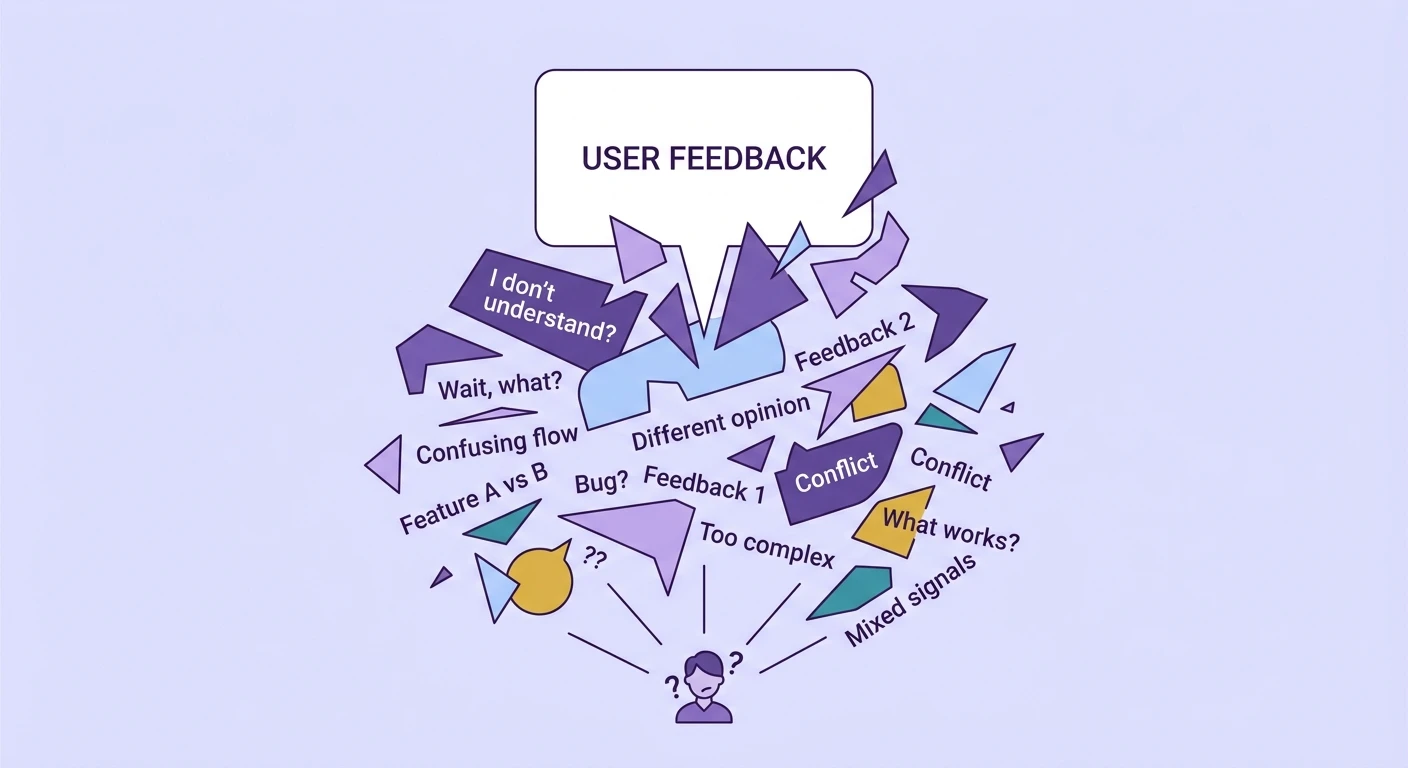
Every researcher knows the feeling. You finish a study of a dozen interviews, you open your notes to synthesize, and the last two or three conversations are crisp and quotable while the first few have collapsed into a vague impression. You reach for the vivid material because it is there, and the faded material stays faded. Without ever deciding to, you have let the end of the study speak louder than the beginning.
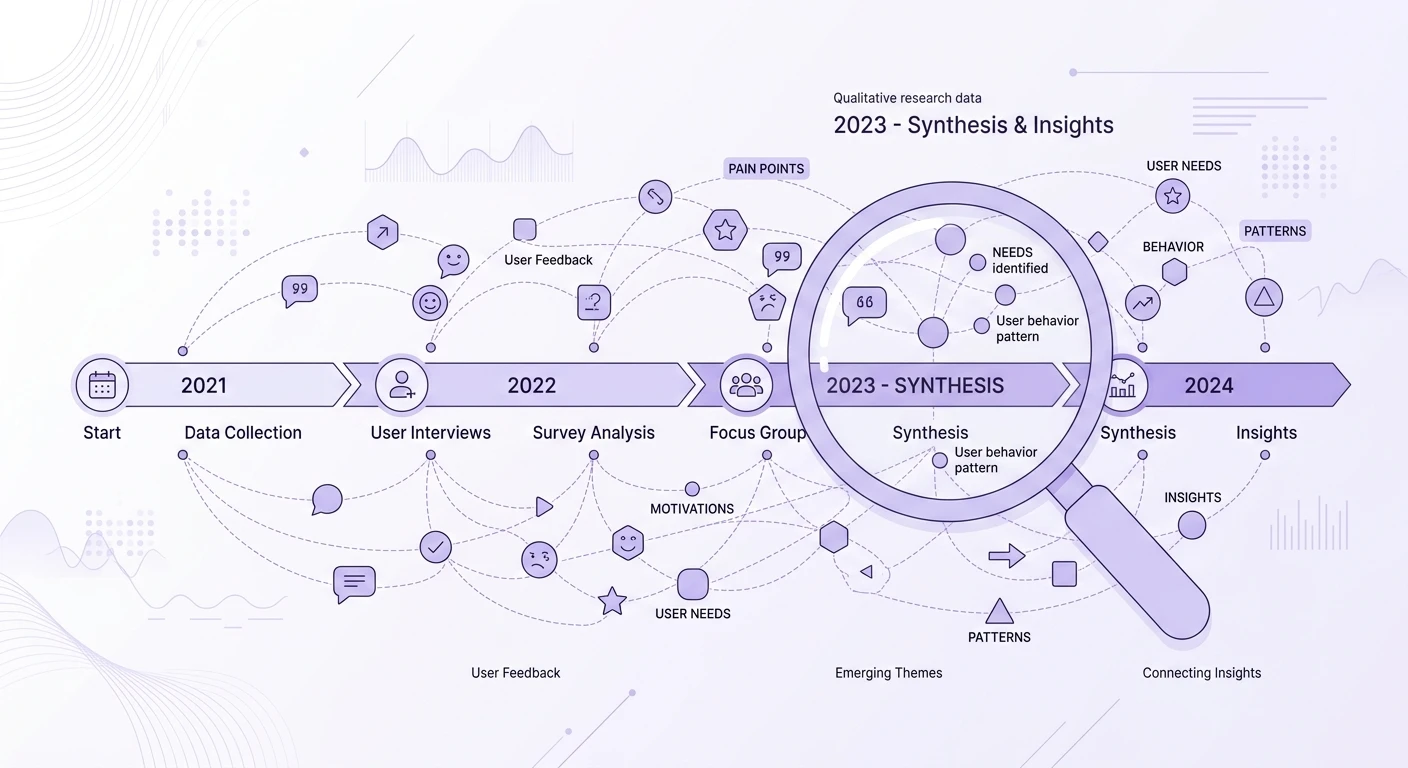
The recency weighting trap is what happens when the order in which you collected data becomes a hidden weight on how much that data counts. The most recent sessions are more available to memory, more emotionally salient, and more likely to be top of mind when you write the summary -- so they exert more influence on the findings than the earlier sessions that carried exactly the same evidentiary weight. The tilt is invisible because it feels like insight. The recent interview does not announce that it is overrepresented; it just feels more true.
Why Order Should Not Matter But Does
In principle, interview seven should count as much as interview one. In practice, the human analytic system does not weight evidence by its logical importance -- it weights by accessibility, and accessibility decays with time and rises with vividness. This is a close relative of the availability cascade in stakeholder debriefs, where the first insight shared becomes the one everyone remembers -- except recency runs the tape in the other direction, privileging the last thing you heard rather than the first thing said aloud.
It compounds with the ordinary drift of interpretation. As a study progresses, your coding frame evolves, your questions sharpen, and you hear later participants through a lens the earlier ones helped build -- which means the later interviews are not only more memorable, they were literally conducted by a more opinionated version of you. That is the interpretation drift that quietly reshapes qualitative coding over the life of a study, and recency weighting is what happens when that drift also decides which sessions you actually remember at synthesis time.
The Distortion Hides Inside Confidence
The dangerous part is that recency weighting does not feel like a bias. It feels like clarity. The last interview is the one where the pattern "finally clicked," so you treat it as the confirming case and reread everything before it as leading up to it. The participants who contradicted the emerging story -- and who were often the early ones, before the story existed -- get quietly demoted, which is exactly the failure that negative case analysis exists to prevent. A finding built this way looks strongly supported and is actually supported by whoever spoke last.
This is the same class of silent-degradation problem that enterprise AI teams fight when a system keeps reporting healthy while its real behavior rots underneath -- the dashboards stay green precisely because the drift does not trip an alarm. Mature engineering teams counter it with observability that surfaces silent degradation before it reaches users; qualitative analysis has no such instrumentation by default, so the recency tilt runs unmonitored until it ships as a conclusion.
Building Analysis That Resists Recency
The fix is not to have a better memory. It is to stop relying on memory as the weighting mechanism at all, and to make every session count through structure rather than salience.
- Synthesize continuously, not at the end. Write an analytic memo after every interview while it is equally fresh, so session one gets the same fidelity of capture that session twelve will. This is the discipline behind analytical memo writing, which produces stronger insights than coding alone precisely because it timestamps your thinking before recency can reweight it.
- Re-read early transcripts last. Deliberately return to your first interviews at the end of the study, after the recent ones have had their say, to give the faded data a second and equal hearing.
- Weight by evidence, not vividness. Before you write a finding, count how many participants actually support it and note where in the sequence they fell. If your strongest theme leans on the final third of your sessions, treat that as a warning, not a confirmation.
- Keep every claim traceable to its source. A finding you cannot map back to specific participants across the whole study is a finding vulnerable to recency -- the same reason enterprise AI systems insist on audit trails that trace any output back to its evidence.
Recency weighting will not go away, because the memory asymmetry that drives it is built in. But a study that captures each session at equal fidelity, revisits its earliest data on purpose, and weights findings by counted evidence rather than by what feels vivid is a study where interview one gets to matter as much as interview twelve -- which is the only way the order you happened to schedule people stops secretly authoring your conclusions.
Qualz.ai keeps every session equally analyzable from the first interview to the last, so your synthesis draws on the whole study instead of whatever you talked about most recently. See how teams run recency-resistant analysis on Qualz.ai.