The Question That Passed Every Review and Still Biased the Study
Your discussion guide went through three rounds of review. A colleague flagged the obvious offenders -- the "Don't you think..." openers, the adjective-loaded prompts -- and you rewrote them into calm, professional phrasings. The guide reads clean. And yet the data still tilts, consistently, in one direction, and you cannot figure out why participants keep converging on an answer you did not expect them to hold in common.
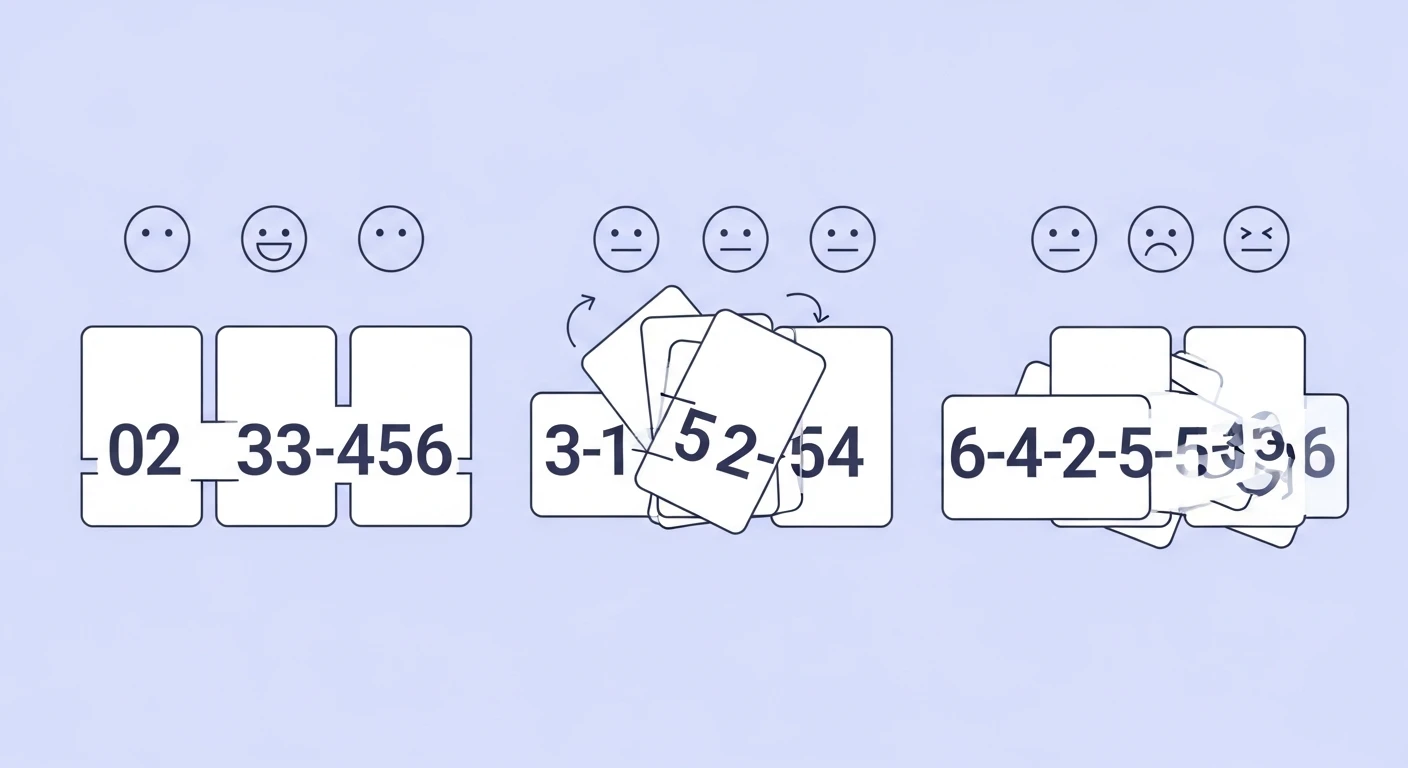
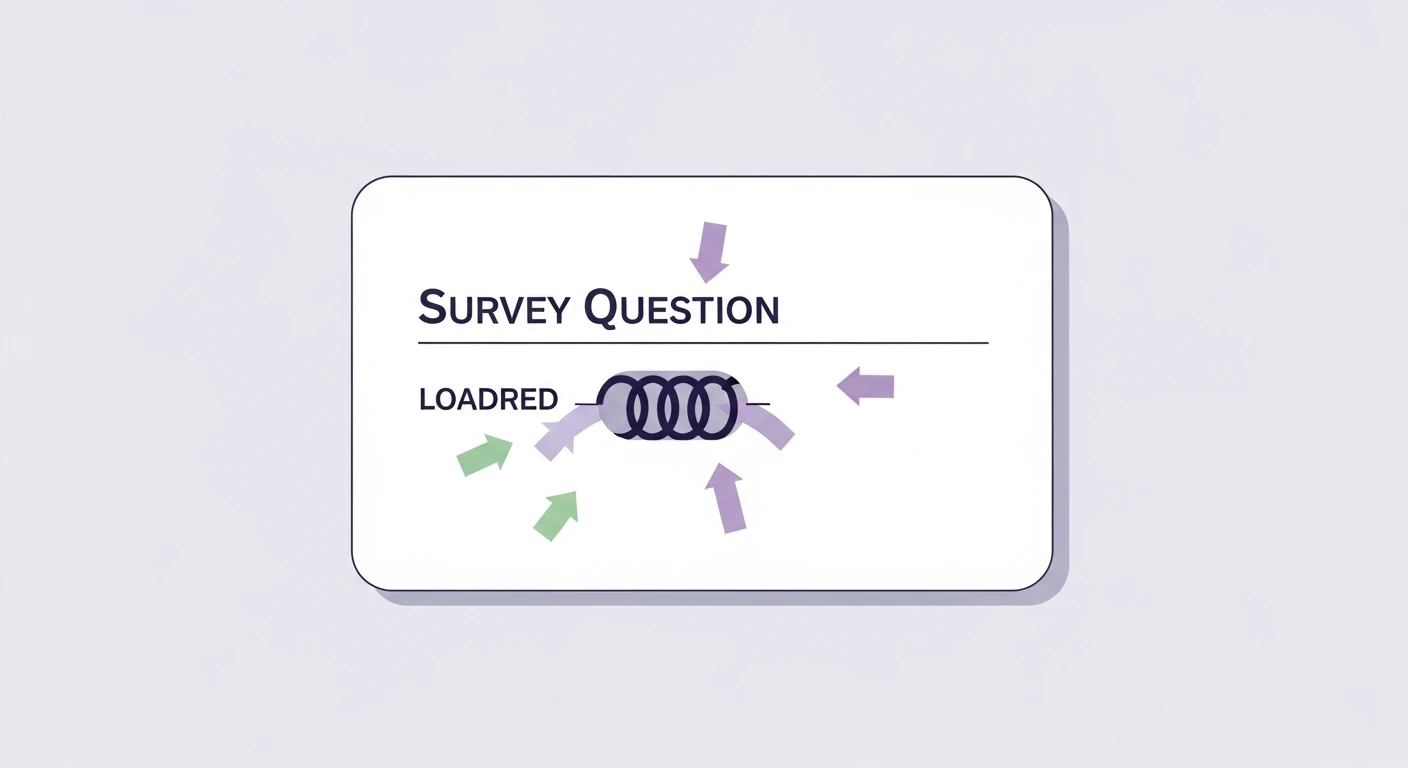
The culprit is almost never the question you can see is leading. It is the presupposition riding inside a question that looks perfectly neutral. When you ask "How did the onboarding flow help you get set up?" you have not asked whether it helped -- you have asserted that it did, and invited the participant to supply supporting detail. The claim was smuggled in as settled background, and answering the question means accepting it. This is assumption smuggling, and it is the most durable form of leading question precisely because it survives the review that catches the crude ones.
Why Presuppositions Are Invisible to Everyone in the Room
A presupposition is a proposition a sentence treats as already true in order to ask about something else. "When did you stop using the competitor?" presupposes you used one and that you stopped. Human conversation runs on presupposition -- it is how we avoid restating context every sentence -- which is exactly why it is so hard to notice when one is doing analytical damage.
Participants almost never challenge a presupposition. Contesting the hidden claim requires interrupting the conversational frame, correcting the interviewer, and taking on social friction most people will not absorb in a research setting. So they answer the surface question and quietly ratify the buried one. The result looks like agreement in your data when it was actually compliance with a framing, a close relative of the reassurance reflex, where smoothing the interaction erases the very signal you were trying to capture.
The Three Kinds of Smuggled Assumption
1. The existence smuggle
"What frustrates you about the reporting dashboard?" presupposes frustration exists. A participant who was neutral will now search memory for a frustration to report, because the question makes having one the expected, cooperative answer. You have manufactured a finding out of a framing. The honest version asks about the existence before the character: "How do you feel about the reporting dashboard, if you have a view at all?"
2. The causal smuggle
"How did the new pricing page change your decision?" presupposes it changed the decision. Even a participant whose decision was driven entirely by a colleague's recommendation will now construct a story in which the pricing page mattered -- an instance of the narrative coherence bias, where people build a tidy causal story out of a messy reality on demand. The causal claim was yours, not theirs, and now it is contaminating your attribution.
3. The category smuggle
"Which of our collaboration features do you rely on most?" presupposes the participant thinks of these as collaboration features at all, and that they rely on some. You have imposed your product taxonomy onto their mental model, and the answer tells you about your categories, not their experience. This is where a concrete, behavior-first prompt outperforms an abstract framed one -- the difference at the heart of the specificity gradient, where concrete questions unlock real experience while abstract ones produce performative answers.
Why AI-Generated Guides Make This Worse
If you draft discussion guides with an LLM, the assumption-smuggling rate goes up, not down. Language models are trained to produce fluent, confident, well-formed sentences, and confident sentences are precisely the ones that embed presuppositions -- fluency and presupposition are correlated in natural text. The model will happily generate "Tell us about the moment you realized you needed a better solution," a sentence dense with smuggled claims (that there was a moment, a realization, a need, and an inadequacy) that reads beautifully and biases ruthlessly. This is a specific case of the priming contamination problem in AI-generated discussion guides, where LLM-authored questions embed assumptions participants cannot detect.
The same dynamic explains why treating a model's fluent output as trustworthy is dangerous downstream too: the discipline enterprise teams apply to structured output engineering for production LLMs -- constraining and validating what the model asserts rather than trusting its confident prose -- is exactly the discipline a research team needs to apply to AI-drafted questions before they ever reach a participant.
How to Strip the Smuggle Out
Run a presupposition audit. For every question, ask: what does a participant have to accept as true just to answer this? List those hidden propositions explicitly. Any one that is actually a research question in disguise gets pulled out and asked directly first.
Split existence from character. Never ask about the quality of a thing before you have established the thing is present in the participant's experience. Two questions, in order: does this exist for you, and then what is it like.
Neutralize the verb. "Help," "improve," "struggle," and "change" all carry directional cargo. Swap them for zero-valence verbs -- "use," "do," "happen" -- and let the participant supply the direction. This connects to the deeper discipline of not mirroring a participant's framing back at them and trapping them in it; the interviewer's own verbs are a framing too.
Read it aloud as an adversary. Say each question as if you were a participant looking for the easiest cooperative answer. The path of least resistance is the answer the question is smuggling for. If that path leads somewhere you would be happy to report as a finding, the question is broken.
The Standard: Questions That Do Not Know the Answer
A clean research question is genuinely agnostic about how it will be answered. If you can predict the shape of the response from the wording alone, the wording is doing the answering. The goal is not to eliminate presupposition -- conversation cannot run without it -- but to ensure that everything you presuppose is something you already know to be true for this participant, never something you are actually there to find out.
Assumption smuggling is quiet, it survives review, and it accumulates across a whole guide into a systematic tilt no single question would reveal. Catching it is less about politeness and more about logic: interrogate what each question takes for granted, and make sure you never take for granted the thing you came to learn.
Building discussion guides that hold up under scrutiny? Qualz.ai helps research teams design, run, and analyze interviews with the methodological rigor this work demands -- so the questions you ask reveal what participants actually think, not what your wording assumed. Book a demo to see how.