The Invisible Quality Gate
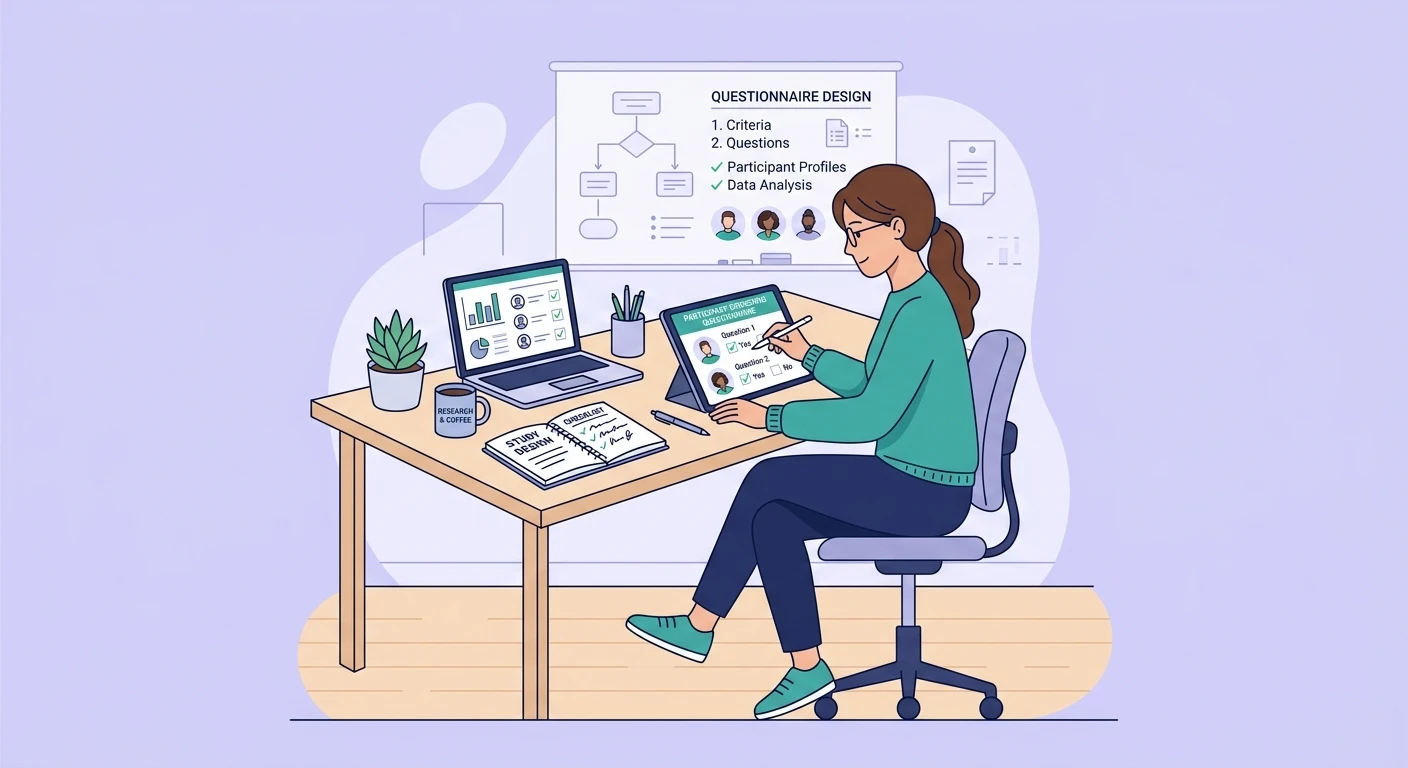
Every research project has a single point of failure that most teams underinvest in: the screener. It is the instrument that determines who gets into your study. Get it right and you talk to the exact people whose experiences matter for your research questions. Get it wrong and you spend weeks generating insights from the wrong population -- insights that feel valid but lead to decisions calibrated for people who do not represent your actual users.
The screener is invisible in final deliverables. Nobody reads a research report and thinks about the recruitment instrument. But its fingerprints are on every finding. The composition of your participant pool shapes what you hear, what patterns emerge, and what your team ultimately decides to build. A screener that admits even two or three mismatched participants in a ten-person study can shift your thematic analysis in directions that do not reflect real user experience.
This is not hypothetical. Research teams routinely discover mid-study that participants do not match the intended profile -- they claimed experience they do not have, they use a competitor product rather than the one being studied, or they represent an edge case that distorts the pattern. By then, the schedule is set, the budget is spent, and the team proceeds with compromised data rather than starting over.
Mistake One: Leading Questions That Teach the Right Answer
The most common screener failure is telegraphing the desired answer. When a screener asks "Do you use project management software at work?" before asking which tools they use, participants who want to qualify (and most do -- there is an incentive attached) learn that the study is about project management software. Subsequent questions become a test of whether the participant can guess which answers get them in, not an honest assessment of their actual behavior.
This problem compounds with platforms that allow participants to screen out and re-screen. A participant who fails with answer A tries again with answer B. The selection mechanism rewards persistence and pattern-recognition rather than genuine fit.
The fix is structural: ask behavioral questions before categorical ones, randomize option order, include red herring categories, and never reveal the study topic in the screener title or introduction. "Which of the following activities are part of your regular work routine?" with twenty options (only five of which are relevant) is far harder to game than "Do you conduct user research?" with a yes/no binary.
Mistake Two: Demographic Quotas Without Behavioral Criteria
Teams often build screeners around demographics -- age, role, company size, industry -- while neglecting the behavioral criteria that actually predict data quality. A product manager at a 500-person SaaS company who has never conducted a user interview has a fundamentally different perspective than one who runs weekly customer conversations. The demographic profile is identical. The behavioral profile could not be more different.
Demographics are easy to specify and easy to verify, which is why they dominate screener design. Behavioral criteria require more thought: frequency of the target behavior, recency of relevant experience, context of usage, and depth of engagement. These are harder to write and harder to verify, but they are what actually determines whether a participant can provide the data your research questions require.
The strongest screeners layer behavioral criteria on top of demographic minimums. Demographics define the broad population. Behavioral questions identify the subset whose experience is relevant to the specific research question. This approach aligns with best practices for recruiting participants for user research -- casting a wide net demographically while filtering tightly on behavior.
Mistake Three: Binary Questions That Collapse Nuance
Yes/no questions are the enemy of good screener design. "Do you use analytics tools?" admits someone who glances at Google Analytics once a month alongside someone who builds custom dashboards in Mixpanel daily. Both answer yes. Their research contributions will be wildly different.
Frequency scales, recency questions, and specificity probes do the work that binaries cannot. "How often did you use analytics tools in the past 30 days?" with options ranging from "never" to "daily" segments the population meaningfully. "Which of the following analytics tasks have you performed in the past month? Select all that apply" with specific activities (created a funnel report, built a cohort analysis, exported data for presentation) identifies depth of engagement.
The goal is to create response distributions that map to meaningful differences in experience. If every qualifying participant can give the same answer to every question, the screener is not doing its job.
Mistake Four: Ignoring Professional Screener-Takers
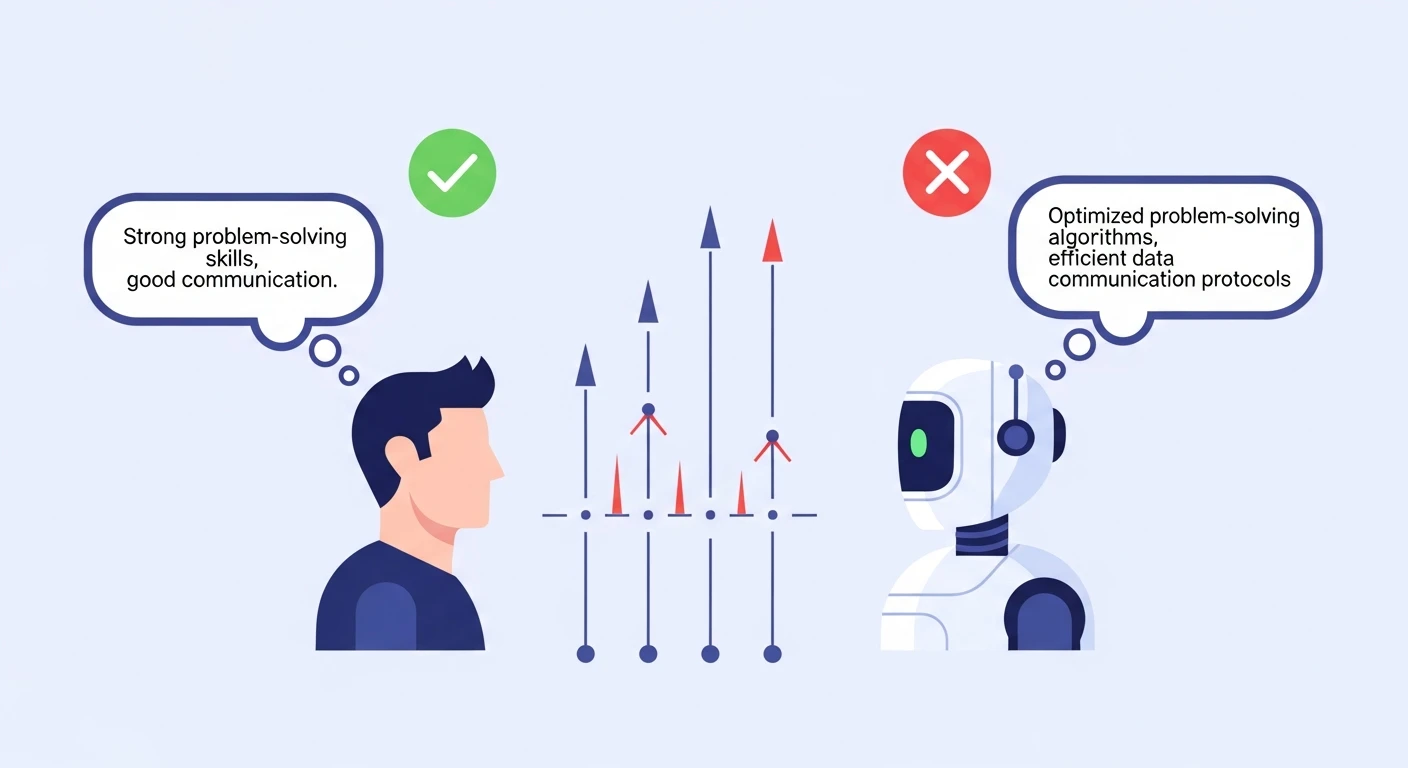
Research panels include a population of professional participants who have learned to pass screeners. They recognize patterns, answer quickly, and provide responses optimized for qualification rather than accuracy. Ignoring this reality is like designing a lock without considering that some people pick locks for a living.
Effective countermeasures include attention checks ("Please select 'somewhat agree' for this question"), consistency traps (asking the same information in different ways at different points), open-ended verification questions ("Briefly describe a recent project where you used this tool"), and speed checks (flagging completions that are implausibly fast).
Some of these tactics feel adversarial, and they are. But the alternative is a participant pool contaminated by people whose primary skill is passing screeners rather than providing authentic data. The research on panel fatigue and participant conditioning documents how repeat participants develop response patterns that degrade data quality over time. Professional screener-takers represent the extreme end of this phenomenon.
Mistake Five: Screening for Who People Are Instead of What They Have Done
Identity-based screening ("Are you a UX researcher?") produces less reliable participant pools than behavior-based screening ("In the past three months, have you conducted interviews with end users of a product you work on?"). People are generous with identity labels. They are more precise about specific recent behaviors.
Someone who calls themselves a UX researcher might be a designer who occasionally runs usability tests, a product manager who considers customer calls "research," or a dedicated researcher with a PhD in cognitive science. The identity label collapses these meaningfully different profiles into a single category.
Behavior-based screening also avoids the problem of aspiration bias. People screen in based on who they want to be, not who they are. A product manager who has not conducted user research in six months but plans to start next quarter will honestly answer "yes" to "Are you involved in user research?" because they identify with the activity even though their recent experience would not support the data your study needs. The framework behind validating product assumptions without full studies applies here too -- lightweight verification through behavioral specifics beats broad categorical claims.
Mistake Six: No Pilot Testing
Teams pilot their interview guides, their survey instruments, their prototype designs. Almost nobody pilots their screener. The screener goes live with its flaws intact, and those flaws propagate silently through every subsequent phase of the research.
A screener pilot with five to ten respondents reveals whether questions are interpreted as intended, whether the qualification rate matches expectations, whether the time-to-complete is reasonable, and whether the instrument admits the population you actually want. Five pilot respondents can prevent weeks of compromised data collection.
The pilot should include a brief follow-up conversation with a subset of respondents. Ask them what they thought each question was asking, whether they were uncertain about any answers, and how they decided between options. This meta-screener data reveals interpretation gaps that the researcher cannot see from the response data alone.
Mistake Seven: Over-Screening Into Homogeneity
The opposite failure is equally damaging: a screener so specific that it admits only participants who are nearly identical. Twelve participants who are all senior product managers at B2B SaaS companies with 200-500 employees in the San Francisco Bay Area will produce highly consistent data -- and that consistency will feel like validity. But it represents a narrow slice of the user base, and findings that feel robust within this sample may not transfer to the broader population.
The tension between specificity and diversity is real, and there is no formula that resolves it. The principle is to screen tightly on the criteria that directly affect your research questions and loosely on everything else. If you are studying onboarding friction, screen for recency of onboarding experience and looseness of everything else. If you are studying power-user workflows, screen for depth of product engagement and let other variables vary.
Building Better Screeners
The best screeners share structural features regardless of topic.
They open with broad behavioral questions before narrowing to specific criteria. They include more questions than strictly necessary to create consistency-check opportunities. They use multi-select and frequency scales rather than binary choices. They embed attention checks and red herrings without making the instrument feel hostile. They are piloted before launch and revised based on pilot data.
Most importantly, they are written with the same care as the research instruments they protect. A screener is not administrative overhead. It is the first research instrument in the study, and its quality determines the ceiling on everything that follows.
For teams conducting AI-moderated interviews at scale, screener quality becomes even more critical. When you are running dozens or hundreds of interviews rather than ten, the cost of admitting wrong-fit participants multiplies. A 10% misqualification rate in a ten-person study means one bad interview. In a two-hundred-person study, it means twenty interviews generating noise that pollutes your entire analysis.
The screener is where research quality begins. Invest accordingly.