The Stakeholder Register Problem Nobody Talks About
Every consultant who has managed a multi-stakeholder project knows the drill. You open a spreadsheet. You create columns: Name, Organization, Role, Interest Level, Influence Level, Engagement Strategy. You fill in rows based on your best judgment during the inception phase. Then you present a neat power-interest matrix in your deliverable.
And then the spreadsheet sits there, untouched, for the rest of the project cycle.
This is not a failure of discipline. It is a structural problem. Excel-based stakeholder registers are static artifacts in dynamic environments. They capture a snapshot of assumptions at a single point in time, usually before the project team has done any meaningful primary data collection. They cannot encode the nuance of how stakeholders actually relate to each other, where coalitions form and fracture, or how influence shifts as a project moves from design to implementation.
For consultants working in development, infrastructure, water management, and policy reform, this gap between the stakeholder register and reality is not just an inconvenience. It is a risk factor that shows up as unexpected opposition during implementation, missed coalition opportunities, and engagement strategies that target the wrong people with the wrong messages.
This guide breaks down what is wrong with conventional stakeholder management tools, what better frameworks exist, and how AI-powered qualitative analysis can transform stakeholder engagement from a compliance exercise into genuine strategic intelligence.
What Excel Registers Actually Capture (And What They Miss)
A standard stakeholder register typically includes:
- Identification data — name, title, organization, contact details
- Classification — internal/external, primary/secondary, supporter/neutral/opponent
- Interest and influence ratings — usually on a 1-5 or low/medium/high scale
- Engagement strategy — keep informed, keep satisfied, manage closely, monitor
This is useful for project administration. It tells you who to invite to workshops and who should receive progress reports. But it tells you almost nothing about the dynamics that actually determine whether your project succeeds or fails.
What Excel registers miss:
- Relational dynamics — Who influences whom? Which organizations have informal alliances? Where are there historical conflicts that will surface during implementation?
- Narrative positions — What do stakeholders actually say about the project, in their own words? What concerns do they express in interviews versus in public forums?
- Temporal shifts — How do positions change after key events, elections, funding announcements, or pilot results?
- Cross-sectoral dependencies — In a water management project, how do agricultural interests interact with municipal water authorities, environmental regulators, and community groups?
- Hidden influence — Which stakeholders have disproportionate informal influence that does not map to their formal role?
The fundamental issue is that an Excel register treats stakeholder engagement as a classification problem when it is actually an analysis problem. You cannot classify your way to understanding a complex stakeholder landscape. You have to analyze it.
Power-Interest Matrices: Useful Framework, Flawed Execution
The Mendelow power-interest matrix (sometimes called the influence-interest grid) is the most widely used stakeholder mapping framework. It segments stakeholders into four quadrants:
- High power, high interest — Manage closely (key players)
- High power, low interest — Keep satisfied (context setters)
- Low power, high interest — Keep informed (subjects)
- Low power, low interest — Monitor (crowd)
This framework is conceptually sound. The problem is how it gets operationalized. In practice:
- Ratings are subjective and unvalidated. The project manager or lead consultant assigns power and interest scores based on their initial assessment, often before conducting stakeholder interviews. These ratings rarely get updated with evidence from primary data.
- The matrix is two-dimensional. Real stakeholder landscapes involve multiple overlapping dimensions: formal authority, informal influence, resource control, technical expertise, political connections, media access, community legitimacy.
- It is stakeholder-by-stakeholder. The matrix maps individual actors in isolation. It does not represent relationships, coalitions, or the network structure of the stakeholder landscape.
- It is a deliverable, not a tool. Teams produce the matrix for inception reports and then rarely use it operationally. The analysis does not feed back into ongoing engagement decisions.
The same critique applies to other common frameworks: the salience model (power, legitimacy, urgency), stakeholder influence diagrams, and RACI matrices. They are useful conceptual lenses, but they degrade when implemented as static spreadsheet exercises.
Actor Linkage Matrices: The Right Idea, Wrong Medium
Actor linkage matrices (also called stakeholder interaction matrices or relationship matrices) attempt to solve the relationship problem. Instead of mapping stakeholders individually, they map the relationships between stakeholders in a matrix format where both rows and columns represent actors, and cell values indicate the nature and strength of relationships.
For a water basin management project, an actor linkage matrix might map:
- Upstream agricultural cooperatives vs. downstream municipal water utilities
- Regional environmental agencies vs. national-level policy ministries
- International donor organizations vs. local implementing NGOs
- Community water user associations vs. private sector operators
This is significantly more useful than a power-interest matrix for understanding where conflicts and alliances exist. But in practice, actor linkage matrices face serious scalability problems:
- A project with 40 stakeholders produces a 40x40 matrix with 1,600 cells to populate
- Relationship characterization is often reduced to simple categories (cooperative/conflictive/neutral) that lose nuance
- The matrix does not capture directionality well (A influences B, but B does not necessarily influence A)
- Updating the matrix as relationships evolve requires re-populating hundreds of cells
More importantly, the data needed to populate an actor linkage matrix accurately — information about how stakeholders perceive and relate to each other — typically comes from qualitative data sources like interviews and focus groups. But the manual effort required to systematically extract relationship data from interview transcripts and code it into a matrix format is enormous. So teams take shortcuts, relying on assumptions instead of evidence.
Where Stakeholder Analysis Actually Lives: In Your Qualitative Data
Here is the insight that changes everything: the richest source of stakeholder intelligence is not the register or the matrix. It is the qualitative data you are already collecting.
When you conduct semi-structured interviews with stakeholders as part of an inception phase, mid-term evaluation, or impact assessment, those transcripts contain:
- Explicit statements about other stakeholders — "The regional authority has been blocking our permits for two years" or "We work closely with the irrigation cooperative on scheduling"
- Implicit influence indicators — Which stakeholders do others reference most frequently? Whose actions do others describe as consequential?
- Narrative framing — How do different stakeholder groups frame the same issue? Where do framings converge and diverge?
- Temporal markers — "Before the new director arrived, we had no problems" or "Since the EU regulation changed, the whole dynamic shifted"
- Emotional valence — Frustration, trust, resignation, optimism — these reveal relationship quality far better than a cooperative/conflictive binary
The problem is that extracting this intelligence manually from dozens of interview transcripts is prohibitively time-consuming. A consultant conducting 30 stakeholder interviews for a water governance assessment generates hundreds of pages of transcript data. Manually coding all of that for stakeholder relationships, influence patterns, and coalition dynamics would take weeks — time that does not exist in typical project timelines.
This is exactly where AI-powered qualitative analysis changes the equation.
AI Qualitative Tools for Stakeholder Intelligence
Modern AI qualitative analysis platforms can process interview transcripts and surface stakeholder intelligence that would take weeks to extract manually. Here is what becomes possible:
Automated Relationship Mapping
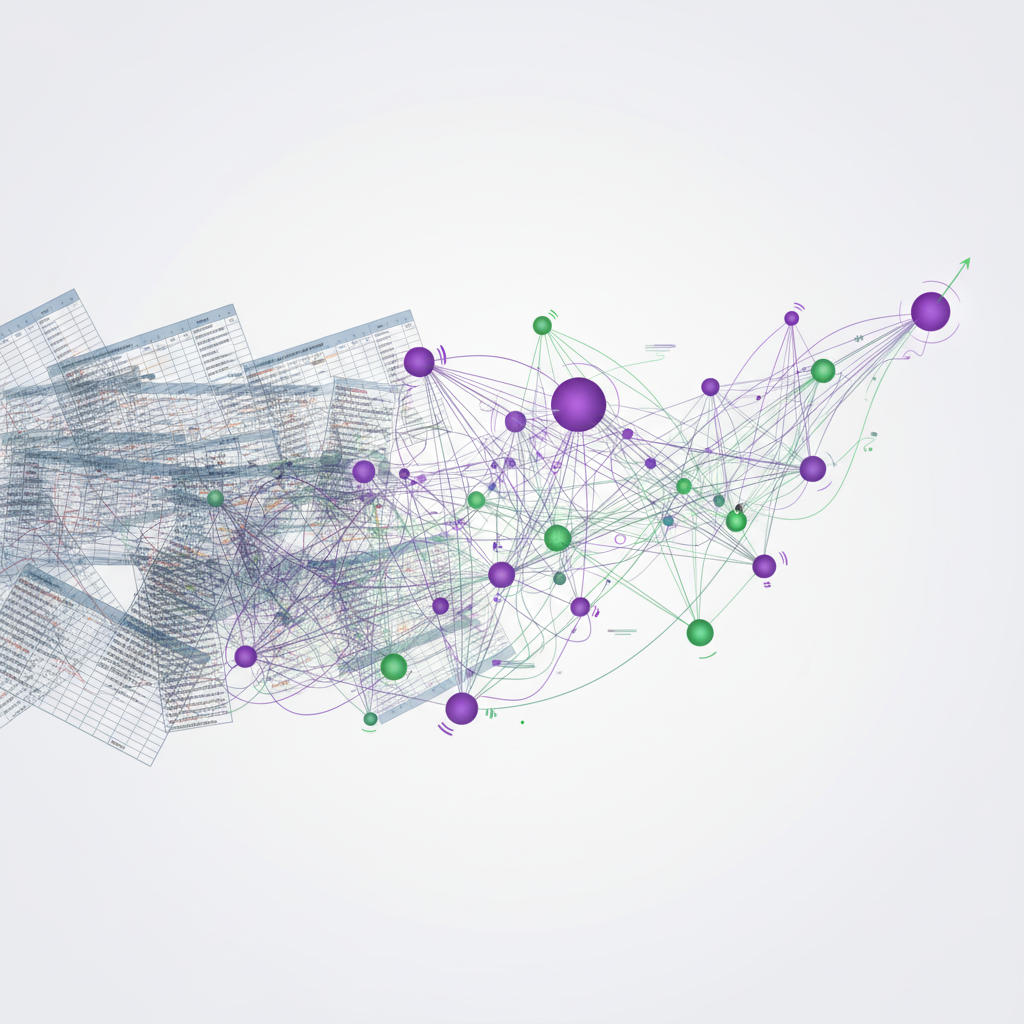
When you upload stakeholder interview transcripts to an AI qualitative tool, the system can identify mentions of other actors, characterize the described relationships, and surface patterns across the full dataset. Instead of manually reading 30 transcripts and trying to remember who said what about whom, you get a systematic extraction of inter-stakeholder dynamics.
For example, in a EU-funded integrated water resource management program covering six municipalities, your interview data might reveal that three municipalities consistently reference the same regional NGO as a trusted mediator, while the national water authority is described in adversarial terms by downstream communities but positively by upstream agricultural actors. This pattern — invisible when reading transcripts one at a time — becomes obvious when AI processes the full dataset simultaneously.
Influence Pattern Detection
Using multi-lens analysis approaches, AI tools can analyze the same interview data through multiple analytical frameworks simultaneously. You can apply a stakeholder influence lens that identifies which actors are most frequently referenced, most often described as decision-makers, and most associated with enabling or blocking project outcomes.
This produces an evidence-based influence map that is grounded in what stakeholders actually said, not in the project team's initial assumptions. The difference matters. In infrastructure projects, the formal organogram rarely matches the actual influence structure. The mid-level official who controls permit approvals may have more practical influence than the director who signs MOUs.
Sectoral Diversification Analysis
Complex projects involve stakeholders from multiple sectors: government (national, regional, local), civil society, private sector, academia, international organizations. AI analysis can segment interview data by sector and identify:
- Cross-sectoral alignment — Where do stakeholders from different sectors express similar concerns or priorities?
- Sectoral blind spots — Which sectors are talking past each other? Where do government stakeholders describe a problem differently than community stakeholders?
- Bridge actors — Which stakeholders are referenced positively across multiple sectors? These are your coalition builders.
In a water management context, sectoral diversification analysis might reveal that environmental regulators and agricultural cooperatives share a concern about data quality in water monitoring, even though they are typically positioned as adversaries on water allocation issues. This convergence point becomes an entry for productive engagement that a static stakeholder register would never surface.
Sentiment and Position Tracking
When you conduct interviews designed for stakeholder analysis, the transcripts contain rich sentiment data. AI tools with sentiment analysis capabilities can track how different stakeholder groups feel about specific project components, policy proposals, or institutional arrangements.
This is particularly valuable for projects with multiple phases. By analyzing interview data from different time points, you can track how stakeholder positions evolve — identifying where support is growing, where opposition is crystallizing, and where engagement strategies need adjustment.
Practical Application: Water Management and Environmental Projects
Water management projects are a perfect case study for AI-powered stakeholder analysis because they involve:
- Multi-level governance — local water utilities, regional basin authorities, national ministries, EU-level policy frameworks
- Cross-sectoral interests — agriculture, industry, municipal services, environment, tourism, energy
- Community dynamics — water user associations, indigenous communities, downstream/upstream tensions
- Technical and political complexity — scientific data about water availability intersects with political decisions about allocation
A consultant conducting a stakeholder equity audit for a river basin management plan might interview 40+ stakeholders across these categories. With conventional methods, the analysis would involve:
- Reading all transcripts (3-5 days)
- Manual coding for stakeholder themes (5-7 days)
- Populating a stakeholder matrix (2-3 days)
- Writing the analysis narrative (3-5 days)
Total: 2-4 weeks of analyst time.
With AI-powered qualitative analysis, the same process compresses dramatically:
- Upload transcripts and configure analysis lenses (1 day)
- Review AI-generated relationship maps and influence patterns (1-2 days)
- Validate and refine findings against your field knowledge (1-2 days)
- Produce the analysis deliverable with evidence citations (1-2 days)
Total: 4-7 days, with deeper and more systematic analysis.
The time savings matter, but the quality improvement matters more. The AI processes every transcript with equal attention. It does not suffer from the cognitive fatigue that causes human analysts to pay less attention to the 25th transcript than the 5th. It catches the passing reference in Interview 31 that connects to a theme from Interview 7.
EU-Funded Programs: Stakeholder Analysis at Scale
EU-funded programs present particular challenges for stakeholder analysis. Framework programs, Horizon Europe projects, and EU cohesion fund initiatives typically involve:
- Multi-country stakeholder landscapes — Stakeholders across 3-10+ member states, each with different institutional structures
- Mandatory stakeholder engagement — EU evaluation frameworks require documented evidence of stakeholder consultation and engagement
- Theory of change linkages — Stakeholder engagement must connect to the project's theory of change and results framework
- Language diversity — Interviews conducted in multiple languages across partner countries
For consultants writing EU project proposals, the ability to budget AI-powered stakeholder analysis tools is a competitive advantage. You can propose more rigorous stakeholder engagement methodologies within the same budget envelope because the analytical efficiency gains offset the tool costs.
During implementation, AI qualitative tools enable the kind of adaptive stakeholder management that EU evaluators increasingly expect. Instead of presenting a static stakeholder map from the inception phase, you can demonstrate how stakeholder dynamics evolved over the project cycle and how your engagement strategy adapted in response. This is the difference between a satisfactory evaluation finding and an excellent one.
From Static Registers to Dynamic Stakeholder Intelligence
The shift from Excel-based stakeholder registers to AI-powered stakeholder intelligence involves three conceptual moves:
1. From Classification to Analysis
Stop trying to classify stakeholders into neat categories and start analyzing what they actually say, think, and do. Use structured and semi-structured interviews as your primary data source, and let AI tools handle the systematic extraction of patterns from that data.
2. From Individual to Relational
Stop mapping stakeholders one by one and start mapping the relationships between them. The network structure of your stakeholder landscape — who influences whom, where coalitions exist, where bridges are needed — is more strategically useful than individual stakeholder profiles.
3. From Snapshot to Longitudinal
Stop treating stakeholder analysis as a one-time inception exercise. Build it into your ongoing monitoring and evaluation practice. Conduct periodic stakeholder pulse checks, analyze the data with AI tools, and track how the landscape evolves. For independent consultants managing multiple engagements, this longitudinal capability transforms stakeholder analysis from a project cost into a strategic asset.
When to Supplement with Synthetic Data
There are situations where you cannot interview all relevant stakeholders directly. Budget constraints, access limitations, security concerns, or stakeholder fatigue from over-consultation may prevent comprehensive primary data collection. In these cases, synthetic participants can supplement your stakeholder analysis — but this requires careful methodological framing and should complement, not replace, real stakeholder voices.
Similarly, in environmental and water management research, there are contexts where community stakeholders are difficult to reach at scale. AI tools that support voice-based data collection and multilingual analysis can help expand reach without compromising data quality.
Building Your AI-Powered Stakeholder Analysis Workflow
Here is a practical workflow for consultants ready to move beyond Excel registers:
Phase 1: Design
- Define your stakeholder universe using existing project documents and preliminary scoping
- Design your interview guide with questions that elicit relationship data, not just individual positions
- Include questions like: "Which organizations do you work most closely with on this issue?" and "Who do you see as the most influential actor in this space?"
- Set up your AI qualitative analysis platform with appropriate data handling for GDPR compliance if working with EU stakeholders
Phase 2: Collect
- Conduct semi-structured interviews across your stakeholder categories
- Ensure sectoral diversity: government, civil society, private sector, academia, community
- Record and transcribe with informed consent
- Upload transcripts to your analysis platform as batches become available
Phase 3: Analyze
- Configure analysis lenses for stakeholder dynamics: influence patterns, relationship mapping, sectoral perspectives, sentiment tracking
- Run initial analysis and review AI-generated findings
- Identify surprising patterns — the value of AI analysis is in surfacing what you did not expect, not confirming what you already knew
- Cross-reference AI findings with your field observations and contextual knowledge
Phase 4: Synthesize and Act
- Produce a dynamic stakeholder map grounded in evidence from primary data
- Develop engagement strategies that target specific relationship dynamics, not just individual stakeholders
- Identify coalition opportunities and conflict risks with citations to supporting evidence
- Build the findings into your project's adaptive management framework
The Bottom Line
Stakeholder engagement is too important to be managed with spreadsheets. The complexity of modern development, infrastructure, and environmental projects demands analytical tools that match the complexity of the stakeholder landscapes they operate in.
AI-powered qualitative analysis does not replace the consultant's expertise, field knowledge, or relational judgment. What it does is process the qualitative data that consultants already collect with a rigor and systematicity that manual methods cannot achieve at scale. The result is stakeholder intelligence that is grounded in evidence, updated as new data arrives, and actionable for project decision-making.
If you are still managing stakeholders in Excel, you are leaving intelligence on the table.
Ready to transform your stakeholder analysis? Explore how Qualz.ai helps consultants move from static registers to dynamic stakeholder intelligence — with AI-powered analysis of interview data, GDPR-compliant data handling, and frameworks designed for complex multi-stakeholder environments.