The Finding Everyone Agreed On, That No One Said
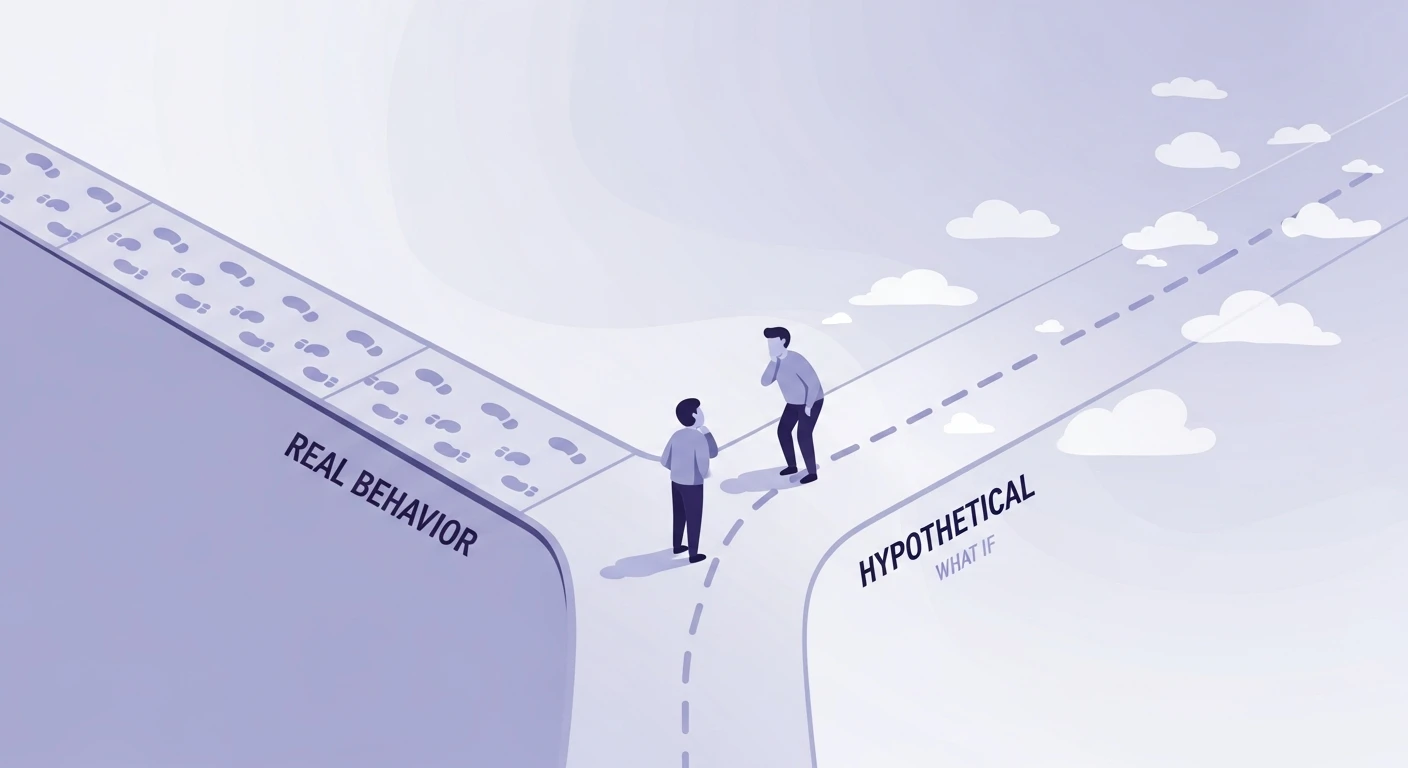
The summary was crisp: "Participants consistently found the onboarding flow confusing and wanted clearer guidance." A product manager read it, nodded, and greenlit a redesign. But when a researcher went back to the transcripts, the picture fell apart. Two participants breezed through onboarding and complained it was patronizing. Three never mentioned confusion at all -- they got stuck later, at a step the summary never surfaced. One said the flow was fine but the copy felt untrustworthy. The "consistent" finding was an average of contradictory experiences, and the redesign it authorized solved a problem that only some users had while ignoring the one more of them actually hit.
This is consensus manufacturing, and it is the most seductive failure mode in AI-assisted qualitative analysis. The summary was not wrong in any quotable sentence. It was wrong in its shape -- it reported agreement where there was a spread, and that shape is exactly what drives decisions.
Why Language Models Are Built to Erase Disagreement
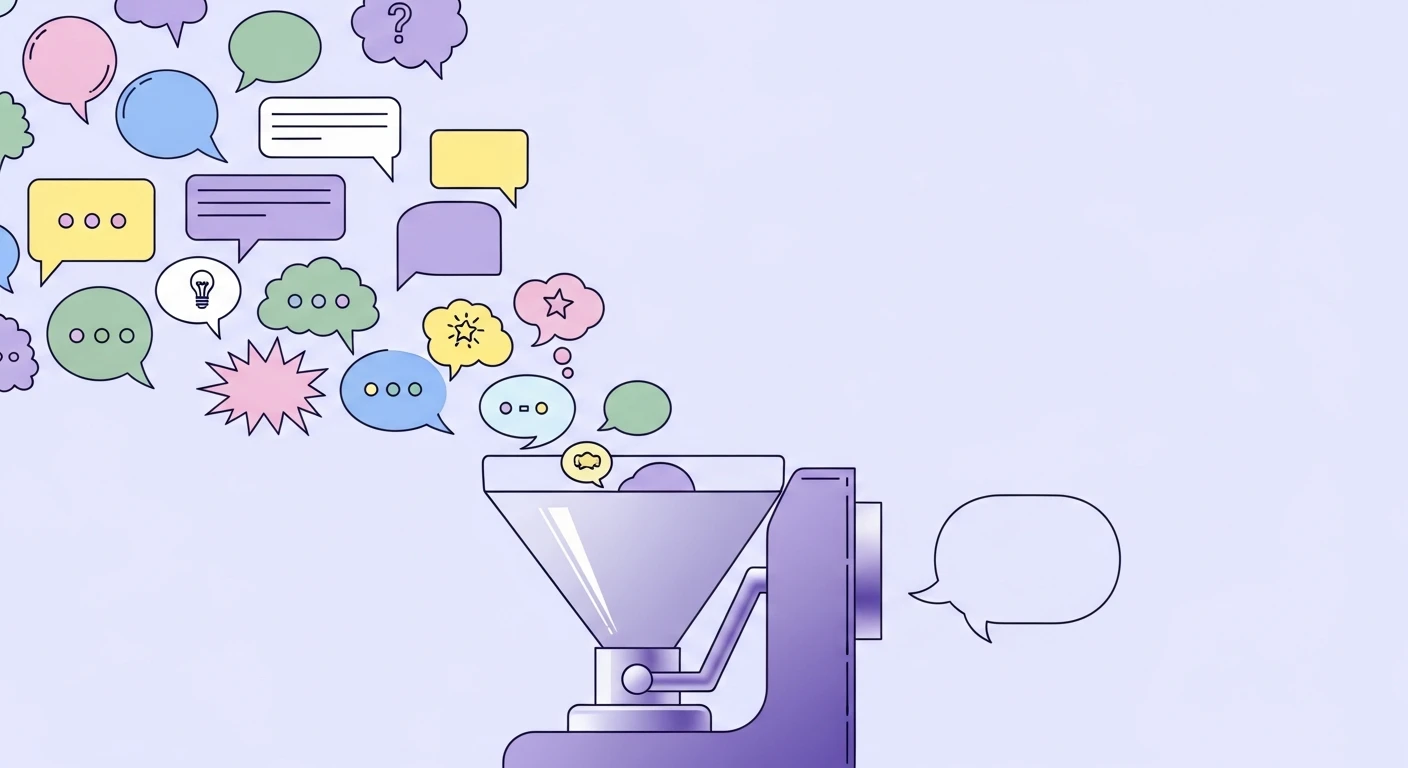
Large language models are trained to produce coherent, fluent prose. Coherence is the enemy of accurate qualitative reporting, because real interview data is incoherent by nature: people contradict each other, contradict themselves, and describe the same feature in incompatible terms. A model asked to summarize that mess does what it was optimized to do -- it resolves the tension into a smooth narrative. Dissent reads as noise to a system tuned for consensus, so it gets averaged away.
This compounds a problem we have written about before: AI interview summaries confabulate coherence that was never in your data. Consensus manufacturing is confabulation's quieter cousin. Confabulation invents a claim; consensus manufacturing inflates the agreement behind a real one. The second is harder to catch because every underlying quote is genuine -- it is the aggregation that lies.
It is also a machine version of a human failure mode. The counting trap in qualitative analysis, where theme frequency masquerades as theme importance, is the same instinct: collapse variation into a single number or a single sentence and call it a finding. The model just does it faster, more fluently, and with more authority than a junior analyst ever could.
The Ambivalence That Gets Flattened
The participants most damaged by consensus manufacturing are the ambivalent ones -- the users who felt two ways about something at once. A single participant saying "I love how fast it is but I never trust that it saved my work" carries a genuine product tension. Summarization splits that into "users appreciate the speed" under one theme and drops the trust anxiety entirely, because it did not cluster with anything. This is the same collapse we described in the sentiment flattening problem, where AI emotion detection turns ambivalence into false clarity. The richest signal in qualitative work lives in the contradictions, and contradictions are precisely what a coherence-seeking model discards.
Why Manufactured Consensus Is Worse Than a Missed Insight
A missed insight is a gap. Manufactured consensus is a false positive with a confidence score attached, and false positives are more expensive because they get acted on. When a summary says participants "consistently" wanted something, it does more than report -- it manufactures organizational certainty. Stakeholders stop asking questions. The availability cascade in stakeholder debriefs, where the first insight shared becomes the one everyone remembers, accelerates when the AI hands the team a ready-made consensus to rally around. Nobody argues with a finding that sounds settled.
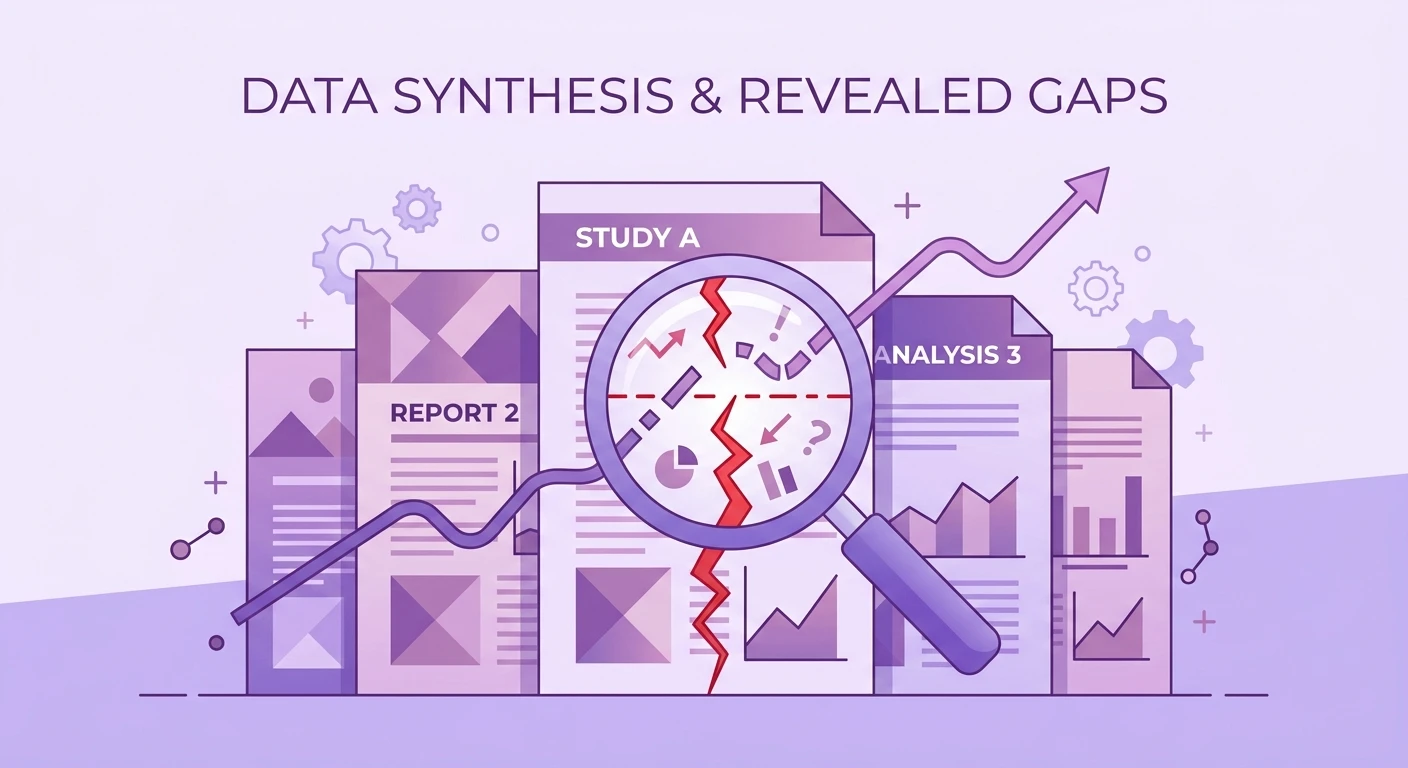
The deeper damage is to negative cases. The participants who contradicted the emerging theme are, methodologically, your most valuable data -- negative case analysis is where qualitative rigor actually lives. A summarizer optimized for consensus is a machine for deleting negative cases. It systematically removes the one class of evidence that would have told you your theme was incomplete.
How to Make Dissent Survive Synthesis
Require distributions, not verdicts
Stop asking the model "what did participants think?" and start asking "how did participant views distribute?" A finding should report the spread: how many held each position, who the outliers were, and what the strongest counter-evidence was. A summary that cannot name a dissenter has not analyzed your data -- it has averaged it.
Preserve the contradiction explicitly
Build a step into synthesis that surfaces disagreement as a first-class output, not a footnote. Ask specifically: which participants contradicted this theme, and what did they say? This mirrors the discipline of detecting contradictions across qualitative interviews -- the contradictions are the analysis, not the residue.
Keep claims traceable to source
Every consensus claim should link back to the specific participants and quotes that support it, and just as importantly to the ones that don't. This is fundamentally an engineering discipline: the same reason production AI systems need audit trails and explainability so any output can be traced to its inputs. A qualitative finding without a traceable evidence chain is an assertion, and assertions do not survive scrutiny.
Constrain the model's output shape
Do not let the model narrate freely. Force it into a structure that has explicit slots for majority view, minority view, and unresolved tension -- the qualitative equivalent of structured output engineering for production LLMs. When the schema demands a dissent field, the model cannot quietly delete disagreement to make the prose flow.
The Researcher's Job Is to Protect the Spread
AI summarization is genuinely useful for volume -- it can process more transcripts than any human analyst has time for. But its native instinct runs opposite to the purpose of qualitative research. Qual exists to surface the range of human experience; summarization exists to compress it. When you hand synthesis to a model without guardrails, you are asking a compression algorithm to preserve the very variation it was built to remove.
The fix is not to abandon AI synthesis. It is to change what you ask it for. Stop requesting consensus and start requesting the distribution of disagreement. The moment your summaries report how participants differed rather than how they agreed, you have turned a consensus-manufacturing machine back into a research tool.
Want to see how Qualz.ai preserves dissent and traces every claim to its source instead of flattening your interviews into false agreement? Book a demo and bring your messiest, most contradictory study.