The Chunking Reality
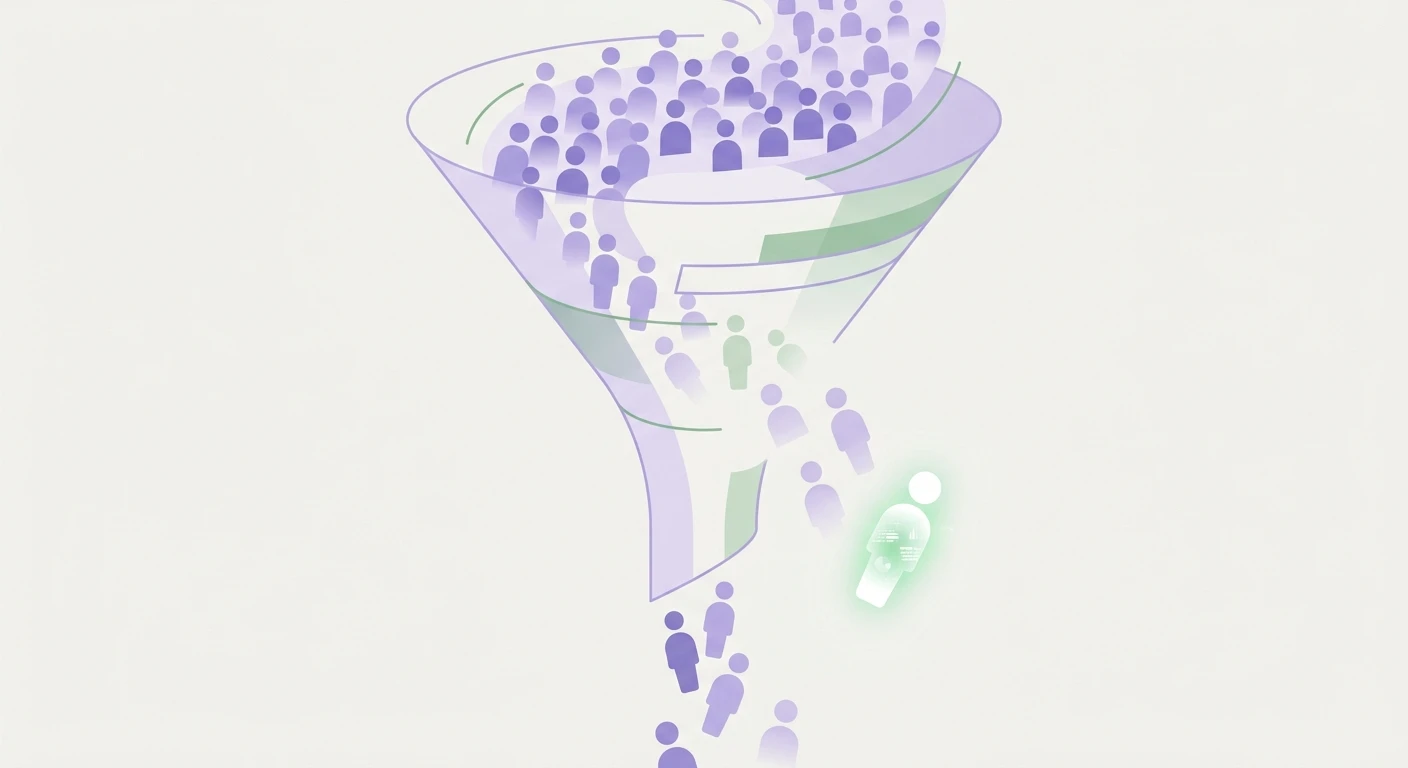
Every AI-powered qualitative analysis tool faces the same constraint: language models have finite context windows. A 60-minute interview transcript runs 8,000-12,000 words -- often exceeding what a model can process in a single pass. The engineering solution is chunking: splitting the transcript into segments, analyzing each independently, then synthesizing results.
This solution works for document types where meaning is locally contained. Technical documentation, FAQs, product descriptions -- these can be chunked without significant information loss because each section is relatively self-contained.
Interviews are fundamentally different. Conversational meaning is distributed across the entire interaction. A participant's statement in minute 42 only makes sense in light of what they said in minute 7. An emotional shift in the final third of the interview recontextualizes everything that came before. The moderator's probe in one segment is a response to something said three segments ago.
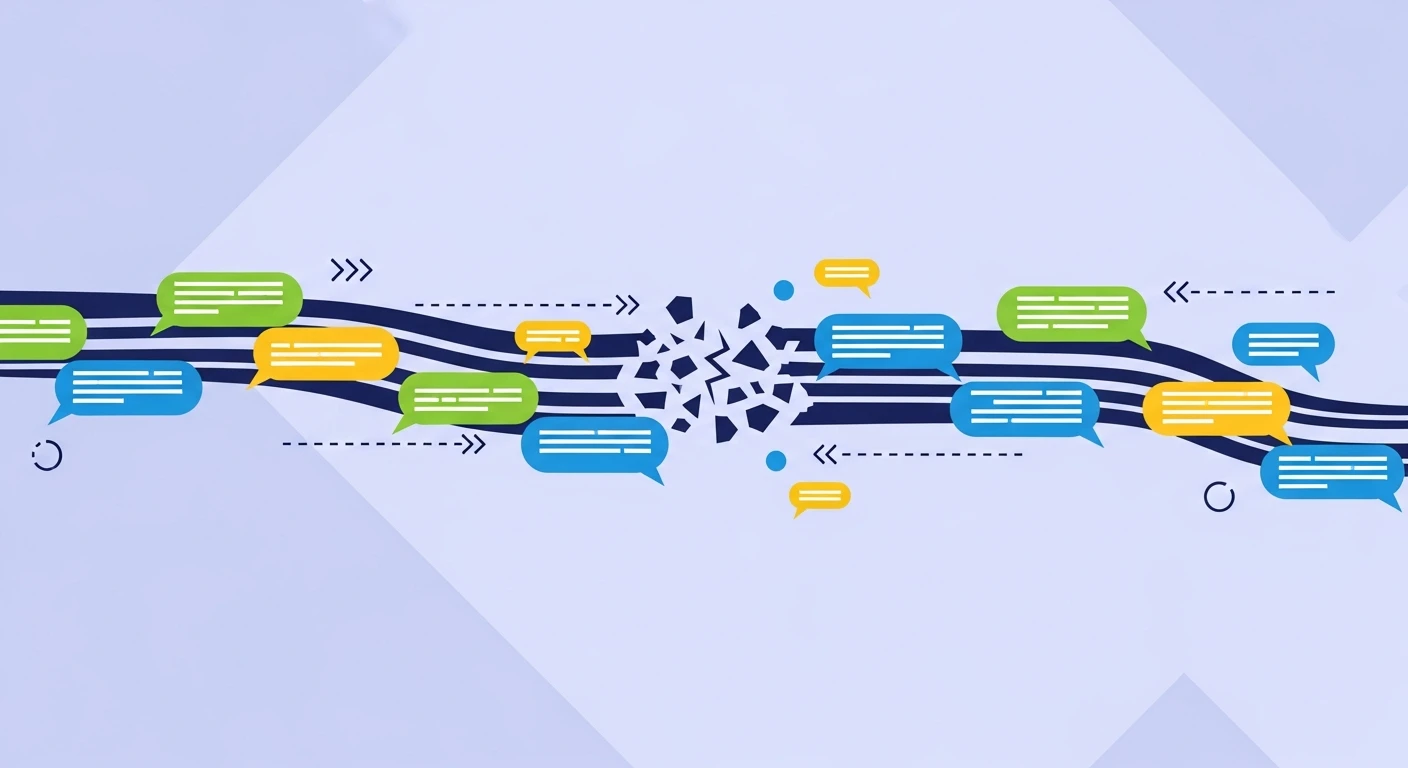
When AI tools chunk transcripts, they do not merely lose efficiency -- they lose the structural properties that make interviews analytically valuable. They transform relational data into isolated fragments, then find patterns in the fragments that may not exist in the whole.
What Gets Lost in the Seams
Backward References and Anaphora
Conversations are riddled with references to earlier statements: "Like I said before," "Going back to that thing about the onboarding," "That is exactly what I meant earlier." These backward references create meaning chains that span the entire interview. When chunking splits the reference from its referent, the AI encounters a statement whose meaning depends on context it cannot see.
The result is not an error message -- it is a confident but wrong interpretation. The AI assigns meaning to the orphaned reference based on local context alone, potentially coding it under a theme that contradicts the participant's actual intent.
Emotional Arcs
Participant affect builds across an interview. Someone who begins cautious may become increasingly candid as rapport deepens. Someone who starts positive may gradually reveal frustration as the conversation creates safety. These arcs are analytically significant -- they reveal what participants feel comfortable saying early versus what requires trust to disclose.
Chunked analysis treats each segment's emotional tone independently. It cannot see that cautious language in chunk 1 and candid language in chunk 4 represent a trust arc rather than contradictory data points. It cannot distinguish between a participant who is consistently frustrated and one whose frustration only emerges after careful rapport-building -- a distinction that matters enormously for interpretation.
Conversational Implicature
Much of what participants communicate is implied rather than stated. "I guess it works fine" in one context means satisfaction; in another context -- following a litany of complaints -- it means resigned acceptance. The implicature depends on conversational history that chunking severs.
This is particularly damaging for detecting what participants are NOT saying. The silence problem in user interviews -- where what is unsaid matters more than what is said -- becomes invisible to chunked analysis because silence is relational. A topic's absence only signifies against the backdrop of what IS discussed, and that backdrop spans the entire conversation.
Moderator-Participant Dynamics
The relationship between interviewer and participant evolves across the session. The moderator adjusts their approach based on accumulated understanding of the participant's communication style, sensitivity areas, and expertise level. These adjustments are analytical data -- they reveal what the experienced moderator noticed about the participant.
Chunked analysis loses this meta-layer entirely. It sees moderator questions as independent stimuli rather than as responsive adaptations informed by everything that preceded them. The moderator's decision to probe deeply on one topic and move quickly past another is itself data about where meaning concentrates -- data that chunking destroys.
The Synthesis Illusion
Most AI tools address chunking by adding a synthesis step: analyze chunks independently, then pass chunk-level findings to a final summarization prompt. This creates the appearance of holistic analysis while preserving the fragmentation problem.
The synthesis step can combine themes found across chunks, but it cannot recover relationships that were never detected because the relevant information was split across boundaries. If a participant's sarcasm in chunk 3 recontextualizes their apparent agreement in chunk 1, no synthesis step will catch this -- because the sarcasm was coded as a standalone observation rather than as a modifier of earlier statements.
This is analogous to how methodological transparency in AI-assisted research requires disclosure of analytical limitations. Teams using chunked analysis should understand that their tool's "comprehensive analysis" is actually a synthesis of fragmented observations -- not a holistic reading of the conversation as a unit.
Strategies for Researchers
Pre-Chunking Annotation
Before submitting transcripts to AI analysis, annotate cross-references manually:
- Mark backward references with their referent: "[refers to statement at 7:23 about onboarding confusion]"
- Flag emotional arc markers: "[tone shift: moving from guarded to candid]"
- Note conversational context for ambiguous statements: "[said immediately after discussing competitor frustration]"
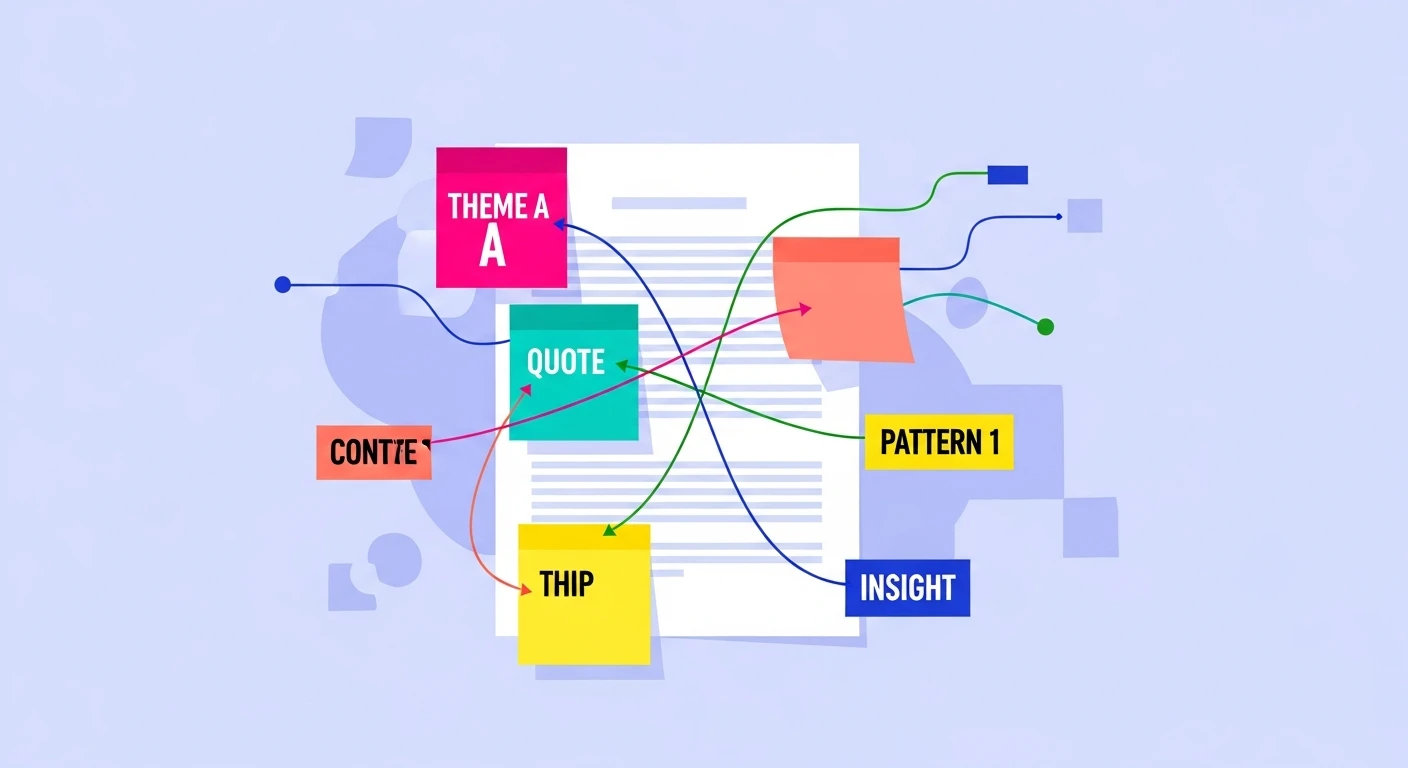
This annotation preserves relational information that survives chunking. The AI encounters not just the statement but its conversational context, encoded as metadata.
Overlap Chunking
Instead of clean cuts between chunks, use substantial overlap -- 30-50% of each chunk should repeat content from adjacent chunks. This ensures that most cross-chunk relationships are preserved in at least one chunk's analysis. The redundancy costs more tokens but dramatically reduces severed connections.
Hierarchical Analysis
Run analysis at multiple levels:
- Full-transcript summary (even if truncated) for global themes and arcs
- Large-chunk analysis (3-4 chunks per interview) for section-level patterns
- Fine-grained analysis for specific coding
Reconcile findings across levels. When fine-grained analysis contradicts full-transcript summary, investigate the discrepancy -- it often reveals a chunking artifact rather than genuine analytical complexity.
Human-AI Division of Labor
Reserve relational analysis for human researchers and delegate extractive analysis to AI:
- AI excels at: identifying mentioned features, extracting stated preferences, counting topic occurrences, flagging emotional language
- Humans excel at: reading conversational dynamics, detecting implicature, understanding backward references, interpreting tone shifts
This division leverages AI's throughput for tasks unaffected by chunking while preserving human judgment for tasks that require holistic reading. The principle mirrors how context engineering in AI-driven development requires careful architectural decisions about what context to include and what to summarize.
The Validation Imperative
Teams using AI-assisted analysis should validate chunking effects by periodically comparing:
- AI analysis of a chunked transcript vs. human analysis of the same transcript read holistically
- Themes identified in chunked analysis vs. themes identified when the full transcript fits within context
- Cross-chunk relationship detection: how many inter-segment references does the AI correctly identify vs. miss?
This validation reveals the specific information types your particular tool loses to chunking -- allowing you to compensate with targeted human review rather than wholesale distrust of AI analysis.
The parallel to AI audit trails in enterprise systems is direct: just as production AI systems require explainability about how decisions were reached, research AI tools require transparency about how analytical conclusions were derived from fragmented inputs. Without this audit trail, teams cannot assess the reliability of AI-generated themes.
The Architecture Trade-Off
As context windows expand -- from 4K to 128K to 1M+ tokens -- the chunking problem diminishes for individual interviews. But it resurfaces at the corpus level: analyzing 30 interviews simultaneously still exceeds any context window, requiring chunking at the study level rather than the transcript level.
The fundamental insight remains: any time AI analysis splits connected information into disconnected segments, relational meaning is at risk. Researchers should understand where their tool's boundaries fall, what information crosses those boundaries, and what analytical questions depend on cross-boundary relationships.
Practical Takeaways
- Understand your tool's chunking strategy. Ask vendors how they segment transcripts and what context is preserved across boundaries.
- Pre-annotate relational information before AI analysis: backward references, emotional arcs, and contextual dependencies.
- Use overlap chunking (30-50% overlap) to preserve cross-boundary relationships at the cost of higher token usage.
- Validate AI findings against human holistic reading for a sample of transcripts to identify systematic chunking artifacts.
- Reserve relational analysis for humans -- conversational dynamics, implicature, and tone arcs require holistic reading that chunked AI cannot provide.
- Disclose chunking limitations in research methodology sections. Your stakeholders deserve to know how the analysis was produced.
- Do not treat AI synthesis of chunks as equivalent to holistic analysis. It is a different analytical operation with different strengths and blind spots.
The context window problem is not a temporary limitation that bigger models will solve. It is a fundamental tension between computational architecture and conversational structure. Interviews distribute meaning relationally; AI processes meaning segmentally. Understanding this mismatch is the first step toward managing it rather than being invisibly degraded by it.