The Bottleneck Nobody Talks About
Healthcare market research operates under constraints that would paralyze most industries. A pharmaceutical company evaluating a vaccine candidate has a regulatory submission window measured in weeks, not quarters. A health system redesigning its patient intake process needs to understand dozens of patient journeys before the board meets next month. An advisory board of twelve KOLs gave you ninety minutes each, and the commercial team needs the synthesis by Friday.
In every one of these scenarios, the data collection happens fast. Recruitment is tight but manageable. The interviews get done. And then everything stops.
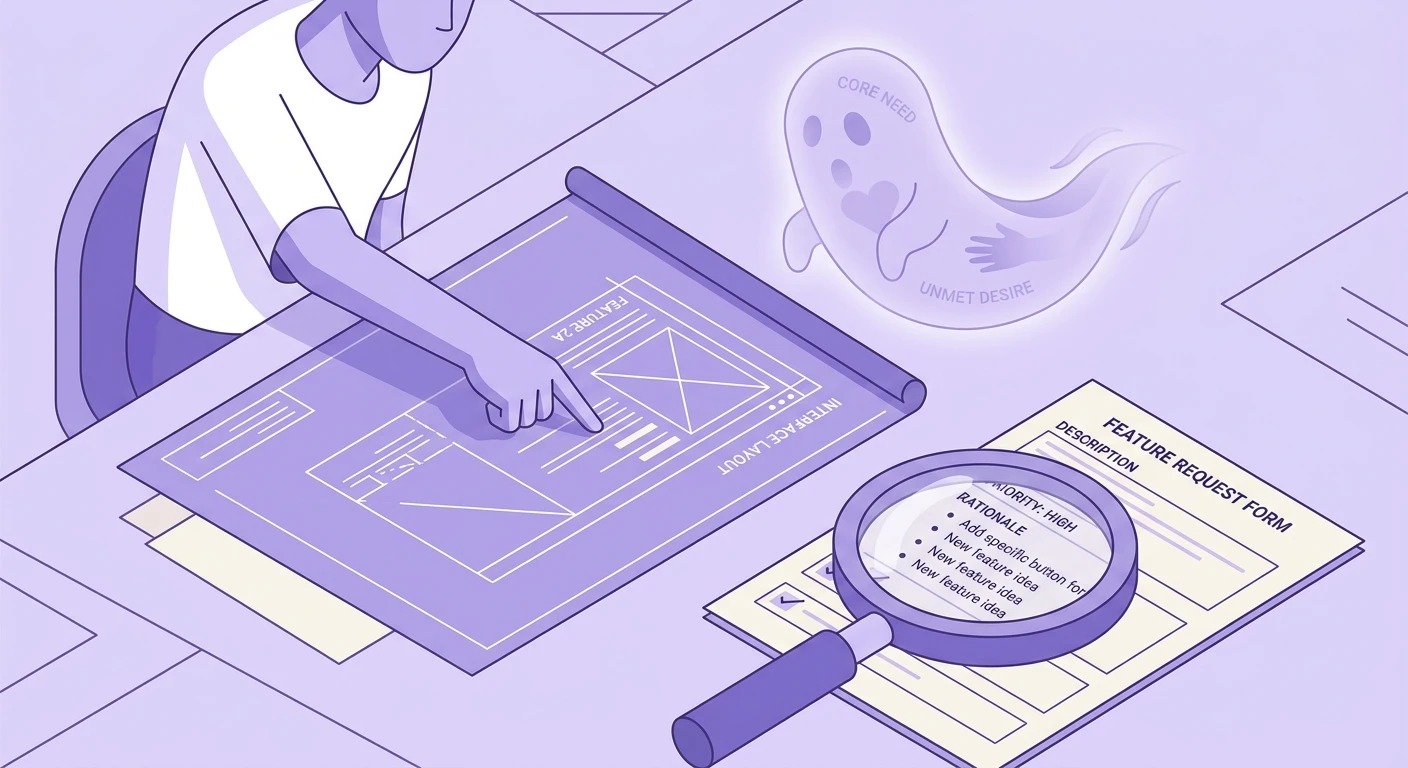
The analysis phase -- manual transcript review, codebook development, iterative coding, theme synthesis, slide deck creation, internal review, revision -- is where healthcare qualitative research dies a slow death. Not because the researchers are slow. Because the methodology was designed for a world where a six-week turnaround was acceptable. That world no longer exists in healthcare.
Why Healthcare Is Different
Every industry claims its research timelines are compressed. Healthcare actually is different, and the reasons matter for understanding why AI-powered analysis is not optional here but inevitable.
First, regulatory timelines are immovable. When an FDA advisory committee meeting is scheduled, the qualitative insights that inform your positioning strategy need to be ready weeks before, not days after. Miss that window and the research is not late -- it is irrelevant. No amount of rigor compensates for insights that arrive after the decision has been made, a reality well documented in research on how findings lose value over time.
Second, competitive intelligence in pharma is uniquely time-sensitive. When a competitor announces Phase III results, the window for adjusting your messaging, repositioning your asset, or revising your launch strategy is narrow. Qualitative research with prescribers and payers can inform those adjustments -- but only if the analysis keeps pace with the news cycle.
Third, patient safety adds stakes that pure commercial research does not carry. When qualitative research with patients reveals confusion about dosing instructions, adherence barriers, or unreported side effects, that information needs to reach decision-makers immediately. A manual analysis pipeline that surfaces critical safety signals three weeks after they were spoken in an interview is not just slow. It is a failure of the research system.
Fourth, healthcare qualitative samples are expensive and hard to assemble. When you have secured ninety minutes with a KOL who charges $500 per hour for consulting time, every minute of that interview carries more analytical weight than a typical consumer depth interview. The analysis needs to extract every signal, not just the ones a fatigued analyst catches on the third transcript review at 11 PM.
What the Traditional Pipeline Actually Costs
Let us be honest about what manual qualitative analysis costs in healthcare research, beyond just analyst hours.
A typical healthcare qual project -- say, twenty in-depth interviews with oncologists about treatment sequencing -- follows a predictable path. Fieldwork takes two to three weeks. Transcription takes three to five business days. A senior researcher builds the codebook over two days, iterates on it after reviewing the first five transcripts, and then the team codes all twenty transcripts over a week. Synthesis takes another week. The deck goes through internal review, comes back with comments, gets revised, and is finally presented to the client three to five weeks after the last interview.
During those three to five weeks, the research team cannot answer the client's most basic questions. "What are we hearing about tolerability?" "Is there a split between community and academic oncologists?" "Should we be worried about the payer feedback?" The analysts know the answers -- they are living inside the data -- but they cannot articulate them in a structured, defensible way until the formal analysis is complete.
This is the hidden cost: not just the calendar time, but the decision vacuum it creates. Stakeholders who need qualitative insight to make choices are flying blind while the analysis grinds through its sequential process. And when they make those decisions without the research -- which they inevitably do -- the research team becomes a documentation function rather than a strategic input.
How AI Analysis Changes the Calculus
AI-powered qualitative analysis does not eliminate the researcher. It eliminates the bottleneck between data collection and actionable insight.
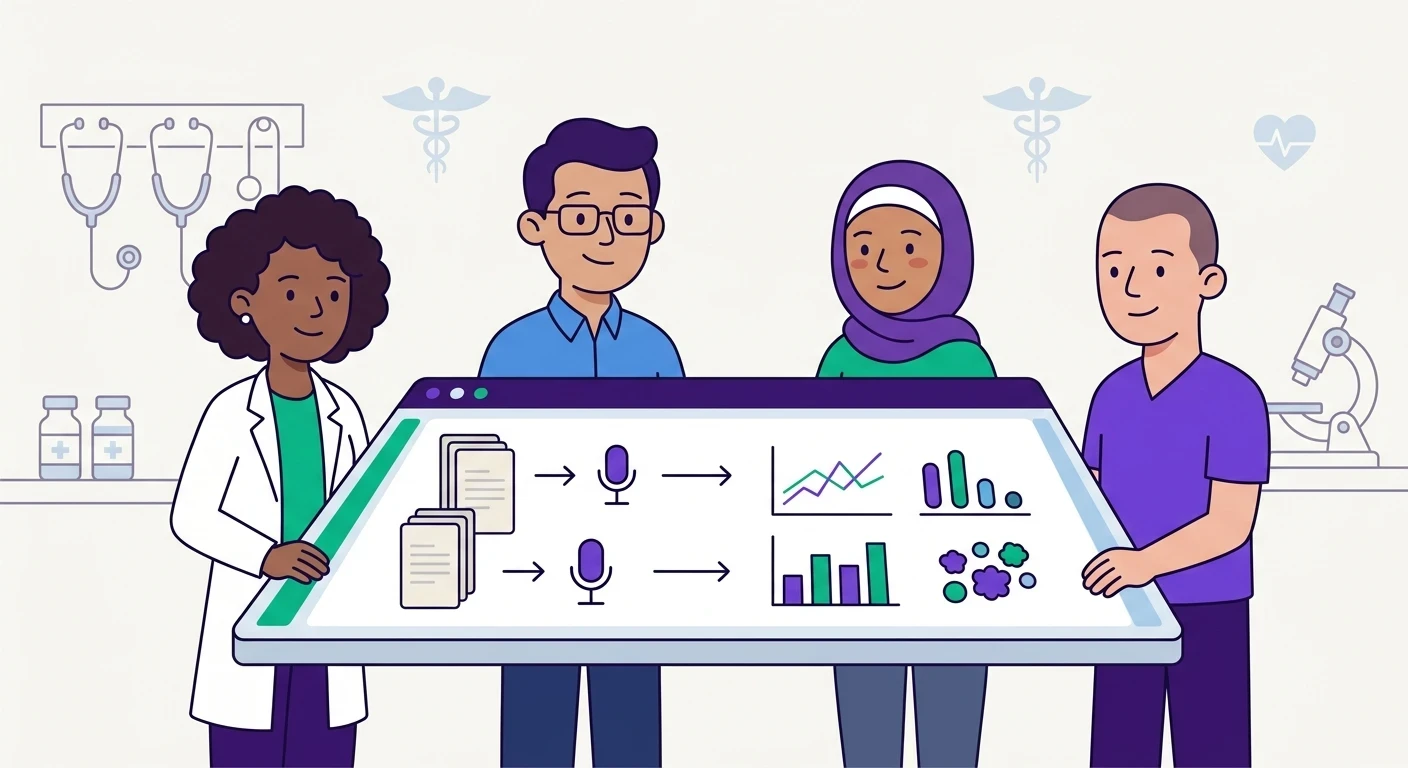
Here is what changes concretely. Transcripts are analyzed as they arrive, not after fieldwork concludes. By the time you finish interview fifteen, you already have a thematic structure built from interviews one through fourteen. You can see which themes are saturating and which are still emerging. You can adjust your discussion guide for the remaining interviews based on actual gaps in the data rather than hunches.
This is not a minor workflow improvement. It fundamentally changes the relationship between fieldwork and analysis from sequential to parallel. The implications for speed without sacrificing rigor are substantial -- you are not cutting corners, you are removing wait states.
Codebook development, which traditionally requires a senior researcher to read multiple transcripts before establishing a framework, happens inductively from the first transcript. The AI identifies candidate themes, which the researcher reviews, adjusts, and approves. By the fifth transcript, you have a working codebook that would have taken a manual process until transcript ten or twelve to develop.
Cross-transcript pattern recognition -- the most cognitively demanding part of qualitative analysis -- scales without degradation. A human analyst reviewing the twentieth transcript is less sharp than they were reviewing the fifth. They are anchored to early impressions, fatigued by repetition, and more likely to miss subtle contradictions. AI-powered analysis applies the same attention to transcript twenty as to transcript one. It catches the oncologist in interview seventeen who contradicts the consensus view from interviews three through sixteen -- the kind of finding that contradiction detection is specifically designed to surface.
Vaccine Research and the Speed Imperative
Nowhere is the time pressure more acute than in vaccine research. The COVID-19 pandemic proved that the traditional qualitative research timeline is incompatible with pandemic-speed decision-making, but the lesson applies to routine vaccine programs as well.
Consider a scenario that plays out regularly: a research firm is commissioned to conduct qualitative research with healthcare providers about a new vaccine -- barriers to recommendation, messaging effectiveness, clinical concerns, practice integration issues. Twenty interviews with pediatricians, family practitioners, and pharmacists. The client needs findings to inform a go/no-go decision on a messaging campaign that has a media buy deadline in three weeks.
Under the traditional model, this project is impossible to complete in time. Under an AI-powered analysis model, the first thematic read is available within hours of the first interview batch. By mid-fieldwork, the research team can provide a preliminary briefing that identifies the major themes with confidence intervals -- which findings are stable across participants and which are still evolving.
This does not mean cutting the research short. It means the analysis is ready when the fieldwork ends, not weeks after. The client gets rigorous findings on a timeline that aligns with actual business decisions.
Patient Experience Programs at Scale
Health systems investing in patient experience programs face a different version of the same problem. They are collecting qualitative data at a scale that manual analysis cannot absorb -- patient interviews, focus groups, journey mapping sessions, caregiver feedback, community health assessments.
The result is a familiar pathology: data collection outpaces analysis, insights are extracted from a subsample rather than the full dataset, and the patient experience team becomes a bottleneck rather than a catalyst. Research on patient-reported outcomes and AI-driven interviews shows that AI analysis allows these programs to process the full volume of qualitative data without sacrificing the depth that makes qualitative research valuable in the first place.
When a health system can analyze every patient interview rather than sampling one in five, the resulting insights carry different weight in executive discussions. Going beyond CAHPS scores to build true patient intelligence requires this kind of comprehensive analysis, and doing that comprehensively requires moving past manual processing.
Compliance and the Documentation Advantage
Healthcare qualitative research carries documentation requirements that other industries do not face. IRB protocols, adverse event reporting, HIPAA-compliant data handling, and audit trails all add overhead to the analysis process.
AI-powered analysis platforms provide a structural advantage here because the analytical process is inherently documented. Every coding decision, every theme assignment, every data point linked to a finding is tracked and retrievable. When an auditor asks how a particular conclusion was reached, the answer is not "our senior analyst's judgment" -- it is a traceable chain from raw transcript to coded excerpt to theme to finding.
This is not about replacing human judgment. The researcher still makes the interpretive decisions. But those decisions are recorded in a system that supports the compliance requirements healthcare research demands.
Regulatory Advisory Boards
Advisory boards with key opinion leaders represent some of the highest-value qualitative data a pharmaceutical company collects. Twelve to fifteen experts spending ninety minutes each discussing a therapeutic area, clinical data package, or market access strategy generates a dense, nuanced dataset.
The traditional approach -- record the sessions, transcribe them, and have a team manually synthesize findings over two weeks -- squanders the urgency that advisory boards create. The commercial team walked out of that room with strong impressions about what the KOLs said. If the formal analysis takes two weeks to confirm, qualify, or challenge those impressions, the informal impressions will drive decisions instead.
AI-powered analysis delivers a structured synthesis within hours, not weeks. Not a summary -- a rigorous thematic analysis that captures the full range of KOL perspectives, identifies where consensus exists and where opinions diverge, and presents findings in a format ready for stakeholder consumption. Voice of customer analysis powered by AI applied to KOL advisory boards turns ninety minutes of expert discussion into immediately actionable strategic input.
The Transition Is Not Optional
The firms that have moved to AI-powered qualitative analysis in healthcare are not doing it because it is trendy. They are doing it because the alternative -- telling a pharmaceutical client that qualitative findings will be ready three weeks after the regulatory submission deadline -- is no longer a viable business proposition.
The transition requires researchers to develop new skills: designing analytical frameworks rather than executing them manually, quality-checking AI-generated codes rather than creating every code themselves, interpreting patterns at scale rather than building patterns from individual transcripts. These are higher-order research skills, not lesser ones.
Healthcare market research will continue to demand the depth, nuance, and interpretive sophistication that qualitative methods provide. What it will no longer tolerate is an analysis pipeline designed for a tempo that healthcare decisions left behind years ago.
If your team is still treating qualitative analysis as a sequential, post-fieldwork activity, the question is not whether to adopt AI-powered analysis. The question is how many decision windows you are willing to miss before you do.
Book a session to see how Qualz.ai handles healthcare qualitative analysis