The Report Problem
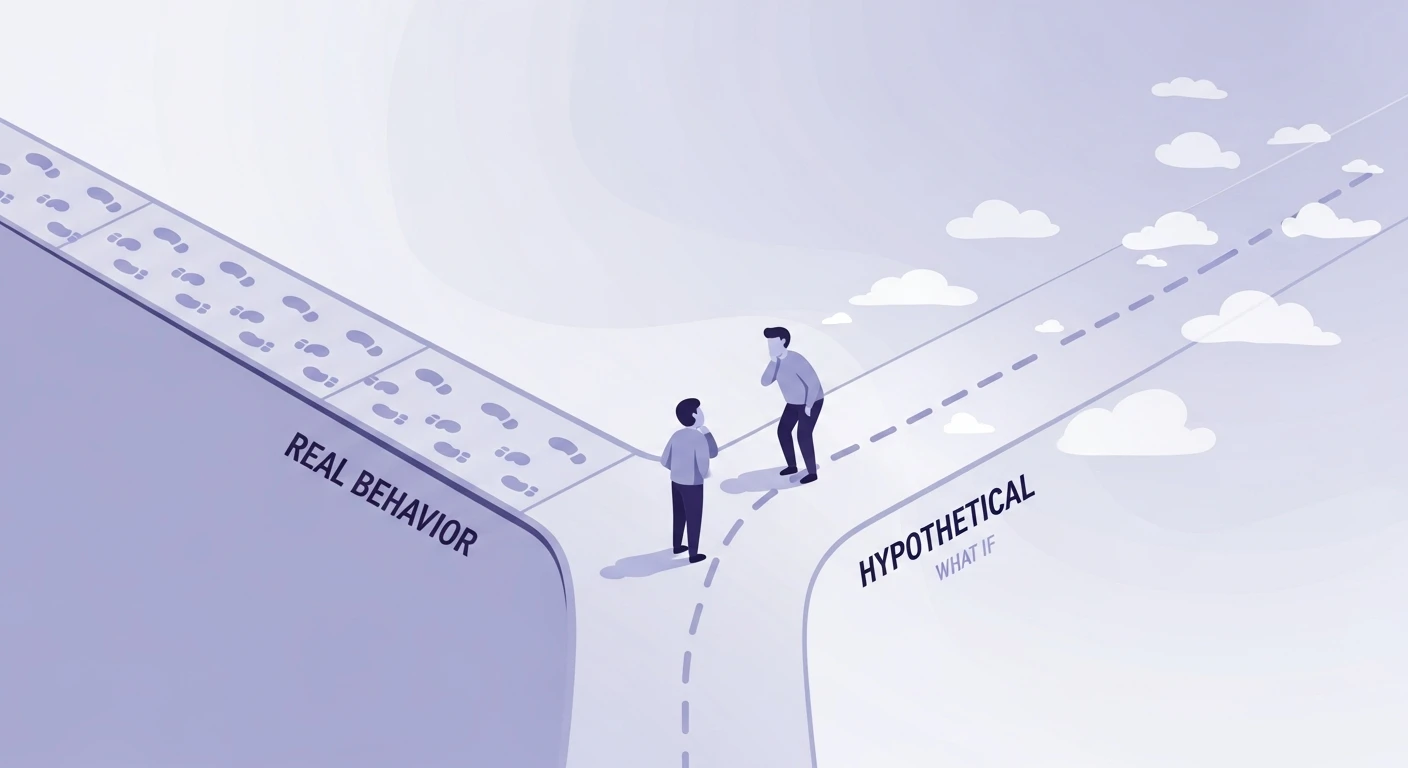
Research reports are necessary but fundamentally limited as persuasion tools. A well-written report distills hours of conversation into neat themes, sanitizes emotional complexity into bullet points, and presents findings with the clarity of hindsight. It is useful for documentation. It is terrible for creating the visceral understanding that drives organizational change.
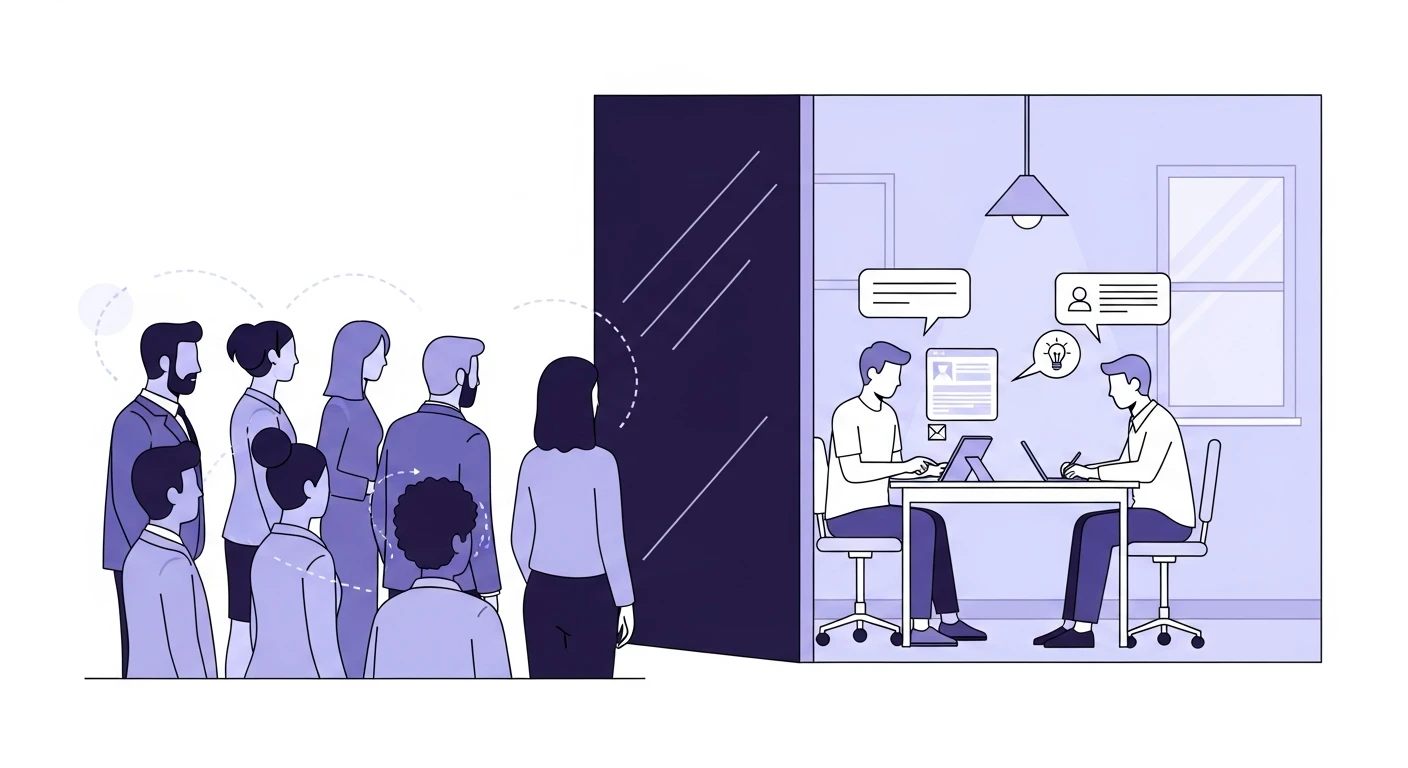
The most impactful research programs share a common characteristic: they get stakeholders out of their inboxes and into contact with actual user experience. Not through carefully curated highlight reels, but through real-time observation of research sessions where the messiness, contradiction, and humanity of user behavior is impossible to ignore.
Why Observation Outperforms Documentation
Emotional weight cannot be transcribed. When a participant struggles with a workflow, their frustration registers differently in person than in a quote pulled from a transcript. Stakeholders who observe a user repeatedly failing at what the team assumed was intuitive carry that memory into every subsequent product conversation. This visceral impact is why the sensemaking gap between research and shared understanding persists when teams rely solely on written deliverables.
Observation prevents cherry-picking. A report presents curated findings. An observation session presents everything -- the pauses, the workarounds, the moments of confusion that precede recovery, the offhand comments that reveal deeper mental models. Stakeholders who observe cannot dismiss findings as "researcher interpretation" because they witnessed the raw data themselves.
Shared experience creates shared language. Teams that observe research together develop common reference points: "Remember the user who tried to export three times before finding the menu?" These shared memories become shorthand that surfaces in design reviews, sprint planning, and roadmap discussions -- far more effectively than any insight tagged in a repository.
Designing Effective Observation Sessions
Pre-session briefing is mandatory. Stakeholders need context before they observe: What questions are we exploring? What should they watch for? What does normal participant behavior look like versus significant behavior? Without this framing, stakeholders fixate on irrelevant details or draw premature conclusions from single data points.
Provide observation guides, not scripts. Give stakeholders a lightweight framework for note-taking during the session. Categories like "Moments of confusion," "Unexpected workarounds," "Quotes that surprised me" help stakeholders engage actively without overloading them with methodology.
Create a dedicated back-channel. Use a shared Slack channel or chat room where observers can react in real-time without disrupting the session. This back-channel serves dual purposes: it captures raw stakeholder reactions (valuable data about what surprised them) and creates social accountability for paying attention.
Debrief immediately after. The fifteen minutes after an observation session are more valuable than the session itself. Ask stakeholders: "What surprised you? What confirmed your assumptions? What would you want to ask this participant?" These immediate reactions, before rationalization sets in, reveal which findings will actually influence decisions. This connects to why research debriefing practices matter more than the interview itself.
Managing Stakeholder Behavior During Sessions
The interpretation leap problem. Stakeholders who observe one session immediately want to draw conclusions: "Users clearly want X feature" based on a single participant. Build in explicit guardrails against premature generalization. Frame sessions as "adding one data point" rather than "proving a hypothesis."
The solution-jumping reflex. Product managers and engineers observe a user struggling and immediately begin designing solutions in their heads. Redirect this energy: "We are here to understand the problem space, not solve it today. Note your solution ideas for later -- they are valuable but premature."
The presence bias. Some stakeholders worry their presence changes participant behavior. This is real but manageable. Remote observation through screen-sharing eliminates this concern entirely. For in-person sessions, participants forget observers within minutes if the rapport-building is handled well.
Scaling Observation Without Overwhelming
Rotation schedules. Not every stakeholder needs to observe every session. Create a rotation where each product team member observes at least two sessions per quarter. Consistency matters more than volume.
Highlight reels complement, not replace. Record sessions (with permission) and create 5-minute highlight compilations for stakeholders who could not attend live. These work as supplements for those who have already observed -- they lack impact for those who never have.
Observation office hours. Make observation sessions a standing calendar event that stakeholders can opt into. Reduce friction to zero: no special preparation required, just show up and watch. The lower the barrier, the higher the participation.
Connecting Observation to Decision-Making
Observation without connection to decisions is tourism. To convert observation into organizational impact:
Reference observed sessions in design reviews. When discussing a design direction, explicitly reference: "In the session that [stakeholder name] observed, the participant demonstrated X behavior." This validates the stakeholder's investment in observing and creates social proof for evidence-based decisions.
Track observation-to-action paths. Document when a product decision was directly influenced by something a stakeholder observed. Share these wins broadly. When leadership sees that observation sessions led to a feature change that improved a key metric, future observation sessions fill instantly.
Make observation a prerequisite for challenge. Establish a cultural norm: if you want to challenge a research finding, you need to have observed at least one session in that study. This is not gatekeeping -- it is ensuring that disagreement is informed rather than reflexive.
The principles of cross-functional research workshops extend naturally here -- both approaches recognize that research impact requires active stakeholder participation rather than passive consumption.
Organizations building toward AI governance frameworks face a parallel challenge: getting decision-makers to engage with evidence rather than assumptions. The observation session model translates directly -- showing stakeholders the reality of AI system behavior builds governance commitment faster than any compliance report.
The Long-Term Culture Shift
Organizations that sustain observation programs for six months report a fundamental shift in how research is perceived. Research stops being "that team that sends us reports" and becomes "the function that connects us to reality." Stakeholders who have observed sessions advocate for research investment because they have personally experienced its value -- not because a deck convinced them.
This is the ultimate goal: research so integrated into the organizational fabric that the question is never "should we do research?" but "who is observing this week?" When watching users becomes as natural as attending stand-up, the research function has achieved what no report or presentation ever could -- genuine organizational empathy.