Why Solo Analysis Creates Organizational Silos
The standard research workflow looks like this: a researcher conducts interviews, analyzes the data alone (or with one colleague), produces a report, and presents findings to stakeholders. The stakeholders nod, ask a few questions, and return to their work. Two weeks later, the same decisions are being made as if the research never happened.
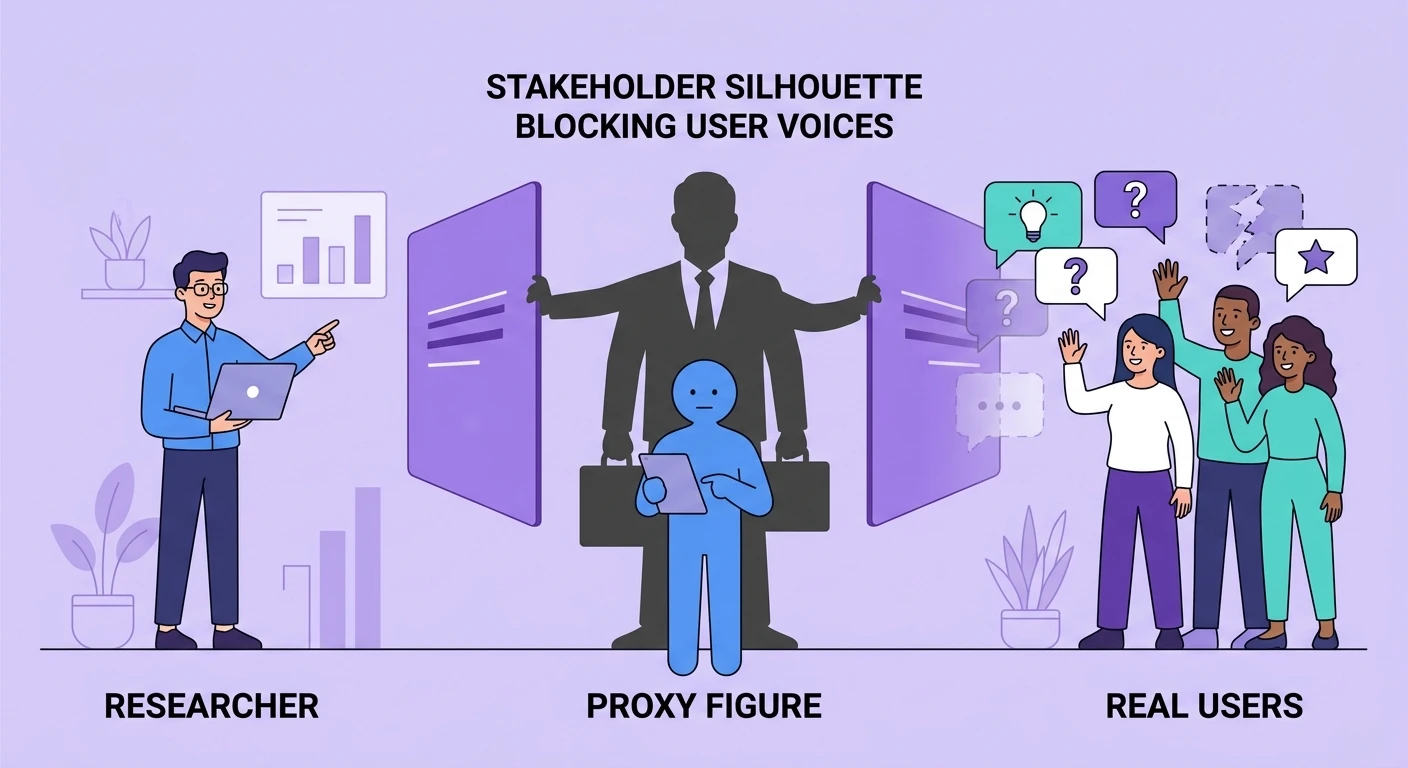
This is not a presentation skills problem. It is a participation problem. When stakeholders are consumers of research rather than participants in analysis, they never develop the deep understanding that changes behavior. They receive conclusions without experiencing the reasoning journey that makes those conclusions feel inevitable.
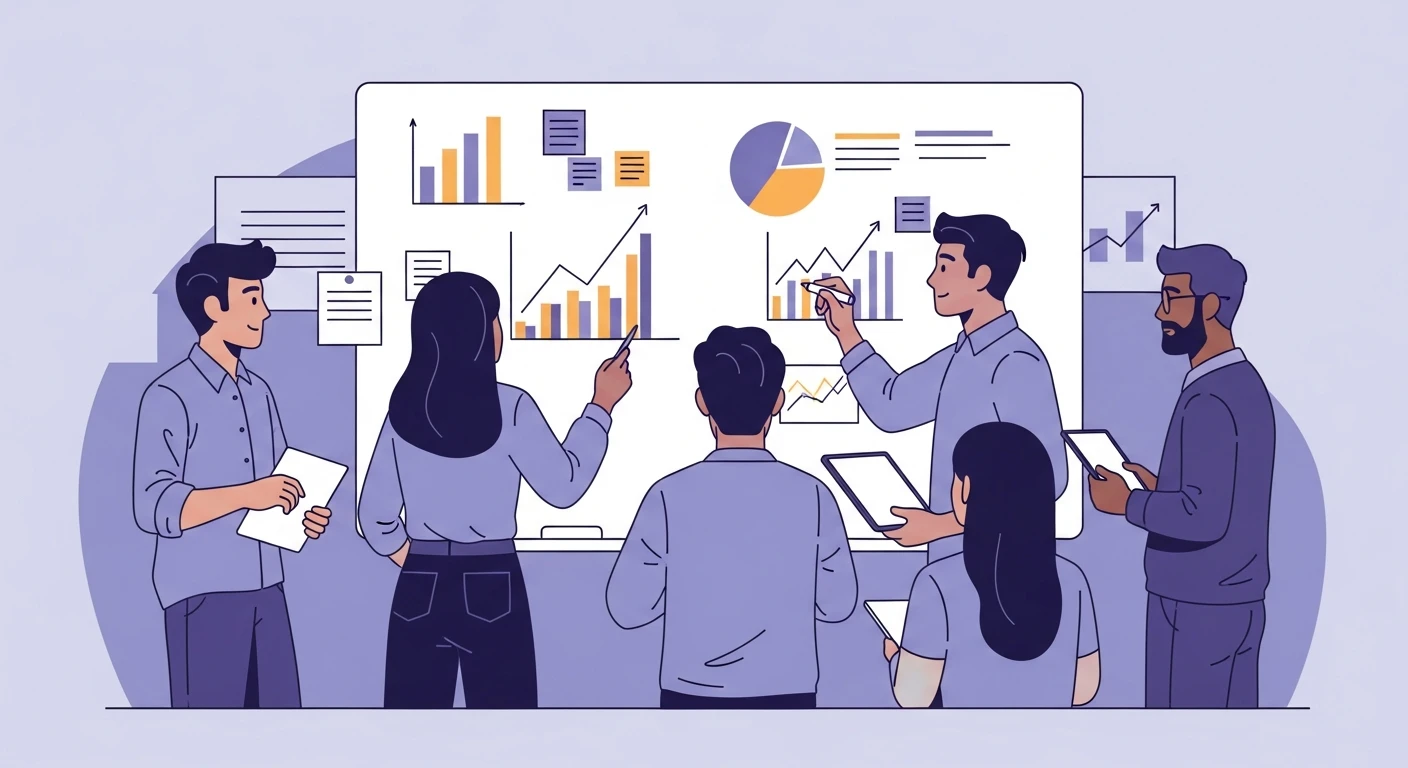
The fix is not better slide decks or executive summaries. The fix is getting cross-functional team members into the room during analysis — handling raw data, seeing patterns emerge, and arguing about interpretation. This is what collaborative analysis sessions accomplish, and the teams that adopt this practice consistently report higher research impact than those clinging to the researcher-as-oracle model.
The Case for Collaborative Analysis
Bringing non-researchers into analysis is not about democratizing research for its own sake. It produces genuinely better outcomes for three specific reasons:
Different expertise sees different patterns. An engineer reading interview transcripts notices infrastructure complaints that a designer might code as "frustration." A product manager recognizes competitive switching signals that a researcher might categorize as general dissatisfaction. Each discipline brings a pattern-recognition lens shaped by their daily work. The collaborative analysis approach multiplies analytical perspectives in ways that solo coding simply cannot match.
Shared exposure builds shared conviction. When a VP of Engineering reads raw participant quotes about performance problems, they do not need to be "convinced" by a research presentation. They have already internalized the evidence. This shared exposure to raw data is what the sensemaking gap in research research identifies as the missing ingredient in research utilization.
Analysis becomes prioritization. When the people who will act on insights are involved in surfacing those insights, the translation step from "finding" to "action" compresses dramatically. An engineer who helped code ten interviews about API latency does not need a ticket to explain why the problem matters.
Workshop Design That Actually Works
Not all collaborative analysis sessions produce good outcomes. Poorly facilitated workshops devolve into opinion-sharing sessions where the loudest voice dominates. Here is the structure that consistently produces rigorous analysis with cross-functional participation:
Phase 1: Individual immersion (30 minutes). Give each participant 3-4 transcript excerpts or video clips to review independently. Provide simple coding instructions: "Highlight anything that surprises you, anything that confirms something you already believed, and anything that contradicts something you believed." This forces genuine engagement before group discussion begins.
Phase 2: Pattern surfacing (20 minutes). Each person shares their highlights on sticky notes (physical or digital). No discussion yet — just exposure. Group similar observations spatially. This is affinity diagramming, but with the crucial difference that non-researchers are doing the grouping.
Phase 3: Interpretation and debate (30 minutes). Now discuss. What do the clusters mean? Where do interpretations diverge? Disagreement is the most valuable output here — it reveals assumptions that need testing. A researcher facilitates but does not dictate.
Phase 4: Implications mapping (20 minutes). Each participant writes one action they would take based on what they saw. Share these. Overlap reveals high-confidence opportunities. Divergence reveals where more data is needed.
Who Should Be in the Room
The ideal cross-functional analysis workshop includes:
- 1-2 researchers who faciliate and provide methodological guardrails
- 1-2 engineers who bring technical feasibility perspective
- 1 designer who connects patterns to interaction possibilities
- 1 product manager who maps insights to strategy and roadmap
- Optional: 1 customer-facing team member (support, sales) who provides ongoing context
Keep the group to 5-7 people. Larger groups dilute participation and extend timelines without proportional benefit. Rotate participants across sessions to spread exposure over time.
Managing the Quality Risks
Researchers rightfully worry that involving non-researchers in analysis will produce bad analysis. The risks are real but manageable:
Confirmation bias amplification. Product managers may see only data that supports their existing roadmap. Counter this by assigning each participant "devil's advocate" data — excerpts specifically selected to challenge their known positions.
Premature solutioning. Engineers especially tend to jump from problem identification to solution design. Facilitate explicitly: "We are in understanding mode, not solution mode. Solutions come next week."
Hierarchical deference. Junior team members defer to senior voices. Mitigate with individual work before group discussion, anonymous dot-voting for prioritization, and explicit facilitation that calls on quieter voices.
Oversimplification. Non-researchers may flatten nuance into binary categories. The researcher's role is to protect complexity: "Actually, three participants said similar things but for very different reasons — let us keep those separate."
The principles of research democratization done right apply directly here. Empowerment without guardrails produces chaos. Guardrails without empowerment produces shelf reports.
Scaling With AI-Assisted Preparation
The biggest logistical barrier to collaborative analysis is preparation time. Selecting appropriate excerpts, anonymizing data, and creating workshop materials for non-researchers takes hours. AI-assisted analysis tools can compress this preparation dramatically.
AI can pre-code transcripts to surface the most information-rich excerpts for workshop review. It can generate initial clustering to give participants a starting point rather than a blank wall. It can identify the contradictions and tensions that produce the richest workshop discussions. These capabilities connect to broader shifts in how eval-driven approaches are changing AI system development — the same rigor that validates AI outputs applies to validating AI-prepared research materials.
The key is using AI for preparation, not for conclusion. The cross-functional team still does the interpretive work. AI just gets them to the starting line faster.
Measuring Workshop Impact
Track these metrics to validate that collaborative analysis sessions improve research utilization:
- Time from research completion to action: Does the gap between final interview and first product change shrink?
- Stakeholder citation frequency: Do team members reference research findings unprompted in planning discussions?
- Decision confidence: Do product decisions made with workshop-involved stakeholders have higher team confidence scores?
- Research request volume: Does participation in analysis increase demand for future research (a sign of perceived value)?
Teams that measure these consistently find that research ops metrics improve across the board when collaborative analysis becomes standard practice.
Starting Small
You do not need organizational transformation to begin. Start with one study. Invite two non-researchers to a 90-minute session. Use three transcript excerpts. See what happens.
The pattern is self-reinforcing. Engineers and product managers who participate once almost always want to participate again — because seeing raw user data is intrinsically compelling in a way that reading research summaries is not. The challenge is never "how do I get people to come back" but "how do I manage demand for seats in the next session."
The articulation gap, the sensemaking gap, and the action gap in research are all symptoms of the same underlying problem: research happening in isolation from the people who need to act on it. Cross-functional workshops do not fix the methodology. They fix the organizational pathology.